Dam Photography

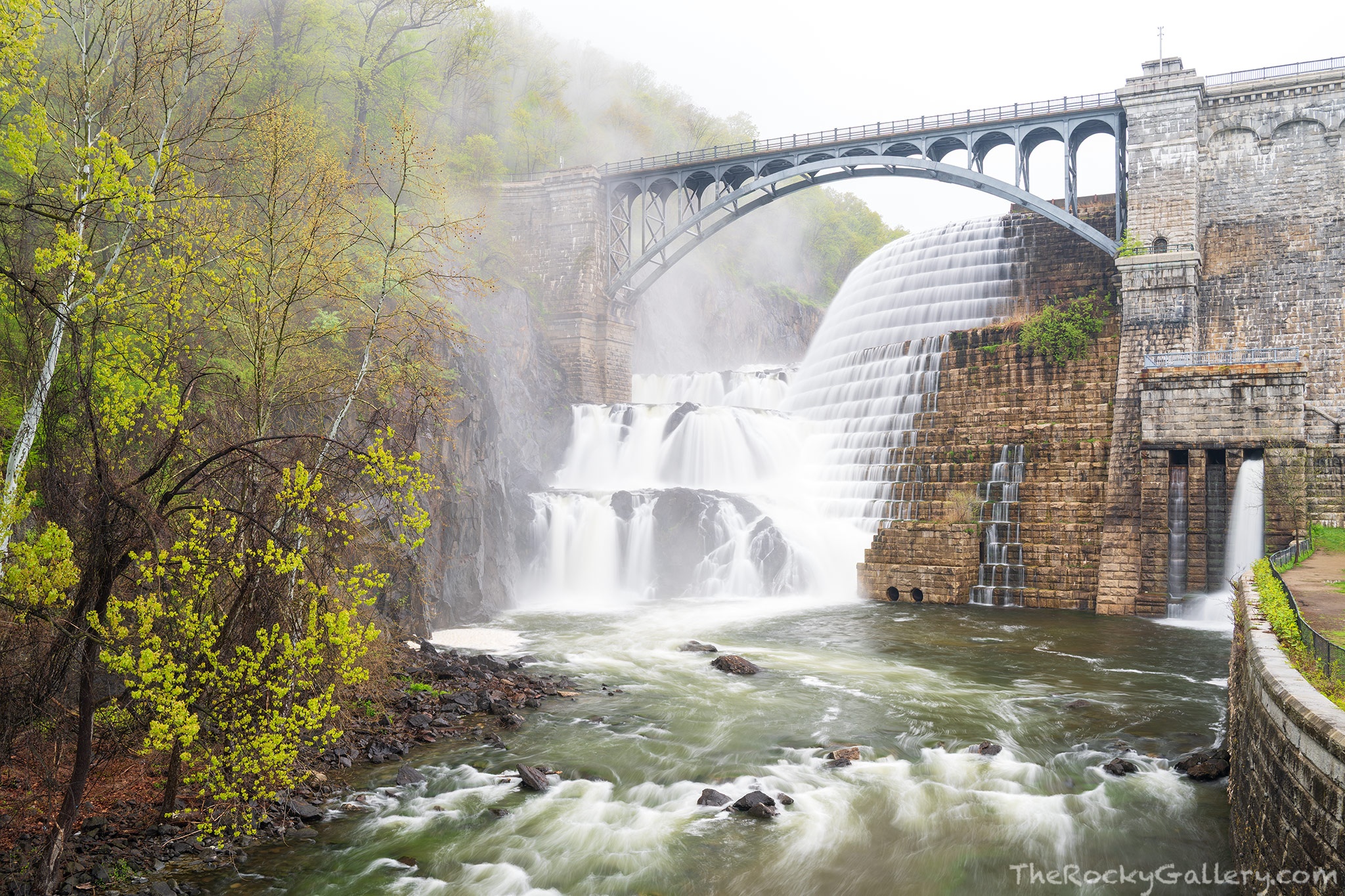
The classic view of the Croton Gorge and Croton Dam on a moody late April spring morning. Fog hugs the walls of the gorge as newly leafed out trees add color along the sides of the Croton River. When I lived in New York I would drive by this location nearly everyday. It was only in the past few weeks I took the time to stop and photograph this spectacular New York icon. Technical Details: Nikon Z8, Nikkor 24-120mm F4 VR S lens

As of late, I’ve been spending a considerable amount of time back in New York helping my eighty-five year old mom with various different chores, tasks and life activities that get more require some assistance from time to time. It’s a blessing to be able to spend time with my mom and one of the benefits is that I get to explore and photograph the areas near and around the town of Yorktown Heights where I grew up.

People who’ve never visited New York State are usually surprised to find that New York is one of the most naturally beautiful states in the country. People think of busy towns and suburbs radiating in all directions from New York city and equate highways, tall buildings, and traffic with New York. The truth is you don’t have to go very far north from midtown Manhattan to find some amazing natural areas, hiking and beautiful vistas.
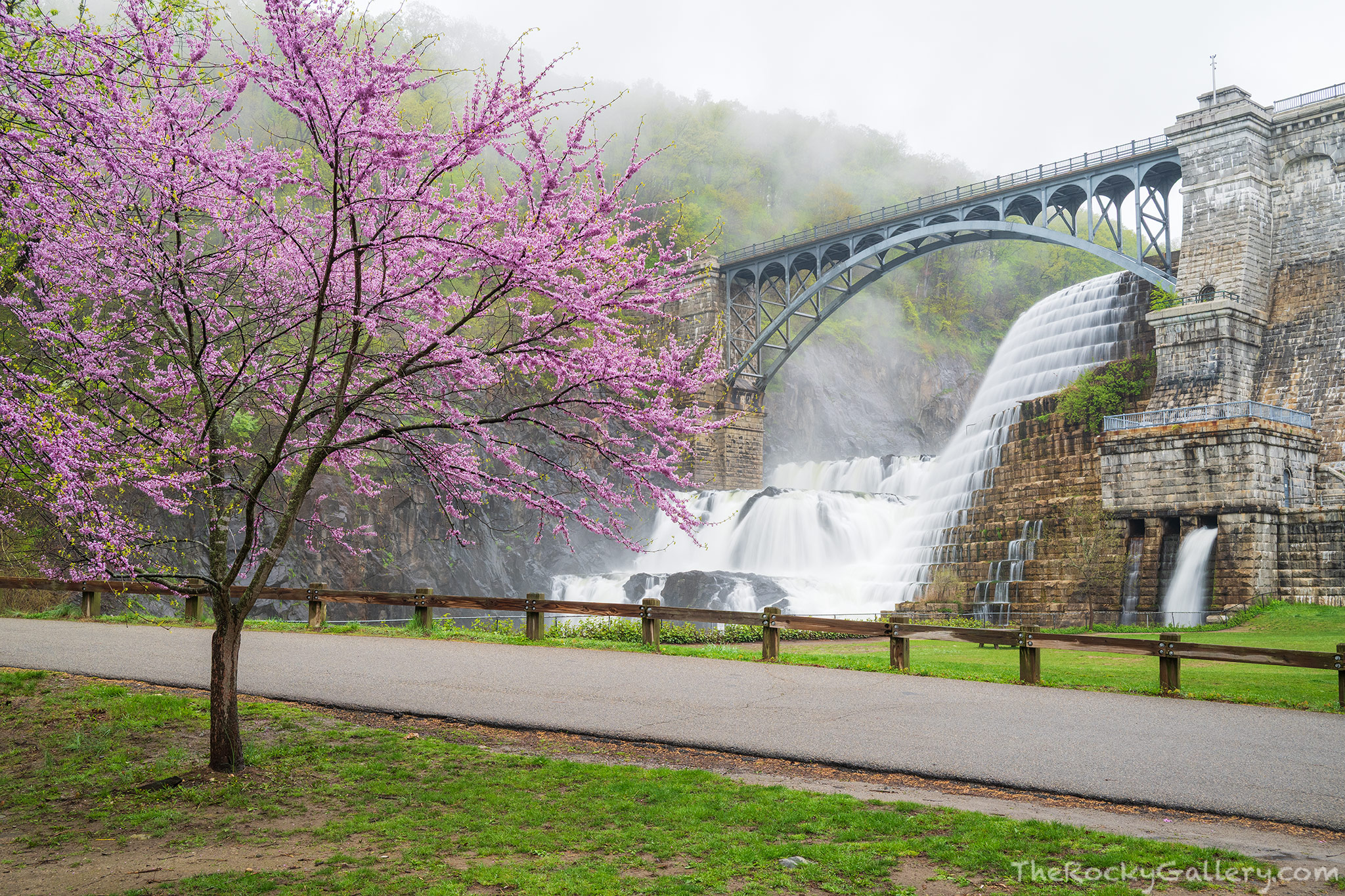
It’s hard not to be impressed by this view of the Croton Gorge and New Croton Dam. With flowering trees and fog, this iconic New York landscape looked spectacular on the last day of April. Technical Details: Nikon Z8, Nikkor 24-120mm F4 S VR Lens

I’ll be the first to admit that when I lived back in Yorktown Heights, I too ignored many of these spectacular locations and never even bothered to make attempts to photograph them. One of these areas that was only a few miles from my house, and a location I would drive by multiple times a week was the New Croton Dam and the Croton Gorge located between bucolic Croton-on-Hudson and Yorktown. I have vivid memories of coming to the Croton Gorge Park with my dad and brother to hike around and give my mom a break and get out of her hair for a little while.

Later on, when my little brother first graduated from college and started working and commuting to Manhattan everyday I would often have to run down to the Croton Harmon train station to pick him up. Doing so, I would drive right past Croton Gorge and the dam without a thought to photograph it.
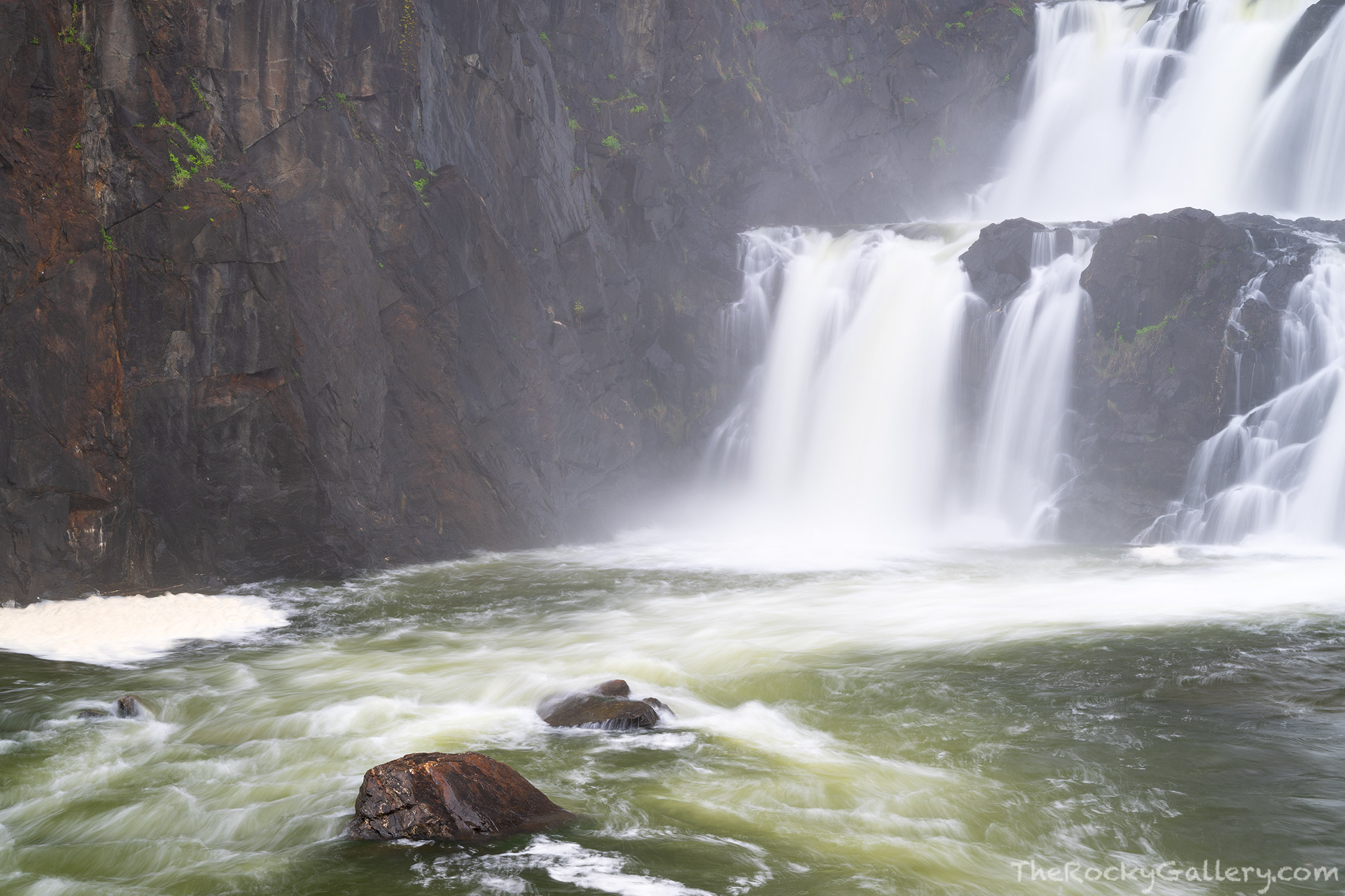
While I spend most of my time photographing Rocky Mountain National Park and the western United States, its hard not to be impressed by the raw power of the Croton River as it exits the Croton Gorge in full spring runoff. Truly a spectaular New York icon. Technical Details: Nikon Z8, Nikkor 28-400mm F4-8 VR Lens

As time moves forward and I spend 95% of my time in Colorado and locations across the American West, getting the opportunity to explore and photograph New York and locations near my hometown gets more difficult. So whenever I’m back east now, I try to make as much an effort as possible to photograph these spectacular locations while I have the opportunity to do so.

The day I was flying back to Colorado on the last day of April, I made a quick jaunt over to Croton Gorge Park to explore and work a few compositions. It was a rainy, foggy spring morning. Perfect to set the mood and everybody knows I love photographing in fog and rain, something that feels like rarely happens in Colorado.

When I arrived at the park, the conditions where just about perfect. Flowering trees, fog hugging the edges of the Gorge and water running down the side of Croton Dam and the Croton River.

I spent a good two hours photographing The Croton Gorge in all is spectacular spring glory. All the while, I could only think to myself ‘how could this be the first time I photographed this place?’. I’m glad I had a chance to explore and photograph this location at the end of April. With any luck, I’ll be able to photograph it a few more times from different viewpoints and in different lighting. The lesson here is always make sure to focus your photography on local locations and don’t take the access you have at any given time for granted. You may not get as many opportunities to explore and photograph as you think, life may have other plans.
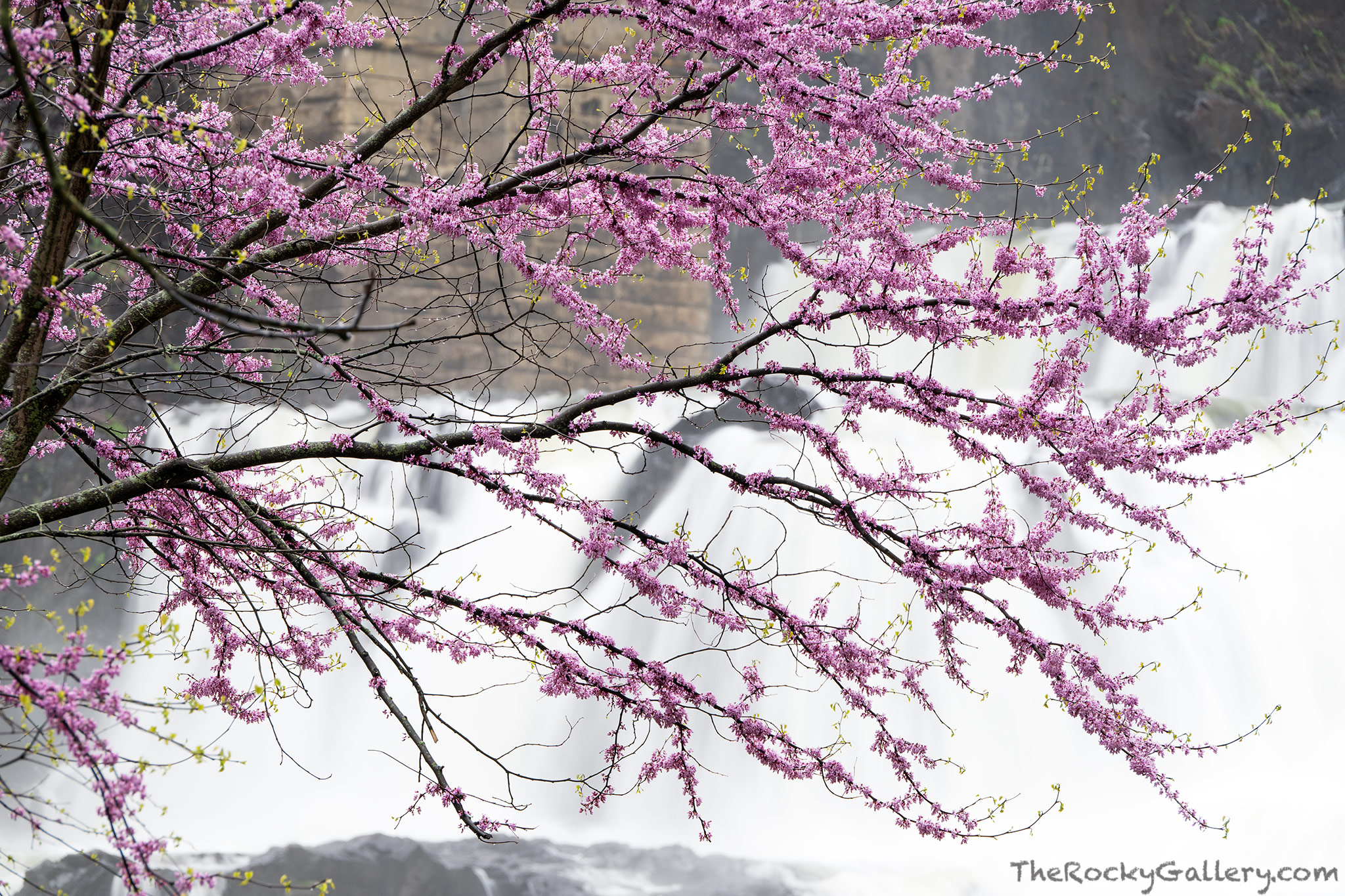
Flowering trees frame the waterfall at the base of the New Croton Dam and Croton Gorge on a misty and moody April morning in New York. Technical Details: Nikon Z8, Nikkor 28-400mm F4-8 lens.

Old Friend Winter May Return

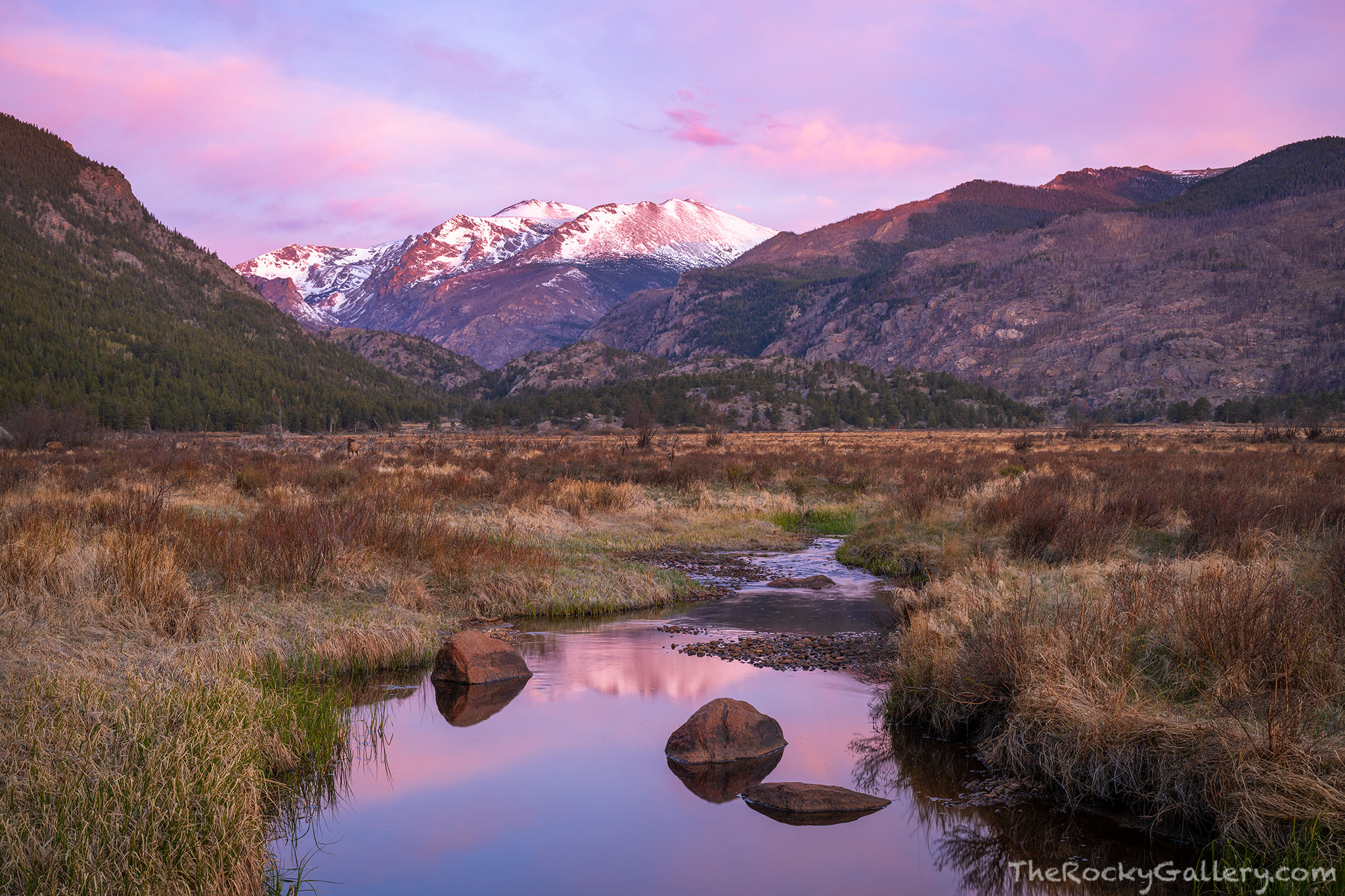
What a difference a day makes. Sunrise over Moraine Park on Monday was beautiful sight to behold. With the Big Thompson River just a trickle, Stones Peak had some nice fresh snow on it from last weeks storms. Grasses are greening and spring is in the air in Rocky Mountain National Park but this calm morning was just prior to the current winter storm dumping snow on Rocky as I write this. Technical Details: Nikon Z8, Nikkor 24-120mm F4 S VR Lens

I’m not out this morning photographing Rocky Mountain National Park though I feel I should be. It’s currently dumping snow over the park and while I have not seen an official Bear Lake measurement since 4:00 PM yesterday of 20 inches, I have to assume there is at least another 6-10 that has fallen overnight. Rocky after a nearly nonexistent winter season, is now one week into May and official winter wonderland complete with news stations and camera crews, including the Weather Channel setup on every corner in Estes Park.

If there was a chance for some sunlight this morning at sunrise I would have headed up to Rocky for the chance to capture the light but with the roads above 7000ft dicey and the park not having been plowed since yesterday evening, I figured I would stay out of the way and make another run at the park the next time it snows.

I had to travel back to New York last week to attend my Uncle’s funeral so I wasn’t able to get out to photograph in the park. I did get a chance for sunrise on Monday which was quite beautiful before the weather quickly change.

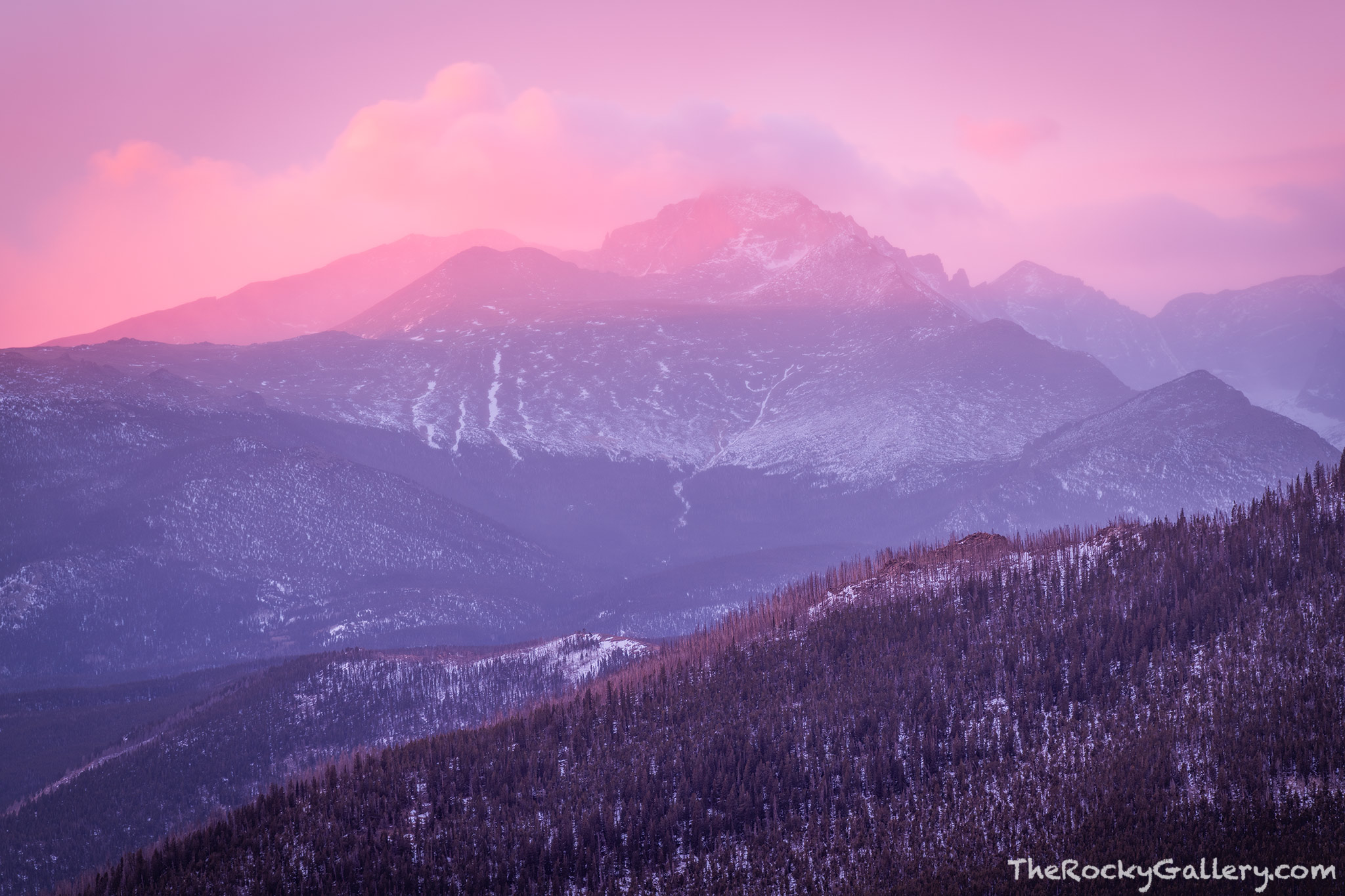
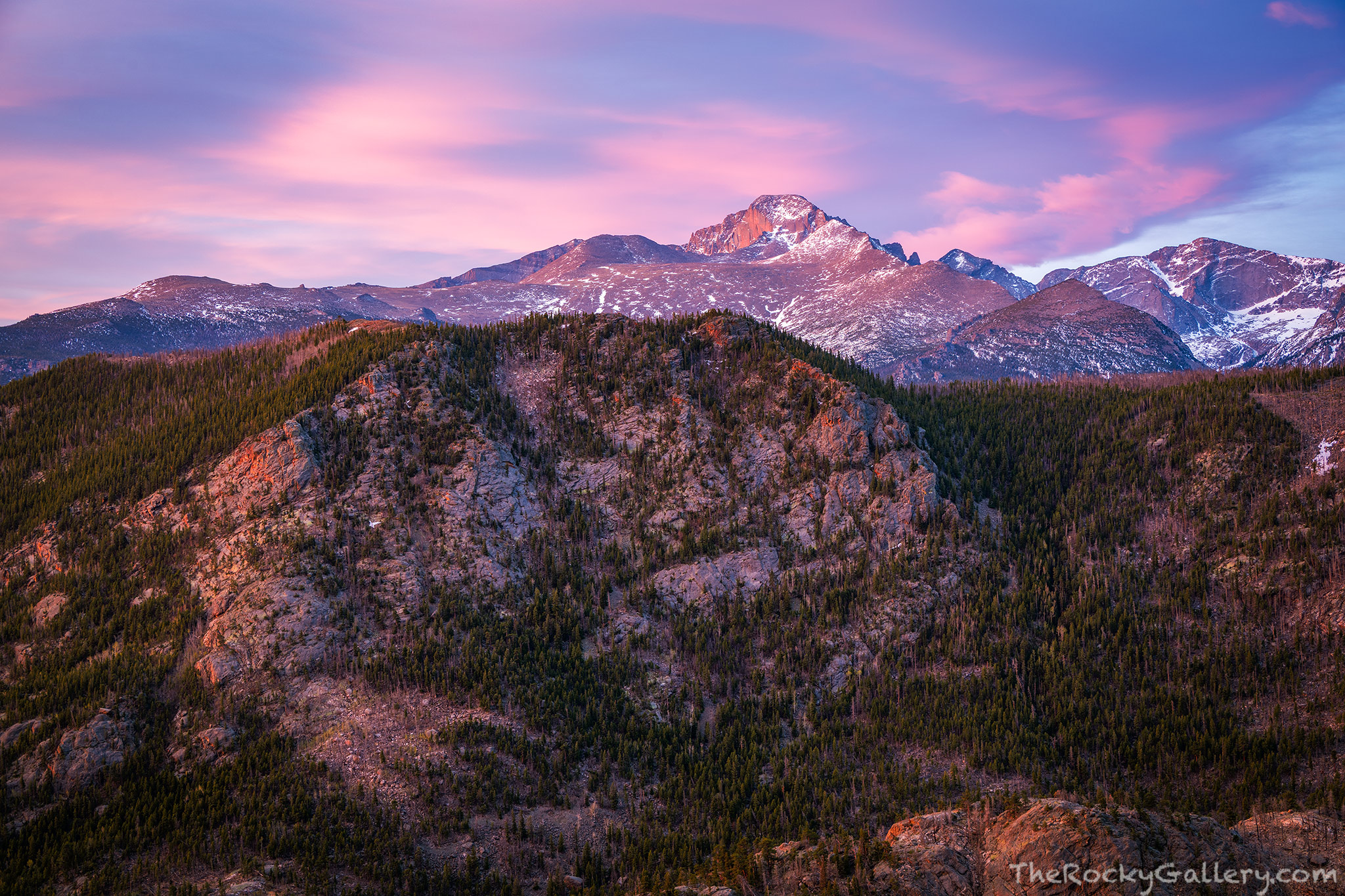
While we are finally getting the snow and moisture we really neeed over Rocky, spring conditions the past few weeks had started opening up new locations in Rocky. Upper Beaver Meadows Road was open and the trails out of the meadow were in summer like conditions as I shot this image of Longs Peak with Steep Mountain in the foreground from Beaver Mountain two weeks ago. Like seeing and old friend, locations difficult to access over the long winter in Rocky are now opening again allowing a reunion of sorts. Technical Details: Nikon Z8, Nikkor 28-400mm F4-8 VR Lens

Spring is in the air in Rocky and once this all this snow that has just fallen melts, the much needed moisture is going to boomerang the condition from brown to green to summer like quickly. I’ll take some more snow or rain as we desperately need all that we can get in Rocky right now, but I’m also stoked about being on the edge of the summer season.

NPS crews have been busy plowing Trail Ridge Road, before our big storm, Upper Beaver Meadows Road was open, Wild Basin Road was open as was the Twin Sisters access road. Day by day Rocky Mountain National Park is becoming more accessible and hopefully by next week portions of Trail Ridge Road open above Many Parks Curve.

With lakes, ponds and streams thawed, it wont be long until the classic summer views and locations in RMNP are primed for landscape photography. Each time a portion of Rocky is reopened or revised after a long winter away, it feels like getting to visit with an old friend again and catching up. Well catching up is only a few weeks away and I cant wait.

Bouldering And Prospecting

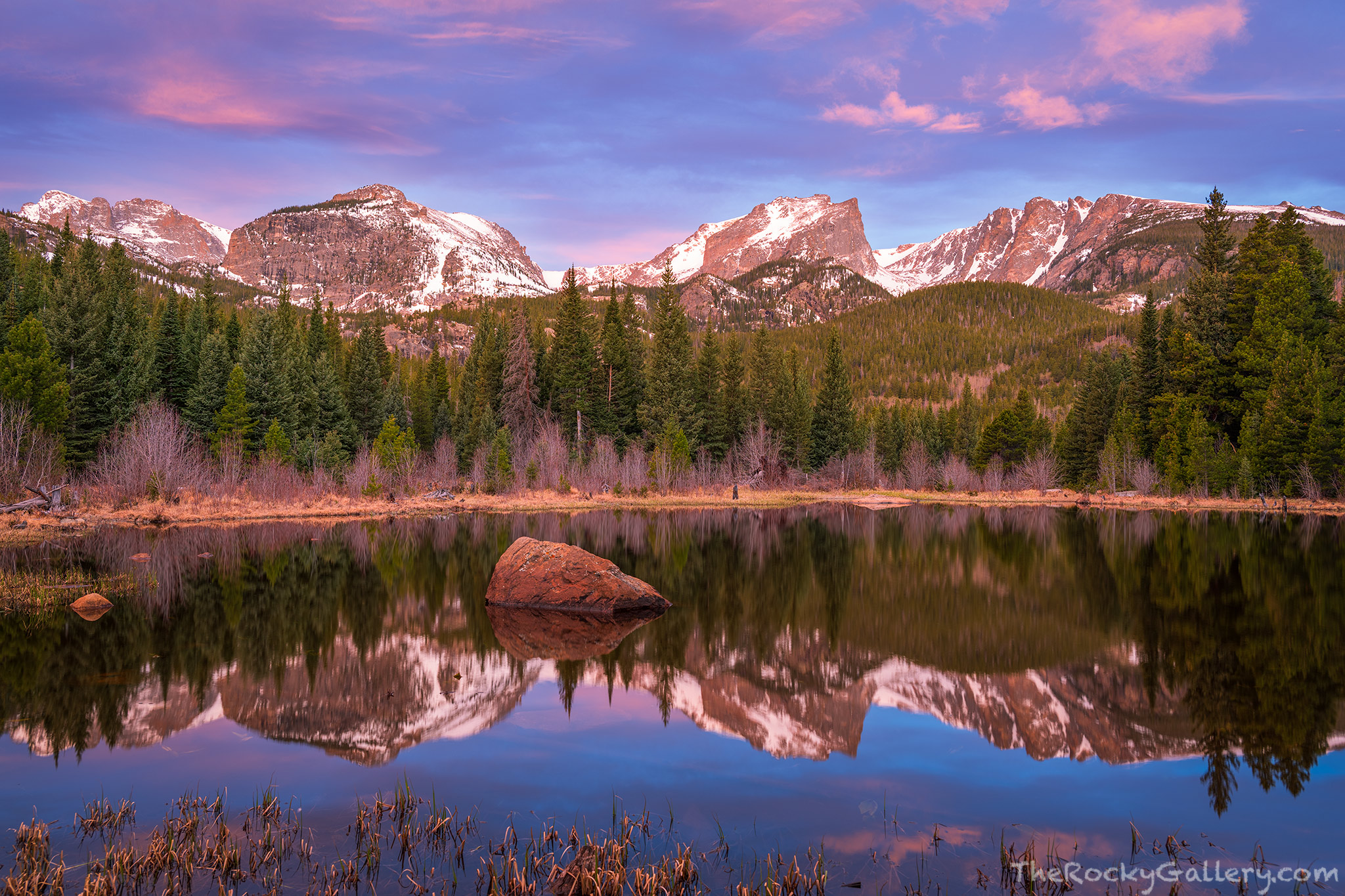
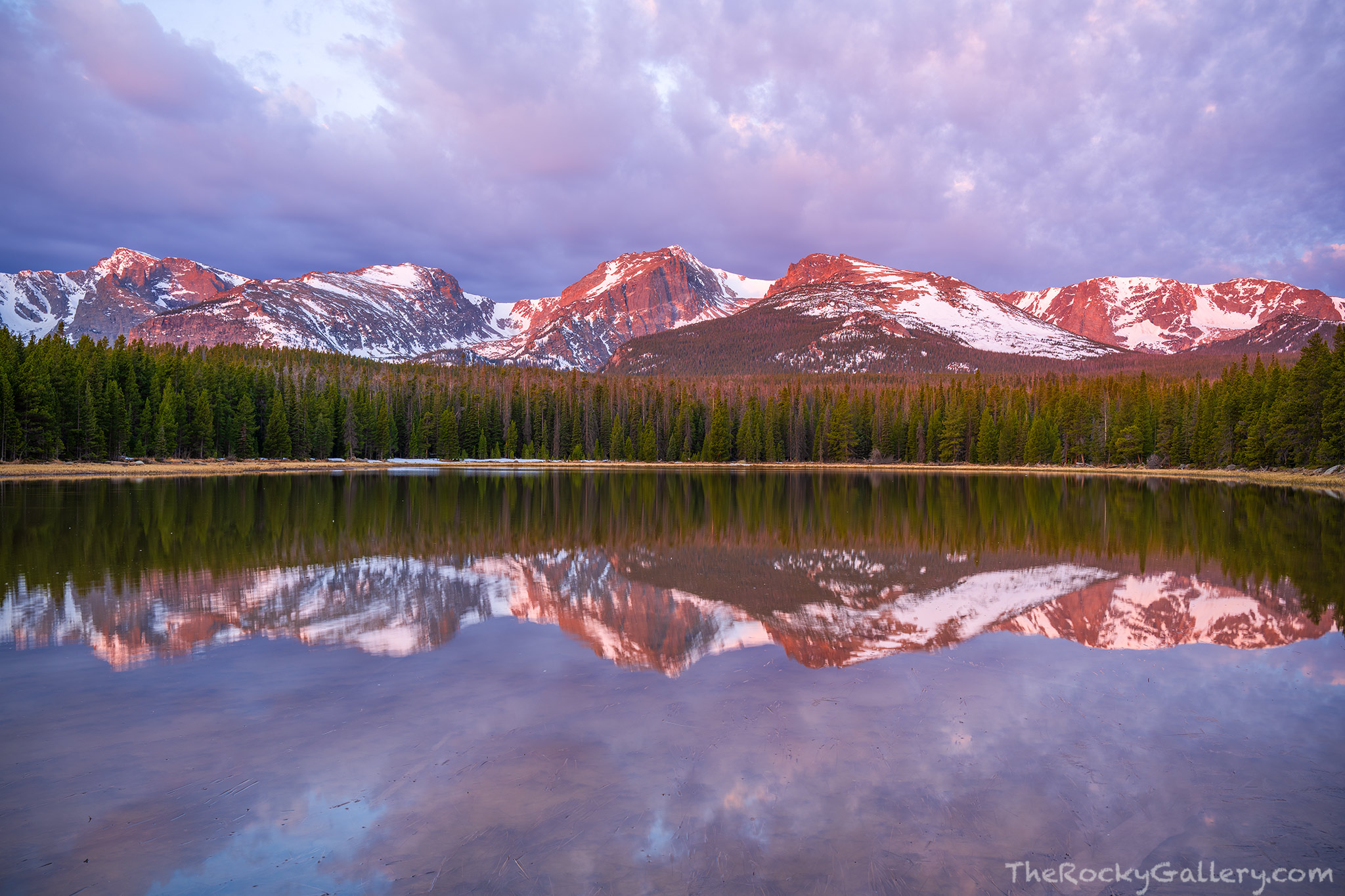
The appearance of Spring is well on its way this year in Rocky Mountain National Park. In fact, I would venture we are almost in early summer conditions in the park with lakes thawed and streams flowing. Sunrise at Prospect Pond yesterday was amazing. One of the most colorful sunrises of the spring season highlighted one of Rocky Mountain National Park’s best views of the Continental Divide at sunrise. Technical Details: Nikon Z8, Nikkor 24-120mm F4 S VR Lens

Bouldering and Prospecting, two activities that are as Colorado as it can get. Some love to climb rocks, others like to pan for shiny rocks in streams around the state. What does Bouldering and Prospecting have to do with photography and Rocky Mountain National Park?, well nothing at all in the case of this blog entry.

Bouldering and Prospecting refers to two of my favorite early spring locations to hike and photograph at in Rocky Mountain National Park. Boulder Brook is an amazing place to photography spring through fall and Prospect Pond commands one of the best views in all of RMNP prior to the lake sprouting pond lilies and high grasses along its muddy and boggy like shoreline. While Boulder Brook is very hit or miss in the springtime depending on temperatures and spring runoff, Prospect Pond also has it challenges and rewards when photographed early in the spring in Rocky.

With our weather being so warm and conditions mirroring what I would expect for late May, maybe even June during a cooler year, there are lots of great opportunities for landscape photography right now in Rocky that during a so called normal or average year, probably would not exist.

On the one hand its great to be able to get out and hike some of the higher elevation trails and not even need to use mircrospikes on your shoes, while at the same time being a bit unsettling. The conditions are the conditions and while we pray it gets better, there is no guarantee that will happen so you take what you are dealt and try to make the best of it.

I’ve been petering around Prospect Pond the past week or so but while I have some decent conditions to showcase this tiny lakes spectacular view of Taylor, Otis, Hallett and Flattop, I was hoping for something a little more dramatic while the lake is free of pond lilies and high grasses. Finally, it all worked out yesterday with one of the best sunrises over the Continental Divide all spring.

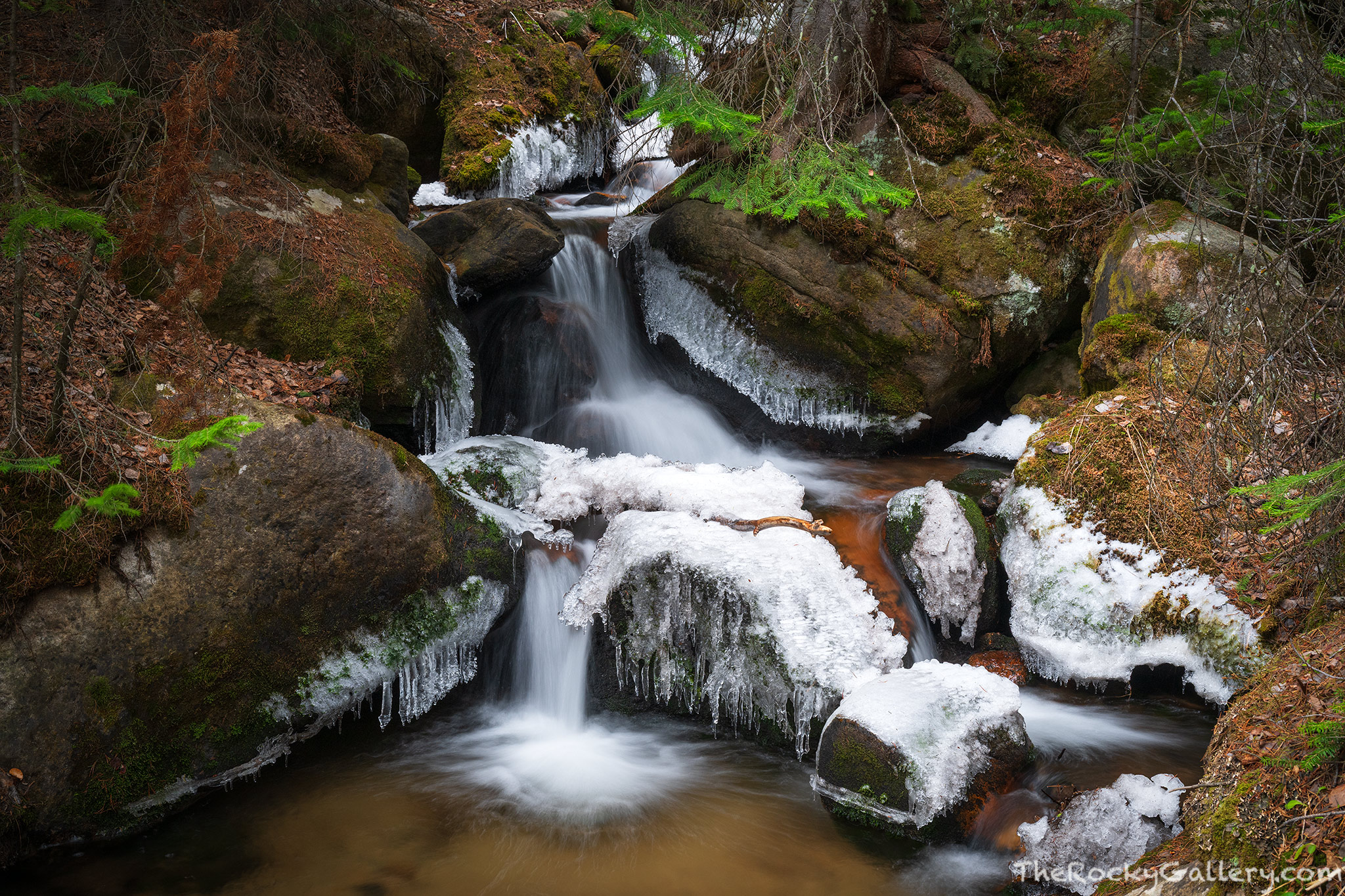
Boulder Brook is one of Rocky Mountain National Park’s most beautiful streams. It weaves its way down off the side of Longs Peak through pine and aspen forests. Most springs, heavy runoff might impeed landscape photography but this spring the flow is just about perfect. With ice from the cold waters forming along the just greening moss, Boulder Brook appears to reveal itself as it flows through rocks, roots and trees. Technical Details: Nikon Z8, Nikkor 24-120mm F4 S VR Lens

With trail conditions mostly awesome right now, photographing Prospect Pond wasn’t going to be the end of exploring for the day. With my car back at the Glacier Gorge trailhead, downhill I headed towards Boulder Brook to see how that look.

Boulder Brook is one of the best places in all of Rocky Mountain National Park to photograph a quiet unambiguous stream weaving through a small aspen grove. It’s an amazing place to photograph in the summer and downright one of the best places to photograph Rocky in the fall. I wasn’t really sure what I would get. If the brook is running to fast and hard with spring runoff it can make photography difficult. On a cold year, lots of ice and snow may be covering and obstructing much of the flow and the stream as well. As is the case all of the time now, tree fall from high winds, beadle kill, and Sudden Aspen Death always alter the landscape with dead and fallen trees strewn over and on Boulder Brook altering and in many cases ruining compositions along one of RMNP’s prettiest streams.

I found the flow at Boulder Brook to be just about perfect. Ice lined the banks where the cold water babbled down the hillside. The moss on the rocks just turning green and the forest appearing only to reveal the brook after keeping it hidden and protected under its rocks, trees, roots and soil. Not a bad April morning even if it felt like late May in Rocky Mountain National Park.

Snow Finally Returns To Rocky Mountain National Park

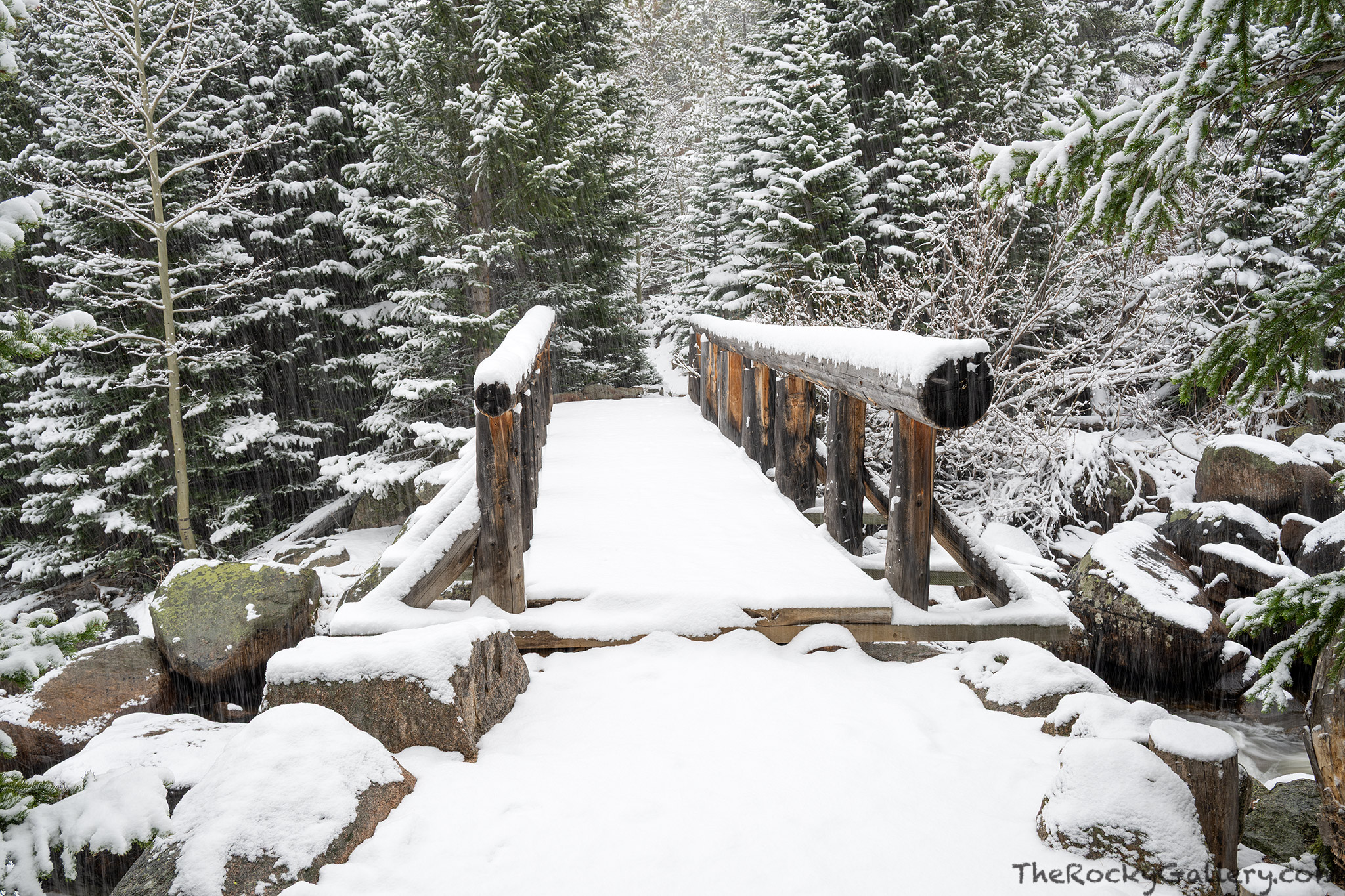
A heavy wet spring snow finally returned to Rocky Mountain National Park this week delighting landscape photographers out in the wet conditions. With a combination of a warm spring and fresh snow, Rocky offered lots of beautiful winter like scenes to enjoy. Hiking along Glacier Creek towards Alberta Falls, I had to stop to photograph the bridge over Glacier Creek in the snow. Technical Details: Nikon Z8, Nikkor 24-120mm F4 S VR Lens

It may be mid April, trees are starting to leaf out, grasses are turning green and early season flowers like Pasque Flowers and Mountain Ball cactus are starting to flower. Even so, April is typically one of the best months to photograph wintry landscape scenes in Rocky Mountain National Park. After a very dry and practically snow-less winter and even drier and warmer spring, snow returned to Rocky Mountain National Park early this week with some more on the way tomorrow.

It’s a welcome sight to see snow return to Rocky after what has been a historically warm and dry winter. Snowpack levels are abysmal to date and the little amounts of snowmelt we have are melting at a more rapid pace than previous years due to a very mild and warm spring. At this point in the season, there is no chance we makeup for the moisture we didn’t receive over the winter but we can hope for a wet spring to triage what can only be described as a critically serious moisture deficit.

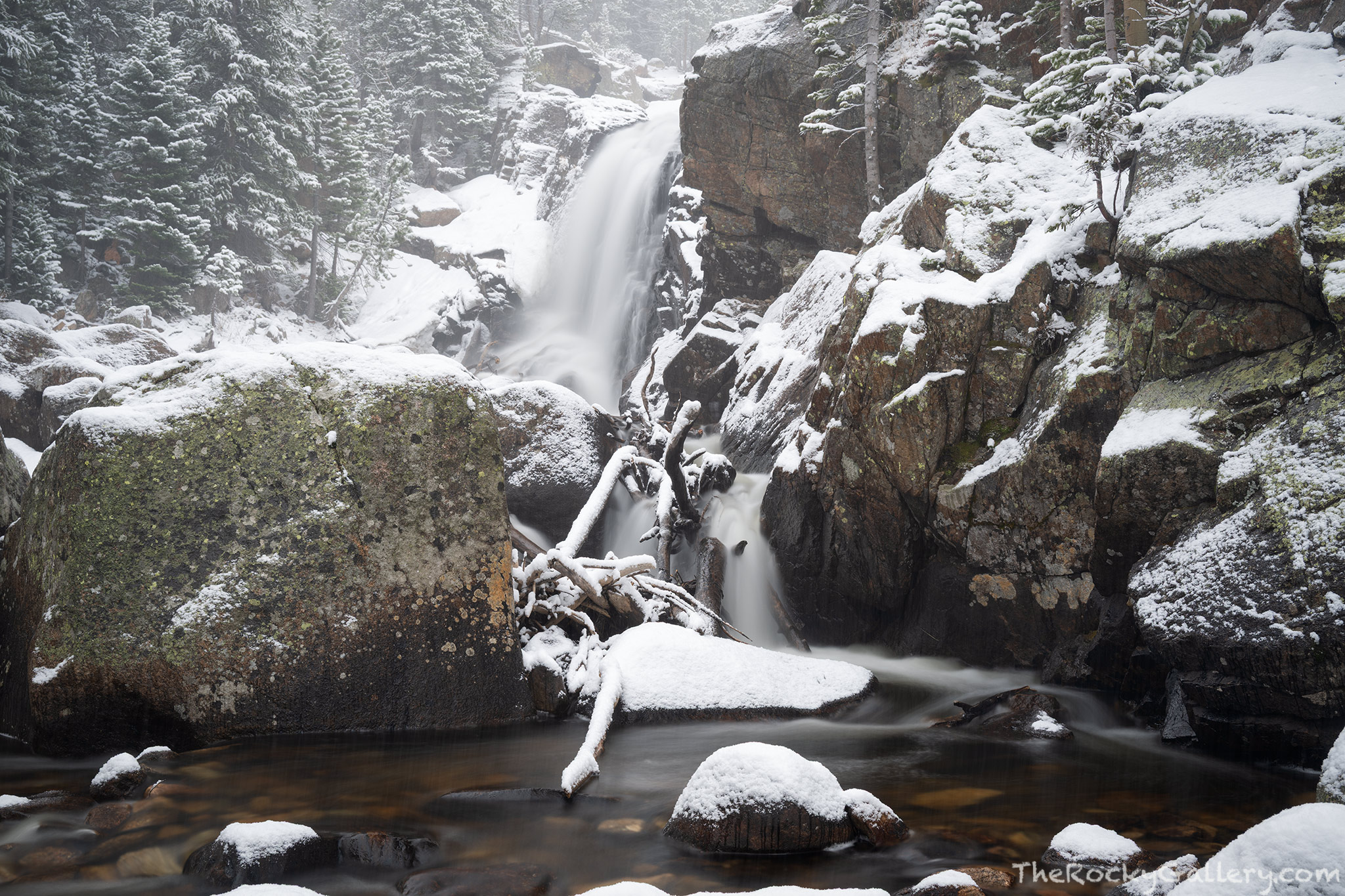
A warm spring has opened up Alberta Falls earlier than in most years. With Alberta Falls free from snow and ice, this April snowstorm allowed me to photograph the waterfall free flowing while covered in fresh spring powder. Technical Details: Nikon Z8, Nikkor 24-120mm F4 S VR lens

So with most of the lakes and streams thawed out about a month early this year in RMNP, and seasonal conditions that I would liken more to late May or early June in Rocky, it’s was great to have a heavy wet spring snow fall on the park on Tuesday and hopefully again tomorrow morning. For landscape photographers, the current oddity of having waterfalls, lakes and streams free of ice and snow so early in the season is bound to offer opportunities for photographers when the changing of the seasons inevitability clash.

Thats just what happened on Monday when I hiked up to Alberta Falls from the Storm Pass trailhead. I knew Glacier Creek and Alberta Falls would be free flowing and free of ice, so the snow covered waterfall combined with fresh snow made for a somewhat unique composition. While heavy wet snow fell on RMNP on Tuesday, Alberta Falls, Prospect Pond and the beautiful landscape along Glacier Creek offered endless unique compositions of flowing and open water and heavy wet spring snow all while helping to add moisture to our severely parched forests.

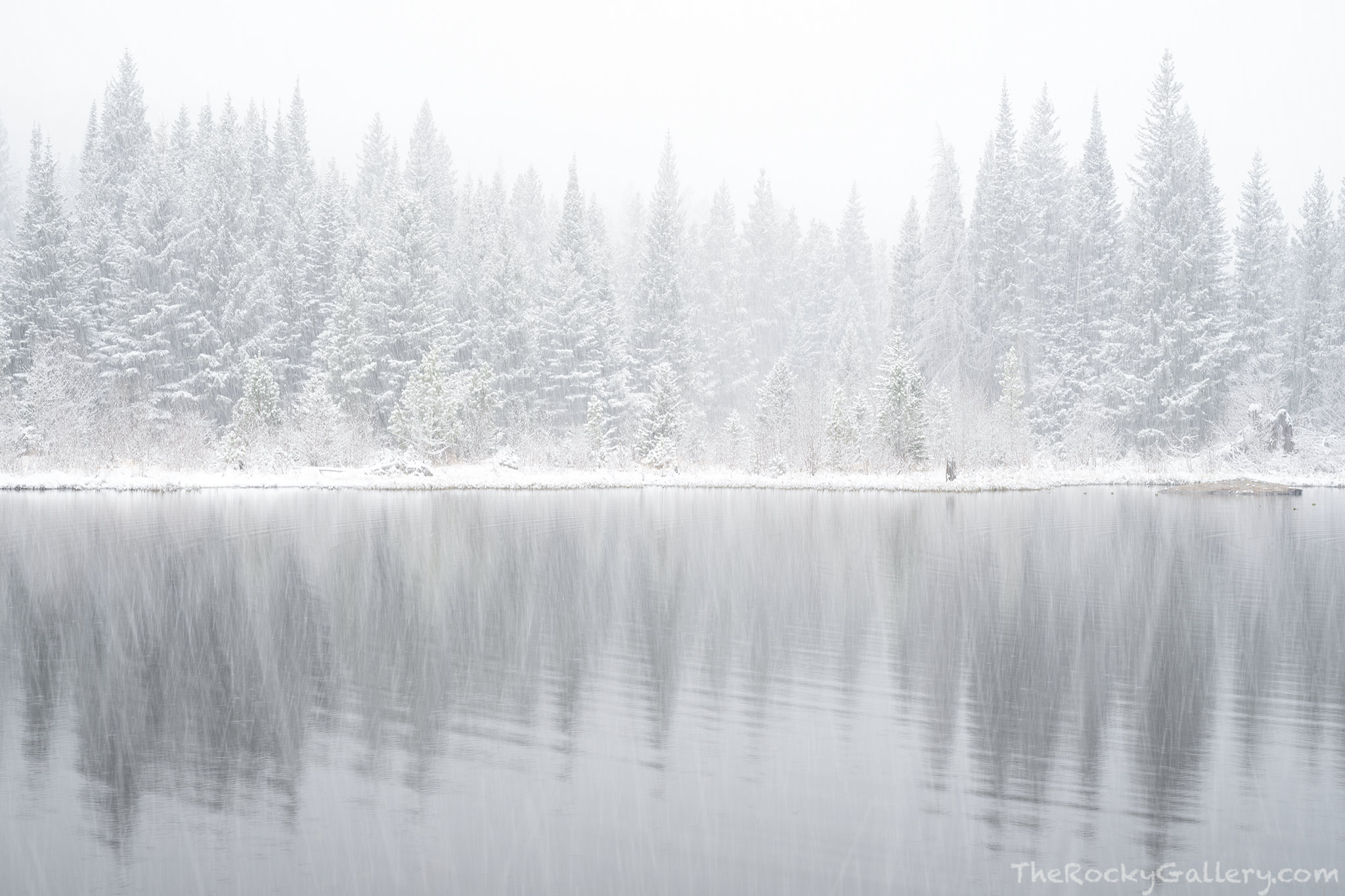
I always love the subtle beauty of Prospect Pond. Tucked away below the more popular lakes such as Bear Lake, Nymph Lake and Dream Lake, Prospect offers stunning views of the divide and solitude you often wont find at the more visited lakes. Canada Goose just out of the frame caused ripples to flow on the surface of Prospect Pond as a heavy wet snow encased the landscape and pines of Rocky Mountain National Park. Technical Details: Nikon Z8, Nikkor 24-120mm F4 S VR Lens

With another system incoming early tomorrow over Rocky Mountain National Park, lets hope we get some more of the heavy, wet snow that typifies spring time in Rocky. I’ll be out tomorrow morning just as this latest system runs into the park. It may not be snowing at sunrise tomorrow morning in Rocky Mountain National Park, but as long as it starts falling soon after we can all breath a slight sigh of relief.

Looking And Feeling A Lot Like June In RMNP

A spectacular sunrise unfolds at Bierstadt Lake on the last day of March. While I was pleased to be able to photograph Bierstadt Lake free of snow under some beautiful clouds and light, the landscape here looks a lot more like June 1st than March 31st. Photographers can excpet almost summer like conditions now in Rocky with most lakes below 10,000 ft mostly free of ice. Technical Details: Nikon Z8, Nikkor 28-400mm F4-8 VR Lens

I sound like a broken record, but the warm and dry weather that continues to settle over Colorado and more specifically Rocky Mountain National Park is really making for some unusual early season photography. Lakes and water below 10,000 ft are ice free or nearly ice free about a month earlier than I would usually expect. Snow is almost nonexistent in under the forest canopy below 9500 ft and streams and waterfalls are free of ice and snow and flowing freely. To summarize, as we move into the first week of April in Rocky, it sure feels like early June in the park.

Tuesday, which was the last day of March, I hiked up to Bierstadt Lake for sunrise. Typically this time of year Bierstadt is covered in ice or at least most of it would be. The Bierstadt Moraine and trail which gets plenty of sun and faces south is usually mostly free of snow by now but once you get to the top of the moraine, the entire forest surrounding the lake usually has feet os snow covering the trail and forest. As of now, there is barely any snow in the canopy or along the trail and the lake itself except for a small area on the west side is completely free of snow, just like I would expect to find in early June.

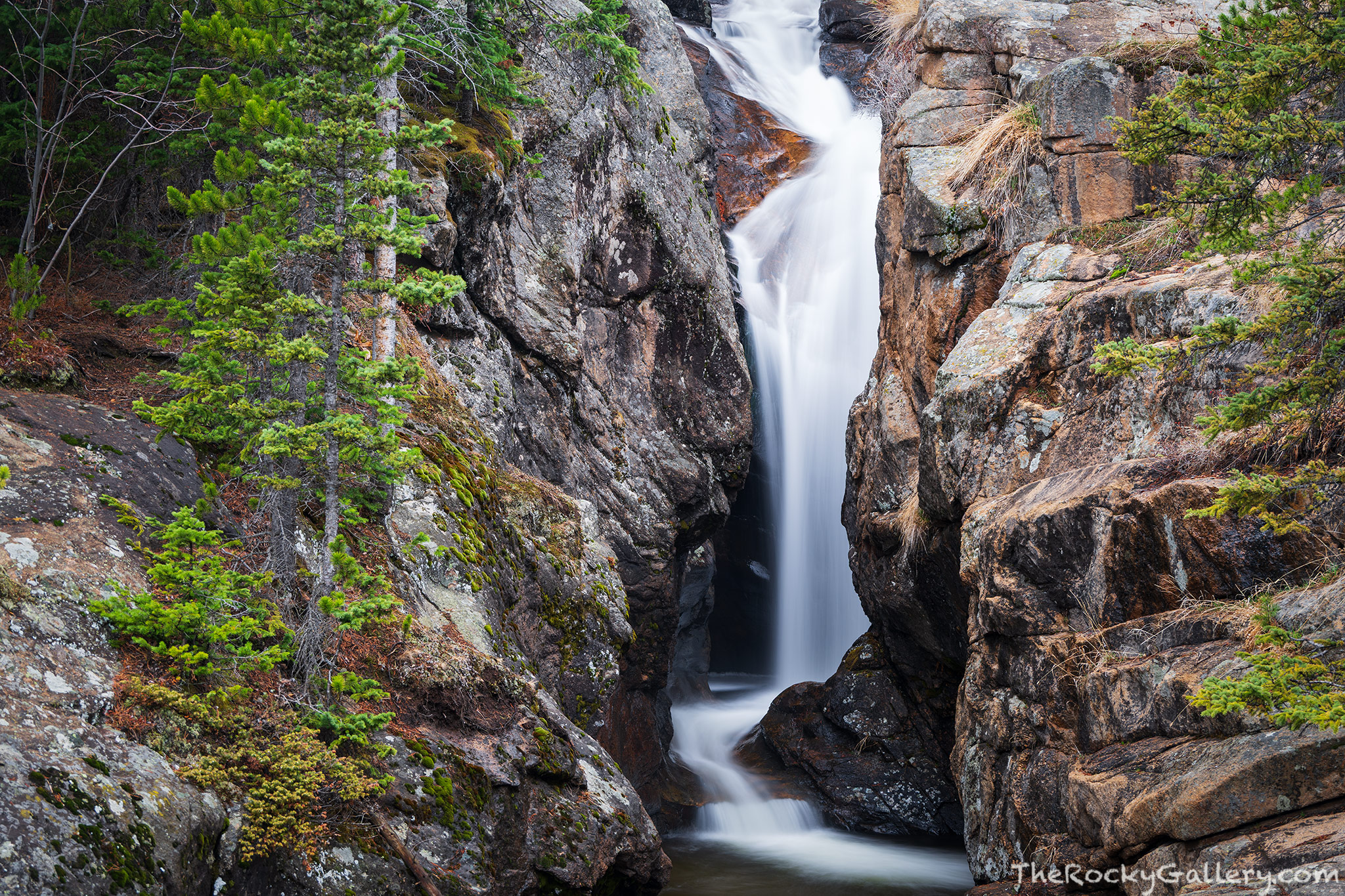
Chasm Falls is looking great right now. After hiking up a snow free Old Fall River Road on the first day of April, Chasam Falls is free from snow and looking like it usually does in the late spring or early summer. This warm weather pattern is making for some interesting photography currently in Rocky Mountain National Park. Technical Details: Nikon Z8, Nikkor 28-400mm F 4-8 VR Lens

On Wednesday of this week, the first day of April we were lucky enough to get some light rain and snow over the park. Sunrise was clouded over and so I decided to hike up to Chasm Falls along the still closed Old Fall River Road to see how the waterfall was looking in the overcast light. Old Fall River Road was completely free of snow which is odd for April 1st and Chasm Falls was also completely thawed and free of snow except for one tiny remaining patch above the falls. The falls were flowing at a moderate clip and its actually a great time to photograph Chasm Falls with the road closed as a normally busy location essential becomes a backcountry like experience. In a normal year I would expect some snow and ice to still be encasing the falls but once again Chasm Falls looks like it does in June more than early April.

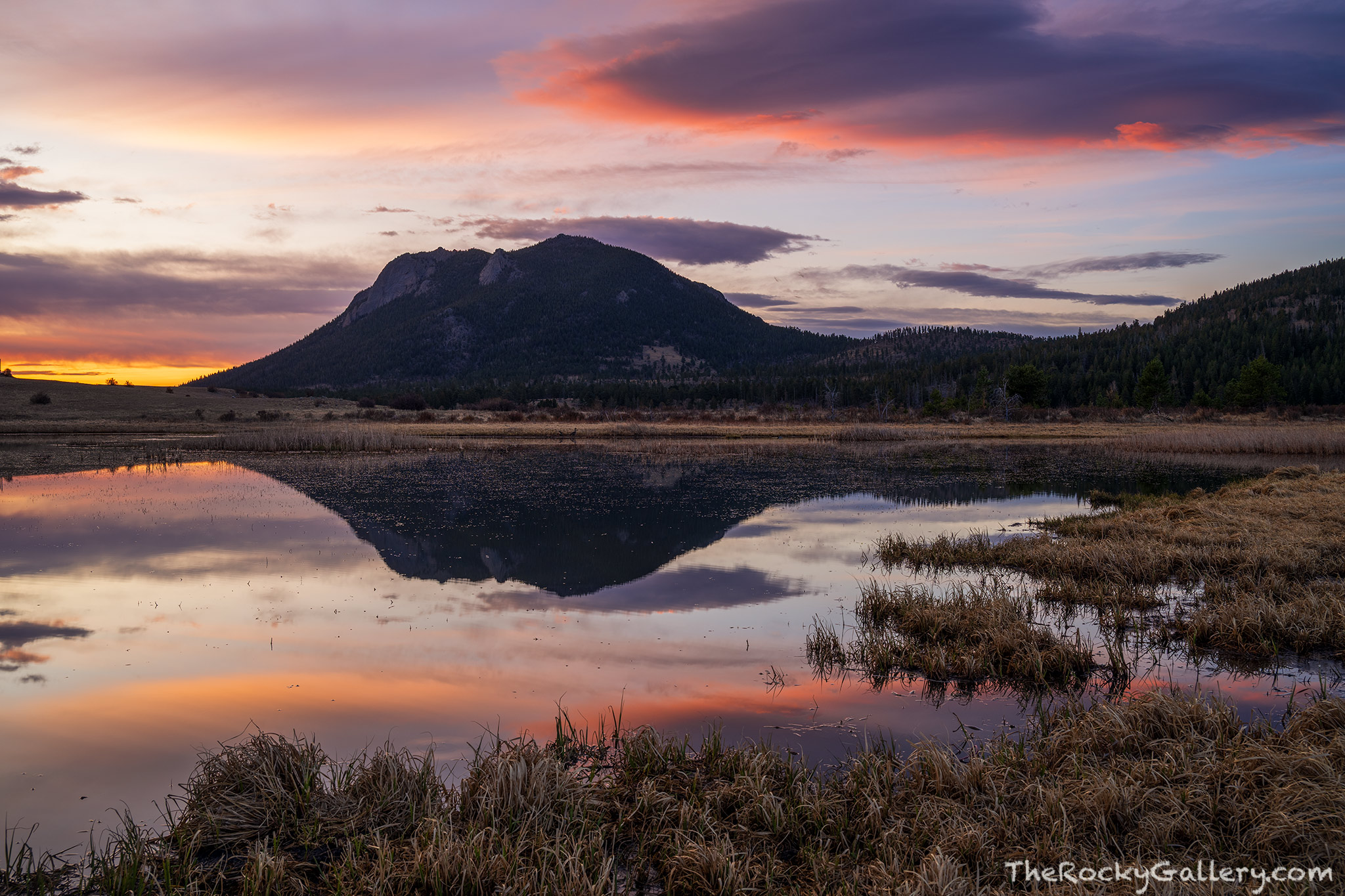
Sheep Lake sunrise on Monday morning in Rocky Mountain National Park. The grasses in Horseshoe Park are starting to turn green and Sheep Lakes while low on water is also free from ice. Soon the park service will close access to the meadow but its nice to photograph a reflection of Deer Mountain in Sheep Lake ice free. Technical Details: Nikon Z8, Nikkor 24-120mm F4 VR S lens

The warm weather pattern has not released its grip yet over Rocky. Every time the weather looks promising for a good dose of moisture in the form of snow or rain, the system underdeliver or peters out. I keep holding out hope we will have a rainy and snowy April and May as we transition towards even warmer summer days. Were never going to catchup to normal this year but here to hoping the pattern flips and more moisture finds its way over Rocky Mountain National Park this spring to assuage the overall oddity that has been winter and spring this season.

Its All Looking The Same

A spectaular and colorful sunrise unfolds over Moraine Park earlier this week in Rocky Mountain National Park. It feels like I’ve shot from this location or another simmilar location in Rocky all winter. Our mild dry and especially windy condtions have caused most of the colorful sunrises to unfold on the east side of the park. While the pattern has been the same and many of my images from this seaons look simmilar, I keep hoping we will get a change in the weather pattern over RMNP soon enough. Technical Details: Nikon Z8, Nikkor 24-120mm F4 S VR Lens

As I keep this blog lively and updated regarding the current conditions in Rocky Mountain National Park, I try to get out in the field as often as possible to photograph Rocky in all conditions in seasons. Scrolling through the past handful of updates on this blog, one could skim through the images posted and think many of these images where all shot on the same morning or during the same sunrise. As a matter of fact, I had this same thought earlier this week while scrolling through my recent image catalog.

The fact of the matter is, since about November we have had very mild, dry and windy conditions many mornings in RMNP. Very little snow, no real discernible snow storms that produced magical conditions for landscape photography the following morning and colorful sunrises with lenticular clouds, caused by our high winds creating all the action in the sky facing eastward towards the high plains as opposed to directly over the high peaks of the Continental Divide.

My motto with regards to photographing Rocky is to photograph in favor of the conditions, not against. So while I may head up to the park hoping to capture a beautiful sunrise over the Hallett or Longs Peak, Mother Nature may have other ideas in store such as a brilliant sunrise over the eastern portion of the park with rolling foothills in foreground. This season there has been a lot of adjusting to the conditions and going with Mother Nature doles out as opposed to fighting it.

As a result of Mother Natures decree, many of the landscape images in Rocky this season have been of beautifully colorful sunrises to the east with a snowless landscape as the foreground. It is what it is and its best to go with the flow but I’m really looking forward to a little change and hopefully some late season snowstorms that present some dynamic landscape and lighting conditions moving forward. While the longterm forecast for Rocky Mountain National Park shows more warm, windy and dry conditions ahead, I have to believe there will be opportunities ahead for things to stop looking all the same this year.

The Winter That Never Was

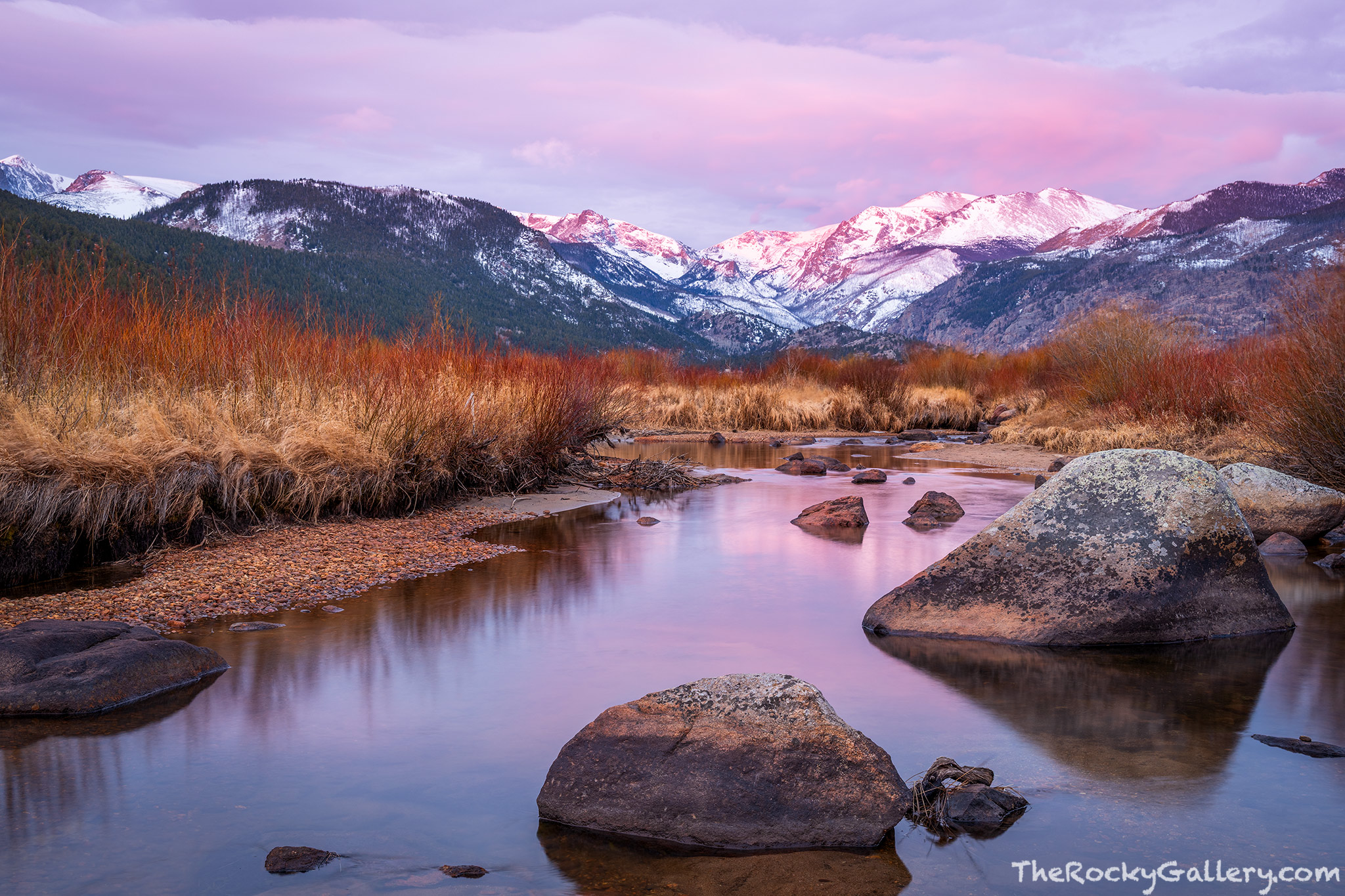
A beautiful late winter sunrise unfolds over Moraine Park with Stones Peak in the distance. The Big Thompson River is basically free of ice and the grasses and willows of Moraine Park are free of snow. Even up on the Divide the snow is sparse in Rocky Mountain National Park this year. Technical Details: Nikon Z8, Nikkor 24-120mm F4 S VR Lens

Finally it’s March. In a typical year here in Colorado that would mean the summer season in Rocky Mountain National Park was closing in. The mood and anticipation of warmer weather, alpine lakes and wildflowers is tangible. This year as we enter March, after a historically warm and dry winter one is hoping the months of March and April can turn back the clock to winter and perhaps wallop us with a few classic Front Range spring blizzards to help make up for the loss of winter and more importantly the moisture and snowpack we always need before the warm summer season.

It’s snowing today as I post this blog in RMNP so that’s a good sign but we still have a long way to go even to get to sustainable levels. Summer in Rocky is my favorite season but if we continue to move towards summer with the season being as dry as it has been there will be a noticeable tension with the park and forests so dry.

For the past month or so all my blogs posts seem to resonate on the fact that we need some snow in RMNP this winter season. We are still waiting but are hoping March and April will come through with some big dumps of snow. Though its March in Moraine Park, the landscape looks much more typical of something you would find in early November in Rocky than the first week of March. Technical Details: Nikon Z8, Nikkor 24-120mm F4 S VR Lens

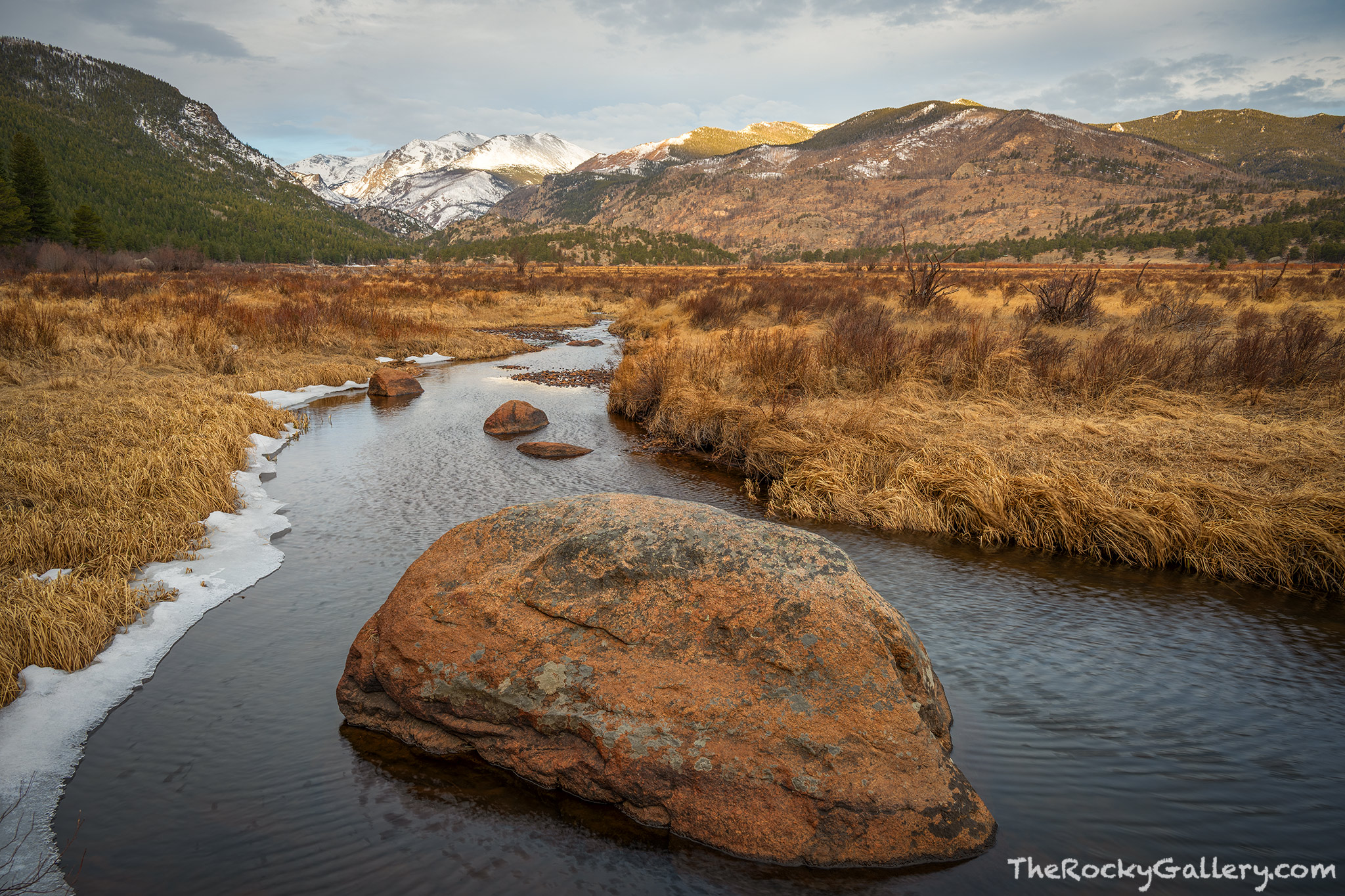
It’s been a strange experience photographing Rocky this winter. Streams that are usually frozen are flowing and free of ice, grasses and landscapes usually buried under feet of snow exposed and open to the elements. It’s created some unique opportunities for photography this winter in Rocky but it’s not something any of us would welcome.

I feel like I keep writing the same thing in all these blog posts. We need winter and we need moisture in the park. With todays weather system hitting the park, lets hope this is the start of some good spring moisture, With any luck, maybe I’ll be complaining that they are taking too long to open Trail Ridge Road for the season in May due to all the spring snow.

Keeping It Colorful

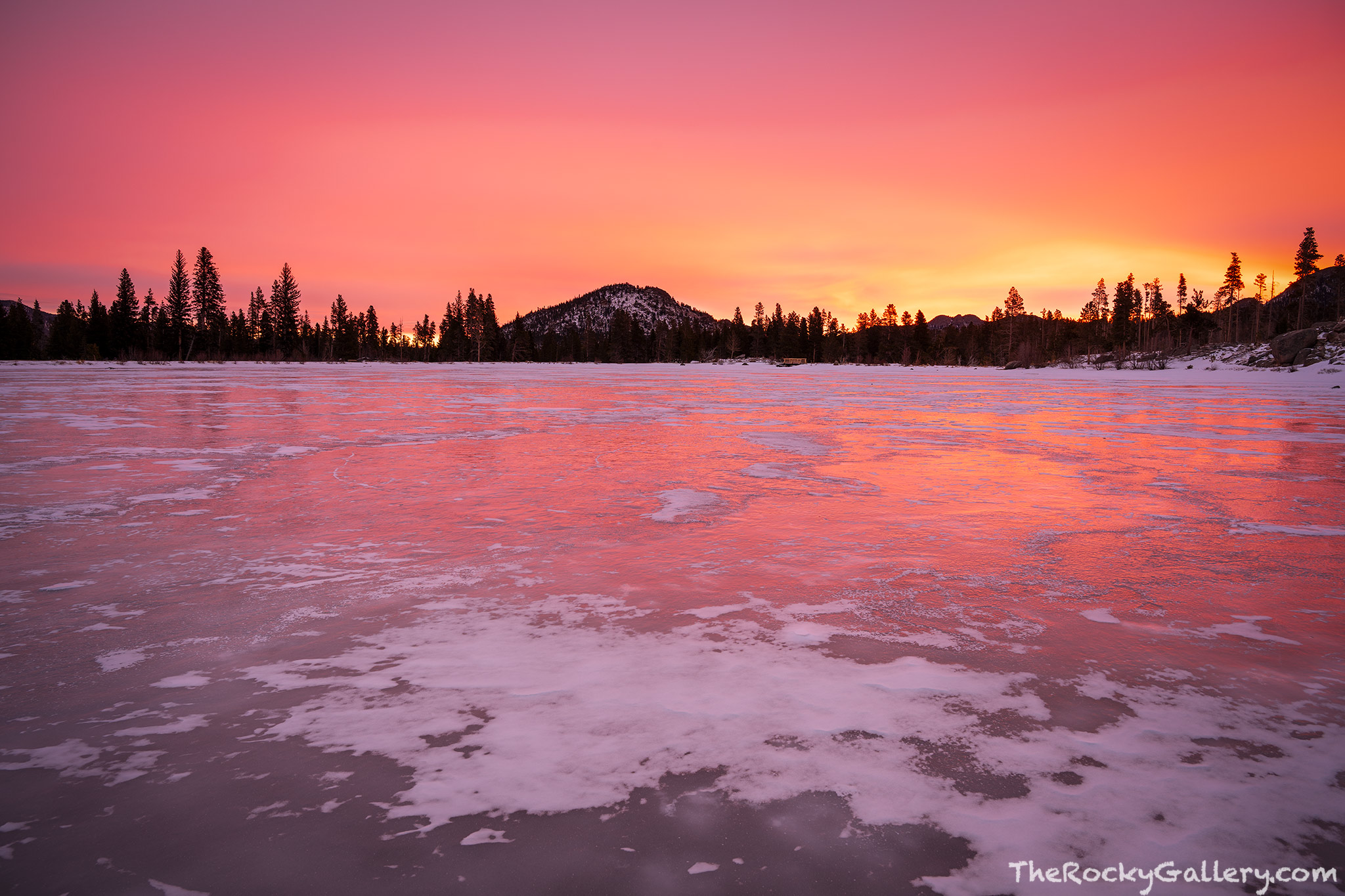
Sunrise last week over a frozen Sprague Lake. A lenticular cloud hung over the east side of the park and the divide was not visible as it was covered in clouds and snow squalls. Photographing colorful and dynamic scenes in Rocky Mountain National Park can be a challenge during the middle of winter. Technical Details: Nikon Z8, Nikkor 24-120mm F4 S VR Lens

The middle of winter can be a drought when it comes to creating colorful imagery in Rocky Mountain National Park. This has been made more difficult by our overall lack of snow this year which means we have lots of exposed brown grasses. Even so, there are still conditions I look for and tricks I use to try and pull some color from the landscape when appropriate.

As a former longtime 35mm and 4×5 film photographer, I admit I’m a sucker for a colorful landscape. Fuji Velvia was one of my favorite emulsions to photograph with and landscape photographers such as David Muench and Jack Dykinga where huge influences on my early work. Their love of the western landscape combined with their ability to pull subtle or not so subtle coloration from landscapes large and small was inspirational for me when I first started out.

One of the easiest ways to add a little pop to the landscapes of Rocky in not only the middle of winter but anytime of the year is to look for colorful sunrise and sunsets. For this to occur you need to have both sun and clouds. Thats more difficult then one would think as RMNP is often blessed or cursed with cloudless skies, especially at sunrise when the landscapes of Rocky are mostly more conducive to photography. That said, one of the most common types of cloud setups here on the Front Range of Colorado is a lenticular or wave cloud on the east side of the park.

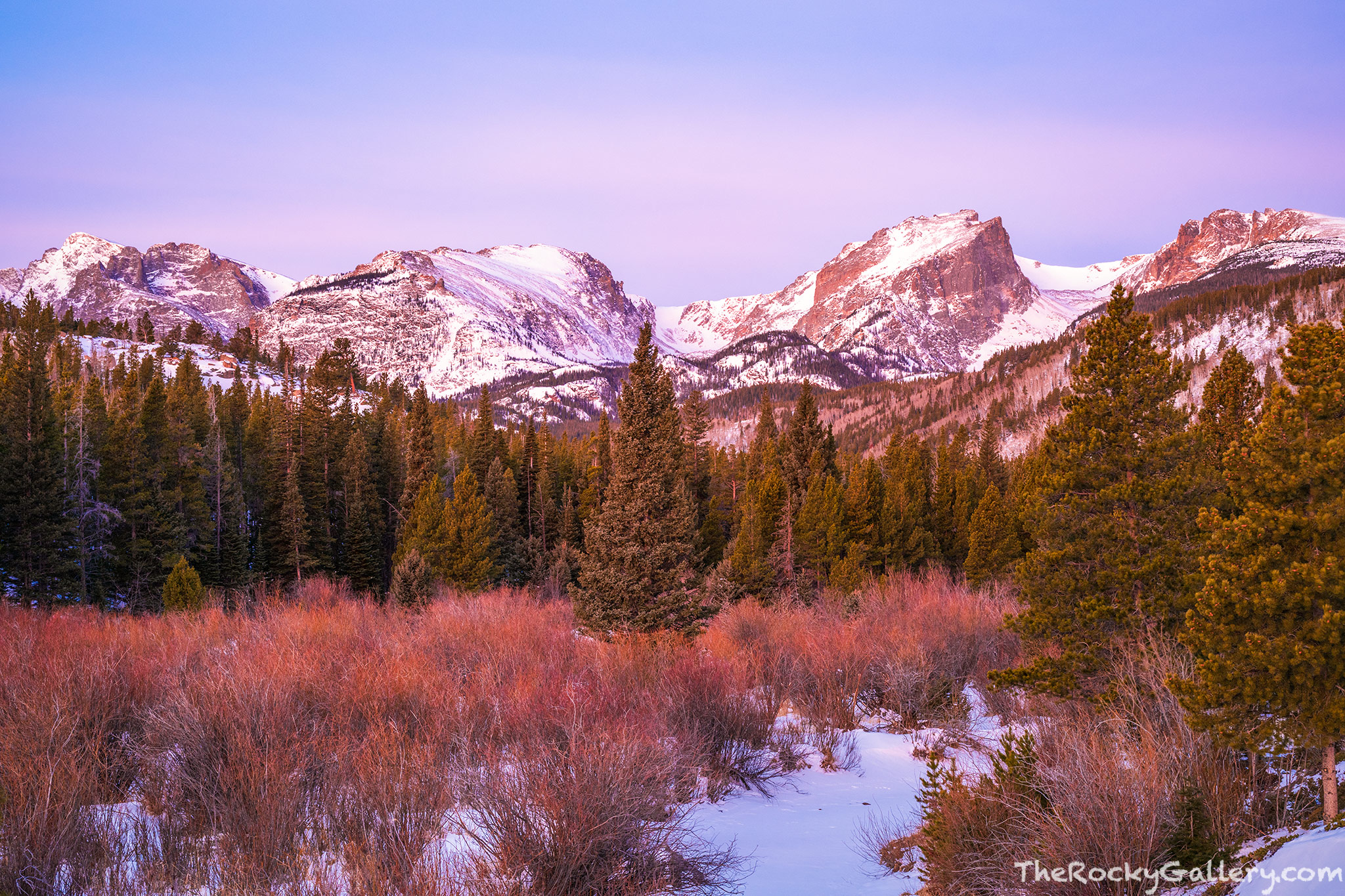
Photographing a colorful sunrise over the high peaks of Rocky Mountain National Park can be much more of a challenge then one would think. During the winter months, snow, clouds or just clear bluebird skies can make it difficult to get inspired to get the camera out. Yesterday, I photographed this subtle sunrise over Taylor,Otis,Hallett and Flattop Mountain from along Glacier Creek. I love this spot because the willows along Glacier Creek add some nice color to the foreground. Technical Details: Nikon Z8, Nikkor 24-120mm F4 S VR Lens

Lenticular clouds are caused by high winds aloft over the peaks. Rocky Mountain National Park has plenty of wind, so lenticular clouds on the east side of the park are common. Combine this with clear skies over the eastern plains of Colorado and voila, you have lots of colorful sunrise. The only issue with this setup, is often has to face east meaning you are shooting towards the Colorado plains or smaller and less iconic foothills on the east side of the park.

Another way to pull some color from the park in the middle of winter is to use the grasses, willows and trees when possible. Ponderosa Pines are spectacular to photograph all year but their red colored trunks add plenty of color in the winter, especially when combined with frost or snow. Grasses can add color and oftentimes brown and red grasses in the meadows can add pattern and form to an image. Willows are amongst one of my favorite winter subjects. Their red, brown and yellow branches create some beautiful palettes in the often drab landscapes of winter.

Regardless of the season, there is always opportunities for landscape photographers to take advantage of the seasonal conditions to create images. Some seasons are certainly more difficult to do so, but these images often help to bring out the beauty of RMNP even in the off season. More often than not, a visit to Rocky in the winter is less likely to find hillsides of pine trees and peaks covered in fresh snow, but a mix of exposed landscapes and residual snow from previous storms. Keep and open mind and use some of these suggestions and photographers can expect to create some rewarding imagery of Rocky Mountain National Park even in winter.

Come On Winter

As we move into February in Rocky Mountain National Park, the sun keeps moving farther to the north making for more favorable lighting conditions over RMNP. The Diamond and Longs Peak catch first light as snow squall moves past Rocky’s highest peak. Even though it’s February, the landscape has very little snow. We are hoping to see big changes in the coming days as well as the potential for a pattern flip to our dry, warm season so far. Technical Details: Nikon Z8, Nikkor 24-120mm F4 VR S lens

It’s been a bit slow here on the blog for the past few weeks. I’ve been itching to write and itching even more to get out with the camera and get some winter photography in. It’s just has happened yet as we continue to have one of the driest and warmest winter seasons on record. We have had plenty of wind but that’s a little more difficult to convey in photographs then inches of snow piled high on the ground and trees.

A colorful sunrise unfolds behind Deer Mountain on a February morning in Rocky. It’s winter here in RMNP but by the looks of this image there is no snow to be found on the flanks of Deer Mountain or Beaver Meadows just below. Technical Details: Nikon Z8, Nikkor 24-120mm F4 VR S lens

The few times I’ve actually had decent lighting conditions, there has been little in the way of snow covering the landscape of Rocky Mountain National Park. As I write this, it looks like we are finally going to see some changes and what could possibly be some of our better snow so far this winter in Rocky. A large winter storm is going to be heading east over from the Pacific, the Sierras and into Colorado by tomorrow. This storm should bring some much needed snow to Colorado and especially the west side of RMNP.

I’m hoping this is the first of a bunch of drought busing late winter/spring storms that can easily help to make up for the lack of snow. While the moisture is badly needed, getting some interesting winter conditions for us photographers would be the proverbial icing on the pine tree.

Blue January

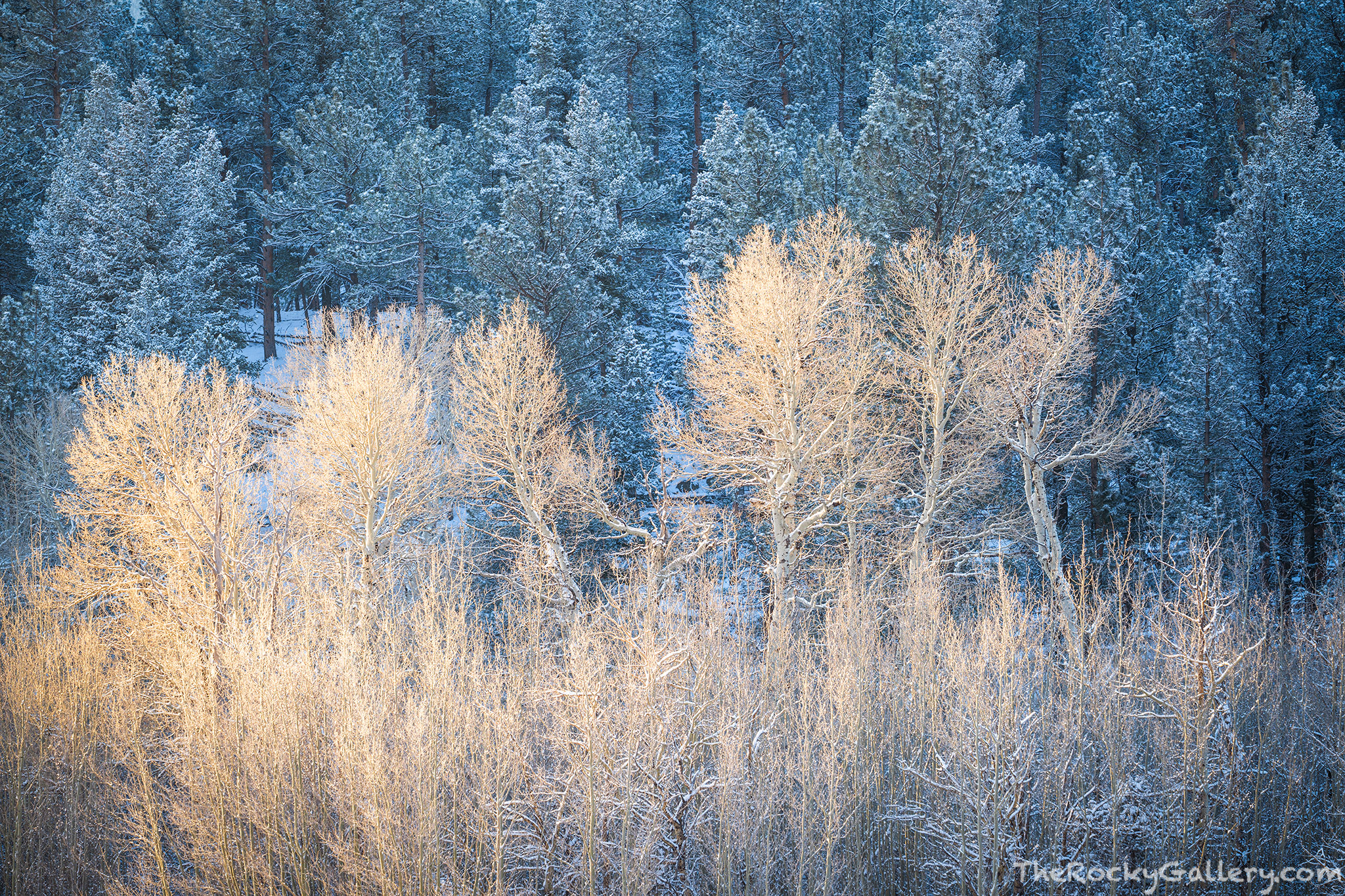
Sunrise illuminates the frozen tips of the aspen trees of Beaver Meadows on a snowy morning last week in Rocky Mountain National Park. Photographing winter scenes this year in Rocky has been difficult but hopefully that changes soon enough and more landscapes like this one present themselves. Technical Details: Nikon Z8, Nikkor 100-400mm F4-5.6 S VR Lens

Winter finally made an appearance this past week in Rocky. We finally had some colder temperatures and even some snow to cover the ground. Winds have continued to remain a nuisance though, and lucking out on a ‘calm’ morning sunrise has been tricky.

Frankly, there has not been much in the way of opportunities to photograph the past few months. I’m always itching to get out in the field and shoot and a bad day in Rocky Mountain National Park is better than a good day pretty much anywhere on the planet so it never hurts to visit the park to see what opportunities may present themselves.

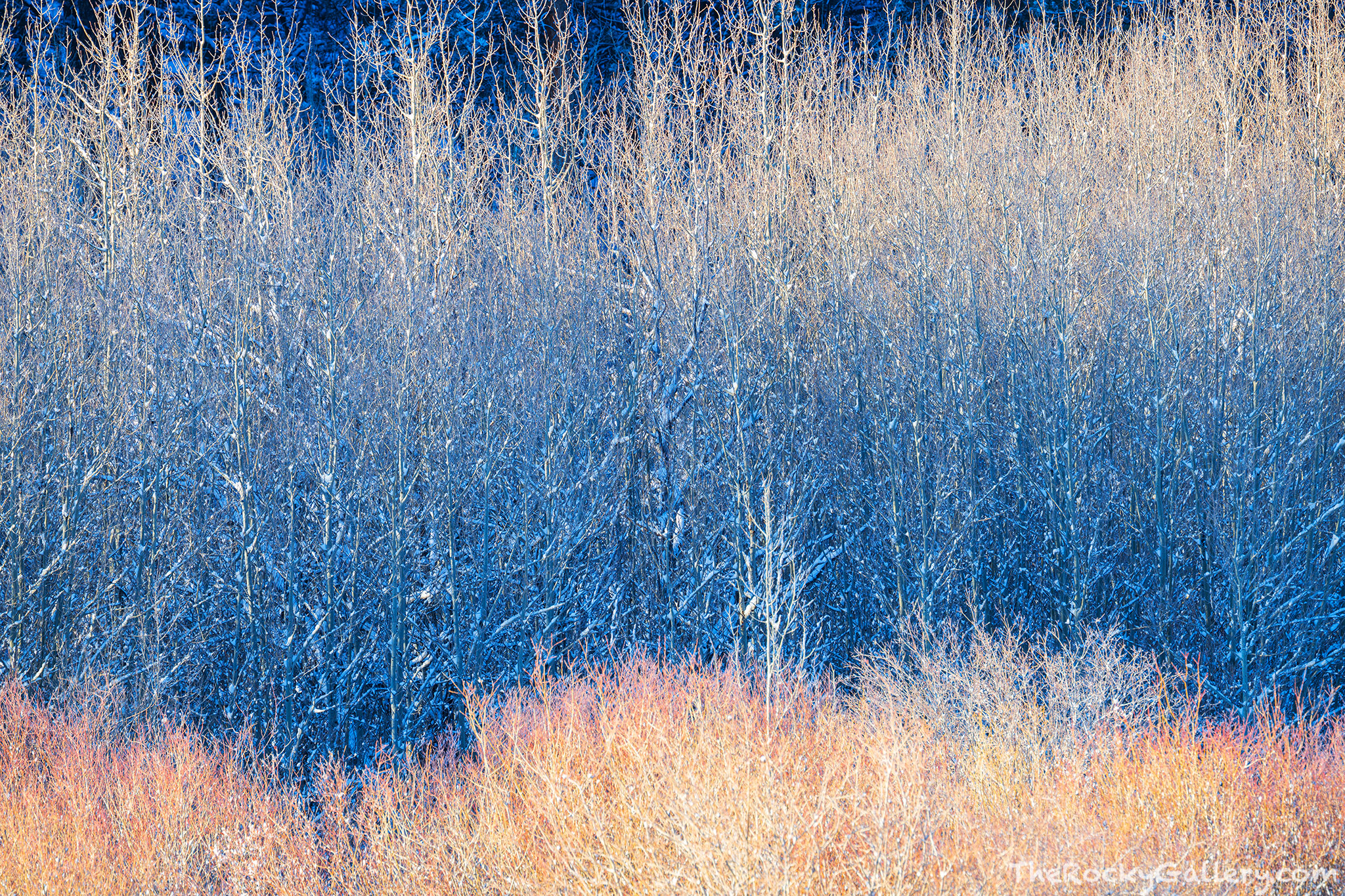
I love the warm and cool hues the blue winter light presents on the landscape of Rocky Mountain National Park in January. Combine that with the warm red branches of winter willows and you get some nice contrasting color in a landscape where that can be a challenge mid winter. Technical Details” Nikon Z8, Nikkor 100-400mm F4-5.6 S VR Lens

With about 2 inches of light snow and some frost and glaze on some of the trees, the willows, aspens and pines caught my eye just inside the park boundary in Beaver Meadows. Frosted barre aspen trees with snow covered Ponderosa Pines as a backdrop caught my eye just as the sun we lighting the crystalline aspen trees in the foreground. Finding color this time of year can be difficult but the combination of warm and cool hues made for some interesting compositions.

The winter willows mixed in with the aspen trees of Beaver Meadow add some nice contrast and color the otherwise cool blue scenes of mid winter. As we start to make our way into mid winter here in RMNP, lets hope we have lots of upcoming opportunities for snow and winter landscapes as its been a sparse season so far.