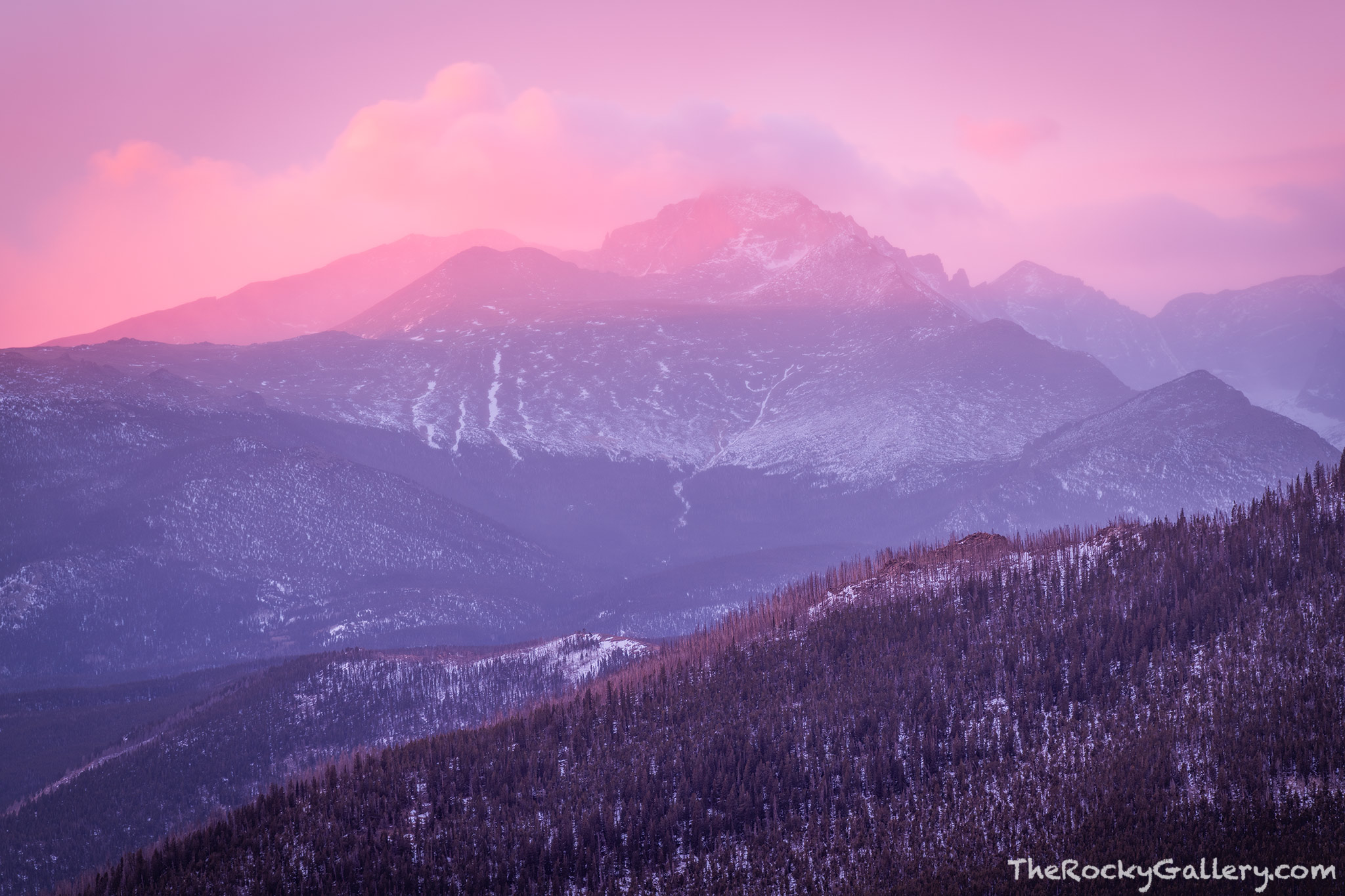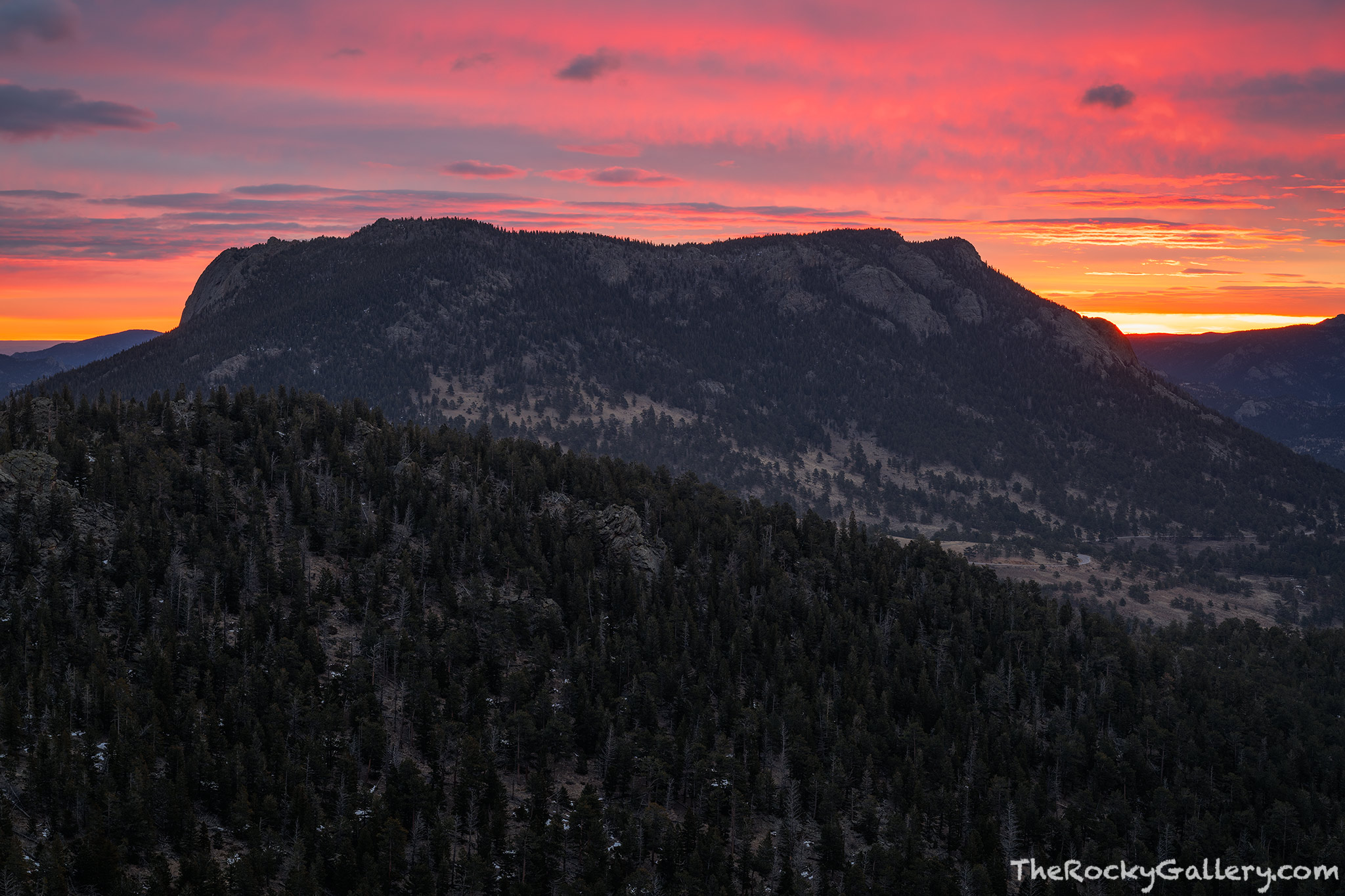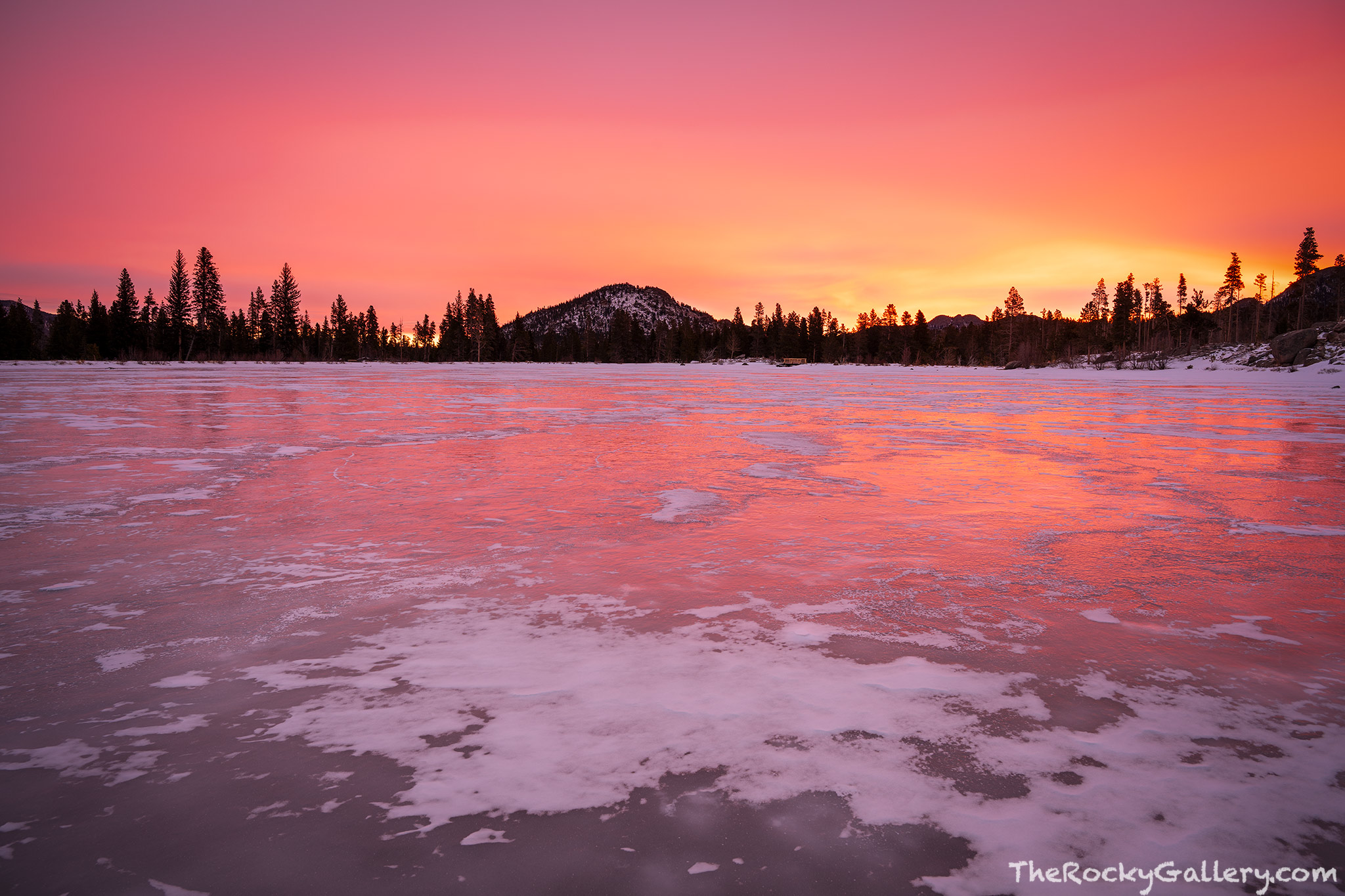
The middle of winter can be a drought when it comes to creating colorful imagery in Rocky Mountain National Park. This has been made more difficult by our overall lack of snow this year which means we have lots of exposed brown grasses. Even so, there are still conditions I look for and tricks I use to try and pull some color from the landscape when appropriate.
As a former longtime 35mm and 4×5 film photographer, I admit I’m a sucker for a colorful landscape. Fuji Velvia was one of my favorite emulsions to photograph with and landscape photographers such as David Muench and Jack Dykinga where huge influences on my early work. Their love of the western landscape combined with their ability to pull subtle or not so subtle coloration from landscapes large and small was inspirational for me when I first started out.
One of the easiest ways to add a little pop to the landscapes of Rocky in not only the middle of winter but anytime of the year is to look for colorful sunrise and sunsets. For this to occur you need to have both sun and clouds. Thats more difficult then one would think as RMNP is often blessed or cursed with cloudless skies, especially at sunrise when the landscapes of Rocky are mostly more conducive to photography. That said, one of the most common types of cloud setups here on the Front Range of Colorado is a lenticular or wave cloud on the east side of the park.
Lenticular clouds are caused by high winds aloft over the peaks. Rocky Mountain National Park has plenty of wind, so lenticular clouds on the east side of the park are common. Combine this with clear skies over the eastern plains of Colorado and voila, you have lots of colorful sunrise. The only issue with this setup, is often has to face east meaning you are shooting towards the Colorado plains or smaller and less iconic foothills on the east side of the park.
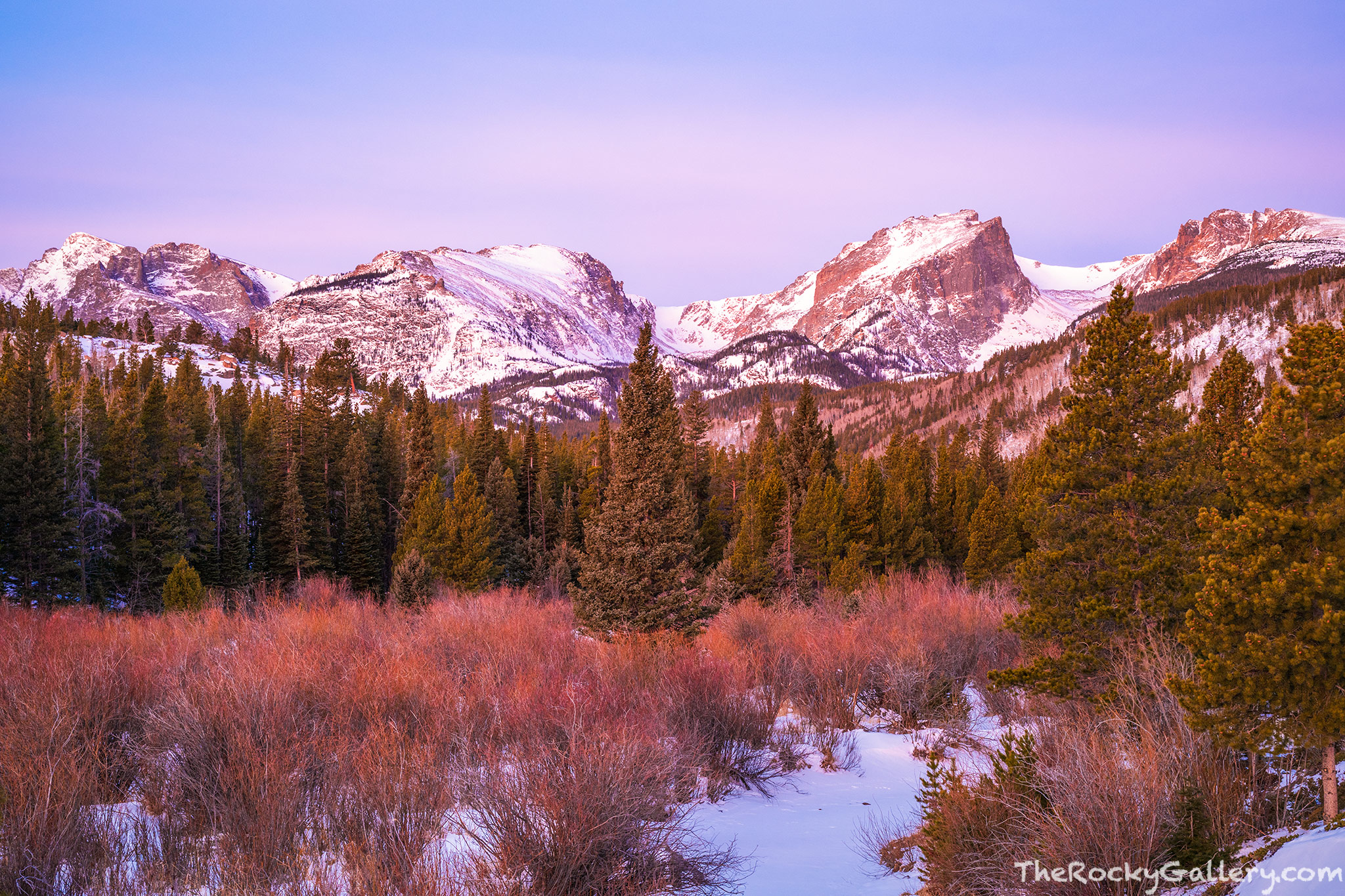
Another way to pull some color from the park in the middle of winter is to use the grasses, willows and trees when possible. Ponderosa Pines are spectacular to photograph all year but their red colored trunks add plenty of color in the winter, especially when combined with frost or snow. Grasses can add color and oftentimes brown and red grasses in the meadows can add pattern and form to an image. Willows are amongst one of my favorite winter subjects. Their red, brown and yellow branches create some beautiful palettes in the often drab landscapes of winter.
Regardless of the season, there is always opportunities for landscape photographers to take advantage of the seasonal conditions to create images. Some seasons are certainly more difficult to do so, but these images often help to bring out the beauty of RMNP even in the off season. More often than not, a visit to Rocky in the winter is less likely to find hillsides of pine trees and peaks covered in fresh snow, but a mix of exposed landscapes and residual snow from previous storms. Keep and open mind and use some of these suggestions and photographers can expect to create some rewarding imagery of Rocky Mountain National Park even in winter.