A Little More Change

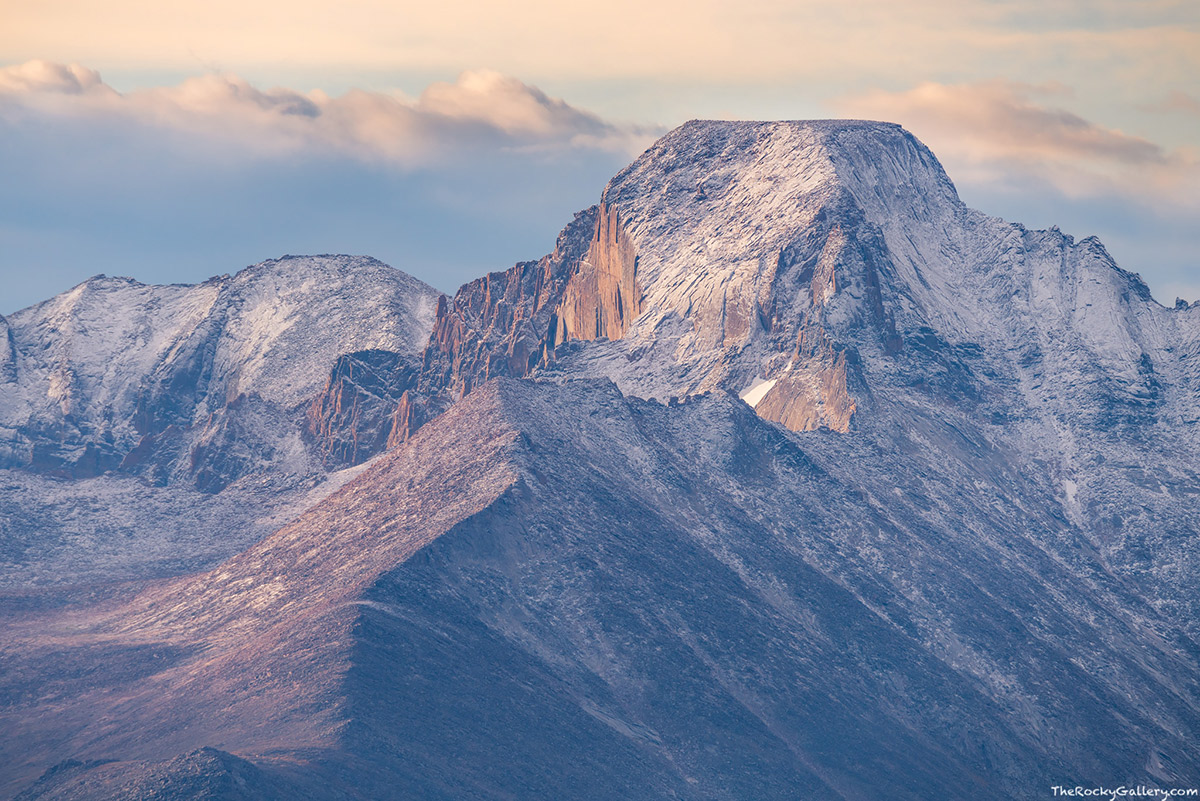
The date on the calendar says August 26th, but the conditions in Rocky Mountain National Park on this morning seems more like those found in winter. I arrived in RMNP this morning to find the landscape above 11,500 ft covered with a nice dusting of fresh snow. Longs Peak looked great covered in snow as seen in this view from Trail Ridge Road and the Rock Cut. Technical Details: Nikon D810,Sigma150-600mm 5-6.3 DG HSM OS C lens

No sooner had I finished writing and posting my previous blog post about current conditions in Rocky Mountain National Park and the subtle changes in the seasons before the weather in RMNP does what it’s famous for, change dramatically again.

True to form, not only are there signs of autumns impending arrival, but the weather in Rocky Mountain National Park on Friday morning decided to remind us that not only is fall right around the corner, but so is winter. While rain had fallen overnight in most elevations of RMNP on Thursday night, it was cold enough to put a light but healthy dusting of fresh snow on the landscape above 11,500 ft.

I drove up Trail Ridge Road early Friday morning looking to see if there would be any breaks in the cloud cover that morning for sunrise. Approaching the Forest Canyon overlook I could see it was more than just droplets of dew on the grasses and tundra and that there was a light dusting of snow right near timberline. Taking a moment to take a good look at Longs Peak in the predawn light, I could see it was also coated in fresh snow. While its a little early, snow in late August on the high peaks is fairly common. Heck it makes for some nice photographs as well so I’m certainly not complaining, I mean whats better than photographing 3 seasons all in the course of a couple of days?

So lets recap the current conditions in Rocky Mountain National Park. It’s still summer. Most of the park is still green, lakes are free of ice and trails are clean and clear. Signs of autumn have started to rear their head in the nooks and crannies of RMNP. A few aspen trees here and there are showing some color and some of the smaller ground foliage has turned red and orange. Lastly, even though it August, we can and do get occasional snow events covering the summer landscape with a winter like cloak.
After The Icons

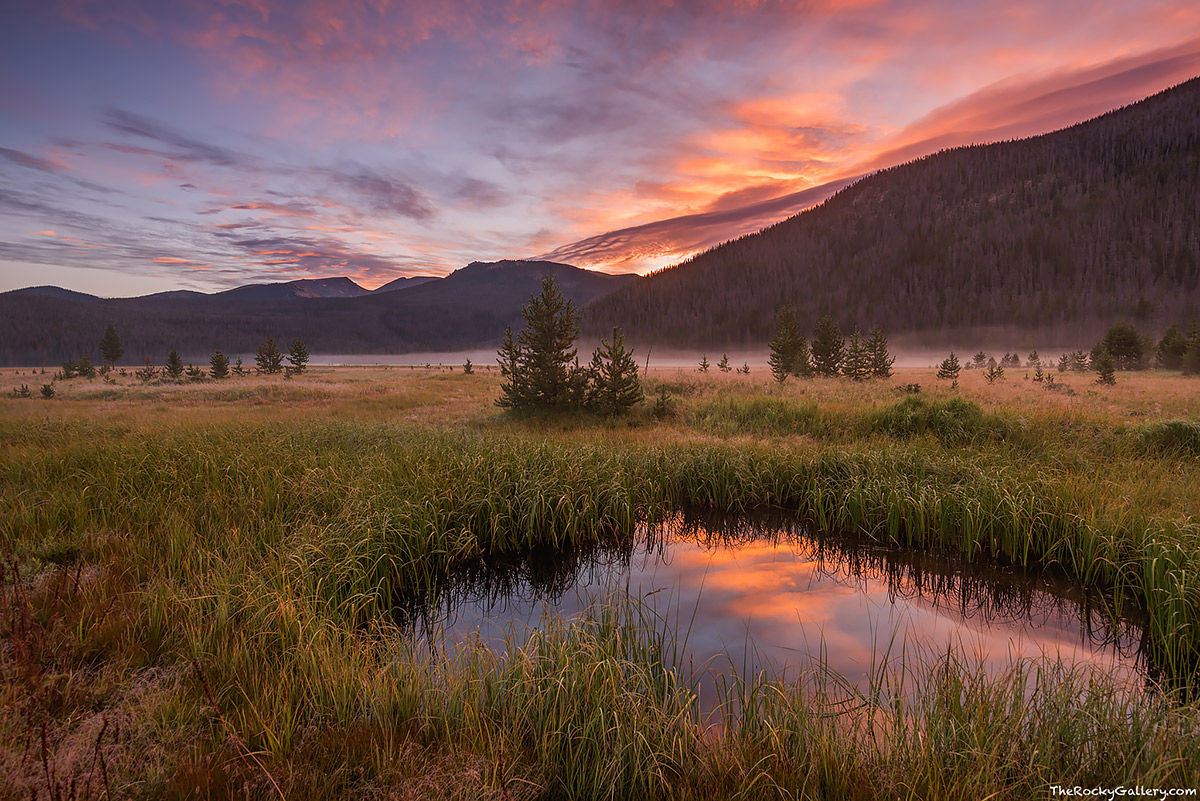
Sunrise over Big Meadows on the west side of Rocky Mountain National Park. Many would not consider Big Meadows one of the must photograph locations in Rocky Mountain National Park. Many hikers and photographers will pass through Big Meadows but it's beauty is more subtle and often ignored. Every location in Rocky has its own beauty, it's just a matter of capturing each location under the right conditions. Technical Details: Nikon D810, Nikkor 16-35mm F4 AF ED VR
Sunrise over Big Meadows on the west side of Rocky Mountain National Park. Many would not consider Big Meadows one of the must photograph locations in Rocky Mountain National Park. Many hikers and photographers will pass through Big Meadows but it’s beauty is more subtle and often ignored. Every location in Rocky has its own beauty, it’s just a matter of capturing each location under the right conditions. Technical Details: Nikon D810, Nikkor 16-35mm F4 AF ED VR
Dream Lake, The Rock Cut, The Loch, Chasm Lake, Moraine Park all these constitute some of the most beautiful locations in Rocky Mountain National Park. These qualify as icons and as such photographers flock to these locations when visiting Rocky Mountain National Park. These locations are iconic because they are stunningly beautiful locations with or without a camera in hand. We all love photographing these icons of RMNP, but what about photographing locations in Rocky that are less iconic but have their own unique beauty and aura to them?.

Photographing non-iconic locations is by far more challenging then setting up along the shore of Dream Lake to photograph sunrise. For me at least, every nook and cranny of Rocky Mountain National Park holds beauty. That beauty may be more subtle than the knock your socks off, in your face beauty of Dream Lake but its there if you look for it. I find some of my most rewarding images of Rocky Mountain National Park are ones taken in locations that other photographers feel are either blasé or ones other photographers consider somewhat pedestrian when it comes to the landscape.

Every location in Rocky is beautiful and for me it’s about finding the right conditions and light to bring out the beauty and mood of a given location. Take for example the image above. Big Meadows on the west side of Rocky Mountain National Park is an often visited location. That being said you wont find many images of Big Meadows in books, calendars or postcards. For the most part, hikers and photographers to Big Meadows will travel right on through on their way to what they consider more scenic areas of Rocky.

I’ve done this very thing many times myself but each time I pass through Big Meadows I think what a beautiful location it is and what conditions would I need to be able to convey the mood and spirit of this location. Big Meadows is exactly what the name describes it as. It’s a large grassy, marshy meadow surrounded mostly by some of Rocky more nondescript and less iconic peaks. There is no lake here, no giant granite mountain face towering over the the meadow. It’s a more subtle beauty, one where you are more likely to be photographing alongside a moose grazing along Tonahutu Creek then alongside another photographer.

So while its fun photographing the iconic locations of Rocky Mountain National Park, I feel it is just as important if not more so to photograph the beauty of the less iconic locations. A few weeks back conditions were perfect for what I had envisioned would be necessary to successfully photograph Big Meadows. Clouds drifted over the mountains and fog was present in the meadow. I had made a mental note to myself that the next time conditions unfolded like these I should make an attempt to hike into Big Meadows and see if I could capture the feel and mood of this beautiful spot.

I’m sure Dream Lake would have yielded a beautiful image as well this particular morning, but squishing around the wet grasses and soil of Big Meadows on this magical morning was not only worth it, but I was rewarded with an image of Big Meadows that I think perfectly captures the beauty of this location.

A Little Bit Late

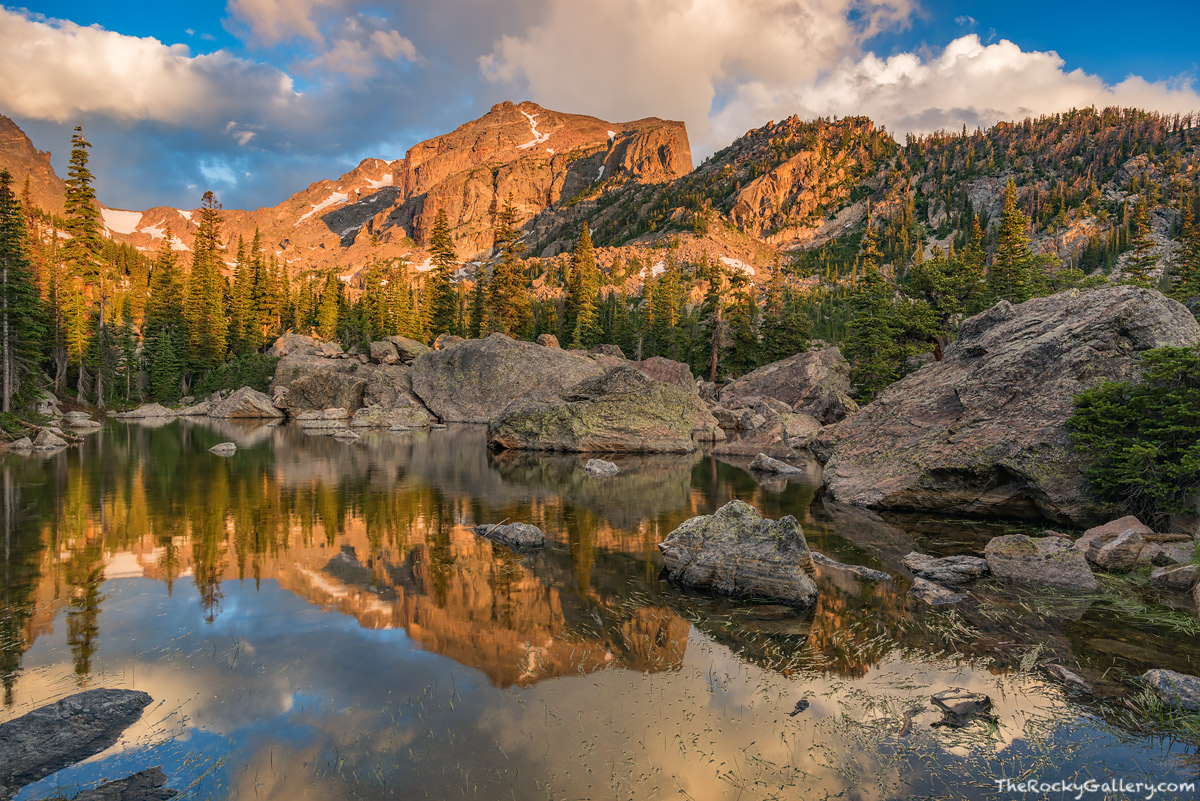
As landscape photographers, we all want to photograph locations in the most dramatic lighting possible. Photographers spend all year planning on  photographing a location in Rocky Mountain National Park during the summer months only to be disappointed when the dramatic lighting they pined for does not appear. My advice, don't fret and make sure you dont dismiss the quality and beauty of light even 20-25 minutes after sunrise. I photographed this image near Lake Haiyaha of Hallett Peak at sunrise under just these conditions. The lighting and clouds though not as dramatic as first light produced one of my favorite images of this location to date. Technical Details: Nikon D810, Nikkor 20mm F1.8 AF G lens
As landscape photographers, we all want to photograph locations in the most dramatic lighting possible. Photographers spend all year planning on photographing a location in Rocky Mountain National Park during the summer months only to be disappointed when the dramatic lighting they pined for does not appear. My advice, don’t fret and make sure you dont dismiss the quality and beauty of light even 20-25 minutes after sunrise. I photographed this image near Lake Haiyaha of Hallett Peak at sunrise under just these conditions. The lighting and clouds though not as dramatic as first light produced one of my favorite images of this location to date. Technical Details: Nikon D810, Nikkor 20mm F1.8 AF G lens
It’s primetime right now for summertime photography in the high country of Rocky Mountain National Park. The snow has melted, wildflowers are peaking and the alpine tundra above timberline is green and vibrant. This is the time of year many photographers wait in anticipation for during the long winter months. For many photographers, this is the time of year they head out into the backcountry and try to capture some iconic Colorado landscapes adorned in their summer splendor.

With this comes all the planning, logistics and 2 AM wakeup calls in order to be in that perfect spot along an alpine lake or tarn, camera on tripod waiting for that decisive moment when the sun breaks the horizon and casts it’s warm beautiful glow on the mountains. All is going swimmingly until one problem arises. The peaks are still not illuminated and your watch says the sun should have risen 20 minutes ago.

You scramble to a high point and see that a thin layer of clouds on the eastern plains of Colorado is holding back that intense color the first few minutes of light produce and the light you have been dreaming about photographing all year. Dread starts to set in and you start to question your plan, waking up at 2 AM and hiking a handful of miles in the dark of night just to get here in time. You can see the sun is about to make it above the thin layer of clouds on the horizon but you are disappointed you wont have the screaming, intense light you dreamed about.

My advice in this situation?, don’t fret and stay ready to fire the shutter. Maybe the internet is full of images that picture this location in conditions that rival even the most dramatic Albert Bierstadt painting. Guess what the reality is?. Even 20 minutes after sunrise the lighting can be nearly as dramatic as first light. In many cases I find more subdued lighting to be more pleasing and for many non-photographers, the lighting is more relatable to what they may see(normal people think early means 6 AM). I want to photograph those first few minutes of light just as much as the next photographer, but I find it important to stay in the moment, find a strong composition and allow mother nature to do the heavy lifting, even if its 20 minutes after sunrise.

Backward Dreams

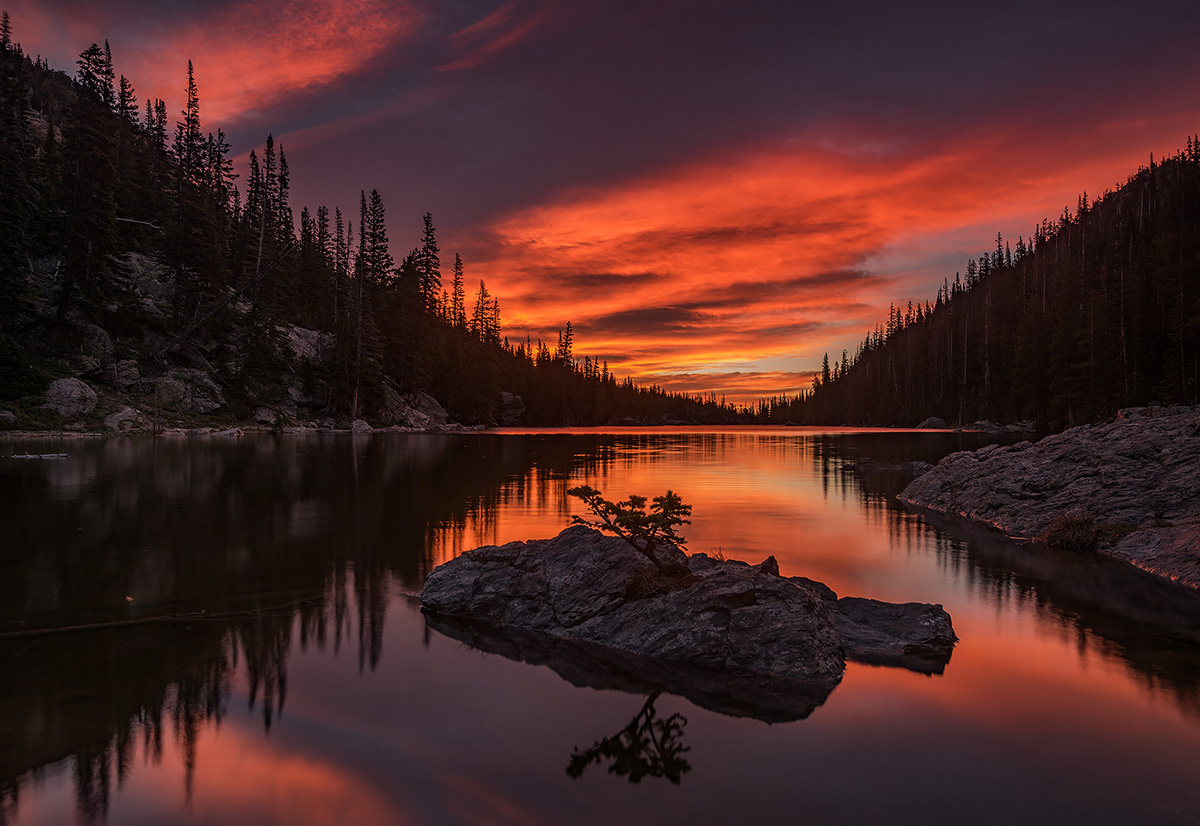
One of the tips I stress with photographers who are out with me on photo tours or are soliciting advice on photographing Rocky Mountain National Park is to be prepared to change your plans and look for alternative images. We all like to capture the iconic images when visiting Rocky Mountain National Park but its important to remember that some of your best images may come for changing up your game plans. This was the case for me last week when I opted to look the otherway and photograph Dream Lake from its inlet instead of the iconic image from the more traditional outlet of Dream Lake. Clouds are often present just to the east of RMNP and may not be hovering over the peaks. Maximize your chances of making dramatic imagery by keeping the option of shooting away from the icons to capture some beautiful lighting. Technical Details: Nikon D810, Nikkor 16-35mm F4 AF-S VR lens
I just wrapped up a busy week of photography and photo tour/guiding. Summer season is in full swing both weather and visitation wise. Lots of people in Rocky Mountain National Park again enjoying all she has to offer and lots of opportunities in Rocky for photographers.

In between 3 really good sunrises last week I was reminded of something I preach to clients and those seeking advice on photographing Rocky Mountain National Park. Make sure you remember to look behind you. All to often we head out into Rocky dead set on capturing the perfect iconic Colorado view of a jagged mountain peak reflecting perfectly in the still waters of a tarn or lake.

When the conditions are right and you have the opportunity to photograph peaks reflecting in still mountain lakes you should cherish and take advantage of the situation. While I have many of these images in my Rocky Mountain National Park portfolio, many have taken years and years and dozens of visits to these locations to capture. Wind, clouds, lack of clouds and poor lighting can all work against you in Rocky’s alpine environment. Whats important is to keep and open mind and be prepared to look for alternative images to what you planned on photographing.

Last Sunday I had just this type of scenario unfold before me. As I always am, I was up long before dawn checking out conditions. Cloud cover was ample and there were nice breaks to the east of Rocky Mountain National Park. I had a short amount of time but decided that I would head up to some mountain lake and see how sunrise unfolded. As I approached the Bear Lake parking lot it became apparent that the cloud cover was mostly east of the mountains and not directly over them.

This is a common setup for clouds in Rocky. Winds aloft will often cause the skies directly over the peaks to be clear of cloud cover while the skies just to the east of the mountains will have cloud cover or lenticular clouds that will explode with color as the sun rises. When conditions are like this you should look to play the hand your dealt and find a shot that is going to maximize the drama and conditions unfolding before you.

While Dream Lake may be one of the top five most iconic images in all of Colorado, the traditional image from the outlet of Dream Lake on the it’s east side was not going yield an average image with clear blue skies and some nice color on the peaks. I opted to head to the inlet of Dream Lake and photograph looking east. The cloud layer east of Dream Lake would explode with color and better yet, the west side of Dream Lake was mostly sheltered from the winds that were raking the surface on the east side of the lake, hence ruining ones chance for a reflection.

All in all It worked out to be one of the more dramatic mornings I’ve spent at Dream Lake. If I had stayed with my original plan I would have captured Dream Lake with a choppy lake surface and little color. As I always like to say, have a good game plan for your morning shoot, but be prepared to find an alternative image or location if conditions don’t materialize like you intended them to do. Doing this will open up many more opportunities for photography in Rocky Mountain National Park as well as add new imagery to your portfolio.

Summers In The Meadow

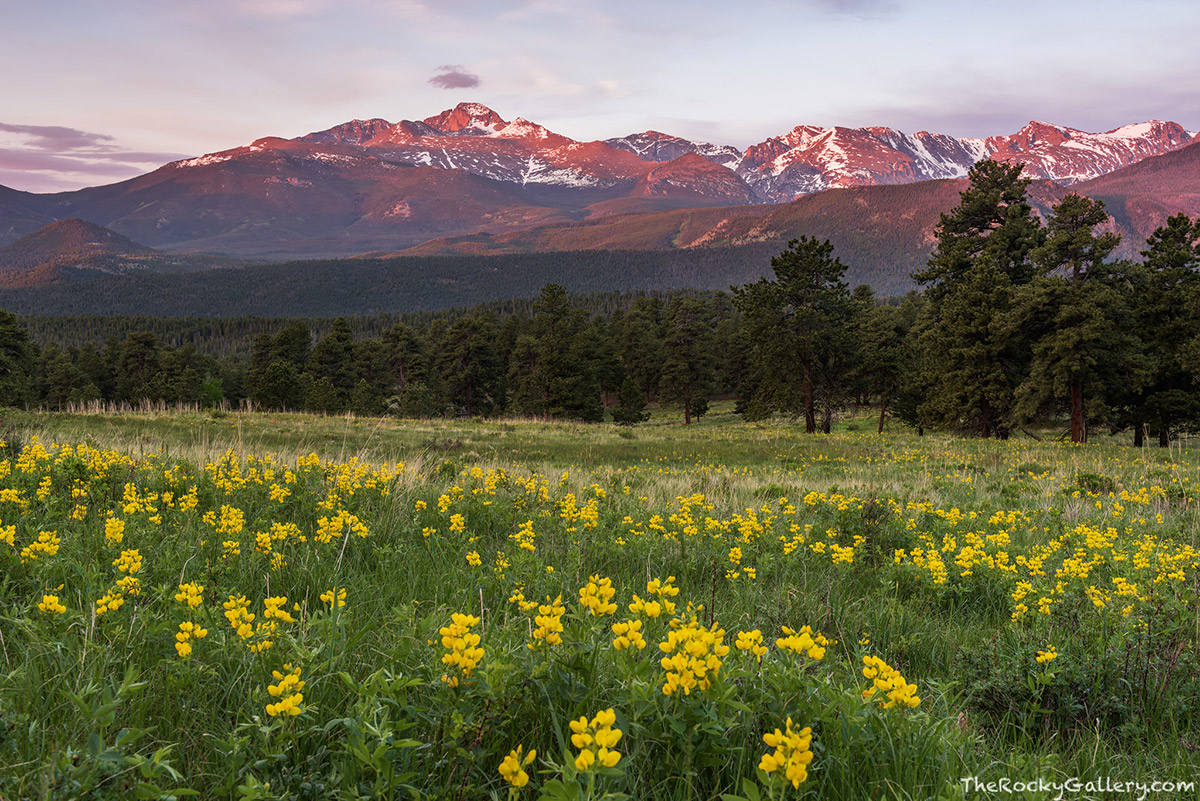
It seems as though summer arrived overnight in Rocky Mountain National Park. A few warm sunny days and the snow is quickly melting and the early season wildflowers are in bloom all over the lower to mid elevations of Rocky Mountain National Park. The Golden Banner looks beautiful around Beaver Meadows and made a great subject for this image of Longs Peak at sunrise last week. Technical Details: Nikon D810, Nikkor 24-70mm F2.8 AF
The wildflower parade is now well underway in Rocky Mountain National Park. Lots of flowers blooming all over the park and it’s only June. Golden Banner, Wild Iris, Calypso Orchids, Marsh Marigolds, Aster and many others can now be found. I’m always amazed at not only how quickly the weather can change in Rocky Mountain National Park, but also how a week of mild weather can catapult us so quickly to summer like conditions in the park. Higher elevations are mostly covered with snow but even areas where the snow is rapidly melting, wildflowers can be found. My advice is to enjoy this time of year in Rocky and quickly take advantage of the rapidly changing season. Enjoy the start of the wildflower bloom, because I’m sure I’ll be commenting sooner than later about golden aspen leaves.

A Couple Of Days On The West Side Of Rocky

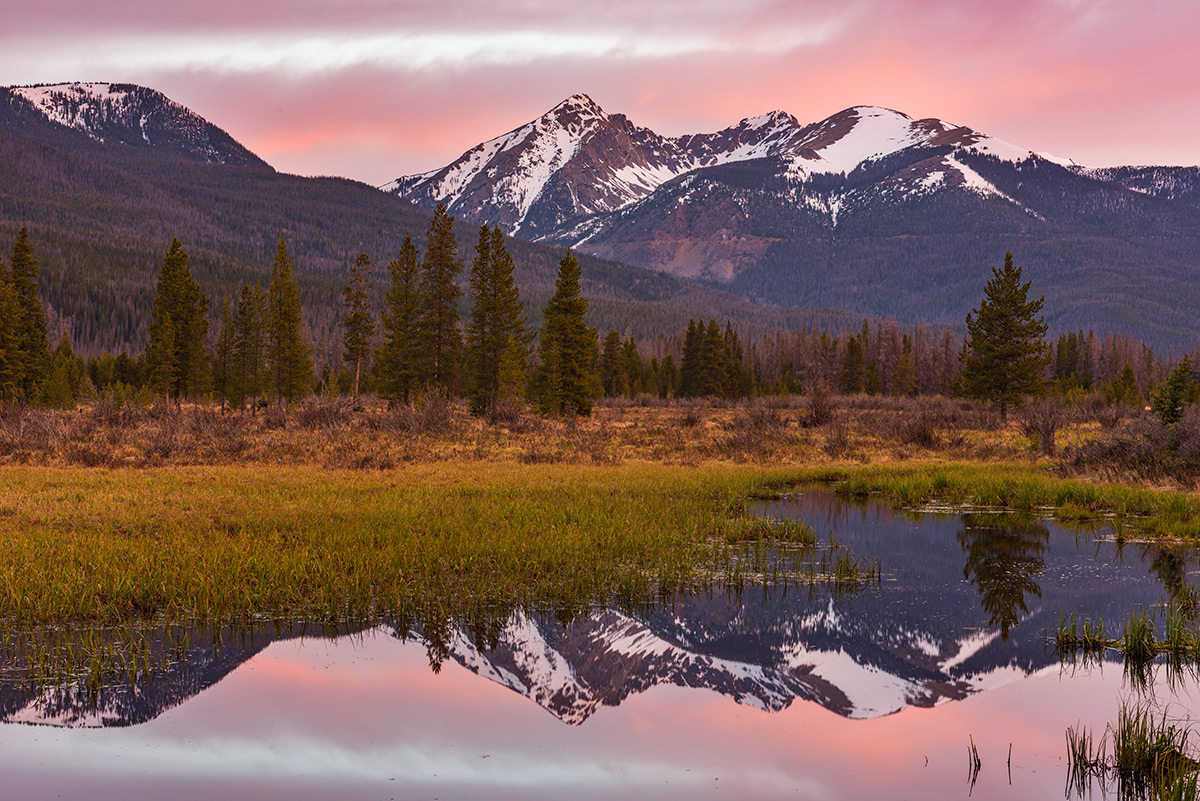
It felt great to be back on the west side of Rocky Mountain National Park again. Conditions were beautiful and I was lucky to have a couple of great sunrise and sunsets thrown into the mix. This morning, Baker Mountain looks stunning as a short but brilliant sunrise unfolds over the Kawuneeche Valley. Technical Details: Nikon D810, Nikkor 24-70mm F2.8 AF

With Trail Ridge Road opened late last week, all that stood in the way of being able to easily return to the west side of Rocky Mountain National Park was the nightly 8:00 PM closure that was in place. On Wednesday June 1st, the NPS removed the nighttime closure of Trail Ridge Road and with that a whole lot of options opened up for photographers visiting Rocky.

With the removal of the nighttime closure of Trail Ridge I headed out first thing the next morning for sunrise on Trail Ridge Road and then I figured a few nights camping on the west side of Rocky to survey the conditions and photograph some areas I had not visited since last October prior to Trail Ridge closing for the season.

I spent most of my time this trip photographing mainly in the Kawuneeche Valley and along the East Inlet just outside of Grand Lake. There is still a fair amount of snow to be found along some of the trails especially as you move higher up in elevations but the both the Kawuneeche Valley and the East Inlet are clear of snow. As of this writing, snow could be found on the trails above Lone Pine Lake and I found trails covered in patches of snow starting near Big Meadows.

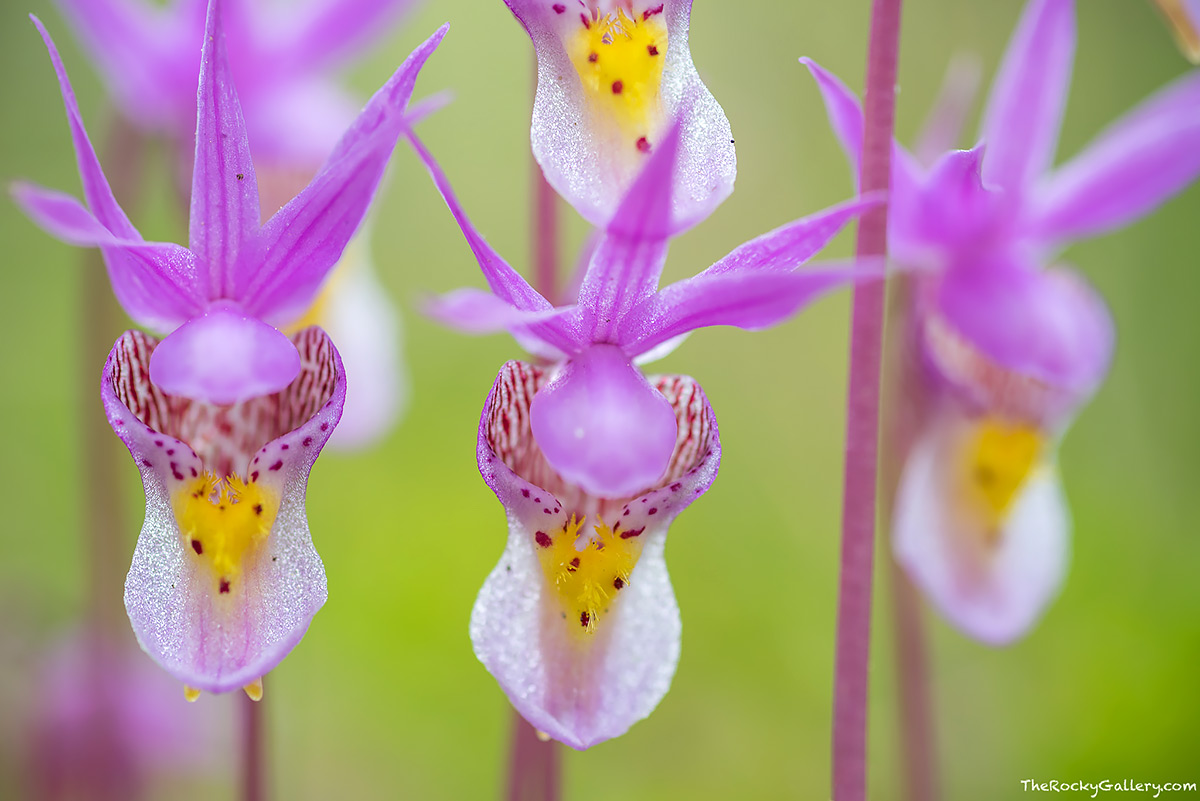
While there was still a fair amount of snow to be found in some of the trees, the wildflowers are starting to put on quite a show on the west side of Rocky. Calypso Orchids could be found in the lower elevations. These tiny wildflowers are small but stunning. Technical Details: Nikon D810, Nikkor 105mm micro AF

Moose were plentiful on the west side and while the grasses have just started to green, wildflowers such as Marsh Marigolds and Calypso Orchids were plentiful. The highlight of my trip over to the west side of Rocky Mountain National Park was watching a large cinnamon colored black bear amble across Harbison Meadows and into the trees. I made an attempt to photograph this healthy bear but he managed to cross the road behind my vehicle and quickly scamper up the hillside before I could photograph the bear.

Even though I did not manage to photograph the bear it was a productive trip nonetheless will a nice sunrise and two beautiful sunsets mixed in. I’m already planning my next trip over to west side and I only expect ease of access and conditions to improve with each passing day.

Party On!

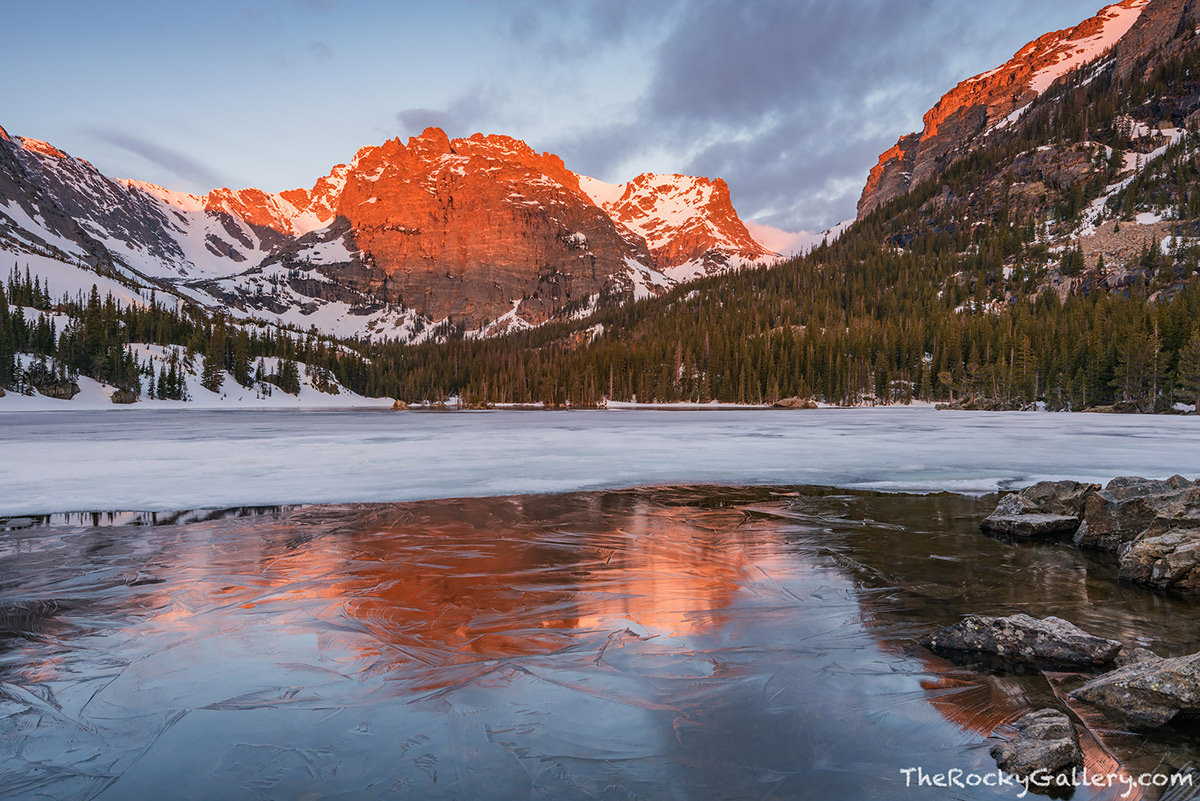
With the Memorial Day holiday here it's officially time to get your party on and start exploring Rocky Mountain National Park. With Trail Ridge Road open and temperatures warming RMNP is becoming more accessible each day. I photographed a mostly frozen scene at The Loch on Thursday(pictured above) and then was snow on at Bierstadt Lake on Friday morning. Even so, summer like conditions in Rocky will quickly be upon us. Technical Details: Nikon D810, Nikkor 16-35mm F4 AF-ED VR lens
With the Memorial Day holiday here it’s officially time to get your party on and start exploring Rocky Mountain National Park. With Trail Ridge Road open and temperatures warming RMNP is becoming more accessible each day. I photographed a mostly frozen scene at The Loch on Thursday(pictured above) and then was snow on at Bierstadt Lake on Friday morning. Even so, summer like conditions in Rocky will quickly be upon us. Technical Details: Nikon D810, Nikkor 16-35mm F4 AF-ED VR lens
It’s Memorial day so we now have the official start to summer upon us. Summer seasons in Rocky Mountain National Park is here and much of the terrain in Rocky Mountain National Park will soon be more accessible and easier to access.

Trail Ridge Road officially opened for the season a day late on Saturday, May 28th after being delayed a day due to snow falling on the road on Friday. As of this writing, Trail Ridge Road is typically cleared each night and closed at 8:00 PM due to the potential for ice on the road. Depending on the conditions in the morning, the rangers usually reopen Trail Ridge Road around 8:00 AM the following morning. Within a few weeks Trail Ridge Road will once again be open 24 hrs a day as the snow melts away from the shoulder of the road. Fall River Road won’t be open until July 4th as it typically is each year.

The high country trails and lakes are starting to thaw out and melt. Sloppy intermittent snow covered trails can be found now above 8000 ft. From about 10,000 ft on down most lakes are open or partially covered with ice. You can expect to be postholing on portions the trails and if you plan on going much higher in elevation than 10,000 ft expect near winter travel conditions in Rocky.

It’s an exciting time in RMNP now as summer finally begins to descend upon the park. Access gets easier and the potential for landscape photographers increases on a daily basis as temperatures warm and last winters snow melt. Have fun out there and make sure to take advantage of this all too short but sweet time of year.

Keeping It Fresh

I'm often asked by people if I ever get bored or tired of photographing in Rocky Mountain National Park. Many assume that I must have run out of good locations to photograph by now. The truth however, is that there is an unlimited amount of opportunities for photography in Rocky and I have a list of locations I would like to photograph from that I won't be completing anytime soon. Technical Details: Nikon D810, Nikkor 24-70mm F2.8 ED AF
I’m often asked by people if I ever get bored or tired of photographing in Rocky Mountain National Park. Many assume that I must have run out of good locations to photograph by now. The truth however, is that there is an unlimited amount of opportunities for photography in Rocky and I have a list of locations I would like to photograph from that I won’t be completing anytime soon. Technical Details: Nikon D810, Nikkor 24-70mm F2.8 ED AF
People often ask me if I ever tire of photographing Rocky Mountain National Park. After all, I spend the majority of my time in the field photographing in Rocky. When I field this question people assume that I most get bored photographing in the same locations in RMNP time and time again. In reality I find the opposite actually holds true. The more time I spend photographing in Rocky Mountain National Park, the more I realize just how much there is to photograph and just how much of a folly it is to every think once can photograph an amazing location like Rocky to the point of no longer being able to find new or unique compositions.

While I still photograph many of the well known locations in RMNP, I’m constantly on the lookout for new viewpoints or scouring my topographic maps trying to figure new locations which may hold great potential. New locations, varying lighting conditions, changes in seasons all make it easy to find new locations and opportunities for photography in Rocky Mountain National Park.

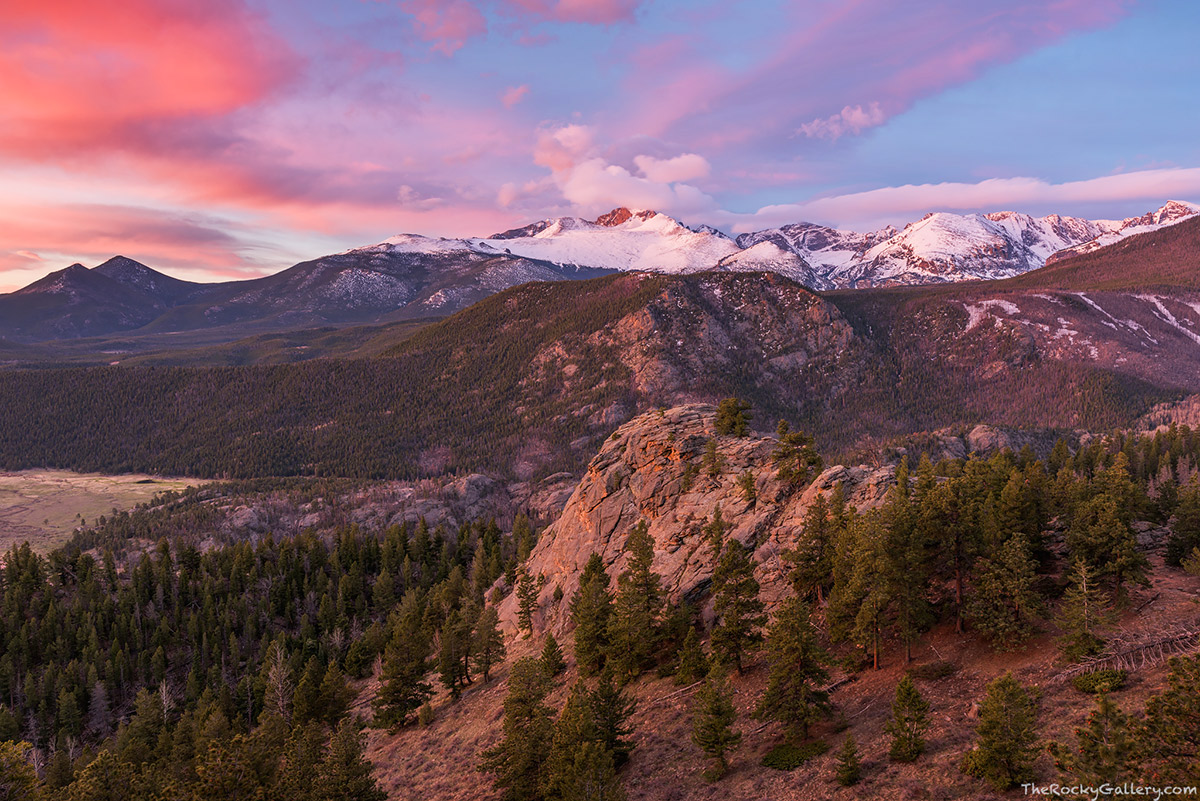
This past Friday I was able to get to a location I’ve been eyeing quite a few times but had yet to shoot. High above Moraine Park on the side of Beaver Mountain are some nice vistas of Longs Peak, Chiefs Head Peak, Thatchtop, Otis and even Hallett. I’ve been waiting for the right cloud setup before photographing from this location. As the high country of Rocky Mountain National Park thaws out I’ll end up spending much of my time photographing from those locations so I have a somewhat short window to photograph from this area before I start dedicating much of my time to locations that become more accessible as the temperatures warm.

Conditions where just about perfect on Friday from the side of Beaver Mountain and I was able to capture the image I had been envisioning for sometime. I have quite a large list of locations like this one on Beaver Mountain that I have yet to photograph from, so I don’t think I’ll be running short on locations to photograph in Rocky anytime soon.

Walker Ranch Fog

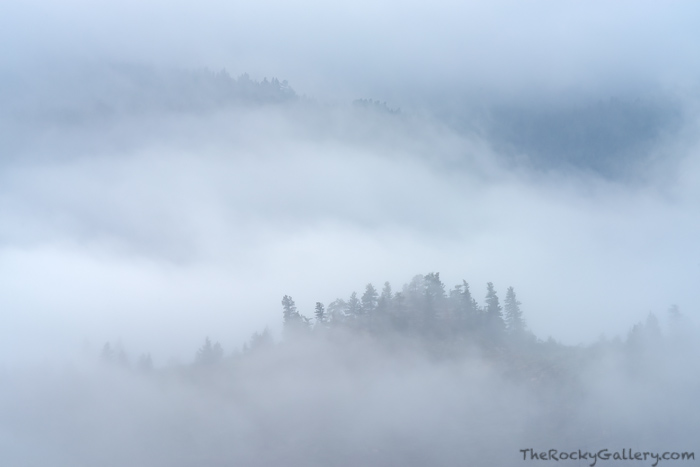
Foggy conditions over Walker Ranch Open Space just west of Boulder, Colorado transform the landscape into something magical and mystical. From Walker Ranch Open Space, this view of the South Boulder Creek drainage looks foreign as fog sweeps in and out of the valley and pines. Technical Details: Nikon D810, Nikkor 70-200mm F4 VR ED AF

Who doesn’t love fog? Well besides some of good friends who live in and around the bay area of San Francisco most photographers I know also love fog. Theres no question we all love dramatic sunrises and sunsets with colors exploding over the skies as mountain peaks turn a fire red. Nothing however, changes and alters a familiar landscape like a cloak of fog does. Fog can take a common unremarkable landscape and transform it into a mystical and magical location in mere seconds. Common landmarks become hidden from sight and the feel of the landscape changes by the minute as fog drifts in and out of valleys and canyons hiding or revealing only portions of mountains as it see’s fit. Photographing in fog is a bonanza for landscape photographers keen on searching for unique images of familiar locations.

The unsettled weather pattern we’ve been experiencing here in Colorado for what feels like the last two months has presented quite a few opportunities of late to photograph in the fog. Generally speaking, fog on the Front Range of Colorado and in the foothills in particular while not rare, is also not a common every week occurrence. Colorado’s quick moving weather systems often mean that storms move in and out of the Front Range with speed. The back end of these weather systems often leaves us with beautiful clear blue skies and little in the way of lingering clouds, fogs or moisture.
This past week has been an exception to that rule. One slow moving system after another has blanketed the Front Range with fog, rain and snow depending on elevation. At first blush it’s easy to want to make a back handed comment about another cloudy, rainy day but it’s also apparent that it’s a good idea to take advantage of the unsettled conditions in the field while one can.

Looking north from a ridgeline at Walker Ranch Open Space as the fog envelops the pines and transforms the landscape. Technical Details: Nikon D810, Nikkor 24-70mm F2.8 ED AF

I spent the past few days in the foothills just west of Boulder taking advantage of the foggy conditions. Walker Ranch Open Space on the backside of the Flatirons was just about perfect on Sunday morning. Thick fog enveloped the slopes on the backside of the Flatirons as well as the South Boulder Creek drainage making for countless opportunities to photograph the moody landscape. I could spend hours photographing in conditions like those at Walker Ranch Open Space on Sunday morning. There were literally new opportunities and compositions by the minute as I stood high on a ridgeline observing and photographing the conditions.

So while part of me was yearning for a little sunshine, the photographer in me was happy to be out in less than ideal conditions taking advantage of the conditions mother nature had in store.

Thawing Out With Alberta

This is what Alberta Falls in Rocky Mountain National Park looks like in April. Lots of visitors and photographers to Rocky Mountain National Park see it during the warmer months, but its a much different waterfall when it begins to thaw. You are able to get to some access points on the waterfall that you would not normally be able to do and the combination of snow, ice and water add a dynamic aspect to Alberta Falls. Technical Details: Nikon D810, Nikkor 24-120mm F4 VR AF ED

Late April in Rocky Mountain National Park can mean quite a few things. It can mean the days are getting longer, sunrise is getting obscenely early again, the first wildflowers of the season are appearing and theres a good chance your going to have quite a few snowy days in the park. In a nutshell, spring in Rocky Mountain National Park typically consists of what feels like two steps forward towards summer, and 1 step back towards winter each week.

This tango that the weather plays this time of year can be frustrating, especially if one is champing at the bit to start hiking far into the backcountry, photographing reflections and just enjoying the short but spectacular summer season in Rocky Mountain National Park. So slowly but more steadily everyday the tides are turning and the weather is becoming more summer like.

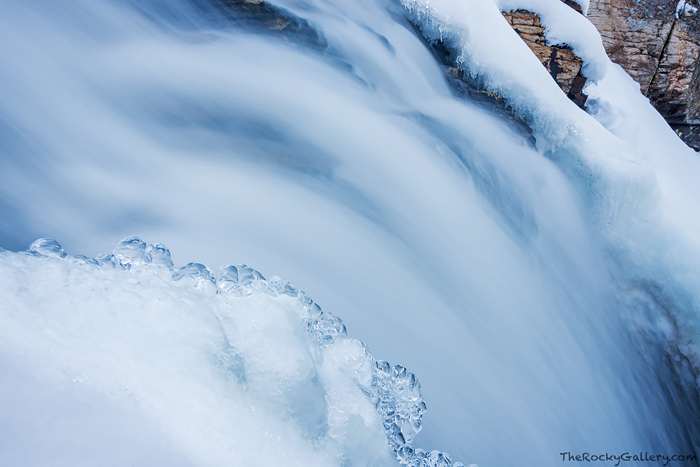
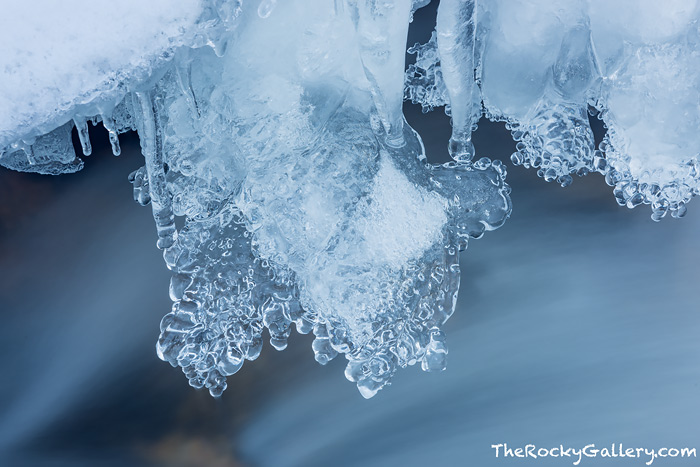
On clear days when the magic is not happening in the skies overhead dont overlook the more subtle details of the landscape. This ice hanging off the side of Alberta Falls caught my eye. Technical Details: Nikon D810, Nikkor 70-200mm F4 VR ED AF

On a clear morning this week I slapped on the microspikes and headed out for a hike to see just how much snow was still lingering around the higher elevations of Rocky. On my way up Glacier Gorge in the blue light of the predawn hours I stopped at Alberta Falls to survey the scene and see how the thaw and water flow were progressing.

Alberta Falls a few days after a large spring snowstorm may not look like the most photogenic location in RMNP when you first decide to take a look around. Most of Alberta Falls was covered in crusty snow and the water flow was still pretty modest. Even with that being the case there were plenty of opportunities to take advantage of what Alberta Falls had to offer a photographer. Lots of smaller scale landscapes with water and ice and the blue light from the early morning hour helped to convey the mood of a cool spring morning at Alberta Falls.

More and more opportunities for photographers are now presenting themselves each day in Rocky Mountain National Park. In between snowstorms and the big thaw out the opportunities may no be as dramatic or iconic as one would like but taking the time to look for the smaller details will result in some interesting seasonal imagery.