Having a daily routine and embracing the entire process behind being a photographer allows me to get out into the field often. Photographing this beautiful bank of fog weaving its way through Glacier Gorge just below Longs Peak at sunrise is something that should not be taken for granted. Doing this nearly every single day scenes like this could become routine. I try to make it a point to not take for granted how awesome it is to be mobile and independent enough to be in these locations with camera in hand. Technical Details: Nikon Z7, Nikkor 24-70mm F4 AF S lens.
I’ve been back on the east coast for the past week helping my 78 year old mother who had a fall early last week and injured herself. While its been great getting to spend a lot of time with mom, watching her lose her mobility and independence is difficult. So for the past week I’ve been helping getting my mom settled and have not been able to spend most mornings up in Rocky photographing from some spectacular vantage point.
You realize quickly how much of ones daily routine is taken for granted. Much of this routine that makes up one’s day seems to happen as involuntarily as a heartbeat. You go about your routines until something disrupts them.
The question then becomes how do you adjust when your routine is disrupted?. Obviously this is a good question to ponder when thinking about one’s daily routines, but it also is something I’ve thought about quite a bit as a landscape photographer.
I’m a creature of habit. I LOVE my routines. They help me achieve my goals, keeps me stable and has allowed me to create and expand my photography portfolio by embracing and enjoying the entire process of landscape photography. I enjoy every part that goes into working as a landscape photographer, much of which many might fight mundane.
I enjoy waking up at 12:30 AM in the summer to start my day so I can be tarn side as the sun rises over the mountain peak. Working out before leaving for the park is something I look forward to each night before going to bed. Many of these routines make my wife think I’m crazy but embracing the process and creating routines have allowed me to consistently create new work by allowing me to consistently make time to be out in the field behind the camera.
Watching my mom struggle this week has really helped to reinforce who much I enjoy my routines but even more importantly value independence. I’m always attempting to be more mindful, but it’s even more important to value every opportunity one has. When it comes to photographing Rocky Mountain National Park, I’m lucky enough to get many opportunities. What I’m still learning each day is just how important it is to value and embrace and be thankful for each one of them. It may be routine for me to photograph Rocky, but its certainly not a given.
The winds were howling yesterday morning over Rocky Mountain National Park. Not uncommon anytime in RMNP, photographers interested in capturing images of the park will need to make adjustments and get used to photographing under windy conditions. While my keeper rate was low, just a few like this with dramatic clouds and light streaming over Otis Peak,Hallet Peak and Flattop Mountain made it worthwhile. Technical Details: Nikon Z7, Nikkor 70-200mm F4 AF-S VR
Spend more than a few days in Rocky Mountain National Park and you will certainly meet our good friend the wind. Wind comes with the territory here in Colorado and the higher you venture in the park the more intense it is.
Wind is common in early spring as fronts move through the state. For the most part wind makes photography in RMNP very challenging. A tripod, high shutter speed and lots of might help to allow for a few sharp frames in between the gusts that can be hurricane force on some mornings. As much of a nuisance that wind can be in Rocky Mountain National Park it can also be accompanied by some dramatic clouds and light.
Yesterday (Sunday) was one of those kinds of mornings where there were lots of nice clouds hanging over Rocky, mostly on account of the wind stirring up the atmosphere. I’m always a bit reluctant on these windy days to go out and shoot. The lighting may be great but nothing is worse than finding all or nearly all of your images suffer from motion blur on account of the wind. That being said photographing in the wind in Rocky comes with the territory and if you want to spend time photographing RMNP you will have to deal with it one way or another.
My strategy on windy days is to find areas that have some shelter from the wind. Often this means stick to the lower elevations of the park as the winds tend to be more moderate and there are often groves of trees or rocks one can use to shield the wind.
With the wind howling in the park and gusts near 30 MPH I settled on Upper Beaver Meadows to setup. Lots of trees to duck behind and Otis, Hallett Peak and Flattop Mountain had some amazing wind driven clouds streaking over them.
With about a 15% success rate as far as sharp images go I did manage enough sharp frames to make the morning worthwhile. Overall the wind was a pain but the lighting and clouds on the divide were more than worth the temporary nuisance that accompanied the wind on this beautiful morning.
I’ve got my truck in at the shop for a few days so I wont be able to get out while our latest snowstorm moves in over Rocky. I did manage to get out yesterday morning at sunrise before dropping my truck off at the shop to capture a beautiful sunrise over RMNP. I was focused on photographing the Mummy Range as this looked like it would have the best color. Mummy Mountain had some beautiful color over it as the sun rose to the east. Technical Details: Nikon Z7, Nikkor 24-70mm F4 AF S lens
New new image from this morning from Rocky. ‘Big Bertha’ aka my truck is in the shop getting a new fuel pump so I’m stuck here in the office for a few days watching sunrise through the Estes Park web cams. I figured its better to take care of that whining fuel pump now then up stuck somewhere or losing ‘Bertha’ for a few days during prime summer photography and photo tour season in Rocky Mountain National Park.
With another April blizzard up us what better time to drop off the truck for a few days and to attend some administrative work while the rain, snow and wind make photography difficult.
I did manage to get out yesterday morning before dropping the truck off at the shop. Sunrise looked promising the night before so I made sure to schedule the drop off on Tuesday. I figured with all the nasty weather moving through state it may be a few days before things get interesting again in Rocky for us photographers.
In typical Colorado spring fashion it was about 80 degrees here in the Denver area yesterday. Today it’s raining and snowing and temps are in the high 30’s. For the most part if we have warmer than average temperatures here on the east side of Colorado’s Front Range it means Rocky Mountain National Park is going to be windy due to westerly or down-sloping winds. This also usually means that higher level lenticular clouds may form just east of the mountain peaks.
That was the case yesterday morning in RMNP. Lots of great clouds in the sky to the east and a nice small break on the eastern horizon to illuminate the skies and mountain peaks for a short amount of time at sunrise.
I focused myself on the Mummy Range as that looked like it would have the most color based on the clouds I could observe before sunrise. Also due to the fact that it was very windy in Estes Park, I figured heading high up Bear Lake Road would just result in lots blurry images for a wind blown camera.
The Mummy Range turned out to have some very nice color though just to the east and south of Rocky the skies really popped. While my main composition was of Ypsilon, and Fairchild I did take advantage of the beautiful color over Mummy Mountain. Because of the orientation of Mummy Mountain its one of the more difficult peaks to photograph in Rocky as it often does not have direct lighting and is in the shadow of other peaks. The orange and red skies over it yesterday worked well to highlight this awesome piece of granite.
Hopefully by the end of the week I have both my truck back and we are able to capture some post snow images. Winds will remain high in RMNP through the middle of the week so its likely much of the snow will be blown off the pines as is often the case. Regardless, I’m looking forward to getting ‘Big Bertha’ back as well as getting back out into the field after this latest storm moves eastward.
A colorful sunrise this morning over the high peaks of Rocky Mountain National Park as seen from Moraine Park today. Seeing the Big Thompson free from ice and flowing is an awesome sight. It wont be much longer until the higher lakes in RMNP start to thaw signaling the pending arrival of summer. Technical Details: Nikon Z7, Nikkor 24-70mm F4 AF-S
It was a beautiful spring morning in Rocky Mountain National Park today. The temperature was mild and our bitter nemesis the wind even laid down just before sunrise allowing the silence to reveal the chirps of birds and the howls of coyotes welcoming in the new day.
My options were limited this morning as clouds covered most of the peaks in the park just before sunrise. On mornings like these where a ‘mountain blanket’ cloud is covering most of the divide, the sunrise can be great on the continental divide but you may not see any of the snow covered peaks. I call it a ‘mountain blanket’ cloud because unlike a mountain wave cloud that forms high above the peaks, this kind of cloud essentially covers the peaks like a blanket.
Longs Peak was covered, Hallett Peak was covered, Ypsilon Mountain was mostly covered. While Stones Peak had clouds around it, it was mostly free of clouds prior to sunrise. Because of this I decided to setup at one of the iconic, oft photographed locations in Moraine Park along the Big Thompson River. This is both a beautiful spot and one in which the water is now free from ice and flowing free.
Each year when the thaw out after winter starts to set in and water becomes free of ice I get excited. Not only because of the warmer weather on its way to Rocky Mountain National Park but because moving and open water creates a dynamic scene and allows for reflections to capture the warm morning light.
More importantly its exciting to watch the thaw march upward as its starts in the lower elevations of RMNP and makes it’s way higher with each passing day. It wont be long know before some of the higher lakes start to break free from ice and start to open. Exciting times ahead for photographers and summer season approaching quickly now.
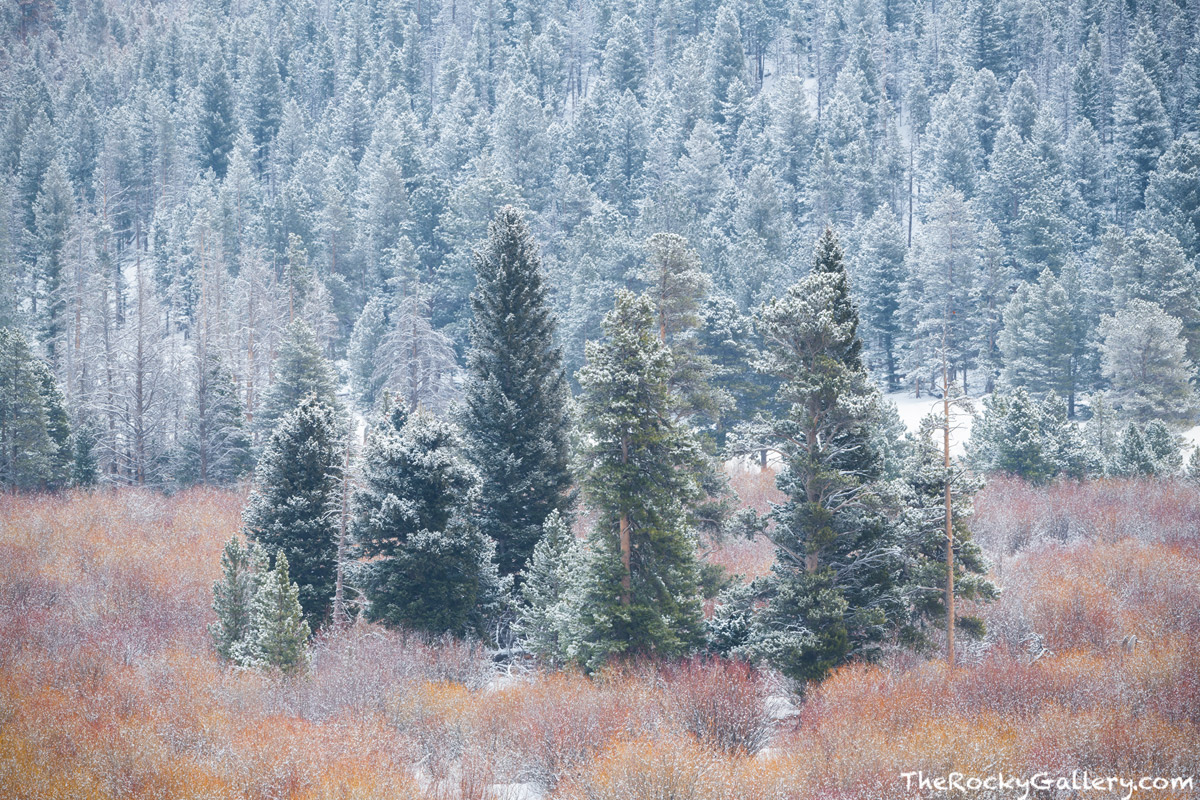
Embracing all kinds of light means its important for landscape photographers to navigate through all the different kinds of light that may fall on a landscape. Dramatic lighting on iconic scenes is awesome but learning how to photograph under more subtle lighting condtions can be just as rewarding. Sublte ligithing conditions can allow one to capture a sense of place better or to photograph locations that dont work well under more dramatic lightingn conditions. I’ve been waiting for a gray day to photograph this scene in Rocky Mountain National Park for quite awhile. Snow on the trees and willows combined with overcast lighting allowed me to bring out the blues on the pines and the reds of the willows in a more discrete fashion.Technical Details: Nikon D850, Nikkor 200-500mm F5.6 AF-S VR E lens
The trend in landscape photography has been every more dramatic, epic, and otherworldly lighting conditions. Combine this was some iconic spot and one has the formula for a Facebook post, Tweet or Instagram post to garner lots of likes or maybe even go viral. The euphoria and endorphin rush with capturing a scene under dramatic lighting combined with lots of likes and comments on social media feeds right into one’s ego and can set a photographer on a temporary feel good high.
As with both light and capturing that light with a camera and creating a photograph, these conditions and moments in time are ethereal. Both the photographer and their mostly anonymous social media fan club that liked, shared and retweeted the image, will move on to another image or shiny object.
Make no mistake about it, as a landscape photographer the condition that allows me to convey my message and portray my subjects personality and mood is the lighting. Like most other landscape photographers I strive to photograph my subjects in the most dramatic lighting conditions possible. I study the conditions, topography and subject envisioning the best conditions that will render what I perceive as a reflection of the sense of place of a given location based on what the potential lighting conditions may be. I’ll stare at a landscape and envision what it would look like wrapped in fog or lit with sun and clouds in a manner that flow with jagged peaks or deep canyons.
Even though I strive to photograph locations in dramatic lighting conditions, some of my favorite light on the landscape is still plain old diffused lighting found on cloudy, rainy and snowy days. For me, while this particular lighting is more subtle and quiet, it often allows me to photograph subjects and conditions that would not reflect the sense of place under more dramatic lighting conditions.
Earlier this week I found myself immersed one morning in cloudy overcast lighting conditions on the east side of Rocky Mountain National Park. I headed out in Rocky this particular April morning with the hopes that we would get some breaks in the cloud cover at sunrise. Snow had been falling the night before and being as difficult as it is to capture landscape images in Rocky after snow (on account of high winds and bluebird days preceding storms), I’m always going to take my chances hoping the light breaks my way. While I’ve had more than my shares of sunrises and sunsets where this has not worked, many of my most dramatic images have happened on mornings when chances were slim anything dramatic would happen.
Well as so often happens the dramatic lighting did not come this morning. It looked good at times with breaks in the cloud cover but just as sunrise approached snow moved back in over Rocky Mountain National Park’s east side and the lighting on the landscape remained gray and diffused.
I could have packed it up and left the park. Instead I started scanning the list in my head of locations I wanted to photograph under these conditions. That list is as long or longer than the locations I want to photograph in RMNP under prime lighting conditions and sun. Instead of sulking and heading home I was excited and energized by the prospect of being able to shoot locations and subjects that I’d normal pass on.
With this in mind I headed out into Hollowell Park. Hollowell Park is a beautiful location accessed from Bear Lake Road. Great hiking trails emanate out of this small park but I would think for most landscape photographers shooting Rocky, its not high on the ‘to-do’ list as the view of the mountain peaks are not quite as sexy as they are further up Bear Lake Road.
But there is plenty to photograph in Hollowell Park, especially under gray, diffused light. Fresh snow on the landscape and snow covered pines, willows and aspens could keep me and my camera busy and clicking all morning. Even better was I had the entire area to myself that morning kept company only by a pair of ravens, the occasional mountain bluebird and a pack of coyotes.
It get’s tiring hearing many well known photographers rail against the copycat nature that seems perverse in the craft these days. Comp-stomping has become and epidemic and social media only serves to fuel this behavior. That being said, we’ve all been there at one point or another and I can still get just as excited for a dramatic sunrise at Dream Lake as I could twenty plus years ago when I first started photographing Rocky Mountain National Park.
Nowadays I get just as excited for cloudy, gray days to photograph. In fact, with 300 plus sunny days a year here on the Front Range of Colorado, getting these kinds of conditions can be difficult at times. The bottom line is that its important to embrace all kinds of light.
Enjoy and photograph dramatic lighting, but also learn to embrace and enjoy the more subtle lighting when it arrives. It will make you concentrate of both your subject, your composition and your surroundings more. I think you will also find this kind of lighting will allow you to create images that are both more original, and speak to your creative side as much or more than dramatically light iconic subjects.
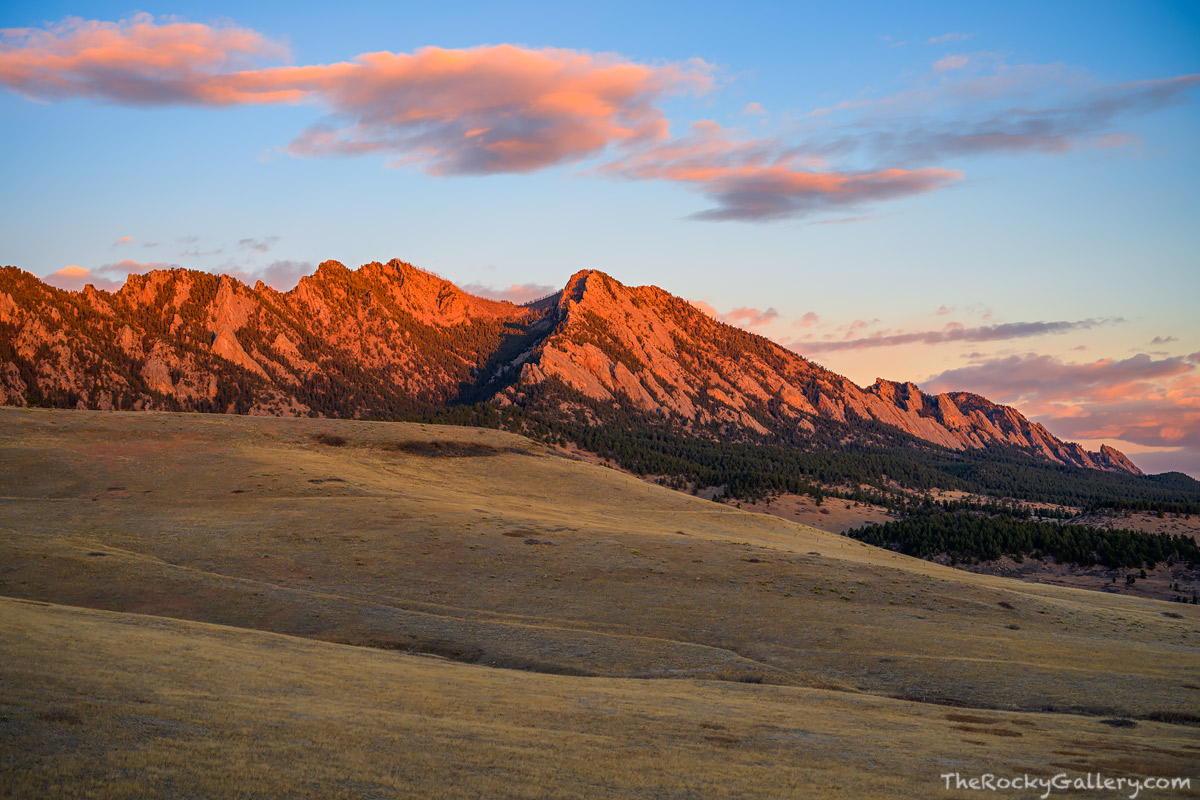
2019 has started off with uncertainty. Currently Rocky Mountain National Park has limited access due to our current government shutdown. We are all hoping for the situation to resolove itself sooner than later but trying to guess when that will be is difficult. Currently, I’ve been spending lots of time in and around Boulder, Colorado photographing the landscape down here and getting out as much as I can. This is a view of the Flatirons from the Doudy Draw area last week looking back towards South Boulder Peak and Bear Mountain. Technical Details: Nikon Z7, 24-70mm F4 S lens
I apologize for the lack of blog posts lately. After wrapping up a very busy 2018 year of guiding and tours in Rocky Mountain National Park, I took a brief hiatus only to have the latest government shutdown make access to Rocky Mountain National Park difficult. As a reminder you can always check my Twitter or Facebook feeds that are linked at the bottom of this page as I post to them at least a few times a week if not more.
While you can technically walk into Rocky as of right now, services are limited and getting into most areas of the park is fairly difficult. Furthermore, most of the better locations for winter photography would require quite a commitment to get to without the ability to drive to a trailhead.
As of writing this it’s difficult to tell when the current government shut down may actually end as we have just past the 23rd day of the shutdown. I’m keeping my fingers crossed for all involved that a resolution can be found sooner than later and we can get back to Rocky Mountain National Park operating as is normal once again.
While we wait out the shutdown, I’ve been keeping myself busy photographing in and around the Boulder area. Not only is this area my second favorite place to photograph after Rocky Mountain National Park, but I’m thankful I have a fallback that allows me the ability to get out and keep productive while the machinations of our current political climate grind away.
I’ll again be offering photography tours in Rocky Mountain National Park for the 2019 season. If you are interested in heading out with me feel free to drop me an email and I’ll be more than happy to discuss dates, locations and times with you.
Until we get some more clarity here, I’ll be out traversing the landscape and open space properties in and around Boulder and will try to make a few expeditions into Rocky because I miss getting out and exploring the park as much as you all do. Stay tuned for lots of posts and images as 2019 unfolds here.
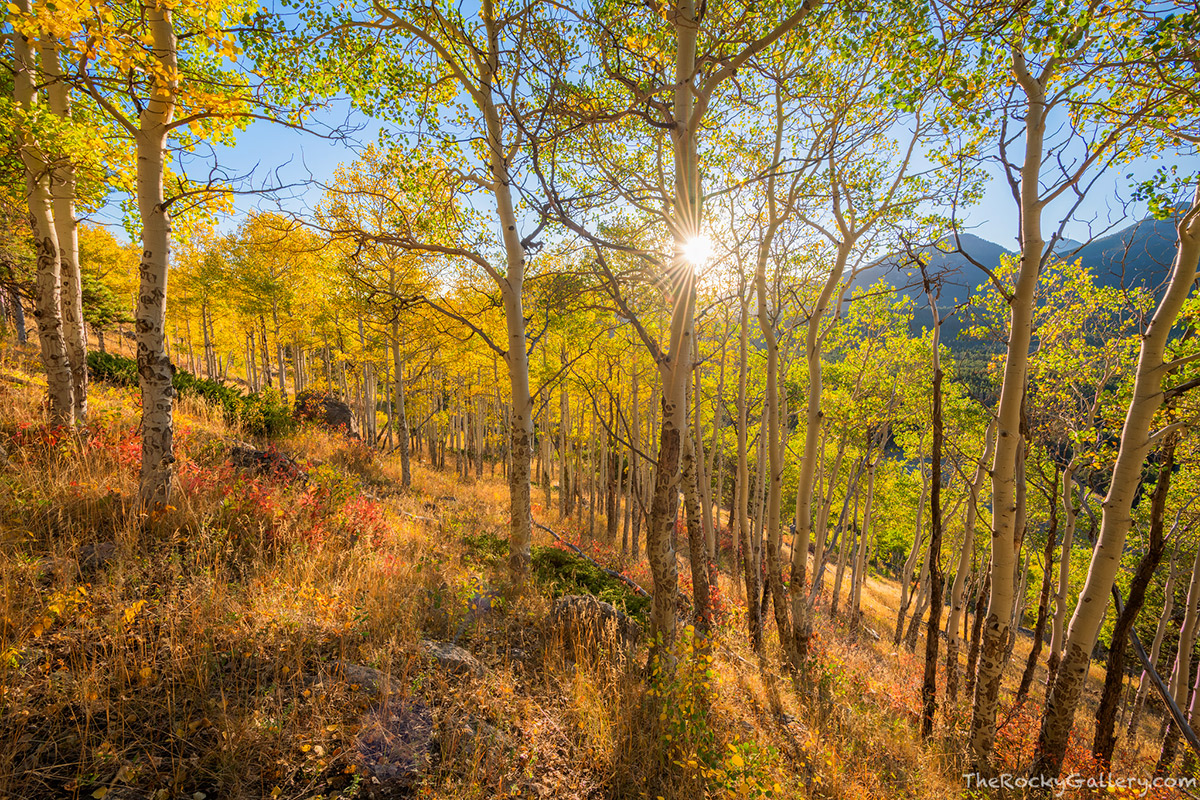
Autumn has arrived in Rocky Mountain National Park. At this point it appears we are going to be a little ahead of schedule on the turning of the leaves. I photographed these aspens at peak along the Bierstadt Moraine last week. Many areas of Rocky Mountain National Park are at peak or quickly nearing peak. Technical Details: Nikon D850, Nikkor 16-35mm F4 AF-VR lens
Just wanted to give my readers a quick update on the current fall color situation in Rocky Mountain National Park as I’ve been questions daily on how things look. What I will say in a broad generalization is the following based on my observations being out in the field everyday the past week.
I believe we are running five to seven days ahead of what the normal timing is for fall color in RMNP. Whether this is because of a warm and dry summer, or because of all the smoke and haze over the park much of the late summer triggering the plants in to thinking there is less sunlight I’m not sure. At this point what seems obvious is that we are certainly running ahead of schedule and that the warm and very windy week we just had is not helping in extending fall color any.
First things first, the autumn color in Rocky Mountain National Park is nearing or just past peak in many areas now. Bear Lake was at peak on Friday, September 14th I would say. This is about 5 days earlier then when peak typically occurs at Bear Lake. While the leaves are at peak, the winds have done a number on many of the aspen trees around Bear Lake. You will stay be able to photograph fall color this week at Bear Lake but its going to be slightly past peak and depending on how strong the winds are, there may not be much left by the end of the week.
The Bierstadt Moraine is currently about 50-60% turned. Many of the trees are showing the stress from the drier summer and while there are nice patches of yellow and orange, there are also some areas that have just turned brown. This week, Bierstadt might be one’s best overall location for autumn color.
As for other areas of Rocky, I would say the mid level elevations will be at peak this week with the lower levels starting to show decent color in the ground cover as well as some of the trees. The Boulder Brook area of the park is only about half turned and should be good over the next week or more as this area does well even after the leaves have fallen as they cover the forest floor.
The elk rut is also well underway and if your timing is good you should be able to find some good groups of bull’s with their harems in Moraine, Horseshoe and the Kawunneche Valley. I do think the warm weather has caused the rutting activity to slow quickly after sunrise and I would also say I’m still observing a fair amount of elk activity in higher elevations of the park stll.
Now is really a great time to get out in Rocky and take advantage of the fall color and autumn elk rut. I think overall color this year is going to be on the fair to marginal side but there is plenty of opportunities to find subjects to photograph if you look. At the current pace, I would expect most fall color in Rocky Mountain National Park to be well past peak by the first week of October.
This time of year in Rocky Mountain National Park is one of my favorite. Winter starts to lose her grip on the park and each day as the snow melts and the temperatures rise access to the park improves. While Trail Ridge Road is not ope for the season just yet, it is open to Rainbow Curve. This allowed me to hike up above Forest Canyon to catch this view of Terra Tomah mountain as the sun lights her flanks and fog fills Forest Canyon below. Technical Details: Nikon D850,Tamron 100-400mm F 4.5-6.3 DI VC lens
Spring has arrived in Rocky Mountain National Park and summer wont be far of it’s heels. As I write this we are a little over a week away from Memorial Day which is the traditional unofficial start of the summer season here.
Both winter and spring here have been for the most part mild and more or less seasonal. Snowpack is at about 90% of average so we are a little behind but not much off the mark. We had some good late season snows as well as some good rain in the lower elevations the first few weeks of May so things are starting to green up nicely in the meadows and lower elevations of the park. Pasque Flowers and now Mountain Ball Cactus are blooming and more of the traditional wildflowers will begin appearing in the next few weeks in the lower elevations of Rocky.
Trail Ridge Road has not yet opened for the season but barring any crazy weather should open right before Memorial Day weekend. Trail Ridge Road has been open above Many Parks Curve where it is closed for the winter season all the way to Rainbow Curve for the last two weeks. Having Trail Ridge Road open to Rainbow Curve just above 10,800 ft allows the more adventurous to hike up the plower road and get above timberline with a little more ease and a lot less people than during the summer season when the road is open.
Ponds and lakes are really starting to open up as well. Many of the lakes around 10,000 ft are starting to open up large sections of ice on their surface. Lakes below 10,000 ft are ice off and good for photographing reflections on calm days. Lots of spots of hard packed snow on trails above 9500 ft but lower elevations like Lumpy Ridge Moraine and Horseshoe Park are great for hiking right now with the usual muddy spots.
Overall, Rocky is in great shape and becoming more accessible each day. While there will still be snow and ice around until late June and early July in the highest reaches of the park, access is already great and only getting better. This is one of my favorite times of years and as always I’m looking forward with great anticipation at getting out into the park and exploring new areas as well as visiting old stalwarts.
Winter so far in Rocky Mountain National Park may have been on the mild side, but as always the case RMNP has some of the most spectacular sunrises anywhere. Horseshoe Park maybe on the dry side but looking back towards Deer Mountain during this beautiful January sunrise makes photographing Rocky Mountain National Park worthwhile regardless of snow. Technical Details: Nikon D850, Nikkor 70-200mm F2.8 AF FL ED lensIt’s been a little quiet around here on the blog the past few months. While I’ve been busy posting to my social media feeds on Facebook and Twitter most days I’ve somewhat neglected updating my blog for which I apologize. Having recently moved into a new house it’s taken more effort than I’d care to admit just to be able to get time out in the field in Rocky Mountain National Park.
Good news is that I’m finally settled in and I’m quickly getting myself back on track and back into my routine which some would say borders on obsessive compulsive.
Overall, conditions along the Front Range of Colorado this winter have been fairly bland. In fact we’ve not had much weather to speak of since October and this winter so far has been mild and dry. Rocky Mountain National Park has had some snow, but i’m keeping my fingers crossed that the weather pattern shifts as we head towards spring and we get a good run of storms and moisture to not only make for dramatic conditions for us photographers, but also to increase the snowpack and keep the park from drying out.
Besides the mild winter we have been experiencing so far, a few other notable items have been happening in Rocky. We’ve already had one government shut down this year in which contrary to past years funding shut downs did not close Rocky completely. Many services were limited for the few days the federal government shut down but Rocky was able to operate on a limited basis with the exception of being able to plow snow which lead to the park being closed one day due to dangerous road conditions.
Another hot button issue has been the proposed increased entry fee for 2018. While the final decision has not yet been made, daily entrance fee’s at Rocky Mountain National Park along with over a dozen other popular National Park’s look to be increasing dramatically. Rocky’s proposed daily entrance fee would increase from $20 a day to $70 a day. While the overall trend in visitation to Rocky Mountain National Park continues to increase (with a less than 2% decrease in 2017) these newly proposed increase in daily fee’s are striking most as excessive.
These increase in fee’s are likely to have an impact on my guiding and photography tour services in Rocky Mountain National Park as well. Not only will participants in my tour services have to pay additional fee’s to enter the park, there is another proposed fee to holders of Commercial Use Agreement guide passes or CUA’s of $170 a tour. This proposal is also still being discussed but if you combine the cost of my photography tour services, a $70 entry fee along with another $170 fee for guiding each client or group in the park, the cost of my services my become prohibitive to many of my participants.
Currently, I’m keeping an eye on how these shakes out and at this point are still booking photography tours for 2018. I’ve renewed my CUA pass for 2018 but if these fee’s do come into effect and greatly affect my photography tour services and guiding, I may no longer be able to offer those services in 2019.
Lastly, I plan on doing a better job in 2018 keeping my blog updated. Keeping my social media feeds updated on Twitter and Facebook while effective, take away time from posting on my blog. I only have time to update so many feeds and blog posts and currently my social media feeds have been winning that battle. With Facebook’s new policy changes regarding business accounts being more or less hidden unless one pays to advertise on the site, I’d like to continue to shift my content and energy back to keeping this site updated. I’ll still be updating Twitter and Facebook as often as I have in the past, but I’m going to prioritize keeping my site updated with my content.
So while its been a quiet season in Rocky so far, there have been many a beautiful winter sunrises (Rocky has some of the best). I’ll be out and about in the field as often as I can get out and I’ll keep all of you updated on the new fee proposals and what the final outcome is along with how it will impact my photography tour services in RMNP.
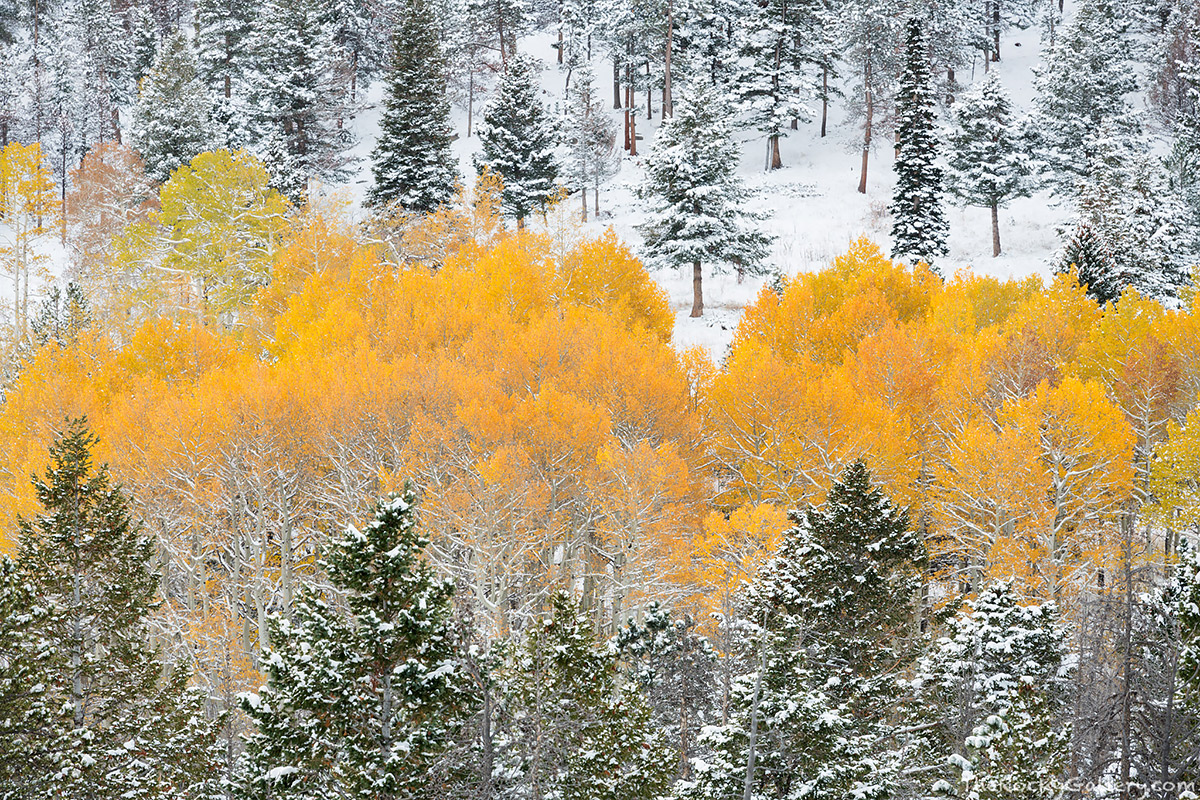
We’ve made it through another fast paced but beautiful autumn season here in Rocky Mountain National Park. Fall color and autumn are quickly making their exit from Rocky but the past fall season while beautiful, varied and always too short has given photographers lots of great opportunities. While the overall color this year was average at best, the weather conditions in the park during the fall season made for some spectacular shooting conditions for photographers. Scenes like this one of snow and autumn aspen trees in Horseshoe Park were common as snow graced the park often this fall. Technical Details: Nikon D850, Nikkor 70-200mm F2.8 ED AF VR FL lens
Autumn in Rocky Mountain National Park is one of my favorite times of year. I look forward to the fall season in Rocky all year only to find it both arrives and departs much more quickly than I am ever comfortable with. It’s a spectacular time of year to visit RMNP and its also and amazing time of year to photograph the park. The autumn hues, golden aspens and elk rut make it a very popular place to be once mid September rolls around. Even with autumn being one of my most favorite times of year to get out in the field, the harried pace of the season in Rocky can make the autumn seem like a blur.
No two fall seasons in Rocky are ever alike. The colors are different each year, the location of the best and most vibrant color are different each year, the timing of peak colors in areas of the park are different each year and the total duration of the autumn season is different each year. Some autumn seasons linger on and on with little to no early season snow or windstorms to expedite the end of autumn.
Some years it’s just the opposite. For one reason or another the fall color may never really pop. Snow and high winds may also rake across the park quickly stripping the trees of their leaves as well as making access to locations more difficult. As is always the case when dealing with mother nature, you just don’t know and there’s not much you can do even if you do know.
This makes it important to take advantage of the conditions whenever they are favorable. If there is one thing I’ve learned in photographing fall in Colorado and Rocky Mountain National Park it’s get the shot while you can. Waiting for better conditions or planning on coming back at a later date is often a fools folly. I’ve personally missed a few opportunities thinking I’ll come back to a location a little later only to have wind, snow or weather decide otherwise.
Autumn season is Rocky has pretty much wrapped up for the year. We’ve had a very dynamic fall season in RMNP and one that offered many great opportunities for photographers even if I would rate the color this season as average to below average. Weather was the story this season along with snow dropped on the park almost once a week since the colors began changing. While the snow and cool autumn hampered some of the fall color, it did allow for some really neat opportunities to photograph the clash of the seasons.
Overall the season was both short and awesome. The frenetic pace of autumn and the need to maximize your time in the field with your subjects while the getting was good takes precedent over sleep, rest and contemplation. Now with the season waining the pace can slow and we can begin looking forward to winter in Rocky Mountain National Park.