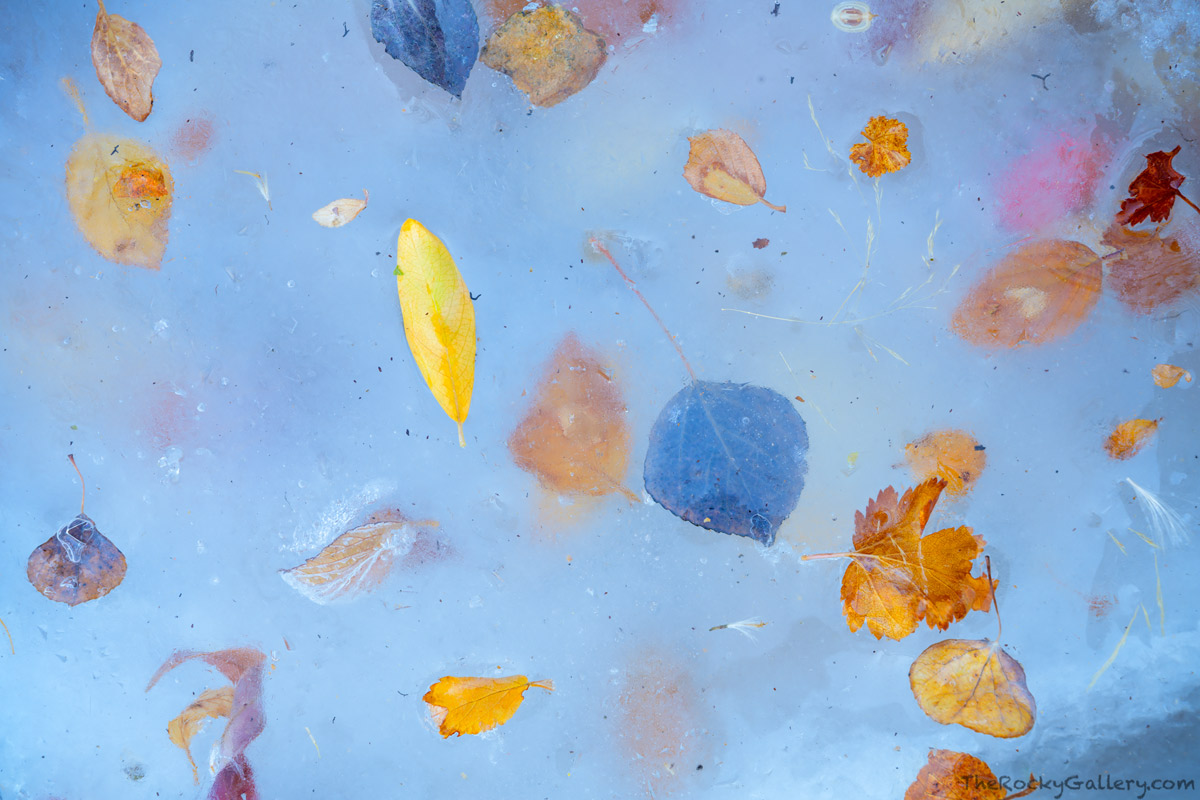
On the back end of our winter blast that hit Rocky Mountain National Park at the end of last week, fall color in the park is mostly done now. For photographers willing to search for some of the smaller scenes and vignettes in the nooks and crannies of RMNP, capturing the back end of the autum season is still possible. I found this menagerie of fall color frozen in a cascade along the slopes of Mount Wuh yesterday. Technical Details: Nikon Z7, Nikkor 24-70mm F4 S lens
It was fun while it lasted. Autumn was stunning this year in Rocky Mountain National Park. The elongated fall season that we experienced, with warm days and vibrant colors has mostly now come to an end. Thanks to an arctic blast which combined both wind and snow finding fall color in Rocky Mountain National Park has gotten a bit more difficult.
It’s still autumn in RMNP it’s just finding fall color to photograph takes quite a bit more work. For the most part almost all the deciduous plants have either dropped their leaves or they have turned brown from the cold temperatures. Some of the small ground plants still have some nice color but one is going to have to work a little harder on more intimate type scenes now to capture the back end of the fall season in Rocky.
With the exception of our blast of snow and cold last week, the weather is still fall like and spectacular in the park. Cool mornings that quickly warm once the sun rises are the norm. There are some icy spots on trails but for the most part one is able to access much of the park without having to pack a full compliment of winter gear.
After spending the morning in Moraine Park looking for some of the last vestiges of the elk rut, I headed up the Cub Lake trail to enjoy the beautiful conditions and investigate some of the nooks and crannies to see if there were any small patches of autumn color to be found.
While autumn color was mostly sparse along the cub lake trail, I did happen upon a small vignette that I just had to photograph. A small stream which runs down the side of Mount Wuh provided just what I was looking for.
The edges of the small cascade had frozen over. Aspen, mountain maples and narrow leaf cottonwood leaves had all recently fallen into the stream and become entombed in the recently formed ice. It’s rare enough to find all these leaves in such close proximity but the fact that I had variety combined with the contrasting warm colors of fall and the cool colors of the ice made me stop in my tracks and get the camera equipment out of the bag.
So while most of the fall color is now gone from Rocky Mountain National Park for the season, with some exploration and appreciation of some of the smaller vignettes of color that can be found in Rocky, one should be able to capture some of the more subtle fall scenes RMNP provides on the backend of the season.
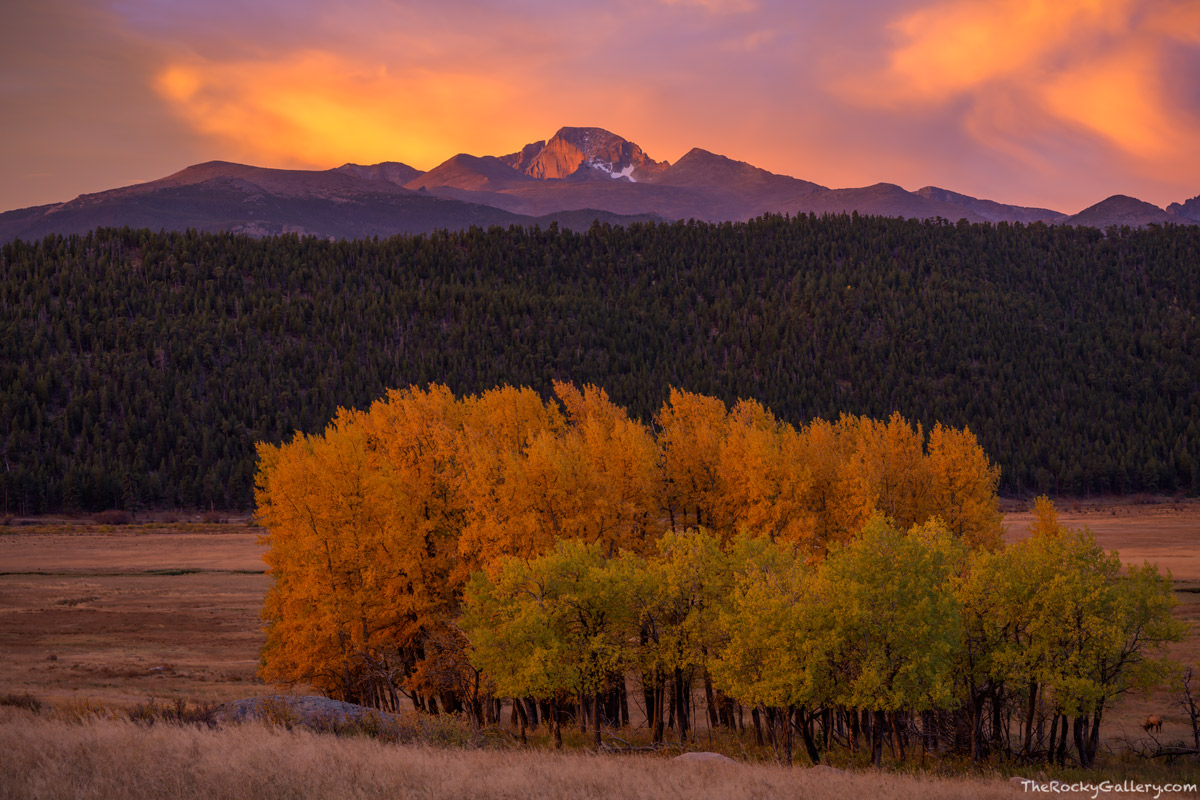
As I write this, big changes are on the way to Rocky Mountain National Park. After a late, but elongated fall color season in the park, an October snowstorm with record low temperatures is settling in over Rocky. Yesterday, before the storm moved in over RMNP, I took advnatage of a beautiful day and spectacular sunrise to photograph what is likely to be the end of the fall color season. Sunrise over Longs Peak from Moraine Park yesterday morning was a jaw dropper and a great way to likely finish up on the autumn season. Technical Details: Nikon Z7, Nikkor 24-70mm F4 S lens
This autumn in Rocky was an unusual one. We got off to a very late start this season with many of the aspens remaining green long past the time they usually lose their leaves. A warm and dry late summer and early fall seemed to be the reason behind the late change in the foliage.
With fall color kicking off this year around the third week of September in the highest elevations, and with the warm and mild weather sticking around, the color remained very good in many parts of Rocky Mountain National Park into the second week of October. Normally, one would be looking for the last remnants of autumn gold in RMNP during the second week of October while lamenting on how quickly the season turns.
Furthermore, with the late start to fall, warm weather and lack of any early season snowstorms or cold through the second week of October, the fall color both hung on late but also remained colorful and vibrant. With the elongated fall, both the trees and the underbrush stuck around long enough so that they peaked simultaneously. Many years in RMNP, the timing with the understory and the tree canopy will occur at different times.
All in all its been an amazing fall color season in Rocky Mountain National Park and one of the more colorful but unusual ones I can remember in my twenty-one years of photographing in the park.
As of today, October 10th you can more or less stick a fork in the fall color season. While its still autumn and there are still going to be some great opportunities for landscape photography and wildlife photography in the next few months, a powerful and cold weather system has moved over the park.
While snow falling in Rocky Mountain National Park during October is nothing unusual, this front is going to pack some record low cold temperatures with it. Lows are expected to be in the single digits tonight, through Friday morning.
Normally, I would expect some of the foliage in Rocky to make it through an early season snowstorm. While there are still some trees that have yet to even turn and remain green, the single digit temperatures coming in on the back end of this front will more than likely put an end to the fall color season. Hopefully I’m wrong, but I’m going to guess that the foliage that remains in Rocky after this system moved through is going to turn brown on the account of the extremely cold early season temperatures.
I expect to be photographing some winter like scenes tomorrow morning in RMNP, but yesterday I spent as much time as I could taking advantage of one last day of peak fall color in the park. In fitting fashion, sunrise was stellar over the park. So while there is a bit of melancholy associated with the end of the fall color season, warmer weather is supposed to return to the area by the weekend and there still plenty of great opportunities for photographers before winter formally settles into Rocky.
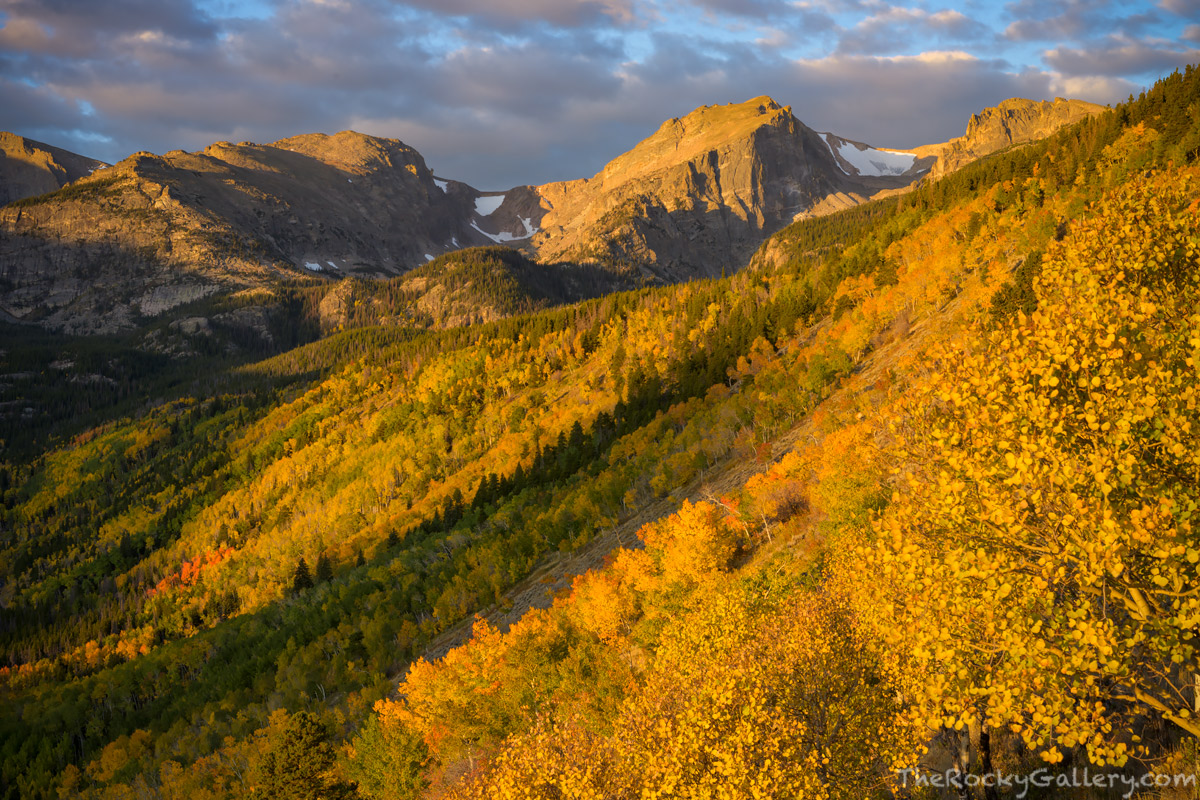
The fall color in Rocky Mountain National Park is still looking great even with the first week of October behind us. I shot this image on the Bierstadt Moraine yesterday and color on Bierstadt is still looking great. Snow and very cold temperatures are moving in Thursday so I would expect these next few days to be autumn crescendo in RMNP. Technical Details: Nikon Z7, Nikkor 24-70mm F4 S
The fall color in Rocky Mountain National is still looking pretty good for the first week of October. We continue to experience a later than usual season with everything running about a week or so behind.
Winds late last week through parts of the weekends certainly did a number on the leaves at or near peak around the Bear Lake area and Hidden Valley but overall everything is still looking pretty good in areas below Bear Lake.
On a typical year in Rocky, I would expect almost all of the autumn color to be down or past peak in the higher elevations like Bear Lake, Bierstadt Moraine, Boulder Brook, Hidden Valley etc. Even lower elevations like Moraine Park and Horseshoe Park would be passing peak most years by this time though as always there are patches here and there that will hang on longer than others.
I expect the fall color to look pretty good through Wednesday of this week. After Wednesday all bets are off as it looks like Rocky Mountain National Park will get hit by an early season snowstorm combined with record cold temperatures on Thursday and Friday.
While there may be some interesting opportunities with the combination of snow and remaining fall color, I would expect whatever color makes it through Thursday and Friday is going to turn brown and fall from the hard freeze.
My advice at this point is if you want to photograph the remaining fall color in Rocky Mountain National Park, it would be best to get out there in the next 3 days and enjoy the end of what has been an awesome fall color season in RMNP albeit a late one. Don’t overlook the interesting opportunities that may present themselves on Thursday and Friday, just don’t forget to bring the winter coat and gloves.
It was hard to beat the rainbow of fall colors on display yesterday morning at Bear Lake in Rocky Mountain National Park. Autumn continues to run behind schedule in RMNP and here we stand at Bear Lake on October 3rd, right at peak. This is easily a week behind what I would consider typical timing for autumn peak color at Bear Lake. Expect Rocky to have great color in locations through the middle of next week. Technical Details: Nikon Z7, Nikkor 24-70mm F4 s lens
Here we sit on October 4th in Rocky Mountain National Park with fall still in full swing. A mild and moderate fall continues and theres been lots of warm days with the nights getting cooler. With only one small dusting of snow above 12,000 ft since the autumn season started in RMNP, the autumn color in the park has taken its sweet time turning over.
Frankly, I have no issue with this as its been great being able to photograph much of Rocky’s fall color with my photography tour clients later into the season than is usual. The photo posted above from Bear Lake was taken on October 3rd. I would say Bear Lake is right at peak now or maybe a tad past. Typically, I anticipate photographing Bear Lake around the 22nd of September to take advantage of the best color. At nearly 9500 ft above sea level, Bear Lake is one of the first areas of Rocky Mountain National Park in which the aspens start to change.
Over a week past the anticipated timing of peak at Bear Lake and the colors look awesome still. Lower elevations of the park area really starting to come into their own as well now. About 50% of the Bierstadt Moraine has peaked and I would guess by the end of the weekend we should be looking as good as its going to get.
A caveat to all this is the forecast for the most part is calling for lots of clear skies and some windy days. I expect the wind forecast in the next few days to strip many of the leaves from the Bear Lake area but you can certainly expect to find fall colors well into next week. The early forecast for the end of the week in Rocky looks like we could see cooler temps and possibly some snow but expect good conditions with both the fall color as well as the elk rut through next week. See you out in the field!.
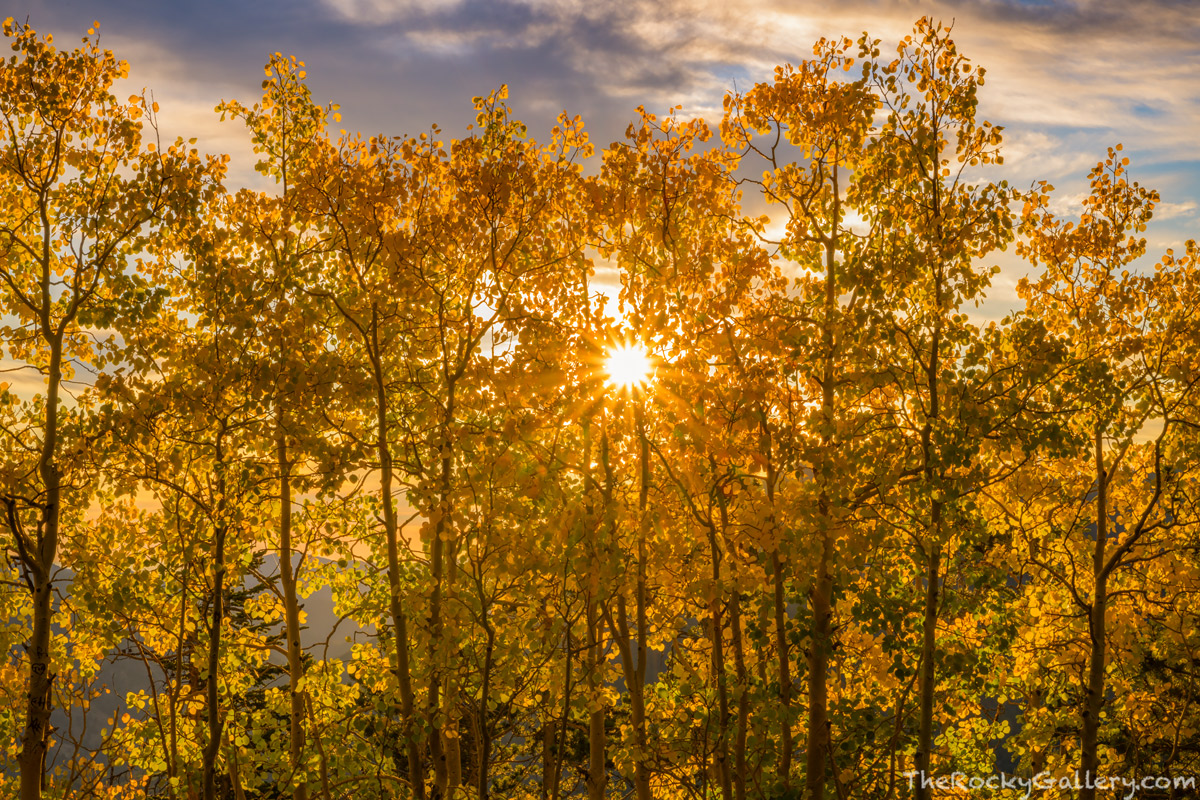
The start of the autumn season in Rocky Mountain Natiional Park this year has been slow to get going. A few cold nights and were starting to see some good color showing in pockets. I opted to photograph this small stand of golden aspen trees this morning along Trail Ridge Road at sunrise. I’d expect really good fall color conditions in RMNP by the end of the week into next week. Technical Details: Nikon Z7, Nikkor 24-70mm F4 S lens
Fall color change has been running behind in Rocky Mountain National Park. It’s running so far behind that up until the last few days with few exceptions it was actually difficult finding even small pockets of fall color.
With a few cool nights over the weekend the leaves and color seemed to have picked up steamed and there are now some smaller pockets of decent color to be found in Rocky.
This morning I opted to pass on other locations to photograph this small stand of aspen trees along Trail Ridge Road above Many Parks Curve. It’s certainly not the most impressive stand of aspens in RMNP, but the color of this stand was one pretty nice and the sun was going to rise directly behind these aspen trees. Add in some clouds and I opted to pass on the grand scenics to photograph this small scene.
There are now some nice pockets of color on the west side of Rocky, some decent patches near Hidden Valley along Trail Ridge Road and aspens starting to change over in and around Bear Lake.
At the current pace, I would expect conditions to start to get really nice towards the end of the week into next week. The elk rut is also very active right now as well so although autumn may be a bit behind, the first day of fall today certainly felt every bit the part.
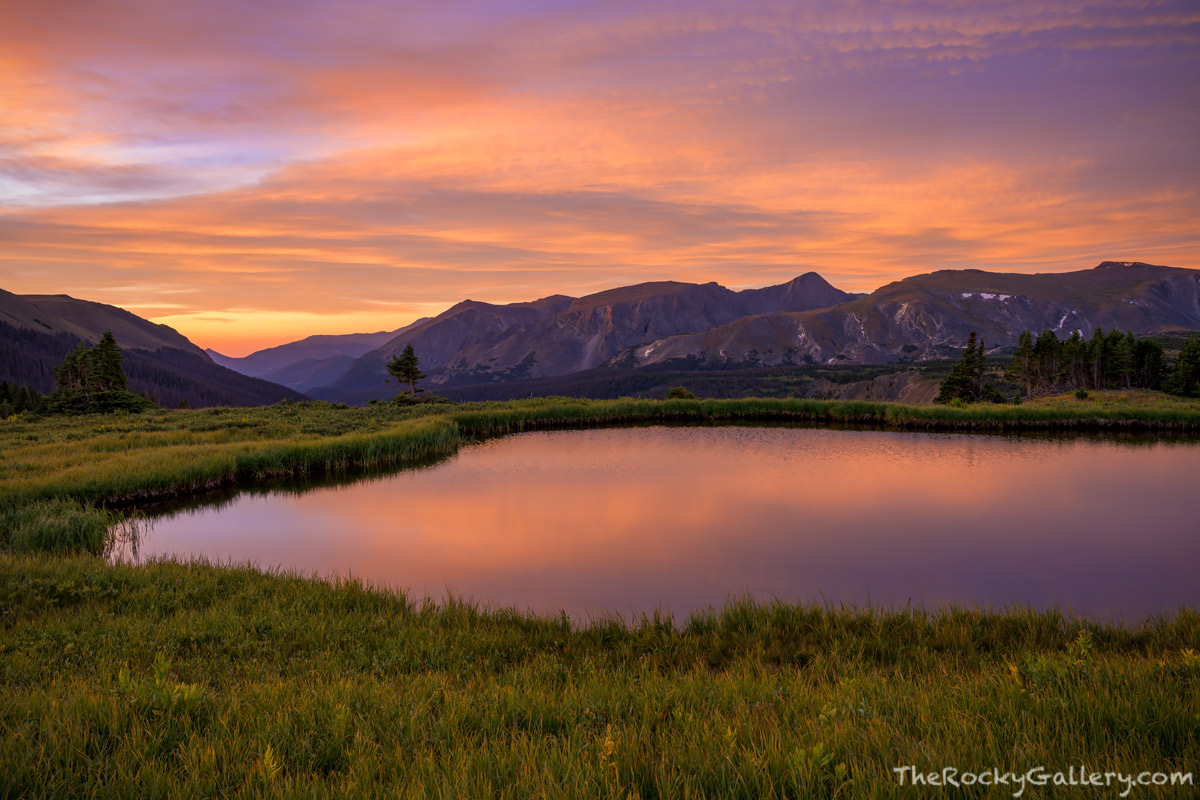
It’s hard to believe but Summer is entering the tail end here in Rocky Mountain National Park. Though fall season is only a few short weeks away, I’m taking advantage of all the great access available in the higher elevations of Rocky such as these beatiful tarns which I photographed at sunrise on Tuesday morning. Technical Details: Nikon Z7, Nikkor 14-30mm F4 S lens
It’s been a beautiful week here on the east side of Rocky Mountain National Park. There is a definite change in the air as late summer unfolds over the park. Subtle signs of the completion of summer and the entrance of autumn can be found if you know where to look.
The summer crowds and families have thinned out a bit during the mid week (weekends are still very busy). Elk can be heard starting to bugle in the meadows of the Kawuneeche Valley and up on the tundra though I would not say the elk rut has officially started as of yet.
Frost can be found on the grasses in the valley and low lying areas and the ground cover is changing color. This is also true of the alpine tundra above 11,000 ft where the short lived green grass is now quickly turning golden and auburn welcoming in fall at this highest elevations of RMNP.
The question most people have, and of course the one most photographers want to know is if there are any signs of fall color amongst the aspen trees of Rocky Mountain National Park as of yet.
There are in fact subtle signs of aspen trees starting to change color in some locations of Rocky. Some aspens above Hanging Valley near Trail Ridge Road are showing some golden leaves now as are some aspens roadside near Hidden Valley. No need to panic as this is typical for any given year and its not uncommon to find a few trees here and there changing color even as early as Labor Day weekend.
While I enjoy seeing the signs of autumn filter in RMNP, I’m still quite focused on working on adding to my portfolio of summer images of the park. The season in the high country is so short, that summer flies by in a blink of an eye each year and before you know it these beautiful and sacred places are covered over in snow and difficult if not impossible to access until next May or June depending on the winter.
We still have at least a month or so of good weather to look forward to. Sure, we could have a snowstorm or two mixed in but access to Rocky Mountain National Park’s higher elevations should be good for another 4-6 weeks.
With that in mind I headed out on the alpine tundra on Tuesday morning to photograph what was one of our best sunrises of the summer. Alpine tarns reflecting the beautiful colors of the sunrise combined with majestic mountains and thick summer grasses are some of my favorite subjects. These are also some of my favorite locations to spent time in during the summer months in Rocky.
Watching a late season summer sunrise unfold over the high landscapes of Rocky Mountain National Park and understanding how fleeting these moments are is both intoxicating and bittersweet. You never forget mornings like this one, while at the same time you understand well that summer is coming to a close and this precious moments in the park are fleeting as always.
One last note. I still have a few morning openings left for my Rocky Mountain National Park Photography tours this fall. As of this writing I still have the morning of 9/16,9/18,9/24, 10/2,10/3 and 10/4 open. If you are interested in any of those dates or dates before or after for a photography tour of Rocky Mountain National Park please contact me via email or phone.
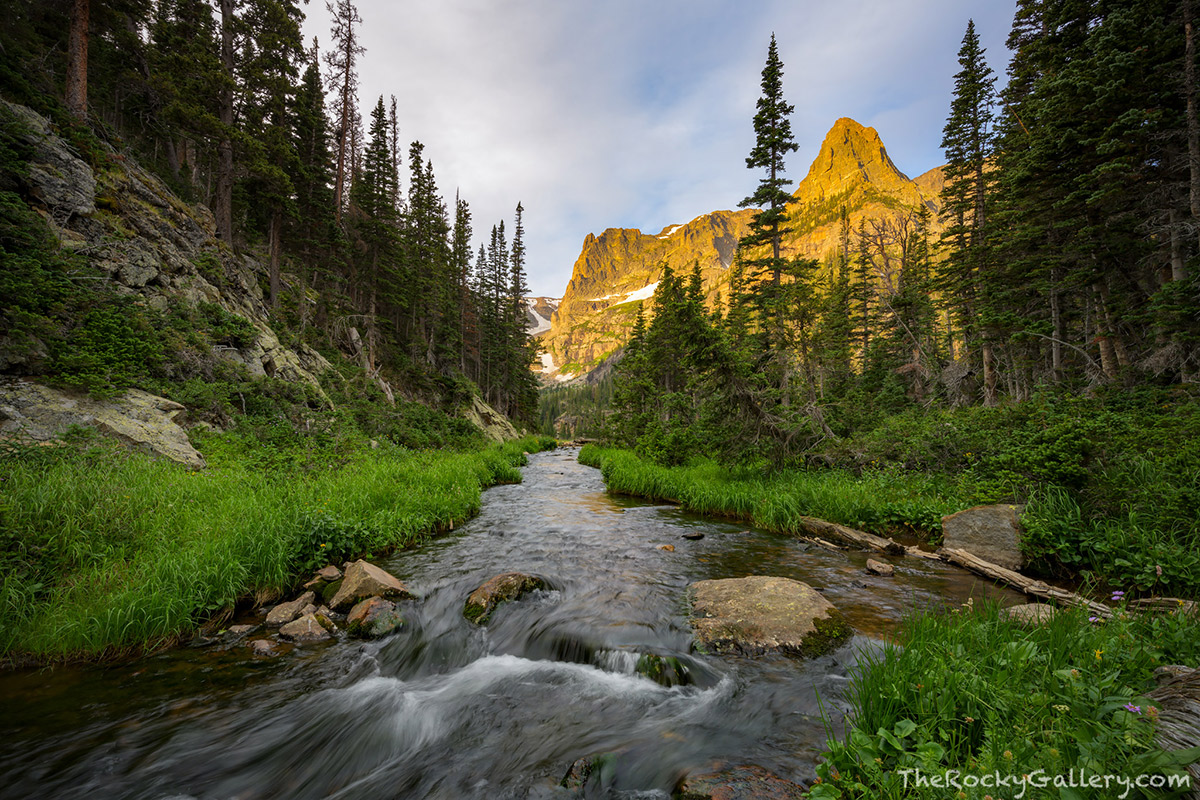
Its not first light but the lighting this particular morning along Fern Creek at Odessa Lake in Rocky Mountain National Park still looked pretty good. I had a photography tour client out with me this morning and while he was a little disappointed to put all the effort into getting to Odessa Lake for sunrise, not catching alpenglow and first light due to clouds was quickly forgotten once the sun did break through the cloud cover this morning. Technical Details: Nikon Z7, Nikkor 14-30mm F4 S lens
Whether you are a beginner when it comes to landscape photography, or a seasoned veteran of the craft, we’ve all been there. You have a location you’ve been dying to photography for months or years and the stars finally align and you have now arrived at the said destination.
You’ve played the scenario through in your head multiple times, you have all your camera gear dialed in, you know just what lens you need to use, you’ve been working out and training so you can make the long difficult hike before sunrise and the weather forecast looks promising.
You’ve now done it, you’ve arrived. Only problem is you’ve arrived to find clouds blocking the first rays of sunlight over the landscape. How could this be?. You’ve put in all this time and effort and now that you are standing behind your camera and tripod waiting to trip the shutter the light is not cooperating. Those dreams of alpenglow hitting the mountaintops, while the sky turns pink and red at sunrise will now remain in your imagination only.
For landscape photographers, this scenario plays out all the time. Having a sunrise or sunset busted by by light or no clouds or other weather related factors that take away from our perceived bias on how the scene looks is one of the most frustrating parts of being a landscape photographer.
While I have no actual numbers to base this claim on, I would bet tarnished expectations is one of the leading causes of burnout amongst landscape photographers. There’s no doubt about, putting all that time, effort and money into making an attempt at capturing a dramatic scene can begin to feel like a fools folly when it doesn’t work out.
As a professional photographer and a photography guide in Rocky Mountain National Park I see this scenario unfold often when I have clients out in the field. I’m rooting for my clients to get killer light and conditions more than anyone and when it doesn’t happen I feel for them and empathize with them as I’ve been there as many times in the exact same situation.
For many landscape photographers, the perfect window of light is the 15 minutes before and after sunrise and sunset. No doubt about it that this is the most dramatic window of light during the day. One can build a career off being in the right place at the right time while the light breaks and the landscape is filled with dramatic otherworldly lighting. The truth however, is this happens quite rarely.
When I have photography tour clients out in the field with me in RMNP, I try to manage their expectations and keep them in a positive frame of mind. Sure, we may not get that perfect image of Dream Lake at sunrise, but the light thats appeared a half hour after sunrise once its cleared a cloud bank to the east is pretty darn nice as well.
One of the things I constantly like to reinforce with my students and photography tour clients, is that you can’t only hit homeruns. Sometimes you need to hit singles, doubles and triples to set the tone or in our case our portfolios.
Just last week this very scenario unfolded. I had a client out in Rocky Mountain National Park for a sunrise photo tour. This client was hoping to capture some great images of Odessa Lake and Fern Creek at sunrise. We started early with a 2:40 AM departure from the Boulder area which culminated in the 4.3 mile long hike into Odessa Lake for sunrise.
Conditions looked promising this morning and there were clouds hanging over the divide and Rocky Mountain National Park. All landscape photographers love to have clouds in their composition unless they are blocking the sun. After our moderate hike into Odessa Lake long before sunrise, this is exactly what happened.
6:25 AM came and went and there was no alpenglow on the landscape. No fire red clouds over The Little Matterhorn or Notchtop Mountain. My client while enjoying the experience, the location and the hike in was disappointed that the sun was not shining. I tried to assure him that I thought the sun would make an appearance and while it might not be exactly the light he had envisioned, even the light a little after sunrise can look really good when you are framing Odessa Lake, The Little Matterhorn and Notchtop Mountain through your camera viewfinder.
Finally, after about 35 minutes past sunrise, the sun started to shine down on our location. While there was some disappointment, going through the motions of shooting the scene in front of you can quickly change ones mood. We spend the next 15 minutes photographing various composition at Odessa Lake until we once again lost the sunlight behind the clouds.
The light was moody once it did make an appearance and I could tell that we would be able to capture some really nice images of Odessa Lake and Fern Creek. While it wasn’t exactly the light my client had hoped for, he was very pleased with his images once he was able to get back home and get them downloaded on his computer.
As I try to reinforce with my clients, photography is all about the light. Sometimes the light may not be exactly what you had hoped for, but sometimes the light is just good enough to work.
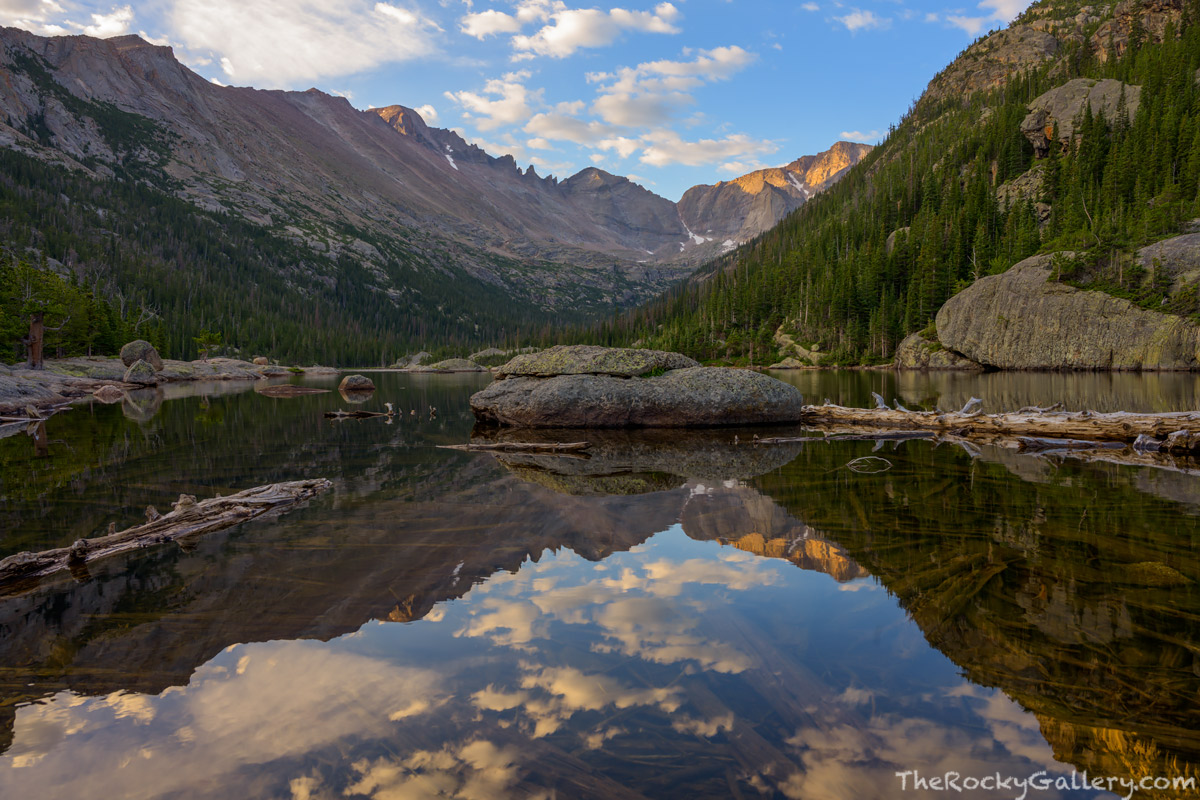
I headed up to Mills Lake on Tuesday morning for sunrise. Mills Lake is without a doubt one of the most impressive and beautiful locations in all of Rocky Mountain National Park. That being said, its a difficult location to photograph. Some clouds gliding over Glacier Gorge make for ideal conditions to photograph Mills Lake in the morning. Technical Details: Nikon Z7, Nikkor 24-70mm F4 S lens
On Tuesday morning of this week I took a quick trek up to Mills Lake for sunrise. In my opinion Mills Lake, located in Glacier Gorge is one of Rocky Mountain National Park’s most spectacular and jaw dropping locations. One of the reasons Mills Lake does not get quite as much attention from photographers as do some of RMNP’s other dramatic locations is that Mills Lake can be difficult to photograph.
With Mills Lake resting at the bottom of Glacier Gorge. It’s nestled in and around some of Rocky Mountain National Park’s most impressive and iconic peaks. Longs Peak, Rocky’s tallest peak at 14,259 ft towers above the eastern shore of Mills Lake along with Half Mountain and Pagoda Peak. To the south rests Chiefs Head Peak and the iconic Spearhead. On the west side of Mills Lake, Thatchtop Mountain rises high above with the Arrowhead down valley. With all of these impressive and iconic peaks of RMNP rising above Mills Lake, it makes for one of the most dramatic and visually impressive locations in all of Rocky.
These same peaks however, make Mills Lake difficult to photography because more times than less, they are overshadowing and blocking the sunlight in and around Glacier Gorge. This is especially true early in the morning and late in the afternoon when the sun is low in the sky.
Mornings at Mills Lake means that only the summit of Longs Peak will catch sun. In the middle of summer Chiefs Head Peak will catch first light. It still takes awhile for the sun to reach the Spearhead even during the longest days of the year.
Afternoons are best at Mills Lake but even with that said sunlight can be sparse. The backside of Longs Peak otherwise known as The Keyboard of The Winds will glow at sunset. That’s all well and good but many summer afternoons produce strong thunderstorms and cloud cover over Rocky Mountain National Park meaning you have a good chance of not getting any light at sunset. Wind is also an issue with a large lake like Mills and both the afternoon and mornings have a good chance of having a breeze flowing down Glacier Gorge.
With that said, my strategy at Mills Lake has been to look for heavy cloud cover over Longs Peak and hope there break in the cloud cover to the east. They way I see it when it comes to photographing Mills Lake, is that while I would call it more of an afternoon shot than a morning shot, a good set of clouds over Glacier Gorge can help even the score.
Tuesday morning I headed up the 2.8 miles to Mills Lake with decent cloud cover of the Gorge. That cloud cover thinned out as the sun rose, but enough white puffy clouds hung around after sunrise to make for a beautiful scene. Even better, the northern end of Mills Lake remained calm enough to allow for a great reflection. Not exactly how I had drawn up the morning in my mind, but regardless the results were still more than satisfactory.
One other note in closing here not related to photography at Mills Lake but to my tour and workshop schedule in late summer and fall. My schedule for photography tours this fall is quickly filling up. Many of my clients book these autumn dates nearly a year in advance. That being said if you are looking to take a photography tour or workshop with me at the end of August or through September and the fall color season, I still have some openings. Please contact me sooner than later and I’ll be happy to let you know what open dates I still have for summer and fall photography tours in Rocky Mountain National Park.
Late August, September and the first half of October is some of the best times to photograph Rocky Mountain National Park. It’s a great time to take a photography tour and I’’m happy to try and accommodate anybody who is interested in heading out with me in the next few months.
Memorial Day weekend is here and with it the unoffical start of the summer season has arrived in Rocky Mountain National Park. Lots of fellow photographers will be out in RMNP this weekend looking to shake the rust off from a long winter slumber. Below is an update of what to expect in Rocky this weekend for your visit. Here’s an image of Dark Mountain from Rainbow Curve earlier this week. As the image depicts, much of Rocky Mountain National Park is still taking it’s time transitioning from winter to spring. Technical Details: Nikon Z7, Nikkor 70-200 F4 AF-S VR G lens
The unofficial start of summer has finally arrived and lots of photographers are loading up their vehicles, packing the camera and camping gear, and heading out to shake the rust off after a long winter.
Theres nothing quite like the anticipation and excitement that comes along with that break in run to start summer. A fair share of landscape and wildlife photographers will be heading up here to Rocky Mountain National Park over the Memorial Day weekend to get their photography fix. For those heading up here to Estes Park and RMNP this weekend here is what you can expect.
First off as it currently stands the weather looks decent compared to the winter like weather we have been experiencing for much of May. With the exception of Monday, the weather in Rocky looks more or less seasonal with partly sunny days. As is often the case with Rocky Mountain National Park it appears the wind will be accompanying photographers much of this weekend so plan accordingly. Mornings look like they will be mostly clear and with higher winds, capturing reflection at many of the lakes and open bodies of water may be tricky.
Photographers will find the lower elevations mostly clear of snow by the time they arrive though trails will be muddy and wet in spots. Higher elevations such as the Bear Lake trailheads will still be packed snow and ice. Traction such as Microspikes or Yak-Trax would be highly recommended. As it warms during the day the snow will soften and post holing through soft snow is likely. Meadows in the lower elevations of the park have just started to green up and the aspen trees in locations such as Moraine Park and Horseshoe Park are just leafing out now. Aspen trees and deciduous plants above 9000 ft are for the most part yet to leaf out.
Roads in the park that are closed seasonally are mostly now open. Upper Beaver Meadows, Wild Basin Road, Inn Keepers Road on the west side of Rocky are now all open. Old Fall River road wont open until July as it stands now which is inline with its normal opening time. As of this writing the road to the end of the Twin Sisters trailhead was still closed which will require parking at the two Lily Lake parking lots.
Trail Ridge Road, the highlight of Rocky Mountain National Park for many visitors will not be open this Memorial Day weekend. The National Park Service crews have been working tirelessly since April in an attempt to open Trail Ridge Road but heavy snowpack over the winter combined with powerful late season snowstorms have made it impossible to safely open Trail Ridge Road from Estes Park through to Grand Lake.
Make sure to enjoy RMNP this weekend as well as the unofficial start of summer. Remember that Rocky has been experiencing record visitation and this weekend will be busy. Be respectful of the park, wildlife and other visitors. Remember to stay on trail and use Leave No Trace principles if you are going to deviate from visiting locations off the beaten path.
In a nutshell remember to leave Rocky better than you found it. Pickup any loose trash, think about visiting areas that are less likely to be crowded and try to be mindful of your impact on the land, wildlife and the park. Most importantly have a great time visiting Rocky Mountain National Park while hopefully coming away with a handful of great images you can add to your portfolio when you get back home.
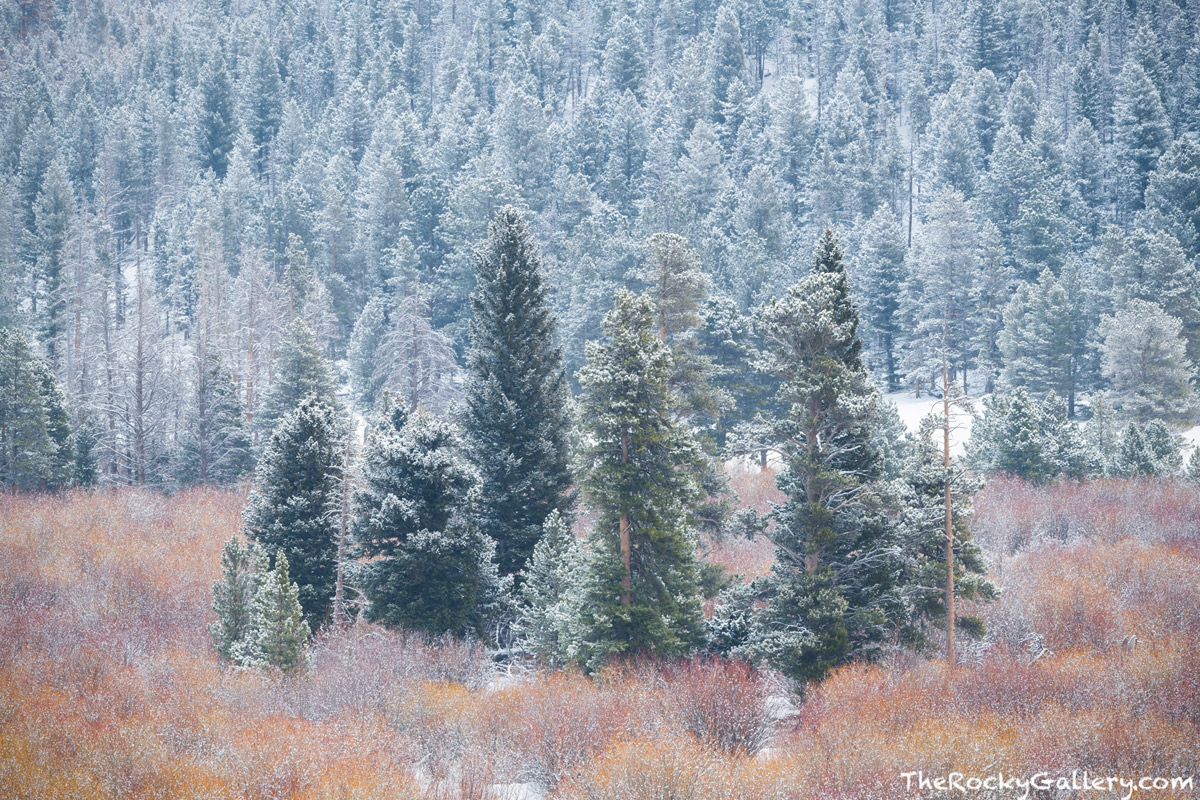
Embracing all kinds of light means its important for landscape photographers to navigate through all the different kinds of light that may fall on a landscape. Dramatic lighting on iconic scenes is awesome but learning how to photograph under more subtle lighting condtions can be just as rewarding. Sublte ligithing conditions can allow one to capture a sense of place better or to photograph locations that dont work well under more dramatic lightingn conditions. I’ve been waiting for a gray day to photograph this scene in Rocky Mountain National Park for quite awhile. Snow on the trees and willows combined with overcast lighting allowed me to bring out the blues on the pines and the reds of the willows in a more discrete fashion.Technical Details: Nikon D850, Nikkor 200-500mm F5.6 AF-S VR E lens
The trend in landscape photography has been every more dramatic, epic, and otherworldly lighting conditions. Combine this was some iconic spot and one has the formula for a Facebook post, Tweet or Instagram post to garner lots of likes or maybe even go viral. The euphoria and endorphin rush with capturing a scene under dramatic lighting combined with lots of likes and comments on social media feeds right into one’s ego and can set a photographer on a temporary feel good high.
As with both light and capturing that light with a camera and creating a photograph, these conditions and moments in time are ethereal. Both the photographer and their mostly anonymous social media fan club that liked, shared and retweeted the image, will move on to another image or shiny object.
Make no mistake about it, as a landscape photographer the condition that allows me to convey my message and portray my subjects personality and mood is the lighting. Like most other landscape photographers I strive to photograph my subjects in the most dramatic lighting conditions possible. I study the conditions, topography and subject envisioning the best conditions that will render what I perceive as a reflection of the sense of place of a given location based on what the potential lighting conditions may be. I’ll stare at a landscape and envision what it would look like wrapped in fog or lit with sun and clouds in a manner that flow with jagged peaks or deep canyons.
Even though I strive to photograph locations in dramatic lighting conditions, some of my favorite light on the landscape is still plain old diffused lighting found on cloudy, rainy and snowy days. For me, while this particular lighting is more subtle and quiet, it often allows me to photograph subjects and conditions that would not reflect the sense of place under more dramatic lighting conditions.
Earlier this week I found myself immersed one morning in cloudy overcast lighting conditions on the east side of Rocky Mountain National Park. I headed out in Rocky this particular April morning with the hopes that we would get some breaks in the cloud cover at sunrise. Snow had been falling the night before and being as difficult as it is to capture landscape images in Rocky after snow (on account of high winds and bluebird days preceding storms), I’m always going to take my chances hoping the light breaks my way. While I’ve had more than my shares of sunrises and sunsets where this has not worked, many of my most dramatic images have happened on mornings when chances were slim anything dramatic would happen.
Well as so often happens the dramatic lighting did not come this morning. It looked good at times with breaks in the cloud cover but just as sunrise approached snow moved back in over Rocky Mountain National Park’s east side and the lighting on the landscape remained gray and diffused.
I could have packed it up and left the park. Instead I started scanning the list in my head of locations I wanted to photograph under these conditions. That list is as long or longer than the locations I want to photograph in RMNP under prime lighting conditions and sun. Instead of sulking and heading home I was excited and energized by the prospect of being able to shoot locations and subjects that I’d normal pass on.
With this in mind I headed out into Hollowell Park. Hollowell Park is a beautiful location accessed from Bear Lake Road. Great hiking trails emanate out of this small park but I would think for most landscape photographers shooting Rocky, its not high on the ‘to-do’ list as the view of the mountain peaks are not quite as sexy as they are further up Bear Lake Road.
But there is plenty to photograph in Hollowell Park, especially under gray, diffused light. Fresh snow on the landscape and snow covered pines, willows and aspens could keep me and my camera busy and clicking all morning. Even better was I had the entire area to myself that morning kept company only by a pair of ravens, the occasional mountain bluebird and a pack of coyotes.
It get’s tiring hearing many well known photographers rail against the copycat nature that seems perverse in the craft these days. Comp-stomping has become and epidemic and social media only serves to fuel this behavior. That being said, we’ve all been there at one point or another and I can still get just as excited for a dramatic sunrise at Dream Lake as I could twenty plus years ago when I first started photographing Rocky Mountain National Park.
Nowadays I get just as excited for cloudy, gray days to photograph. In fact, with 300 plus sunny days a year here on the Front Range of Colorado, getting these kinds of conditions can be difficult at times. The bottom line is that its important to embrace all kinds of light.
Enjoy and photograph dramatic lighting, but also learn to embrace and enjoy the more subtle lighting when it arrives. It will make you concentrate of both your subject, your composition and your surroundings more. I think you will also find this kind of lighting will allow you to create images that are both more original, and speak to your creative side as much or more than dramatically light iconic subjects.