Little Bit Of Fall Left

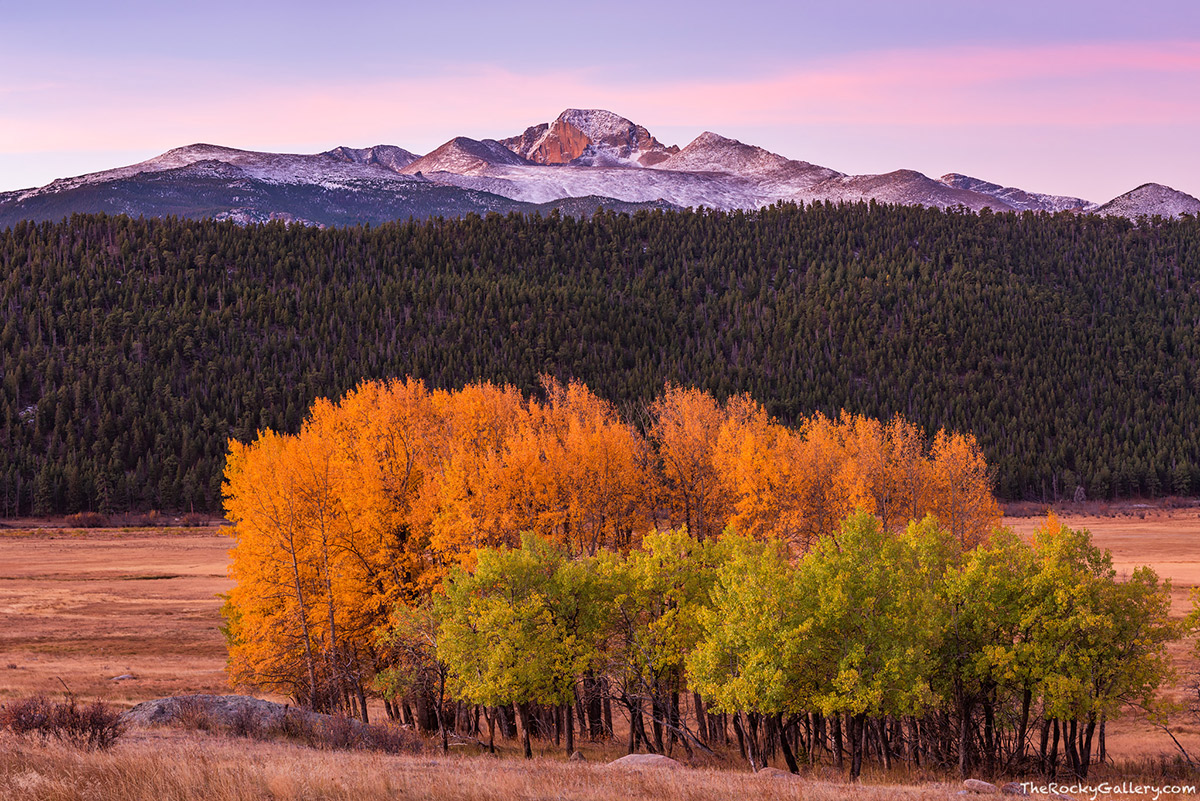
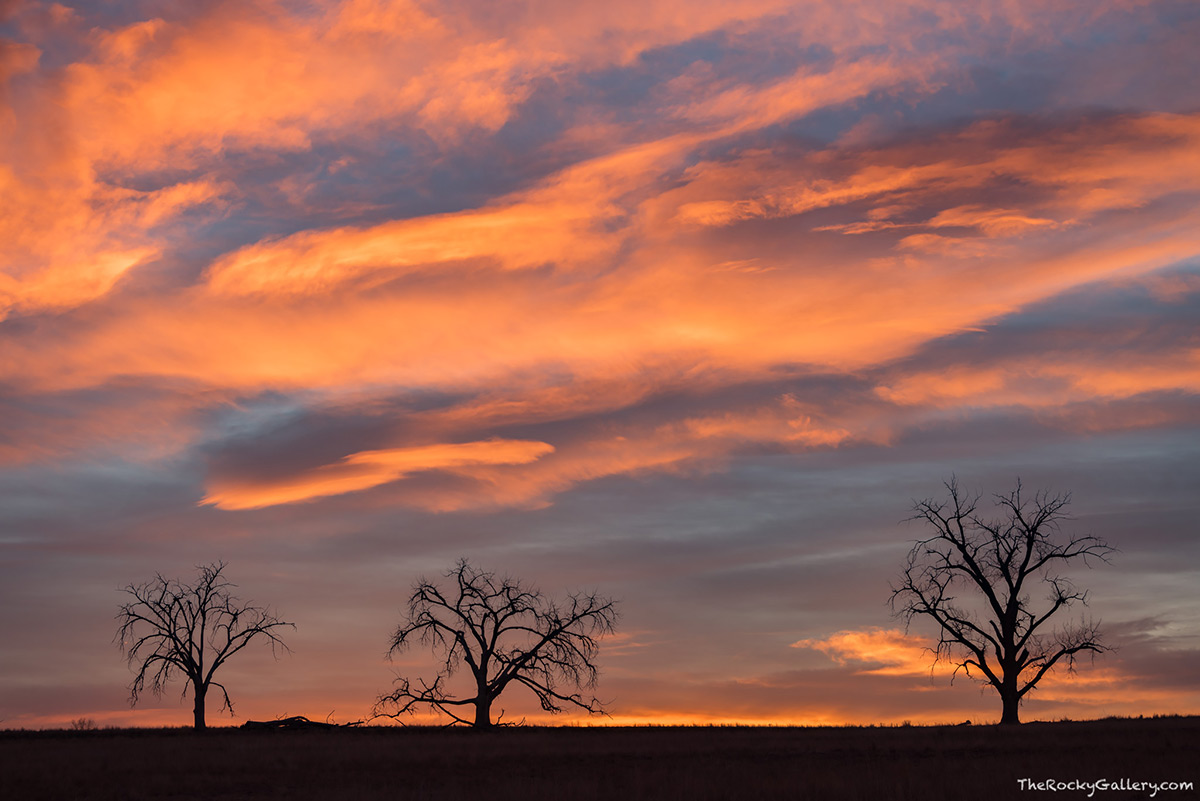
Even though the autumn season in Rocky Mountain National Park is quickly coming to a conclusion. There are still a few areas in the lower elevation of Rocky Mountain National Park where one can capture images of the fall season. These narrowleaf cottonwood trees in Moraine Park looked stunning as first light illuminated a snow covered Longs Peak yesterday morning. The aspen trees just in front of the golden cottonwoods are just starting to change from  green to yellow. Technical Details: Nikon D810, Nikkor 24-70mm F2.8 ED AF lens
Even though the autumn season in Rocky Mountain National Park is quickly coming to a conclusion. There are still a few areas in the lower elevation of Rocky Mountain National Park where one can capture images of the fall season. These narrowleaf cottonwood trees in Moraine Park looked stunning as first light illuminated a snow covered Longs Peak yesterday morning. The aspen trees just in front of the golden cottonwoods are just starting to change from green to yellow. Technical Details: Nikon D810, Nikkor 24-70mm F2.8 ED AF lens
Autumn always seems to come to end in Rocky Mountain National Park to quickly. While its a wonderful time of year in the park, photographing the fall season is a challenge. Photographers are at the mercy of the weather and trying to be in the right place at the right time always mixes preparedness with a little bit of luck and maybe a dash of serendipity.

The coming crescendo of the autumn season in Rocky Mountain National Park will be met with satisfaction and enjoyment of the season, but also a little bit of sadness as we watch the landscape begin its transformation from the brilliant colors of autumn moving towards its long winter slumber. It’s a both a humbling and somewhat frightening experience to watch winters grip removed by the growth and warmth of spring and summer only to see it wiped away in such a short amount of time. Though I wont say I appreciate the coming of winter and the end of fall, it does allow one sometime to recharge and reflect on the beauty of the past season.

So while the fall season in Rocky Mountain National Park is quickly moving towards and end, there are still some opportunities to photograph the last hold outs of autumn. As of this writing there are still a few stands of aspens in the lower elevations of Rocky Mountain National Park that have some color. Moraine Park, a few areas around Upper and Lower Beaver Meadows as well as Horseshoe Park can still yield beautiful fall photographs. Higher elevations such as the Bierstadt Moraine and the Boulder Brook area are now far past peak.

Dont give up quite yet on fall in Rocky Mountain National Park. There are still a few areas that can yield some nice autumn images over the next week or so in the park. Enjoy the last vestiges of fall while they are still able to be enjoyed.

A Little More Change

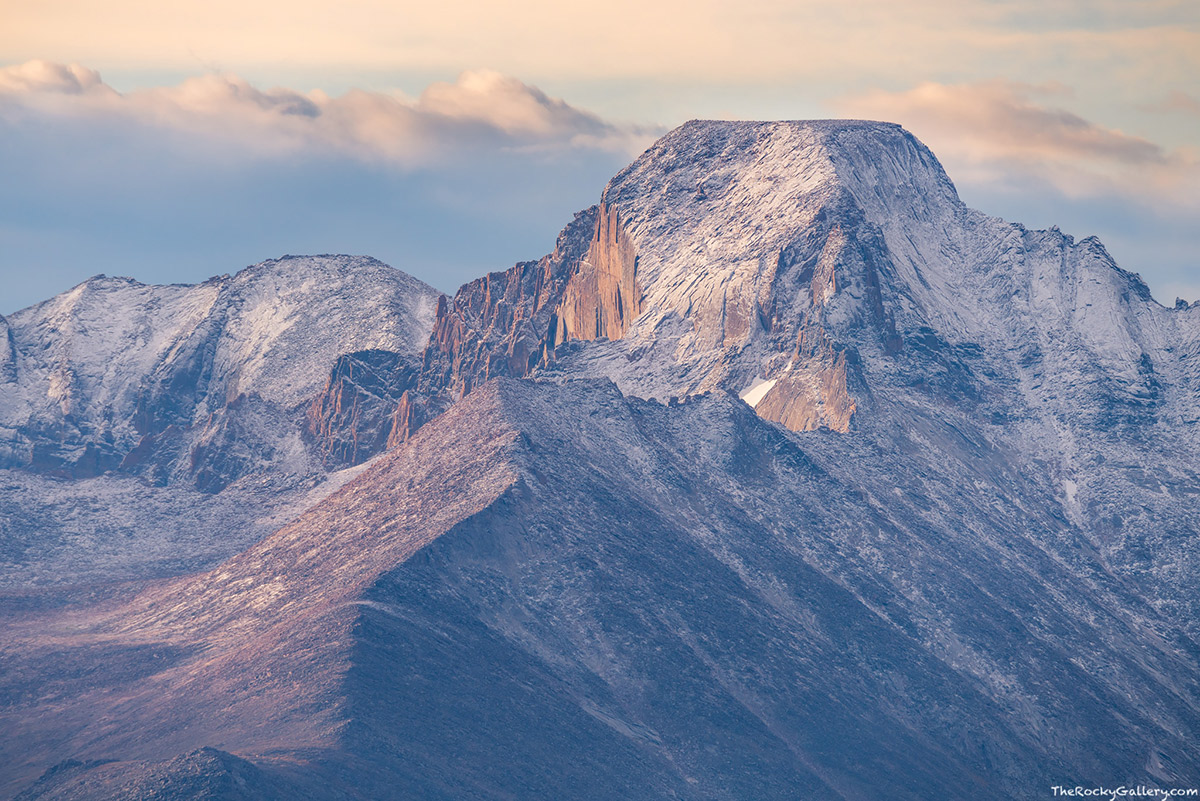
The date on the calendar says August 26th, but the conditions in Rocky Mountain National Park on this morning seems more like those found in winter. I arrived in RMNP this morning to find the landscape above 11,500 ft covered with a nice dusting of fresh snow. Longs Peak looked great covered in snow as seen in this view from Trail Ridge Road and the Rock Cut. Technical Details: Nikon D810,Sigma150-600mm 5-6.3 DG HSM OS C lens

No sooner had I finished writing and posting my previous blog post about current conditions in Rocky Mountain National Park and the subtle changes in the seasons before the weather in RMNP does what it’s famous for, change dramatically again.

True to form, not only are there signs of autumns impending arrival, but the weather in Rocky Mountain National Park on Friday morning decided to remind us that not only is fall right around the corner, but so is winter. While rain had fallen overnight in most elevations of RMNP on Thursday night, it was cold enough to put a light but healthy dusting of fresh snow on the landscape above 11,500 ft.

I drove up Trail Ridge Road early Friday morning looking to see if there would be any breaks in the cloud cover that morning for sunrise. Approaching the Forest Canyon overlook I could see it was more than just droplets of dew on the grasses and tundra and that there was a light dusting of snow right near timberline. Taking a moment to take a good look at Longs Peak in the predawn light, I could see it was also coated in fresh snow. While its a little early, snow in late August on the high peaks is fairly common. Heck it makes for some nice photographs as well so I’m certainly not complaining, I mean whats better than photographing 3 seasons all in the course of a couple of days?

So lets recap the current conditions in Rocky Mountain National Park. It’s still summer. Most of the park is still green, lakes are free of ice and trails are clean and clear. Signs of autumn have started to rear their head in the nooks and crannies of RMNP. A few aspen trees here and there are showing some color and some of the smaller ground foliage has turned red and orange. Lastly, even though it August, we can and do get occasional snow events covering the summer landscape with a winter like cloak.

Little Signs Of Autumn

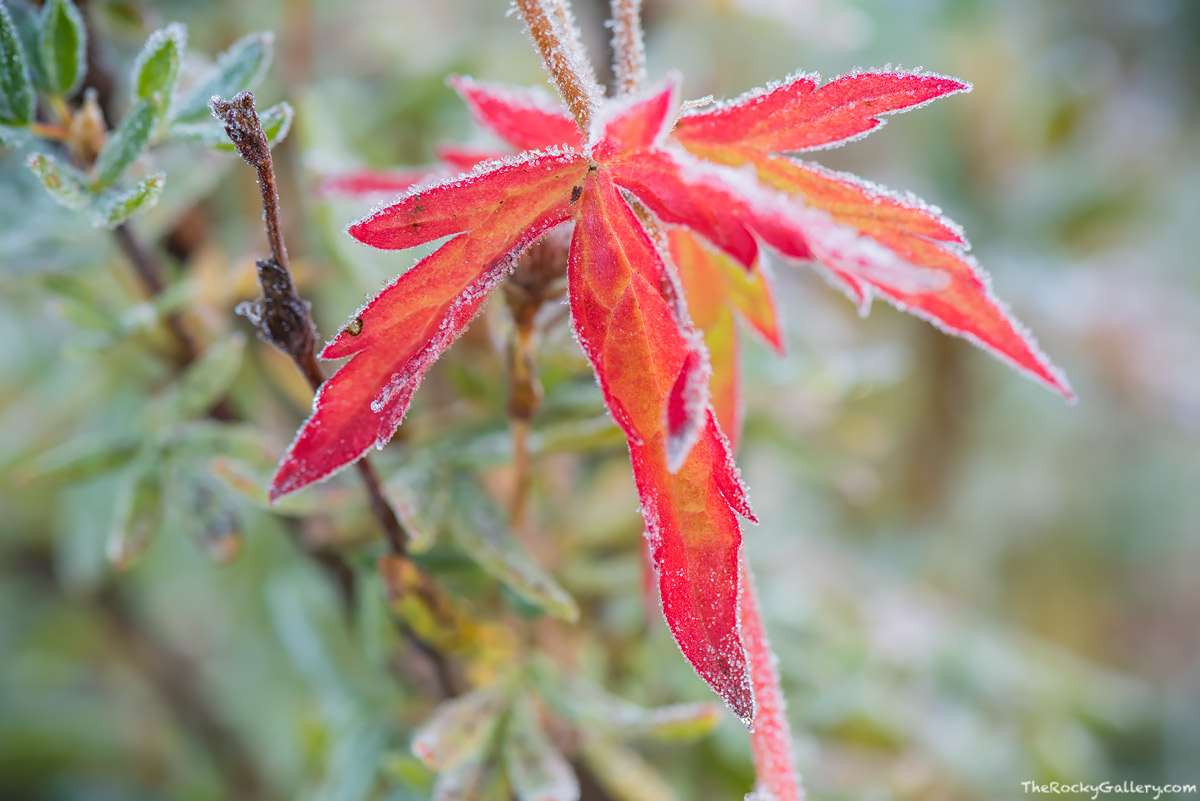
The summer season in Rocky Mountain National Park always comes and go much too fast for comfort. Small signs of fall can be found already in RMNP if you look for them. A heavy frost covered the grasses of the Kawuneeche Valley this morning and these small frost covered plants were already displaying their autumn colors. Technical Details: Nikon D810, Nikkor 105mm Micro ED AF VR
Changes are starting to take place in Rocky Mountain National Park as they always do towards the backend of summer. Summer never seems to stick around as long as one would like and as soon as summer is upon us here in Rocky Mountain National Park, it seems like it’s back on its way out. It’s a conflicted period for me as on one hand while I love photographing the summer season in Rocky, Fall narrowly pulls ahead of summer as my favorite time to photograph RMNP.

It’s still summer and it’s still a bit on the early side (though not that early) to be talking about fall color conditions in Rocky Mountain National Park. With that said and keen observer will already notice that impending signs of autumn have begun to settle into the park.

The tundra grasses above timberline have turned brown and red high on the mountainsides, Bull Elk have shed their velvet and the bulls are starting to collect harems and bellow that beautiful and haunting bugle. Some of the aspen trees which typically turn golden yellow early in the season are showing yellow leaves. Lastly heavy frost has coated the meadows of Rocky Mountain National Park and some of the smaller deciduous ground cover have started to display their intense autumn colors.

On the west side of RMNP this morning fog drifted through the Kawuneeche Valley and a heavy frost covered the grasses of the Kawuneeche. Taking a minute to study the frozen grasses in the meadow I found not only the remnants of summer in the form of some frozen wildflowers, but also some beautiful reds, orange and yellow brush on full display. While there is no need to panic and things are very much on schedule, when in Rocky, take a minute to inspect the hidden and oft overlooked and you will be amazed at the autumn beauty you can already find.

One last note: I still have a few opening for photography tours in Rocky Mountain National Park during the end of September into early October. Availability is quickly filling up and if you think you would like to book a tour date it would be a good idea to do so soon.

After The Icons

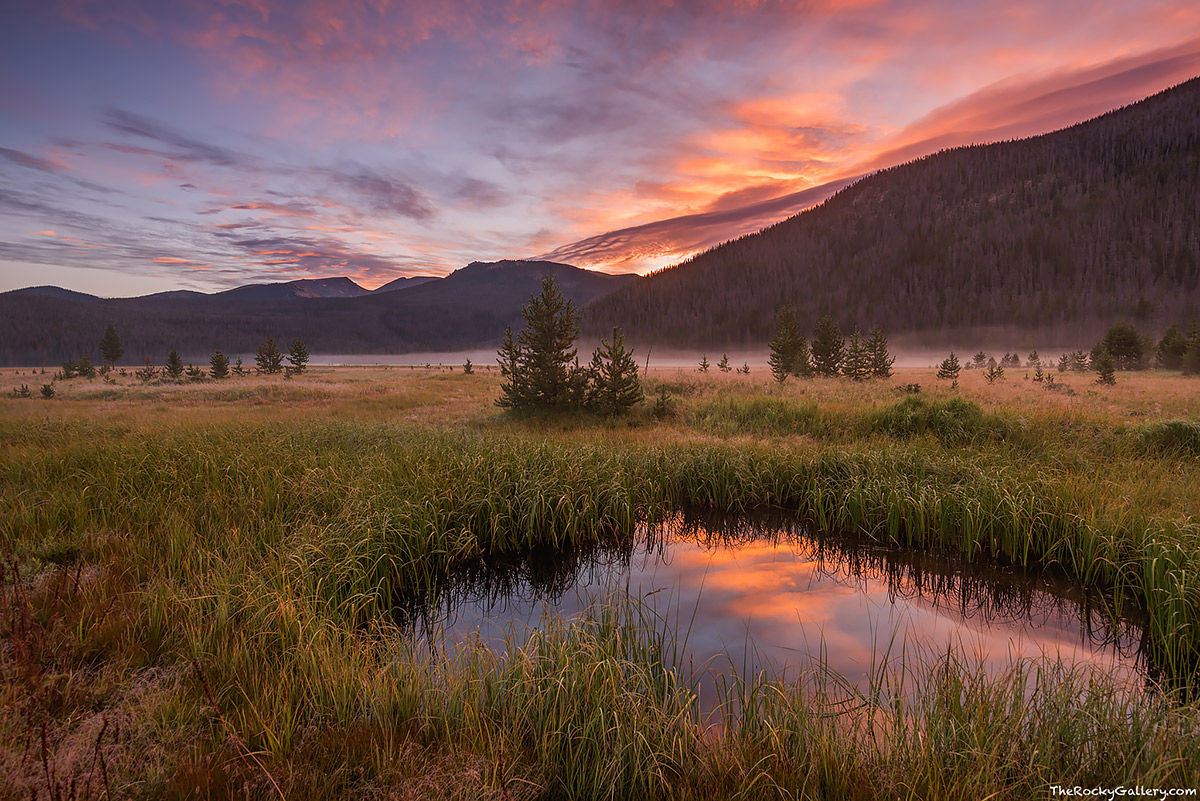
Sunrise over Big Meadows on the west side of Rocky Mountain National Park. Many would not consider Big Meadows one of the must photograph locations in Rocky Mountain National Park. Many hikers and photographers will pass through Big Meadows but it's beauty is more subtle and often ignored. Every location in Rocky has its own beauty, it's just a matter of capturing each location under the right conditions. Technical Details: Nikon D810, Nikkor 16-35mm F4 AF ED VR
Sunrise over Big Meadows on the west side of Rocky Mountain National Park. Many would not consider Big Meadows one of the must photograph locations in Rocky Mountain National Park. Many hikers and photographers will pass through Big Meadows but it’s beauty is more subtle and often ignored. Every location in Rocky has its own beauty, it’s just a matter of capturing each location under the right conditions. Technical Details: Nikon D810, Nikkor 16-35mm F4 AF ED VR
Dream Lake, The Rock Cut, The Loch, Chasm Lake, Moraine Park all these constitute some of the most beautiful locations in Rocky Mountain National Park. These qualify as icons and as such photographers flock to these locations when visiting Rocky Mountain National Park. These locations are iconic because they are stunningly beautiful locations with or without a camera in hand. We all love photographing these icons of RMNP, but what about photographing locations in Rocky that are less iconic but have their own unique beauty and aura to them?.

Photographing non-iconic locations is by far more challenging then setting up along the shore of Dream Lake to photograph sunrise. For me at least, every nook and cranny of Rocky Mountain National Park holds beauty. That beauty may be more subtle than the knock your socks off, in your face beauty of Dream Lake but its there if you look for it. I find some of my most rewarding images of Rocky Mountain National Park are ones taken in locations that other photographers feel are either blasé or ones other photographers consider somewhat pedestrian when it comes to the landscape.

Every location in Rocky is beautiful and for me it’s about finding the right conditions and light to bring out the beauty and mood of a given location. Take for example the image above. Big Meadows on the west side of Rocky Mountain National Park is an often visited location. That being said you wont find many images of Big Meadows in books, calendars or postcards. For the most part, hikers and photographers to Big Meadows will travel right on through on their way to what they consider more scenic areas of Rocky.

I’ve done this very thing many times myself but each time I pass through Big Meadows I think what a beautiful location it is and what conditions would I need to be able to convey the mood and spirit of this location. Big Meadows is exactly what the name describes it as. It’s a large grassy, marshy meadow surrounded mostly by some of Rocky more nondescript and less iconic peaks. There is no lake here, no giant granite mountain face towering over the the meadow. It’s a more subtle beauty, one where you are more likely to be photographing alongside a moose grazing along Tonahutu Creek then alongside another photographer.

So while its fun photographing the iconic locations of Rocky Mountain National Park, I feel it is just as important if not more so to photograph the beauty of the less iconic locations. A few weeks back conditions were perfect for what I had envisioned would be necessary to successfully photograph Big Meadows. Clouds drifted over the mountains and fog was present in the meadow. I had made a mental note to myself that the next time conditions unfolded like these I should make an attempt to hike into Big Meadows and see if I could capture the feel and mood of this beautiful spot.

I’m sure Dream Lake would have yielded a beautiful image as well this particular morning, but squishing around the wet grasses and soil of Big Meadows on this magical morning was not only worth it, but I was rewarded with an image of Big Meadows that I think perfectly captures the beauty of this location.

Party On!

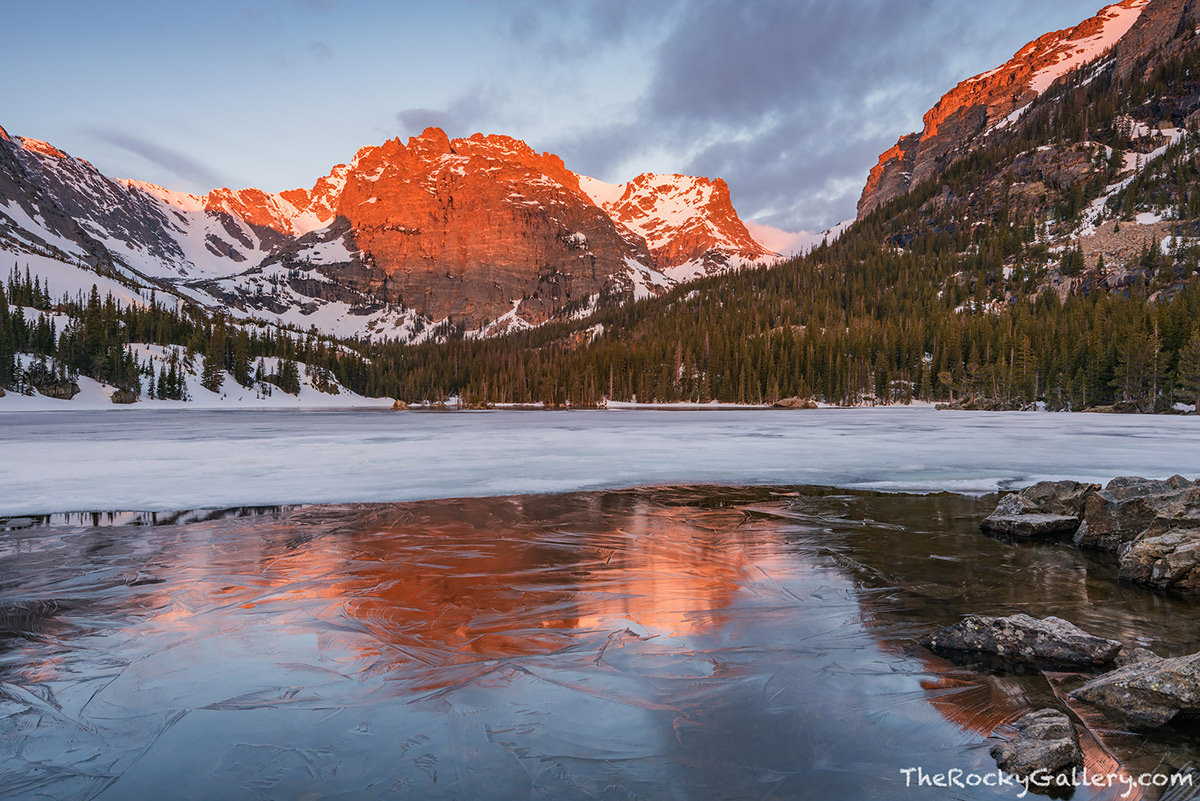
With the Memorial Day holiday here it's officially time to get your party on and start exploring Rocky Mountain National Park. With Trail Ridge Road open and temperatures warming RMNP is becoming more accessible each day. I photographed a mostly frozen scene at The Loch on Thursday(pictured above) and then was snow on at Bierstadt Lake on Friday morning. Even so, summer like conditions in Rocky will quickly be upon us. Technical Details: Nikon D810, Nikkor 16-35mm F4 AF-ED VR lens
With the Memorial Day holiday here it’s officially time to get your party on and start exploring Rocky Mountain National Park. With Trail Ridge Road open and temperatures warming RMNP is becoming more accessible each day. I photographed a mostly frozen scene at The Loch on Thursday(pictured above) and then was snow on at Bierstadt Lake on Friday morning. Even so, summer like conditions in Rocky will quickly be upon us. Technical Details: Nikon D810, Nikkor 16-35mm F4 AF-ED VR lens
It’s Memorial day so we now have the official start to summer upon us. Summer seasons in Rocky Mountain National Park is here and much of the terrain in Rocky Mountain National Park will soon be more accessible and easier to access.

Trail Ridge Road officially opened for the season a day late on Saturday, May 28th after being delayed a day due to snow falling on the road on Friday. As of this writing, Trail Ridge Road is typically cleared each night and closed at 8:00 PM due to the potential for ice on the road. Depending on the conditions in the morning, the rangers usually reopen Trail Ridge Road around 8:00 AM the following morning. Within a few weeks Trail Ridge Road will once again be open 24 hrs a day as the snow melts away from the shoulder of the road. Fall River Road won’t be open until July 4th as it typically is each year.

The high country trails and lakes are starting to thaw out and melt. Sloppy intermittent snow covered trails can be found now above 8000 ft. From about 10,000 ft on down most lakes are open or partially covered with ice. You can expect to be postholing on portions the trails and if you plan on going much higher in elevation than 10,000 ft expect near winter travel conditions in Rocky.

It’s an exciting time in RMNP now as summer finally begins to descend upon the park. Access gets easier and the potential for landscape photographers increases on a daily basis as temperatures warm and last winters snow melt. Have fun out there and make sure to take advantage of this all too short but sweet time of year.

Keeping It Fresh

I'm often asked by people if I ever get bored or tired of photographing in Rocky Mountain National Park. Many assume that I must have run out of good locations to photograph by now. The truth however, is that there is an unlimited amount of opportunities for photography in Rocky and I have a list of locations I would like to photograph from that I won't be completing anytime soon. Technical Details: Nikon D810, Nikkor 24-70mm F2.8 ED AF
I’m often asked by people if I ever get bored or tired of photographing in Rocky Mountain National Park. Many assume that I must have run out of good locations to photograph by now. The truth however, is that there is an unlimited amount of opportunities for photography in Rocky and I have a list of locations I would like to photograph from that I won’t be completing anytime soon. Technical Details: Nikon D810, Nikkor 24-70mm F2.8 ED AF
People often ask me if I ever tire of photographing Rocky Mountain National Park. After all, I spend the majority of my time in the field photographing in Rocky. When I field this question people assume that I most get bored photographing in the same locations in RMNP time and time again. In reality I find the opposite actually holds true. The more time I spend photographing in Rocky Mountain National Park, the more I realize just how much there is to photograph and just how much of a folly it is to every think once can photograph an amazing location like Rocky to the point of no longer being able to find new or unique compositions.

While I still photograph many of the well known locations in RMNP, I’m constantly on the lookout for new viewpoints or scouring my topographic maps trying to figure new locations which may hold great potential. New locations, varying lighting conditions, changes in seasons all make it easy to find new locations and opportunities for photography in Rocky Mountain National Park.

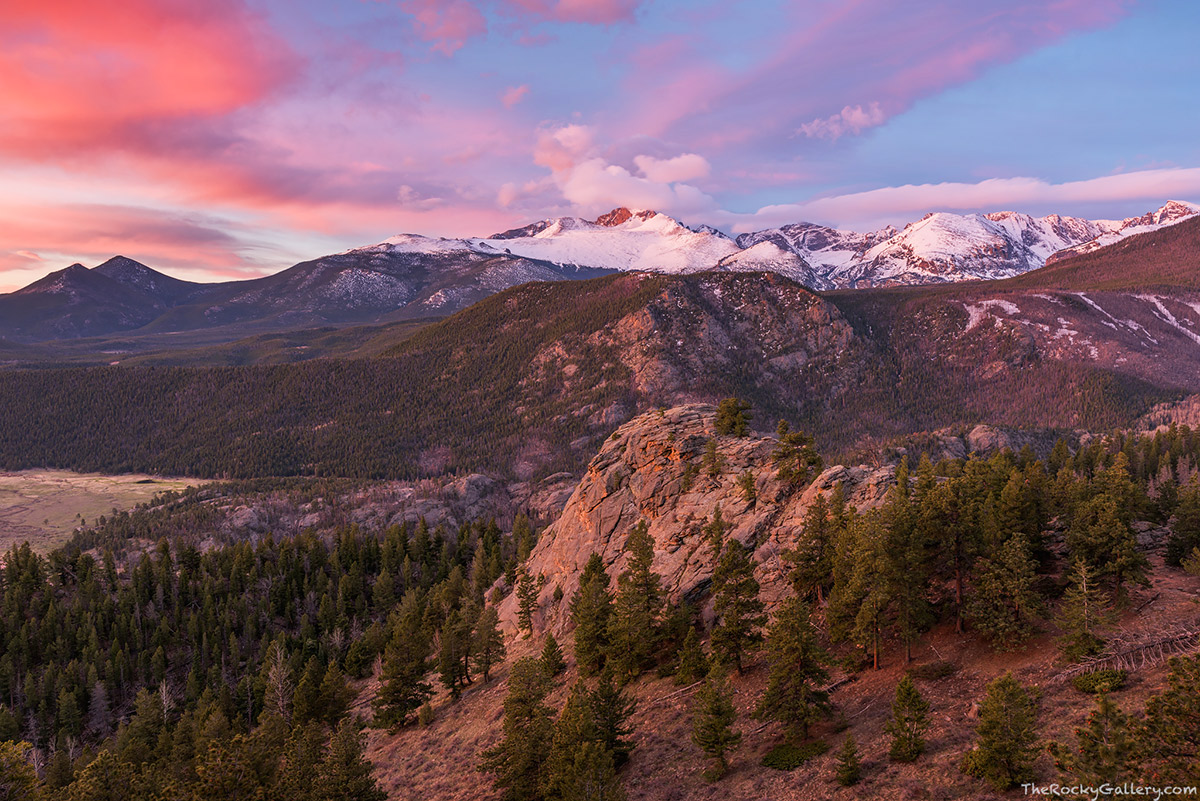
This past Friday I was able to get to a location I’ve been eyeing quite a few times but had yet to shoot. High above Moraine Park on the side of Beaver Mountain are some nice vistas of Longs Peak, Chiefs Head Peak, Thatchtop, Otis and even Hallett. I’ve been waiting for the right cloud setup before photographing from this location. As the high country of Rocky Mountain National Park thaws out I’ll end up spending much of my time photographing from those locations so I have a somewhat short window to photograph from this area before I start dedicating much of my time to locations that become more accessible as the temperatures warm.

Conditions where just about perfect on Friday from the side of Beaver Mountain and I was able to capture the image I had been envisioning for sometime. I have quite a large list of locations like this one on Beaver Mountain that I have yet to photograph from, so I don’t think I’ll be running short on locations to photograph in Rocky anytime soon.

So This Is Spring?

So this is spring in Colorado?. Weather in Colorado during the spring months is quite unpredictable. One day may be sunny and warm and the next day a blizzard. This dynamic weather is what makes being a landscape photographer in Colorado so much fun. Sure I can wait for the lakes to thaw and wildflowers to bloom but scenes like these on Flagstaff Mountain just west of Boulder are hard to pass up. Technical Details: Nikon D810, Nikkor 70-200mm F4 AF ED VR

Leaves are starting to bud on the tree’s, early season wildflowers have begun to make an appearance, the grass is turning green and the days get longer and longer. Spring is in the air here in Colorado and what better way to enjoy a mid April spring weekend with anything other than a nice big drop of fresh snow. It would not be a true Colorado spring if it was not for the warm weather head fake that the Front Range of Colorado is so well versed at performing.

As I write this, heavy wet spring snow is falling hard outside my office window and the mountains are covered with snow reminiscent of a scene straight from a Christmas movie. While meteorologists were calling for some of the areas of the foothills to receive between two and four feet of new snow, warmer temperatures seem to have kept the snow totals down in many areas. Even so, there is a significant amount of snow that has fallen over the higher elevations of Rocky Mountain National Park as well as the foothills just west of Boulder. So while my excitement grows each day as we move towards my favorite season (summer) in the Rockies, we photographers get another chance to get out in the field and enjoy this white winter landscape that now sits before us.

So when the weather gives you lemons, it’s best to make lemonade as they say. Break out the winter parka’s, snow boots and gloves and get out and make some new images. These spring storms often offer the best opportunity to photograph your favorite landscapes covered in snow.

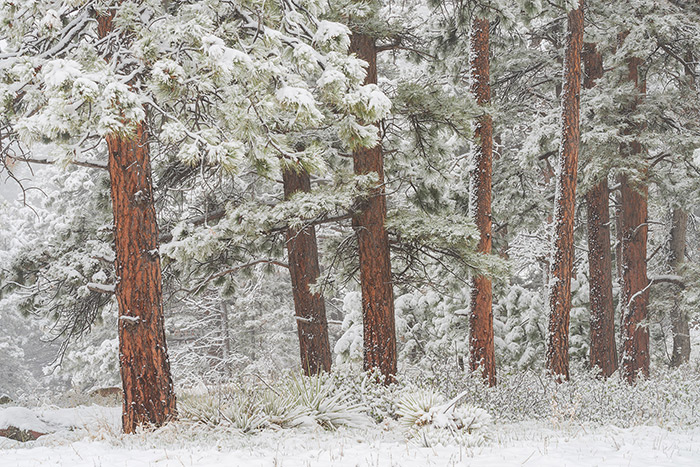
Some of the best winter landscapes of the season often occur during the late spring months in Colorado as this image from Flagstaff Mountain in Boulder illustrates. Technical Details: Nikon D810, Nikkor 70-200mm F4 AF ED VR

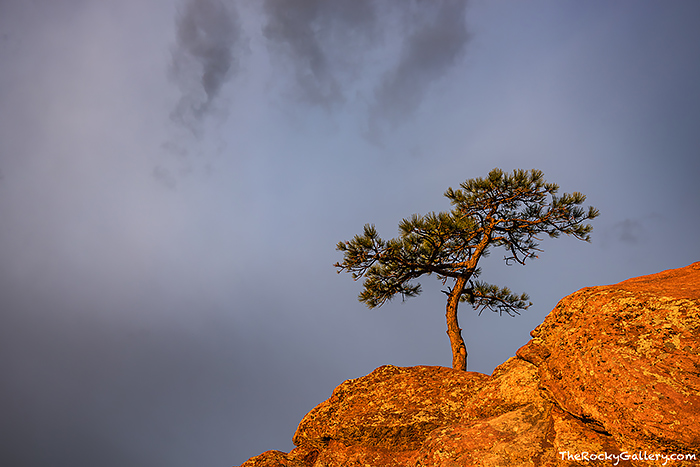
I spent the early part of the storm enjoying a beautiful hike up Flagstaff Mountain in Boulder. I love to get on Flagstaff Mountain when its snowing. Not only is it a great hike, but Flagstaff Mountain has in my opinion some of the most beautiful sets of Ponderosa Pines in all of Colorado. Ponderosa’s and there red colored bark make for beautiful subjects when their pine bows are crusted in snow. Before you know it we will quickly resume are melt off and the snow will once again be gone. With mild weather and temperatures predicted to near 80 degrees by the end of the week, this opportunity to photograph the snow wont last long. So while many of us are looking forward towards summer, unfrozen lakes and wildflowers have fun with the weather curveball we are so often thrown here during spring. Who knows, maybe we will get a few more chances at snow before its all said and done for the season.

Do And Redo

If you follow my work frequently than you know Flagstaff Mountain just outside of Boulder is a favorite location of mine to photograph. In about 25 minutes from my front door I can be out in the field enjoying landscapes like this one. Visiting these nearby locations over and over again allows my to react and anticipate where the best images may be based on the time of year or weather. Technical Details: Nikon D810, Nikkor 16-35mm F4 ED AF VR

Photographers are constantly seeking to create new images and content. Creating new images and photographing in different locations feeds our creative spirit and helps us to grow as artists. This involves scouting, searching and traveling to new locations looking for that next image. Or does it?.

Most photographers I know love to travel to far flung locations around the globe looking to expand their portfolio and feed that ‘traveling jones’ that most of us seem to have embedded in our DNA. Iceland and Chile being the current favorites amongst landscape photographers. While I love to travel to far flung locations just as much as the next guy, I still find photographing and exploring locations close to home the most rewarding exercise.

Here is a different image of the same tree as above. I've been waiting for weather like this to photograph this tree with fog and snow moving across the Flatirons and Gregory Canyon for sometime. Technical Details: Nikon D810, Nikkor 24-120mm F4 ED AF VR
Here is a different image of the same tree as above. I’ve been waiting for weather like this to photograph this tree with fog and snow moving across the Flatirons and Gregory Canyon for sometime. Technical Details: Nikon D810, Nikkor 24-120mm F4 ED AF VR

If you are a frequent visitor to my site or my social media feeds you know that approximately 85% of my landscape photography takes place in either Rocky Mountain National Park or in and around Boulder, Colorado. This is done deliberately and with purpose. While these locations are very close to my home and are without question my favorite subjects to photograph, visiting the same locations and areas over and over again gives me a knowledge and understanding of my subject that I do not posses when I visit a location for the first and possibly only time.

Photographing the same locations time and time again in different seasons or carrying weather conditions and light allows me to not only capture the moment that is unfolding in front of my camera on that day, but it also allows me to anticipate and plan future visits to a given location with the expectation of a different result. Knowing these subjects well so close to my home allows me to adapt and plan based on atmospherics, weather conditions and lighting. Oftentimes we think a subject can only be photographed from one location, in one direction at one optimal time of day. I think many photographers would be surprised to see just how many different interpretations of a subject one can create when they are able to visit at different times in varying conditions.

I realize most peoples styles and motivations are different than mine and my approach may not work or interest other photographers. That being said I strongly recommend finding a local area, or one close to your home and becoming intimately familiar with it. The location may not be as exotic or sexy as some far flung location around the globe, but embarking on a journey to really get to know a local subject or location over time will have just as great a reward to your portfolio and creative process as would a trip to a location you may only visit once in your lifetime.

Brown Season Blues

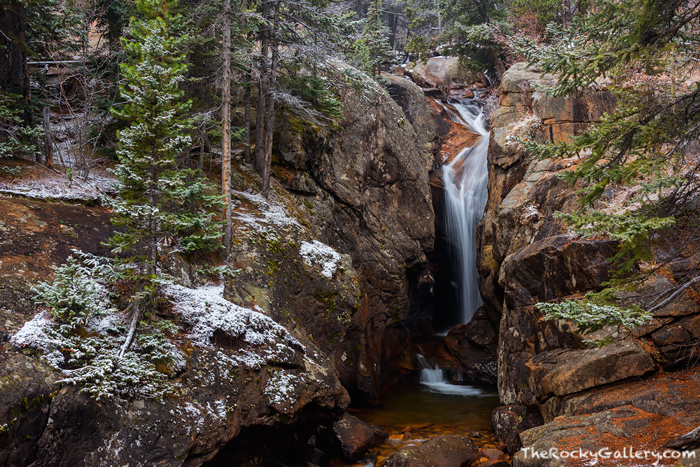
The tweener season between autumn and fall in Rocky Mountain National Park is known as the 'brown' seaons. It's easy to see one's motivation wane when it comes to photography. Even during the brown season there are lots of interesting landscapes and wildlife oppurtunities to photograph. Hiking up to Chasm Falls on a snow morning last week provided a unique opportunity to photograph what would be a very busy place when Fall River Road is open. This day, not another soul to be found. Technical Details: Nikon D810, Nikkor 24-120mm F4 ED AF VR
The tweener season between autumn and fall in Rocky Mountain National Park is known as the ‘brown’ seaons. It’s easy to see one’s motivation wane when it comes to photography. Even during the brown season there are lots of interesting landscapes and wildlife oppurtunities to photograph. Hiking up to Chasm Falls on a snow morning last week provided a unique opportunity to photograph what would be a very busy place when Fall River Road is open. This day, not another soul to be found. Technical Details: Nikon D810, Nikkor 24-120mm F4 ED AF VR

It’s brown season here again in Rocky. While it’s been a very mild autumn it apparent that winter is about to make its appearance in the park. After nearly a month and a half of chasing the colors through different part of the park it can be difficult to make a transition towards photographing the oncoming winter season. Photographing Rocky during the fall season gives one a bonanza of choices. While Autumn is short lived you still have the choice of photographing unfrozen lakes, tarns and streams while simultaneously being able to photograph the fall colors. So in essence autumn season in Rocky Mountain National Park means you can still opt to pursue summer like images while still being able to chase the colors of fall. Throw in the occasional early season snowstorm and you might actually be able to photograph three of the four seasons all in the span of a few days.

So when the fall winds down and the foliage in the park is no more motivation to get out in the field may drop like an aspen leave on a windy day. Making things more difficult is the fact that once the snows start to fall in the higher elevations in late October or early November access to many locations becomes difficult to impossible. With that being said its time to adjust your mindset and remember there are still plenty of great opportunities to be found even if they require a little more work. Here are some suggestions on why photographing during the brown season in Rocky Mountain National Park can be both productive and fun.

1. Clouds. Photographing landscapes with clouds in Rocky is a lot more difficult than it looks. We have lots of bluebird blue sky mornings in Rocky, especially during the summer months. As the season shifts towards winter, Rocky sees some of its most dramatic sunrises. While winds may increase, lenticular clouds hanging over the eastern slope of the Front Range of Colorado become much more common. These lenticular clouds at sunrise with set the skies ablaze with color. This of course will add lots of color and spice to the otherwise brown landscape.

Wildlife in Rocky Mountain National Park is at its prime during the 'brown' season as it coincides with the mating or rut. This beautiful mule deer buck keeps a watchful eye on another buck across the meadow. Technical Details: Nikon D810, Sigma150-600mm 5-6.3 DG HSM OS C lens
Wildlife in Rocky Mountain National Park is at its prime during the ‘brown’ season as it coincides with the mating or rut. This beautiful mule deer buck keeps a watchful eye on another buck across the meadow. Technical Details: Nikon D810, Sigma150-600mm 5-6.3 DG HSM OS C lens

2. Water. Much of the water found in streams and mid level lakes is still unfrozen or only partially frozen. By mid winter pretty much all the lake surfaces will be covered in ice and snow. Streams with moving water will typically freeze later than lakes and ponds but they to will also freeze at some point during the winter. Once the bodies of water freeze over catching reflections becomes impossible. Combine colorful skies, lenticular clouds and water that is yet unfrozen or only partially frozen and you still have some pretty good foreground subjects to work with.

3. Snow. The lower elevations may be covered with brown grasses but the high peaks will have a nice covering of snow. By late summer most of Rocky’s peaks have little to no snow on them with only granite showing. With snow once again falling the high peaks will have more character covered in the white stuff.

4. Wildlife. Unlike the trees and foliage, wildlife is actually at its peak during the brown season. The larger ungulates such as elk, moose, mule deer and big horn sheep are all in various stages of their annual mating rituals or rut. This means most of the animals look the healthiest and strongest they will all year. Furthermore they tend to congregate in open areas and are less distracted by human presence as hormones are calling the shots. Hang around the parks in the lower elevations and it’s quite easy to capture beautiful images of a bull elk or mule deer buck in their prime.

So while most photographers I know tend to get a little depressed and down when when the brown season takes hold, there are still plenty of good opportunities to be had when it comes to photographing Rocky this time of year. Lastly one other great thing about getting out during the brown seasons is the lack of crowds. Most of the time you will easily be able to find peace and solitude easily while in one of the most beautiful places on earth.

Long Lens Landscapes

With the recent addition of a Sigma150-600mm 5-6.3 DG HSM OS C to my lens kit, I've been putting it's longer focal lengths to good use when photographing landscapes in Rocky Mountain National Park. I purchased the lens to use primarily for wildlife in Rocky but have found the longer focal lengths to be very useful at compressing and isolating portions of the landscape. I found this to be the case when photographing low lying fog in Moraine Park from the Many Parks Curve overlook along Trail Ridge Road. Using the 600mm focal length on the lens, I was able to isolate this portion of Moraine Park as the fog moved out. Technical Details: Nikon D810, Sigma150-600mm 5-6.3 DG HSM OS C lens
With the recent addition of a Sigma150-600mm 5-6.3 DG HSM OS C to my lens kit, I’ve been putting it’s longer focal lengths to good use when photographing landscapes in Rocky Mountain National Park. I purchased the lens to use primarily for wildlife in Rocky but have found the longer focal lengths to be very useful at compressing and isolating portions of the landscape. I found this to be the case when photographing low lying fog in Moraine Park from the Many Parks Curve overlook along Trail Ridge Road. Using the 600mm focal length on the lens, I was able to isolate this portion of Moraine Park as the fog moved out. Technical Details: Nikon D810, Sigma150-600mm 5-6.3 DG HSM OS C lens

Which lens or focal length to use when photographing a particular scene or image is a vital function to creating to compositionally coherent image. Browsing through my landscape image catalogs it’s apparent that approximately 75% of my images are taken between the focal length range of 16mm and 105mm. This is more or less in line with my style of photography and works well to convey and translate my vision of the landscapes I enjoy photographing.

With that being said I still look to put my longer lenses to good use whenever possible. While many of my photographs have been created with wide to moderate focal length lenses, some of my favorite images have been taken with longer focal lengths which allow for the isolation or compression of the subject or landscape.

I recently purchased a Sigma150-600mm 5-6.3 DG HSM OS C lens for my Nikon system. I purchased this lens primarily to be used to photograph wildlife in Rocky Mountain National Park. With the Elk,Big Horn Sheep, and Moose rut approaching I was hoping I would get a few opportunities to photograph wildlife at longer focal lengths. While most of my photography revolves around the landscapes of Rocky Mountain National Park, I do enjoy photographing wildlife when the opportunity presents itself.

Ironically, I have not had as many opportunities to use this lens on wildlife as I had previously hoped. At the same time I have found more opportunities to use this lens for landscape photography then I had previously anticipated. I’ve found the long end (300-600mm) range of this lens can help to foster unique and creative images. I plan on continuing to experiment and employ the longer focal lengths for both wildlife and landscape photography in the future. The caveat with this lens of course is that is both large and heavy so it’s not a piece of equipment I plan on backpacking around the backcountry with. Even so, I’ve been impressed with both the image quality of the lens and the new opportunities it’s affording me when in the field photographing landscapes.