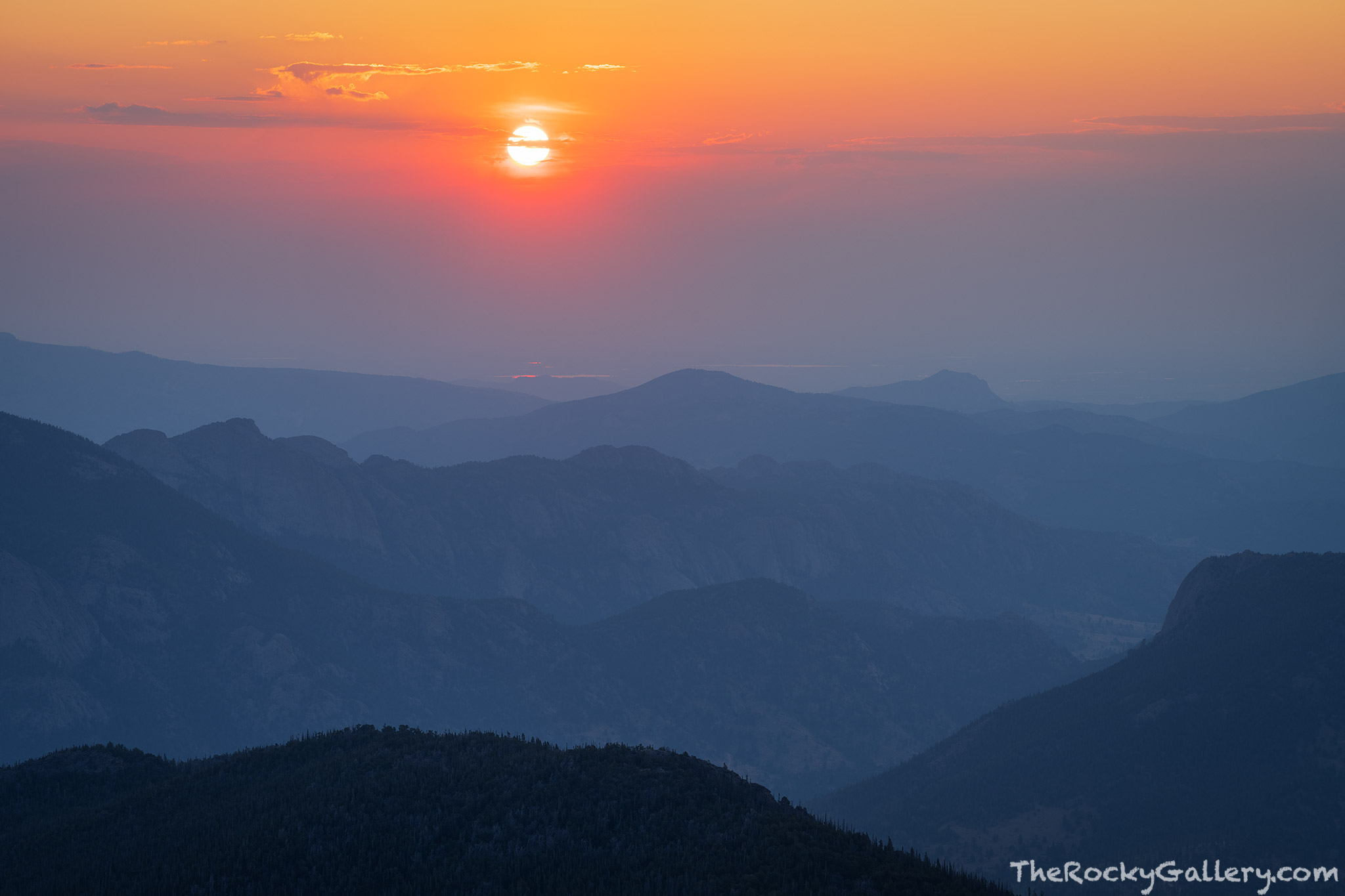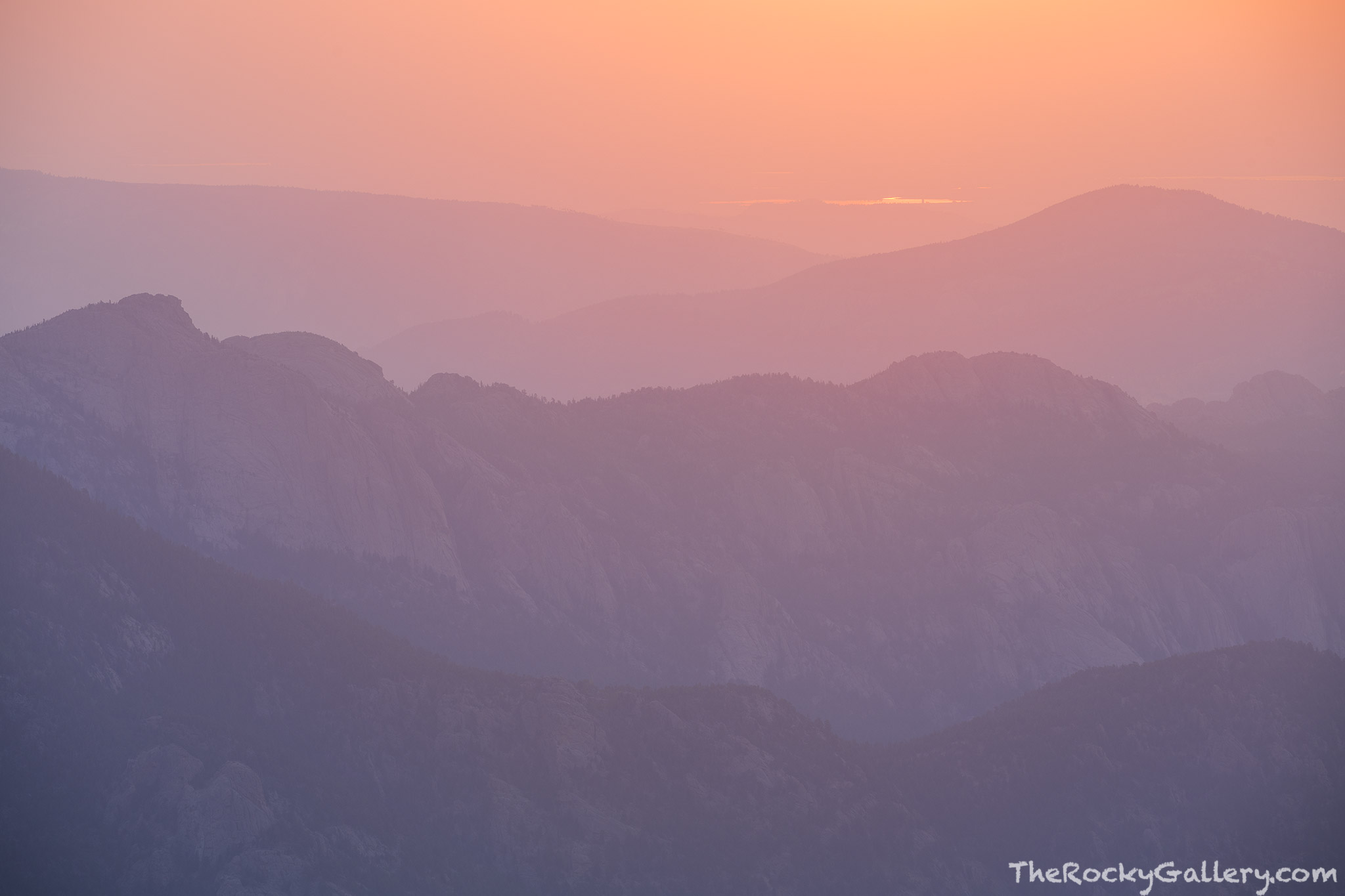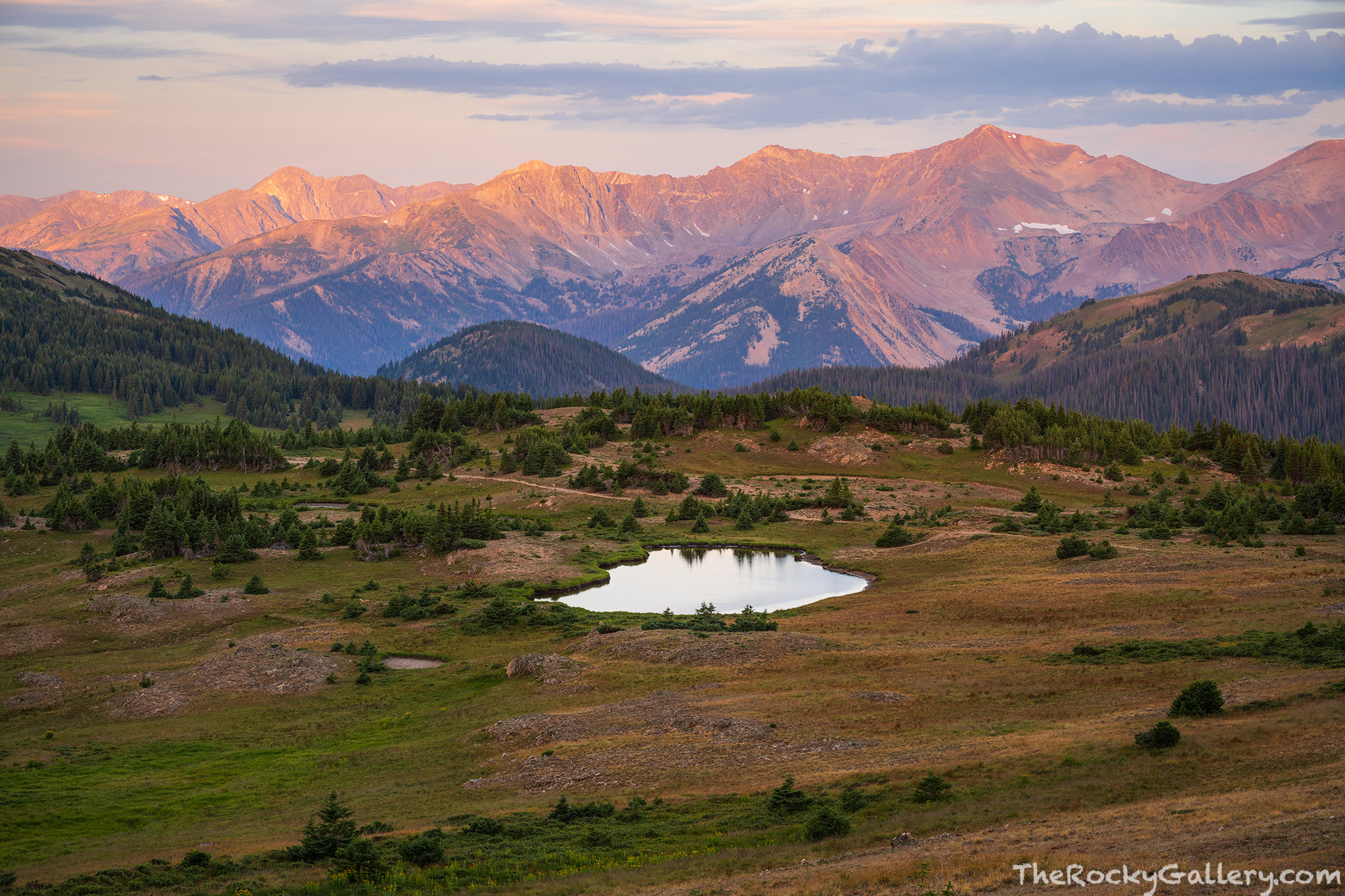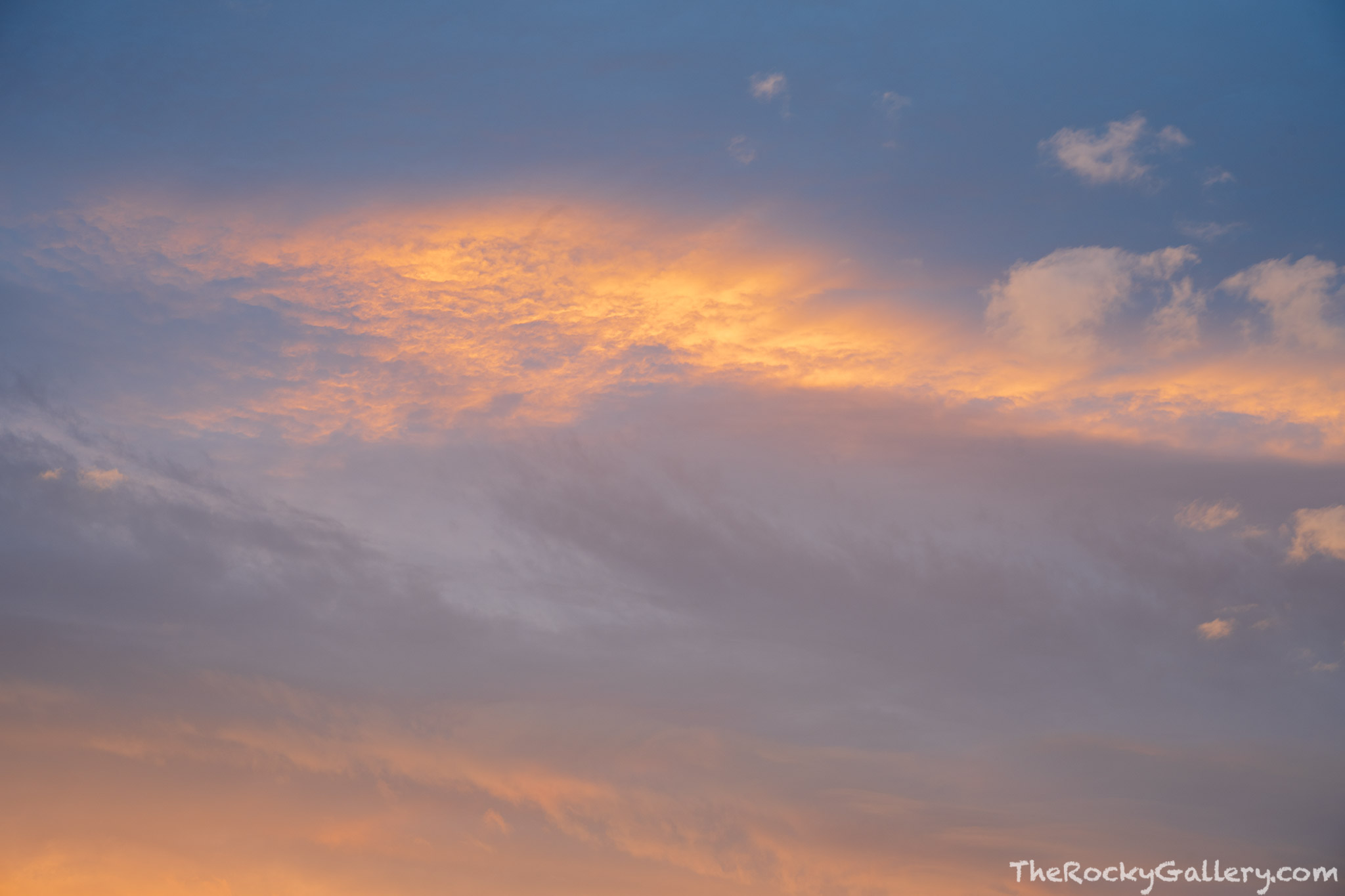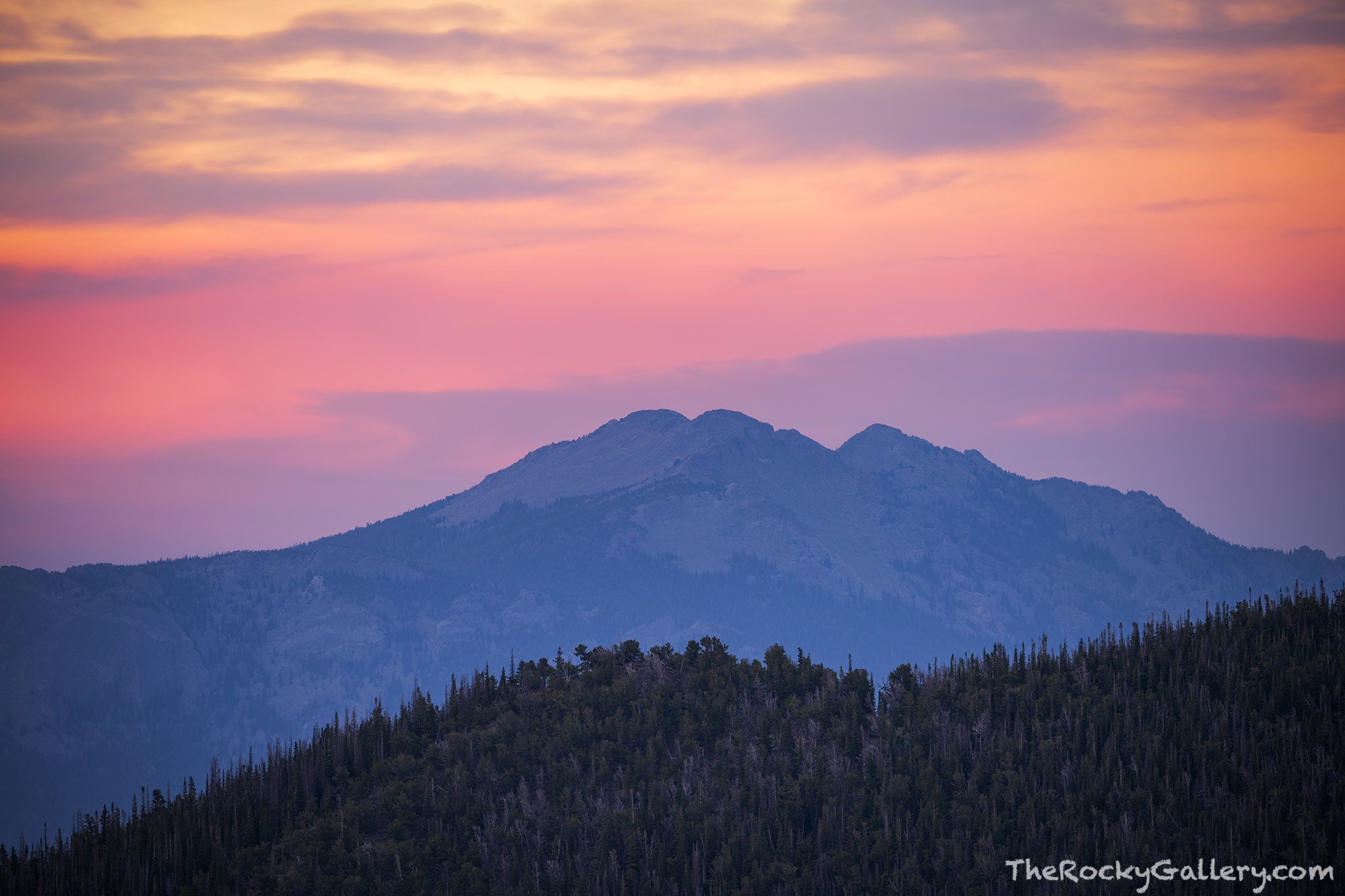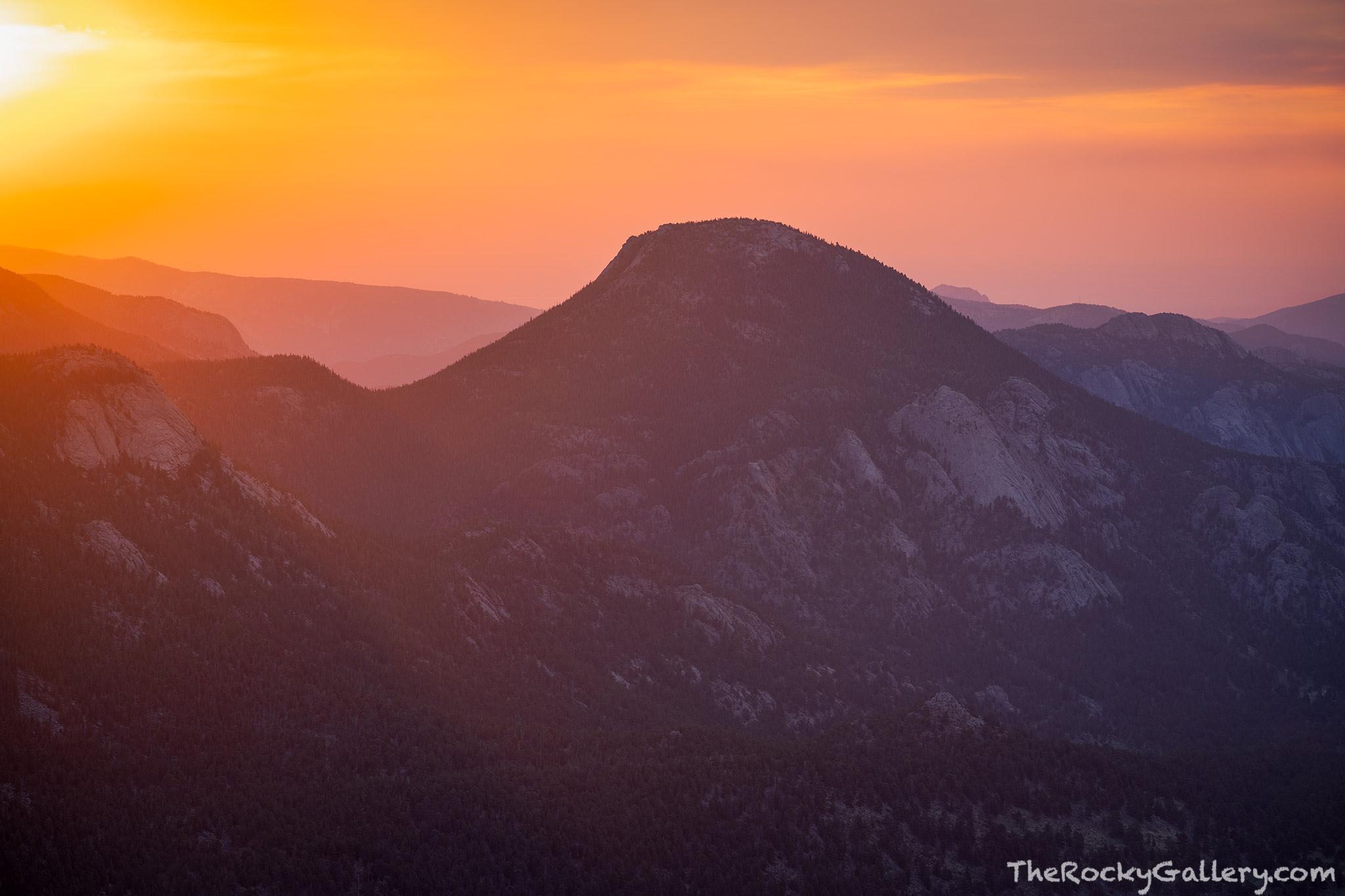
We still have lots of wildfire smoke from forest fires on the west side of Colorado affecting Rocky Mountain National Park. It’s been about a month or so since the smoke settled in to the park and I’m ready for some clear skies and more seasonal conditions to photograph Rocky. This morning I hiked up Tombstone Ridge mostly to stay busy, but also to photograph this moody, smokey sunrise looking east past Deer Mountain. Technical Details: Nikon Z7II, Nikkor 100-400mm F4-5.6 S VR lens
Quick update here as I have not been getting out as much as I want on account of all the smoke that just refuses to leave the Front Range and Rocky Mountain National Park. We could use some rain which would greatly help, but more importantly so could the people affected by them multiple wildfires on the western side of Colorado.
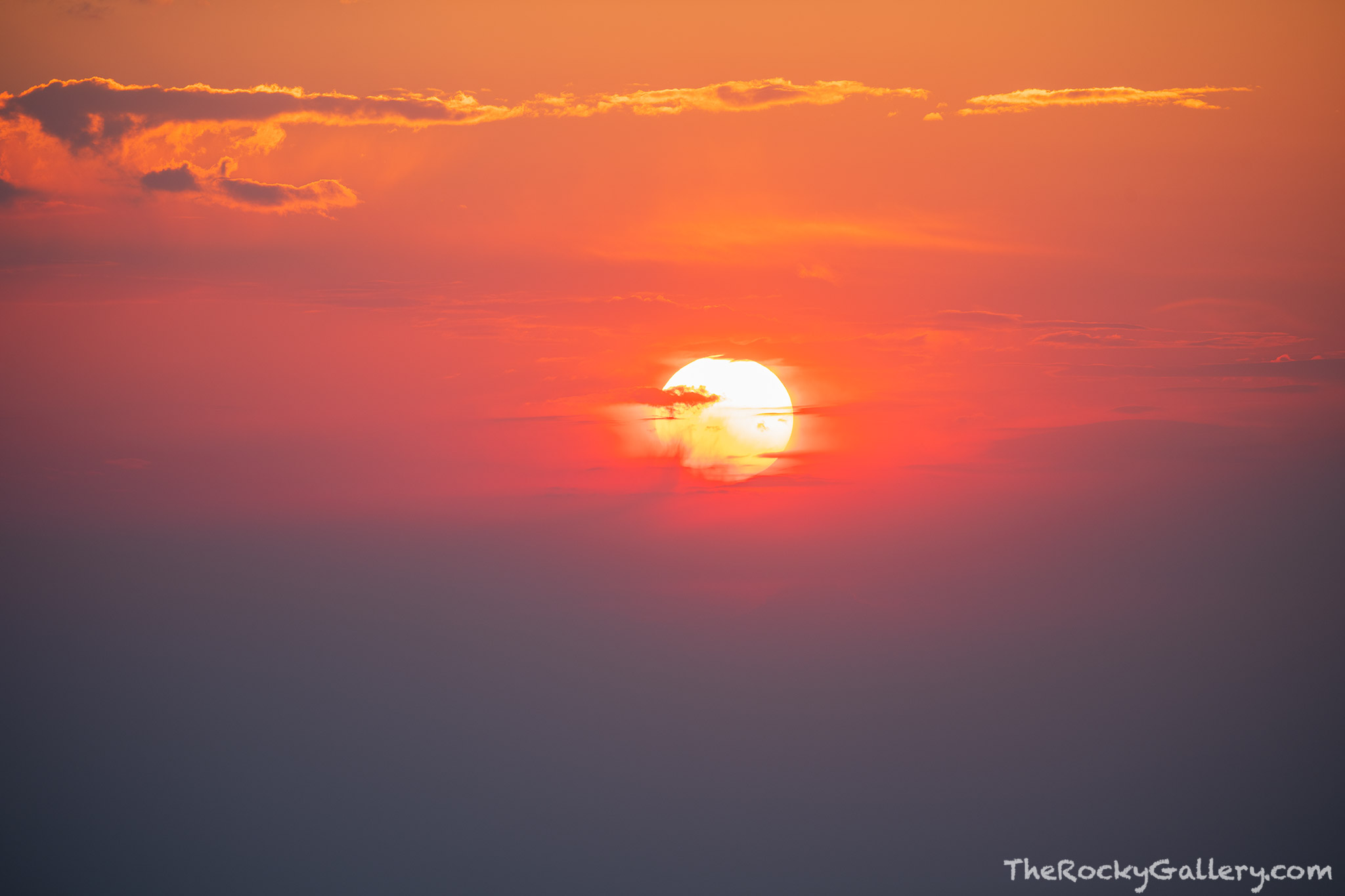
A 400mm view of the sun rising through the smoke and haze this morning in Rocky Mountain National Park from atop Tombstone Ridge, high above Trail Ridge Road. While I want to smoke to clear out, sunrises this colorful only occur when there is smoke in the air. Technical Details: Nikon Z7 II, Nikkor 100-400mm F4-5.6 S VR Lens
The wildfire smoke has been a daily presence in Rocky for about a month now. To say it frustrating would be an understatement. Obviously there are things much more important than photography and creating art, and my thoughts are with those affected and closer to these fires with the Elk Fire now being the fifth largest wildfire in Colorado history.
It feels like a good portion of the prime season in Rocky has been affected by by the haze and smoke. After a 2024 that was my most productive year of photography in RMNP, 2025 has been a bumpy ride. Even so, fall colors, the elk rut and the first snow of the season will all be here sooner than later. I just keep telling myself to ride it out and try to make lemonade out of lemons but it would be great to see conditions improve.
With conditions for photography currently smoked in, landscape photographers will have to be creative. I like using a telephoto lens to emphasize the ridge lines and subtle changes in tone and color between the warm and cool when the smoke fills the valley as it did this morning in RMNP. Technical Details: Nikon Z7II, Nikkor 100-400mm F4-5.6 S VR Lens
With that said, I’ll get stir crazy being in the office all day and I’ll still get out and shoot these moody, smokey sunrise and sunset images as best I can with what I have. It’s still beautiful in a unique way, but lets get back to normal and quit smoking.
Finally the wildfire smoke that has blanketed most of Colorado on and off for the past couple of weeks abated somewhat on Thursday morning. The fire danager is still extreme in the area so please be careful when enjoying RMNP. Here we see the Never Summer Range of Rocky Mountain National Park just as the sun begins to illuminate part of the ridges and peaks as seen from the Forest Canyon area. Technical Details: Nikon Z7 II, Nikkor 24-120mm F4 S VR LensWell a bit of good news is in order with the wildfire smoke over Rocky Mountain National Park abating a little over the past few days. With that there is still tremendous concern about the fire danger in the area. Rocky Mountain National Park is always under State 1 fire restrictions which means no open fires or flames except is campfire rings in picnic areas and campgrounds. With the warm weather and high winds, we are also under a red flag warning as of this writing so its very important to stay vigilant.
With that out of the way, hopefully atmospheric conditions will improve in the area and with some cooler weather and possible rain slated for Sunday, give aid to the larger wildfires burning in the state and bring us some must needed moisture. In what has been a very hot, dry and windy summer in Rocky Mountain National Park, some traditional mountain weather and rain would be welcome around these parts.
Beautiful clouds float over the alpine tundra of Rocky Mountain National Park at sunrise on Thursday morning. Portions of the layers of clouds are being lit by the beautiful soft light of sunirse diffused by the lessened amount of wildfire smoke present over RMNP at the back end of this week. Technical Details: Nikon Z7 II, Nikkor 24-120mm F4 VR Lens
Thursday I was able to get out on Trail Ridge Road with improved skies and hike out onto the tundra for what was a decent sunrise. While it had great potential, the skies over the Never Summer Range from the Forest Pass area never exploded with color. The Never Summers got some great light just after sunrise and I’m it felt great to be out with a lot less wildfire smoke present. One can see in the image above, the tundra is already starting to turn gold and red in some areas. Fall is nearly here at ~ 12,000 ft. and all the seasonal kettle ponds are quickly drying out.
I’ll never get used to how short summers are on the alpine tundra. The speed that the changes occur are striking. A month ago the alpine tundra of Rocky Mountain National Park was carpeted with wildflowers and alpine sunflowers. Now its turning golden and red and many of the summer wildflowers are now past peak. This is just one of the penalties of wildfire smoke in the region. It takes an already painfully short but spectacular season in RMNP, and steals a few days or weeks away. Thats why at these elevations, you can never take time for granted or plan on returning another day. The time up here is always now and never later.
Quite a contrast in conditions this morning in Rocky from a week ago along the Oregon coast. Smoke from western wildfires has covered much of the northern Front Range of Colorado making photography less than ideal. Regardless, I wanted to get back out in to Rocky and see how things were looking. Here we are looking at the Twin Sisters from Rainbow Curve just before sunrise. The smoke and clouds made for some brilliant color over the eastern skies of Rocky this morning. Technical Details: Nikon Z7 II, Nikkor 100-400mm F 4-5.6 S IS Lens
After a week on the coast of Oregon, It was back up to Rocky Mountain National Park this morning to see whats shaking. Sunrise looked like it had some good potential this morning with a possible lenticular type cloud forming along the east ridge of the continental divide. While lenticular clouds often give dramatic sunrises, they are caused high winds aloft, and more often than not high winds below which makes photographing RMNP more difficult.
Frankly, I just wanted to get back into Rocky and get a feel for where things are after a week away. I’m a creature of habit and even a few days away for my normal routine can feel like eons to me so the sooner I can get back in the flow the better.
On top of the high winds forecasted for this morning, we have also had a ton of wildfire smoke here on the Front Range of Colorado. Wildfire smoke makes it difficult to photograph in RMNP as it diffuses the light without any of the typical benefit of diffused light. The light can wind up being very flat, very harsh and make any image or iconic scene in Rocky Mountain National Park look like uncle Bob shot it with his polaroid camera back in 1978.
I find there is one exception where wildfire smoke can actually benefit some scenes and locations in Rocky. The one area where it ‘may’ help is backlighting. Backlit images, or images shot almost directly into the sun may help to bring out the layers between the sky and ridgelines. Furthermore it may help the color palette in that it either diffuses some subtle changes in color or may cause other colors such as reds to have even more pop.
As soon as I drove through the Beaver Meadows entrance station this morning I knew regardless of wildfire smoke that the possibility to photograph certain locations where going to be off the table. When I drove over the causeway on Lake Estes this morning, the lake surface was fairly smooth and it did not appear windy, once I passed through Beaver Meadows is was an Armageddon like scene quickly. The wind was howling, grasses and trees swaying and once out of the card the strong smell of wildfire smoke permeated the air. There was a nice cloud bank setup over the east side of the park so at least I had that going for me!
The sun rises just to the north of McGregor Mountain from Rainbow Curve this morning. Using a telephoto lens to accentuate the ridgelines, colors and textures certainly helped what one can only say where less than ideal conditions for photography this morning in Rocky Mountain National Park. Technical Details: Nikon Z7 II, Nikkor 100-400mm F4-5.6 S VR lensReflection shots, images looking west towards the continental divide where all going to be off the table as there did not appear to be many clouds to the east and the 20-25 mph wind gusts were going to muddle and rake any lake surface so that a reflection would not be possible. I headed up Trail Ridge Road to Forest Canyon to get a better feel but I pretty much knew at this point If I was going to have any luck, it would be photographing silhouettes at sunrise looking back east into the sunrise itself.
Back down to Rainbow Curve where the color on the eastern horizon of the Colorado High Plains was already turning red. The large rock pile and hill just west of Rainbow Curve provides a decent wind break so that one can often photograph and keep their tripod firmly planted on the ground to assure sharp images.
As the day dawned over Rocky Mountain National Park, it was apparent the smoke was thick, the wind was howling but we had some great color in the eastern skies the last about 20 minutes. The colored skies and wildfire smoke sifting and falling between the ridgelines helped to accentuate the layers over the mountains and foothills on the east side of Rocky and beyond. Overall, not a bad return but I’m really looking forward to having this entrenched layer of smoke clear out of the park. How about a rainy, foggy morning?
Sunrise unfolds over an unammed tarn at timberline in Rocky Mountain National Park. The Never Summer Mountains glow in their distinctive red coloring as clouds drift over the summer landscape. With the headwaters of the Big Thompson River in view at the mouth of Forest Canyon. Summer mornings like these in RMNP are hard to beat. Technical Details: Nikon Z7 II, Nikkor 24-120mm F4 S VR Lens
What better way to start the week in Rocky than up a timberline in summer. A few blog posts back I was preaching how the area at timberline in Rocky Mountain National Park is one of my favorite locations to shoot, especially in prime summer conditions which happen to be right now. So with that said, and the cloud forecast looking like Monday’s sunrise would have clouds over the north and west sections of the park, I headed out once again to a favorite alpine tarn.
Setting off from the Alpine Visitors Center well before sunrise, the skies were mostly clear. As I headed out along the tundra trail, I could see clouds starting to form and move in from the north and west. As we photographers know, good forecasts or not, trying to figure out where the clouds are going to be and where one has the best chance to add some additional elements into the landscape such as colorful clouds is a fools game at best. Even so, the game here is to place to your bets on a location based on the forecast and take your chances.
I arrived to my location a good twenty minutes before sunrise. I setup my camera with the small seasonal tarn located below and with the spectacular Never Summer Mountains in the distance and waited. As the earths shadow that precedes the sunrise began to glow over the Never Summer Mountain of Rocky Mountain National Park, I could see a defined bank of clouds to the west. A few other clouds floated over RMNP and the mouth of Forest Canyon and the headwaters of the Big Thompson River.
Even with some wildfire smoke in the air from fires in western Colorado and Utah, the cloud setup and predawn light looked like we should have a beautiful gentle sunrise over Rocky. The skies turned red and pink and the Never Summer Mountains to the west glowed red as they always do still covered in remnants of snow from last season. As I clicked away and enjoyed this beautiful July morning in Rocky Mountain National Park, I though to myself it just doesn’t get much better than this.
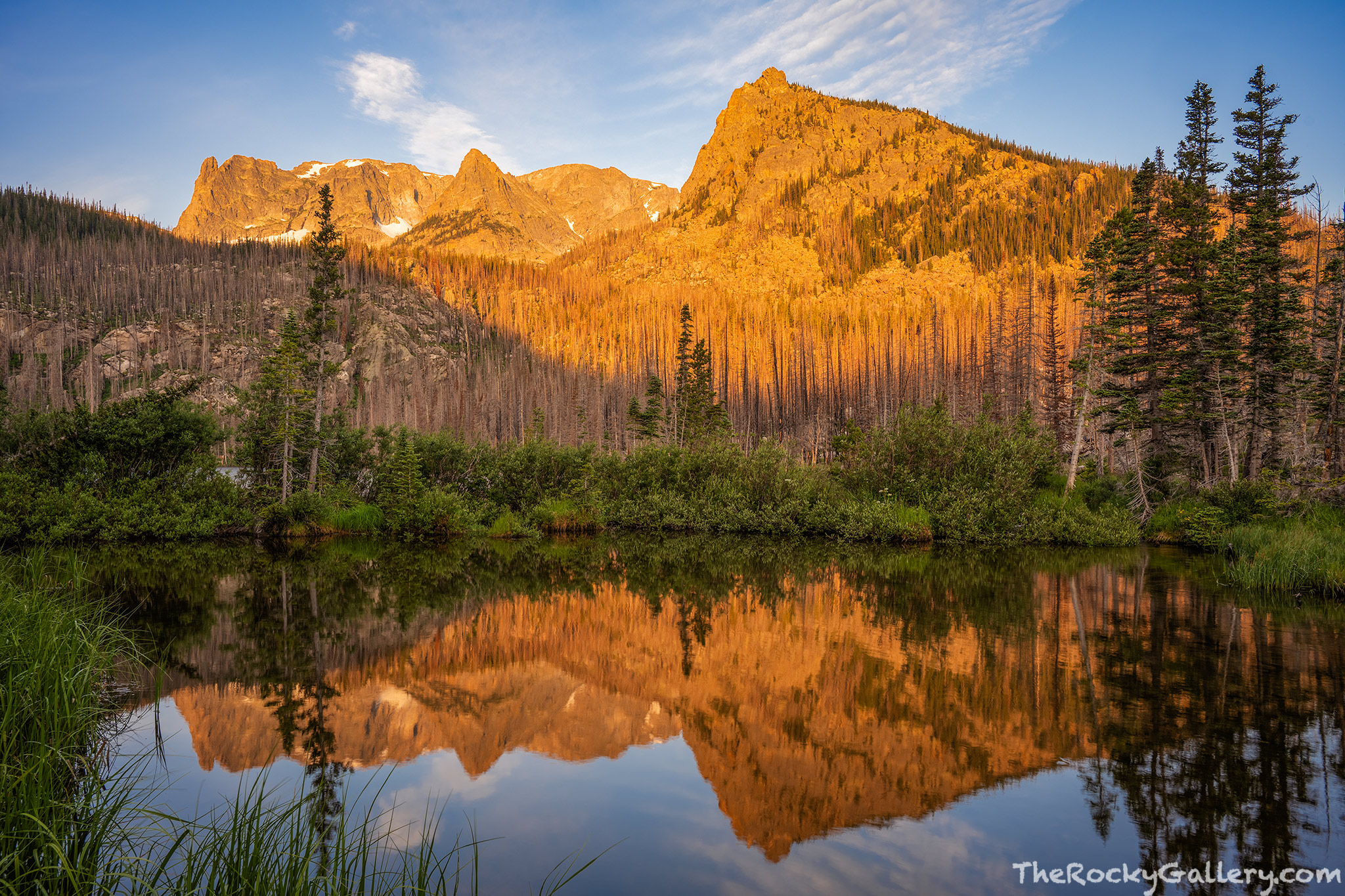
It had been quite a few years since I’ve attempted to photograph Fern Lake. Fern Lake is an iconic location in Rocky Mountain National Park for just about everything except photography. Frankly, Fern Lake is very difficult to photograph well. Yesterday I made the trek up to Fern Lake to see if I could capture an image of this beatiful location. A little after sunrise at Fern Lake and Notchtop, The Little Matterhorn and Gabletop bathed in the early morning light imparting why even difficult locations are worth photographing again. Technical Details: Nikon Z7 II, Nikkor 24-120mm F4 S VR lens
With summer in full swing in Rocky Mountain National Park, it’s time to take advantage of the perfect conditions to head out on a hike to one of your favorite locations. As a photographer, I plan my hikes and destinations based on where I think the most potential for a good image is or a location I have not visited or photographer successfully.
While I have favorite locations in Rocky that I try to visit a couple of times a year, it’s just not physically possible to always be able to visit and photograph locations each year. If you want to keep growing your portfolio on a given location, you have to constantly push yourself to get to new places or try again at locations you may not be happy with previous results.
Fern Lake is one of those places for me. One of my favorite hikes in RMNP is to hike the nearly eight miles from Bear Lake down to Moraine Park. This hike takes you past some of the most iconic scenery in Rocky Mountain National Park while also brining you through alpine and sub alpines zones of the park which adds nice variety. A lot of people like starting in Bear Lake because once you arrive at the top of the Odessa Gorge, its pretty much all downhill from there.
It’s been a few years since I’ve made any attempt to photograph Fern Lake. Both the Fern Lake Fire in 2013 and the East Troublesome Fire in 2020 damaged the areas around Fern Lake. I’ve had both Spruce and Fern Lake on my revisit list but have been too busy photographing other areas of the park to get a chance to get back.
Yesterday seemed like a good day to revisit Fern Lake for the first time in quite a few years. While we have had quite a bit of wildfire smoke around, it appeared the smoke should be manageable and that we had a decent chance for some clouds around sunrise to add some interest to the scene.
I headed out from the Fern Lake trailhead a little after 4:00 AM and was at Fern Lake by 5:20 AM. For those who have spent a lot of time in Rocky Mountain National Park, Fern Lake often holds great memories. It’s a great spot to fish, It’s a great day hike from Bear Lake or Moraine Park and some of the most accessible backcountry campgrounds are located around Fern Lake and Spruce Lake. Because Fern Lake is near the middle point between Bear Lake and Moraine Park, its a great place to stop, eat lunch and just hang out on a rock and take in the sights.
While Fern Lake is all those things to visitors and hikers in Rocky Mountain National Park, I find it to be a very difficult and frustrating location to photograph. It’s often breezy here, there is lots of dead trees from the fires and there are very few locations where one can get a clear unimpeded view of Notchtop, The Little Matterhorn and Gabletop Mountain. Trees and snags abound and trying to keep the viewfinder clear of distracting objects at Fern Lake is tricky. If the winds are gusting as they were yesterday, only the outlet of Fern Lake offers a sheltered enough spot to possibly provide a reflection. Take this all in account and one see’s while photographers will often end up at Lake Helene, Odessa Lake or even Cub Lake as opposed to photographing Fern Lake.
So I had low expectations when I arrived at Fern. The winds were gusting and the main part of the lake was choppy. I found one small area near the outlet where I could just squeeze in a reflection and keep the viewfinder and edges of my composition clear of dead trees, and other visual distractions. It was clear at sunrise, but luckily about 20 minutes or so after sunrise some nice clouds started to form and pass over Gabletop and the Little Matterhorn. The wind settled a little bit and the early morning light added some pop and color to this mountain scene.
Overall, I was pleasantly surprised with the image. Sometimes you can only photograph what the location gives you, there are no secret compositions or ultra wide angle lenses that will make it any more dramatic. In this case, Fern Lake was Fern Lake and that was just fine with me and the millions of other visitors to Rocky who hold a special place in their heart for this iconic spot.
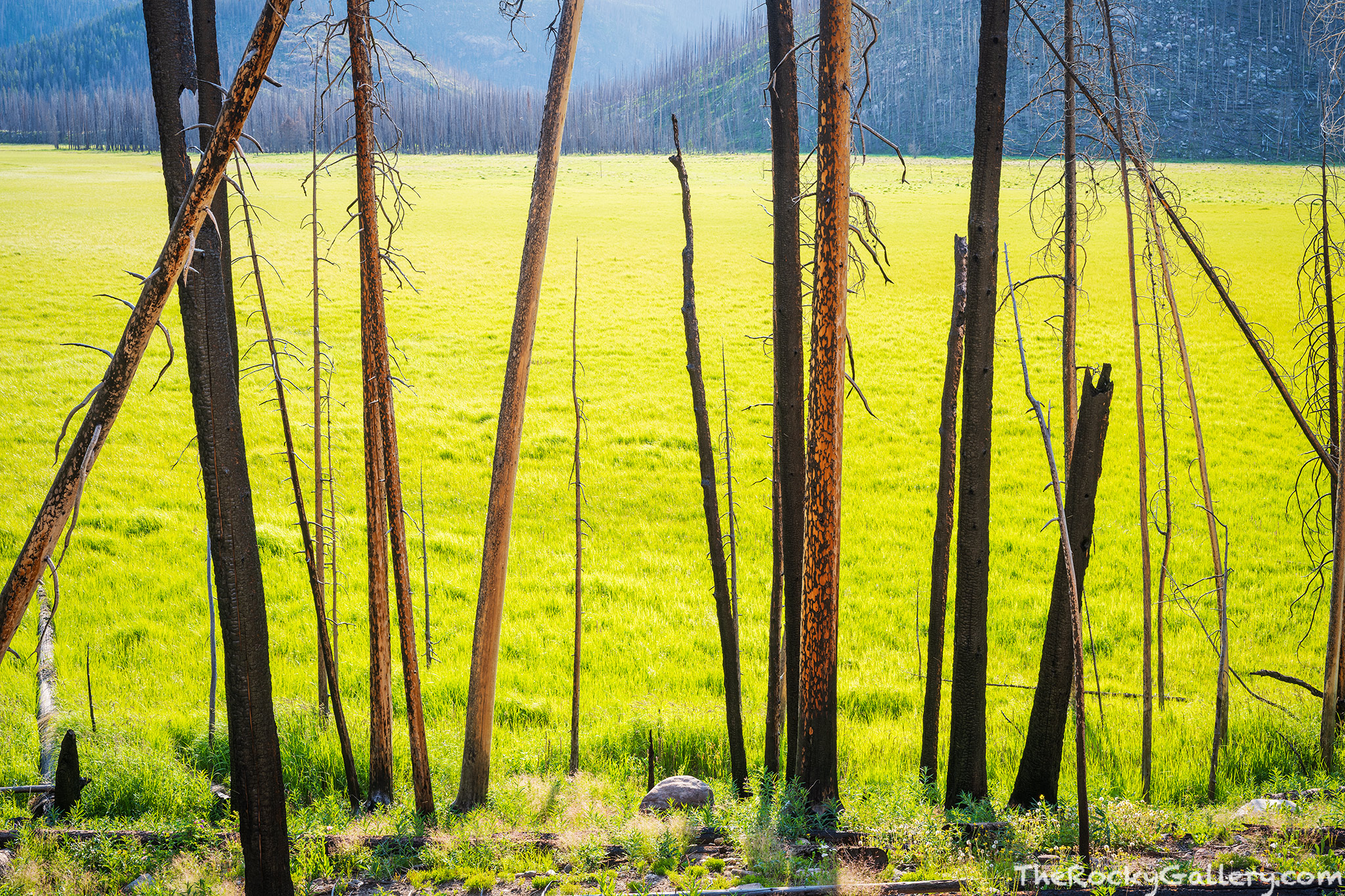
Big Meadows looked amazing in its summer greens yesterday. After hiking up to Big Meadows to cope after being in the wrong location for sunrise, I immersed myself in the more subtle beauty of this amazing location. With burnt pines from the East Troublesome fire in the foreground, the backlit grasses of Rocky Mountain National Parks largest meadow radiate the morning sun. Technical Details: Nikon Z7 II, Nikkor 24-120mm F4 S VR lens
Photographing sunrise and sunsets is always a bit of a gamble for photographers. Figuring out exactly where to be when that sweet light hits can become an endeavor all onto itself. Being a quarter of a mile in either direction could result in having some of the most inspiring and epic lighting ever, or the opposite and ending up skunked questioning one’s choice of location. That happened for me yesterday, as I gambled on the potential of a dramatic sunrise in Rocky Mountain National Park occurring over the west side of the park as opposed to the east. I made the wrong choice as sunrise on the far east side of Rocky yesterday was beautiful and dramatic and more or less a dud on the west side of RMNP where I had setup.
You cant win them all is what I say to myself when this happens which is mostly my way of coping as I will obsess the rest of the morning wondering how I ended up in a less than optimal position when a sunrise unfolded. Truth is, dramatic sunrise and sunset light while awesome, is a bit overrated. As a photographer you will have many times where you are not in the right place, or the light is not working as you anticipated. The test of course of great photographers, is to use the light you have and to create compelling images of the landscape regardless. With that in mind and a heavy dose of cope weighing my camera backpack down and tail tucked, I figured a hike up to Big Meadows would at least help me get over my pouting.
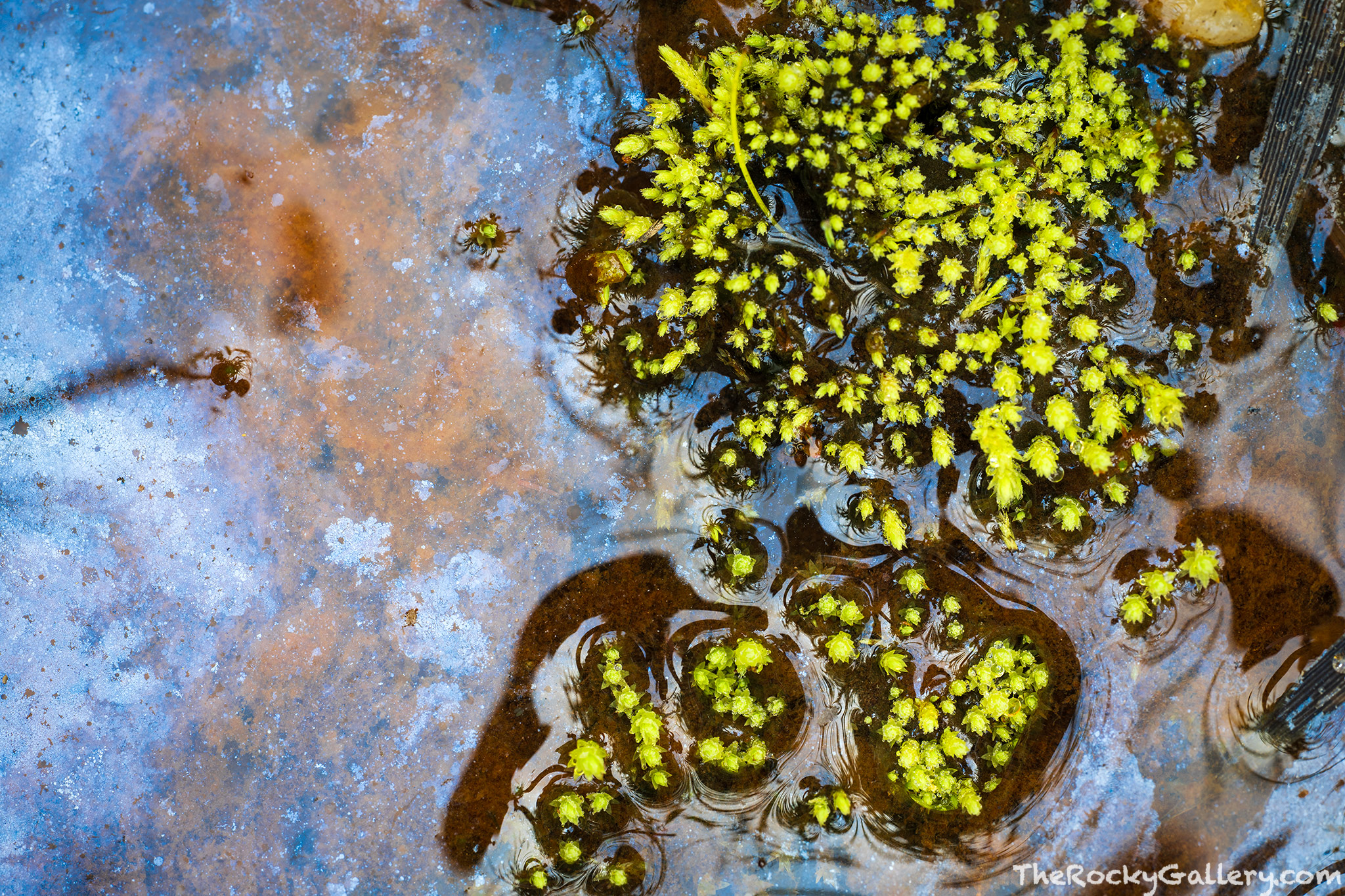
Along the Green Mountain Trail on my way up to Big Meadows to explore yesterday, I came across this tiny scene just off trail. Small greenery grown in the water filled with Iron Bacteria covering its surface. Iron Bacteria is always fun to photograph as it colors the surface of the water in silver, reds and blues. Even though I missed out on sunrise, there is always pleny of awesome subjects to photograph in Rocky Mountain National Park if one just takes a moment to shoot for the conditions and light at hand. Technical Details: Nikon Z7 II, Nikkor 100mm f2.8 micro S lens
Big Meadows on the west side of Rocky Mountain National Park is Rocky Mountain National Park largest meadow. It doesn’t get the notoriety that many of the other iconic locations in Rocky get, but I find it one of the most fascinating and beautiful locations in the park. That beauty does not necessarily translate to your classic mountain images, but there is always something cool to photograph or experience.
Big Meadows is huge. When you arrive from either the Green Mountain Trailhead or Tonahutu Trail you are struck by just how large it is. The Pine Beetle and the East Troublesome Fire have damaged many of the trees in and around the meadows, but the grasses are strikingly green and verdant in summer, beautiful Tonahutu Creek meanders through the meadows and Nakai Peak towers over the meadows on the northeast side. Moose are common as are deer and elk. Wildflower are abundant in the meadows and hillside as are many different types of birds and raptors. I find Big Meadows spectacular and inspiring.
While many will hike through Big Meadows on their way to other locations in Rocky Mountain National Park, both hikers and photographers alike should take their time exploring the beauty found in this meadow. Sure Big Meadows was my second choice yesterday, but after spending the morning coping with missing out on sunrise, there really was no other place in RMNP I wanted to spend the morning at than one of my favorite spots in Rocky.
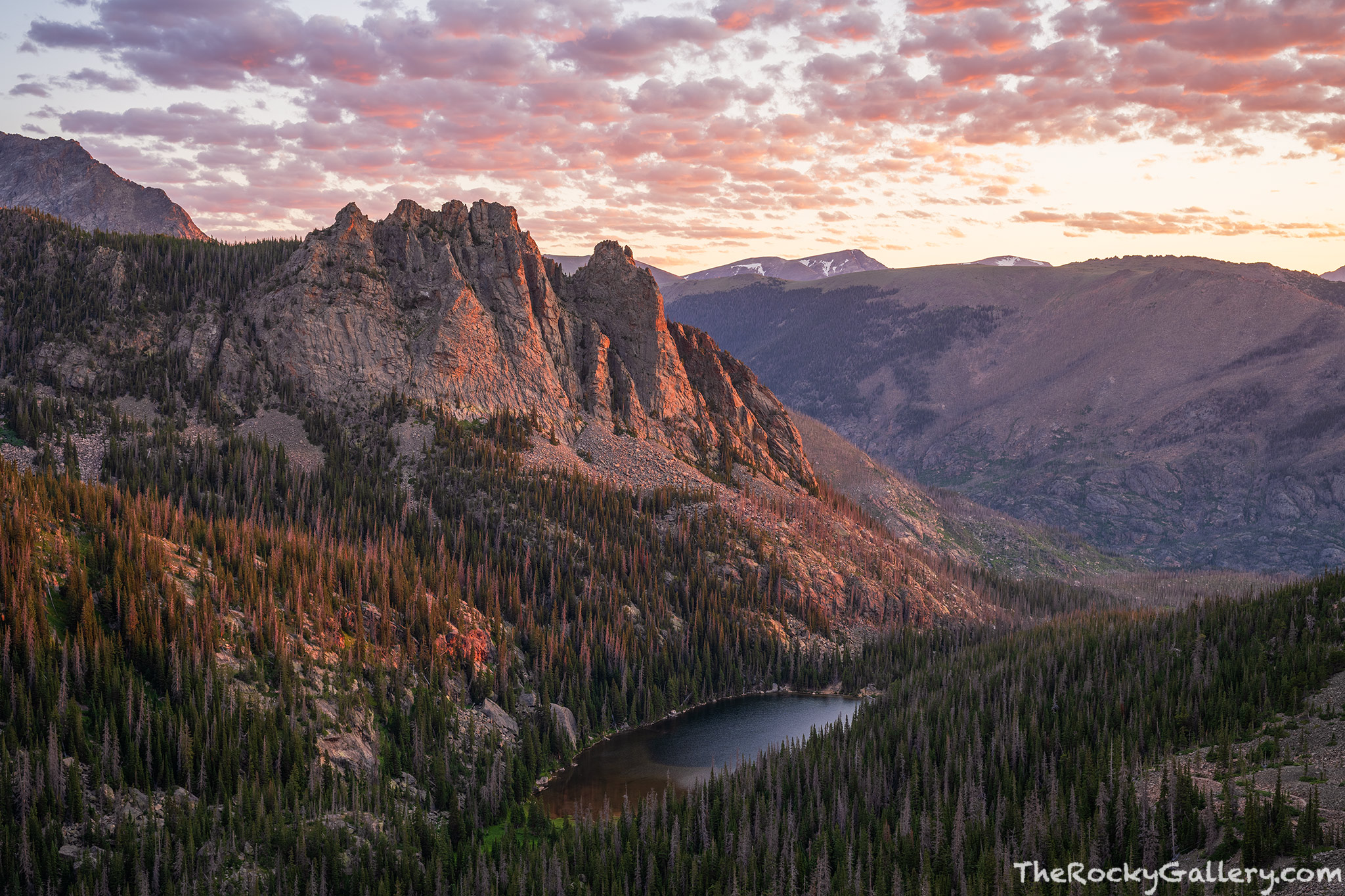
From high above Odessa Lake, The Gable catches first light over the Odessa Gorge. On a morning where forecasts predicted little chance for cloud cover at sunrise, conditions panned out and we had some beautiful light over RMNP. Ithaca, New York touts its Gorges, but I think Odessa Gorge and Rocky Mountain National Park can also lay claim to some beautiful locations as well. Technical Details: Nikon Z7 II, Nikkor 24-120mm F4 VR S lens.Just back from a great morning in Rocky Mountain National Park. One of those mornings where I had little expectations for sunrise based on the forecast. I’ve been either traveling or have been entertaining visiting family the past three weeks so getting any kind of flow going has been difficult. It’s been a combination of weather, late nights or early obligations that have contributed to disrupting my normally obsessive routines.
So even with the weather looking clear and warm this morning with little chance for a colorful sunrise, I gave it the old college try. My motto has always been you just have to consistently keep showing up and unexpected things will happen. With this in mind, I figured I hike up to the Lake Helene area to keep both my legs in trail shape, enjoy the beauty of summer in Rocky Mountain National Park, and maybe with a little luck, come away with an image or two.
I’ve fallen into the trap of looking at all my various weather apps that I use and concluding there is no chance for a dramatic sunrise or sunset so I might as well stay back in the office and work images, reply to emails or update my web site. One of the worst feelings in the world is watching an awesome sunrise unfold over RMNP from the comfort of my office. I hate when this happens and if its because I let the forecast hold me back, it can really ruin my week.
As I started up the trail this morning, it still looked clear. About a mile up the trail or so at one of the overlooks that look back east towards Bierstadt Lake, I could see a few clouds starting to form in the sky. I was actually kind of surprised how many clouds had started to move in over the park so quickly.
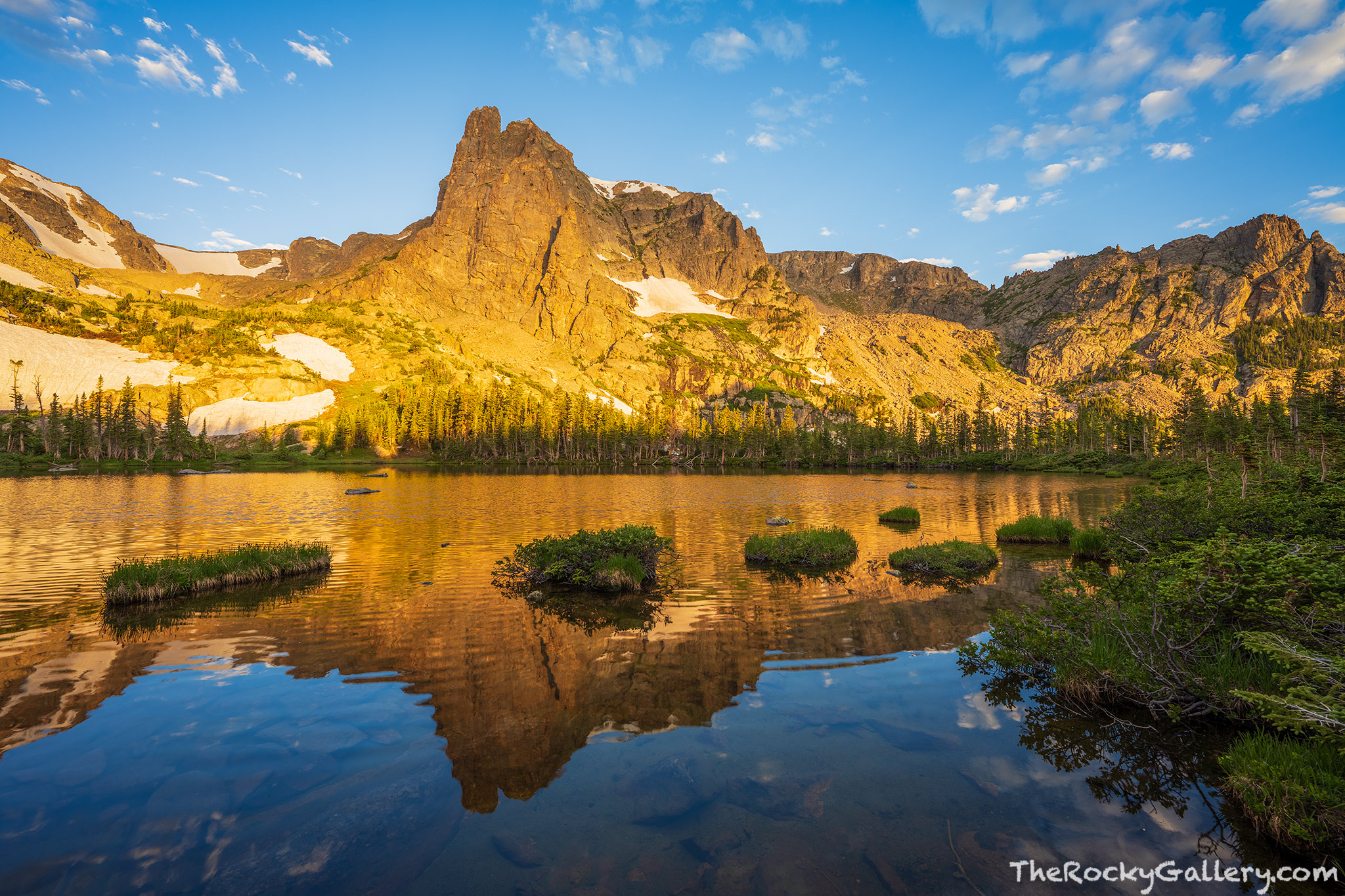
The bonus shot of the day. After photographing sunrise from overlook above Odessa Lake, I made a mad dash down the hillside to Lake Helene. In between being breakfast for the mosquitos, I was able to capture a few beautiful moments as clouds drifted over Notchtop and reflected in the rippled waters of Lake Helene. Technical Details: Nikon Z7 II, Nikkor 24-120mm F4 S VR lensI picked up the pace and arrived in the Lake Helene area about 15 minutes prior to sunrise. I particularly like this area because not only is it spectacular, the hike is great, but more importantly you have some choices on which direction to shoot depending on the clouds and light. You can shoot southeast over Marigold Pond if the light is good, north and northeast over Odessa Gorge or northwest directly towards Notchtop, Gabletop if conditions are more or less perfect.
When I arrived at the overlook over Odessa Gorge, the clouds were just about perfect. Densely packed puffy clouds hovered over Odessa Lake and The Gable. There were some decent clouds to the southeast and a few over Notchtop but the best light was going to be over Odessa Lake and Odessa Gorge from the overlook.
Viola!, a morning in which I had low expectations turned out to be pretty darn awesome in RMNP. Both my first shots over looking the Odessa Gorge were beatiful and after shooting first light there, I hustled down to Lake Helene and managed to capture a few images of the rippled surface reflecting Notchtop Mountain while dappled light and clouds reflected in the waters of Helene. Bottom line, you just need to get out and shoot, and like they say up in Ithaca, New York, Rocky is Gorges!.
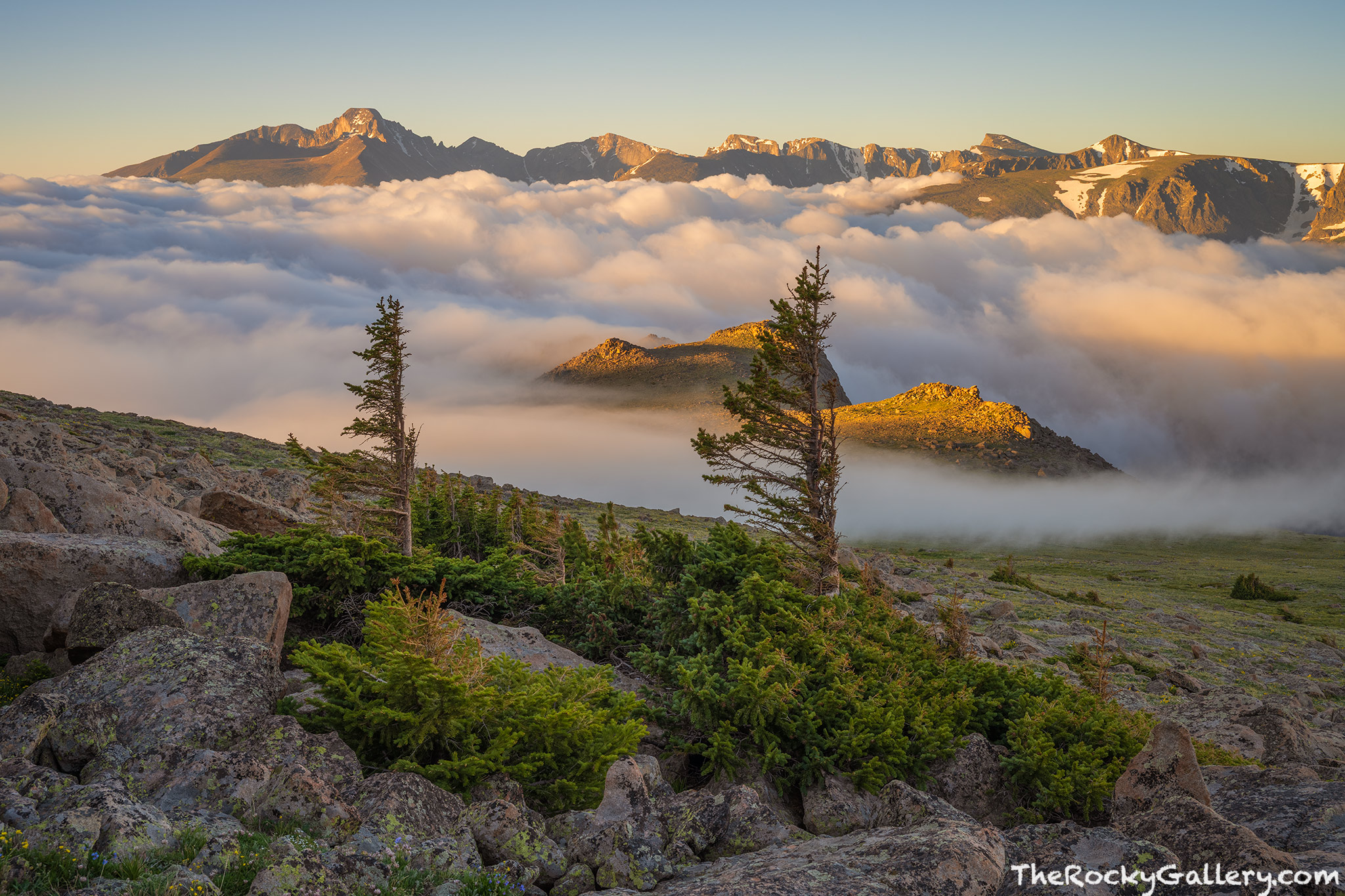
My favorite time of year has arrived in Rocky Mountain National Park. Summer is here in all its short but spectacular glory. The trails are free of snow, lakes are open, wildflowers are blooming and the alpine tundra is green. It’s easy to photograph inversions from 11,000 ft above sea level as I did this morning a week ago from Tombstone Ridge looking over Forest Canyon towards Longs Peak. Technical Details: Nikon Z7 II, Nikkor 24-120mm S lensHard to believe it but we are already past the Fourth of July here in Rocky Mountain National Park. While the official start to Summer already occurred a few weeks prior, I always consider the July 4th holiday to be the official start to Summer in RMNP and what I think is the best time of year in the park for not only exploration and travel, but for photography.
By July 4th, nearly all the readily accessible areas of Rocky Mountain National Park are free of snow. Some years there still may be snow around below 11,000 ft, but on an average year, all but the most stubborn or shaded sections of trails will be snow free. Lakes and ponds will be free of ice and the alpine tundra will be green and really starting to explode with wildflowers. Streams and waterfalls will be running at a decent clip, but not the torrents that they were only a few weeks prior from snowmelt. Lastly, the monsoon season and afternoon thunderstorms will be firing off making for interesting light and conditions in the afternoons.
Summer is my favorite season in Rocky, but it always seems to progress much to quickly. Summer in RMNP, is quick and rapid. One day the alpine tundra is covered in snow, then next it is exploding with wildflowers and what feels like a short time later, is experiencing its first snow all over again as the grasses turn from green to red welcoming fall.
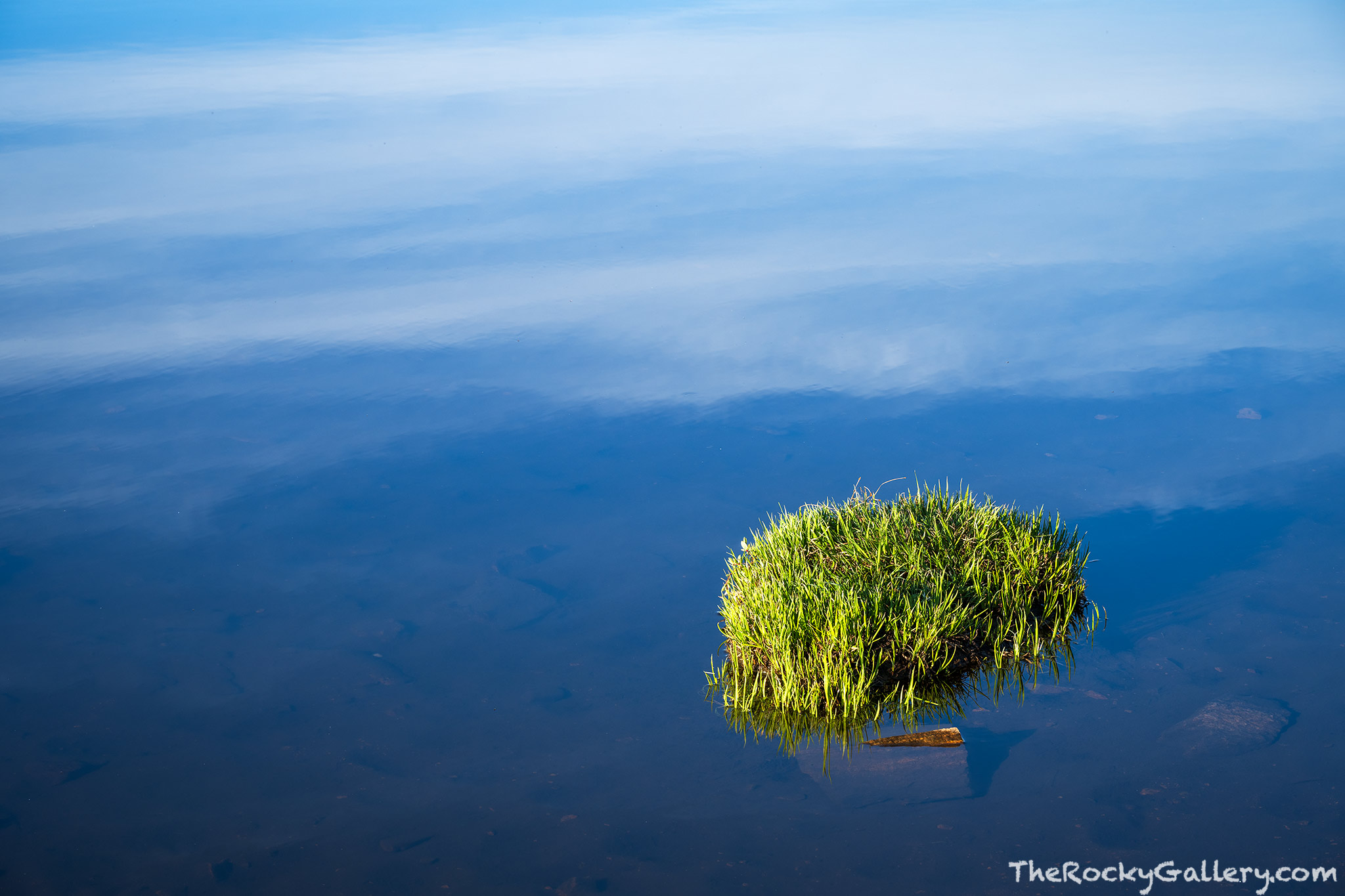
With Summer here in Rocky Mountain National Park. Take the time to relax and enjoy what can be a hectic and short season. We all dream up locations we want to shoot, and light and conditions we want to expeirence. Instead, take the time to let the moment come to you, look for images that speak to the season but perhaps not your preconceived notions of what you want to photograph. This summer morning last week on the alpine tundra, I had other ideas. Taking a moment at a small tarn on my hike out and I couldnt help but stop to photograph the blue skies and clouds reflecting in this pond with this small island of lush grass growing in the middle of it. Technical Details: Nikon Z7 II, Nikkor 24-120mm F4 S lens.For photographers in Rocky Mountain National Park, the pace can feel hectic. You never get to all the locations you want to photograph, and even if you do, mother nature and the weather dont always cooperate. Wind, cloudless skies and or cloudy skies, all conspire against our preconceived perceptions of just how the summer is going to go and what new images we imagine we will be adding to our portfolios in the off season.
The important thing to take note of during this amazing time of year in Rocky Mountain National Park is to enjoy the season for what it is. Short, hectic, physical and most importantly spectacular. Take a moment to relax and enjoy Summer in Rocky. Try not to plan out each and every shoot but also take the day and conditions for what they are and adapt with it and move with the flow. While the season may be short, and some of your goals for images may be left for another summer, stop and enjoy what is an amazing time of year in Rocky.
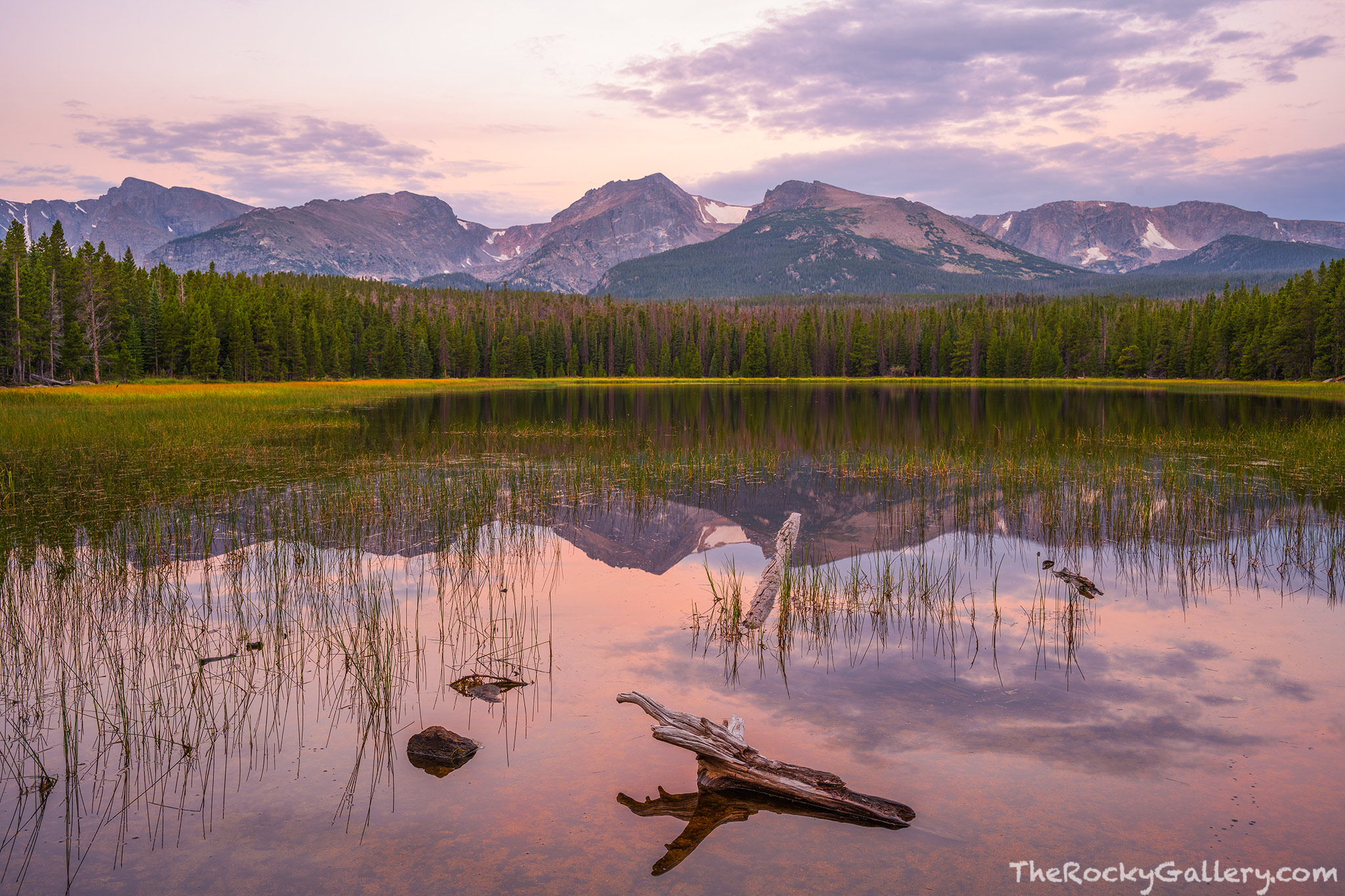
Spring sunrise at Cub Lake. Clouds over Stones Peak, lillies growing on the surface of Cub Lake and beautiful morning light. Rocky Mountain National Park is really starting to look spectacular as late spring transitions to summer. Technical Details: Nikon Z7 II, Nikkor 24-120mm F4 IS S lens
It’s late spring in Rocky but you can really feel summer is just around the corner here in Rocky Mountain National Park. After what has been a cool wet spring, the warm weather has arrived on the Front Range of Colorado. Lots of thawing, melting snow and greening grass are the themes right now in the park,
Thursday morning looked promising for a colorful sunrise. After checking all my usual weather apps, Clear Dark Sky, Sunset WX, Underground, I figured I would hike up to Cub Lake for sunrise. The pond-lilies should be sprouting on the surface of the lake and the grasses around Cub Lake should be looking their spring best.
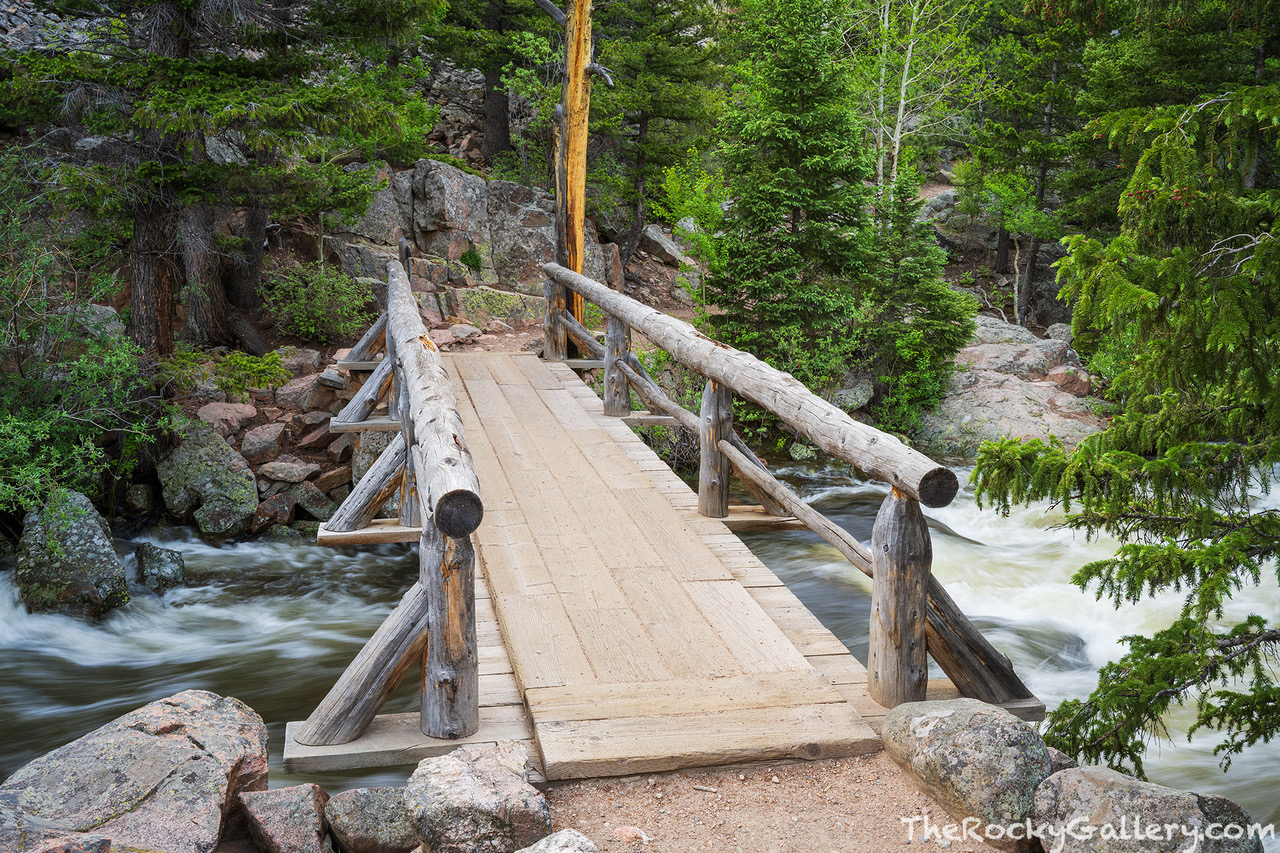
The lower to mid elevations in Rocky Mountain National Park are looking amazing right now. The Fern Lake trail and the bridge over the Big Pool and Big Thompson River are calling hikers and photographers alike right now. Technical Details: Nikon Z7 II, Nikkor 24-120mm F4 IS S lens
I get a chuckle when I go through my past photo catalogs. One theme I notice is that I end up at many of the same locations around the same time year after year. I don’t do this on purpose but the light and conditions often dictate where I end up. Cub Lake is one of those locations that is a great place to photograph early in the season. The lake thaws out much earlier than many of the other lakes as it resides at a much lower elevation. The trail to Cub Lake also is snow free much earlier than the Bear Lake and Wild Basin trailheads do. The other great thing about this trail is wildflowers start blowing here earlier than most places in the park and it’s a great place to see and photograph wildlife early in the seasons. Moose, elk and birds are all abundant along the Cub Lake trail in late spring.
So after leaving the Cub Lake trailhead at about 4:30 AM, I arrived at Cub Lake to find conditions more or less like I would expect. There was a modest breeze which is always tricky for photographers shooting RMNP. The breeze would alternate from calm, to gusty which of course muddles the lakes surface and can make catching a reflection in the surface tricky. Clouds were floating over Stones Peak and we had enough breaks with the wind that the overall prospects for sunrise looked decent.
Sunrise at Cub was beautiful as always. Pastels turned into orange and reds and the wind remained modest. I shot sunrise and then headed west past cub lake to connect with the Fern Lake trailhead and loop back to the parking lot. I love hiking this loop as its both beautiful and a great way to get my legs back in shape for ‘hiking season’ in the park. No matter how much training I do all year, nothing gets you in better trail shape than just hiking miles with a heavy pack on.
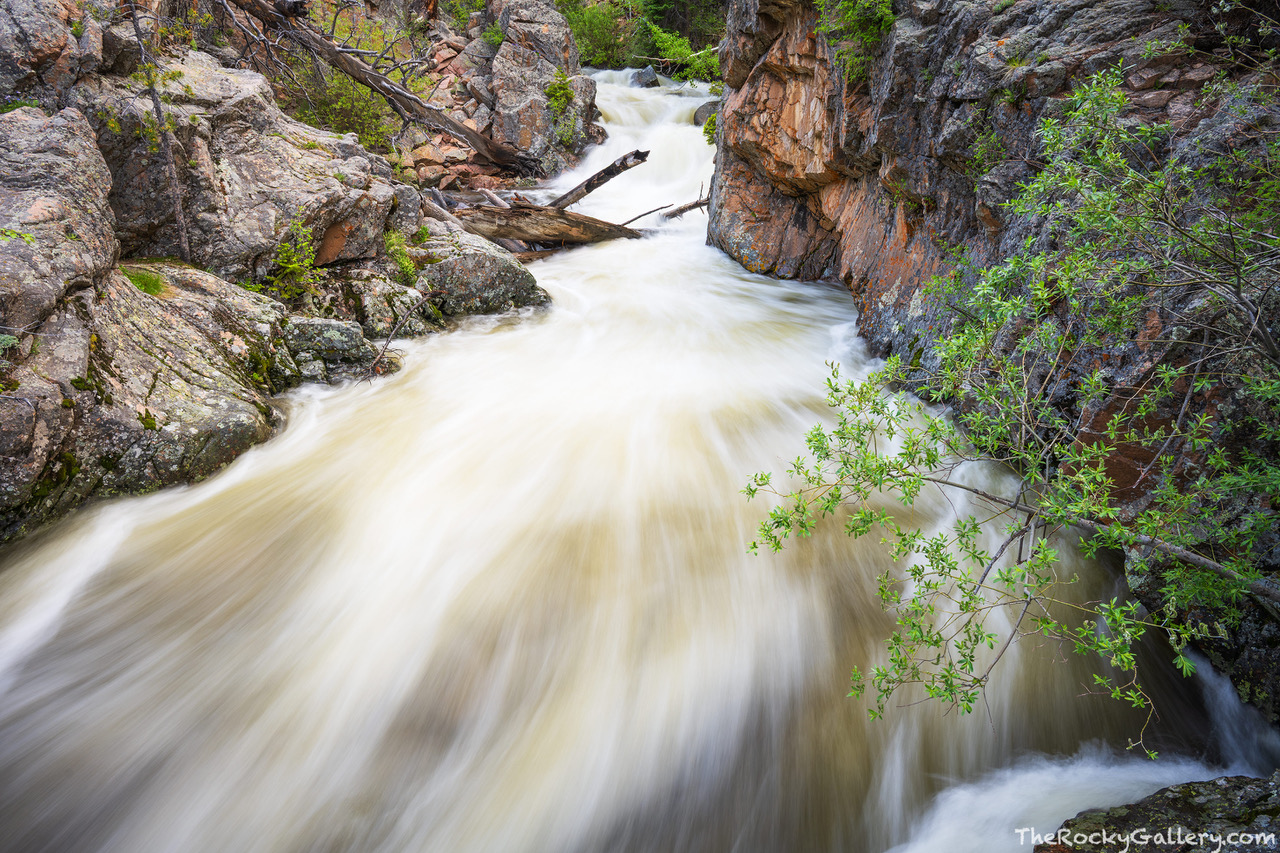
The Big Thompson River is running at a good clip right now. Seen from the bridge at the Big Pool, the water rushes downstream filled with snowmelt from higher elevations in Rocky Mountain National Park. Technical Details: Nikon Z7II, Nikkor 24-120mm F4 IS S lens
Past Cub Lake, and down to Big Pool. The wildflowers are amazing right now along the trail. The Golden Banner is having a banner year, wild roses and a few columbines were all present. The Big Thompson was running at a good clip with the snowmelt of the spring runoff. After photographing the Big Pool for awhile, I headed back to the parking and ran into a Bull Moose right on the trail. Moose number 2, per his tag was enjoying the verdant green aspen trees right along the trail. It’s been awhile since I’ve actually stopped to photograph at the Big Pool but it’s amazing how time can renew interest in photographing any given subject or location that you’ve shot a hundred times before.
I finished up my loop hike, got back to my car and just soaked in all or Rocky’s spring goodness. Its a great time to photograph RMNP right now. Wildflowers are blooming, elk and moose have their newborns, many lakes are now thawed and lower elevation trails are free of snow and great for hiking. Give it another few weeks and the alpine tundra will be greening up and at its prime. It still amazes me to this day, just how short and fast the seasons progress in Rocky. Blink and you might miss it!.
As fo this writing, Trail Ridge Road is still closed for the season. I have to beleive the opening will be eminent but I dont have any inside information as to when that will occur. Regardless, Thursday morning was amazing as fresh snow fell above 11,000 ft and I had the entire area above the Rainbow Curve to myself. Sunrise over Longs Peak from near the Ute Trailhead was spectacular as fresh snow was present on the alpine tundra and pines while beautiful pink clouds drifted over Rocky Mountain National Park’s highest peak. Technical Details: Nikon Z7II, Nikkor 24-120mm F4 S IS lens
Good morning. As of this writing Trail Ridge Road still remains closed for the season. I believe it will be opening shortly as it looks like we will finally have warmer, drier weather moving in. I’m was a bit surprised the road did not open mid week but again there was weather in the form of rain that was due Wednesday night. As many of you know, snow is possible in Rocky Mountain National Park all months of the year, and even if its fairly mild down in Estes Park, up at 10,000 to 11,000 ft there is a good chance its falling in the form of snow and or ice.
We had rain Wednesday night and the system was still parked over the Front Range of Colorado early Thursday morning. As always, I figured with the low hanging clouds and light rain hanging over Estes Park as I headed through town, I would at least attempt to see if I could get above them. With Trail Ridge Road open only until Rainbow Curve at 10,875 ft I figured I would start there. Its always nice to hike Trail Ridge Road before it opens from season after it has been plowed. Hiking Trail Ridge Road before it opens allows you to really enjoy the area before the crowds and cars show up. Basically, the area along the road goes from being a busy roadway in the summer filled with visitors to true alpine wilderness when the gates on the road area closed.
I broke through the inversion layer just below Hidden Valley on my way up. I could see fresh snow along Tombstone Ridge above Hidden Valley and at that point knew I was going to make a dash up Trail Ridge Road to at least the Ute Trailhead to setup for sunrise. As soon as I got past the gate at Rainbow Curve, Trail Ridge Road had a fine layer of ice over the top of the pavement. Obviously, the National Park Service made the smart call in keeping Trail Ridge Road closed as the conditions would have been treacherous for any vehicles driving across in the early morning hours.
What was great about Thursday mornings sunrise in Rocky Mountain National Park was not only the beautiful conditions and light, but the snow that had blanketed the landscape. Enough had fallen to give the appearance of winter but overall the tempreatures were fairily mild for 11,000 ft, the there was only about 1/2 inch of snow which made travel easy and painless. Technical Details: Nikon Z7II, Nikkor 24-120mm F4 S IS lens
Hiking up the road, I had to alternate between the median and the shoulder to avoid the ice and taking a spill on my way up. Except for the occasional protest of a Ptarmigan, it was peaceful and calm at timberline. It was mostly clear overhead but there were some nice clouds floating above the low lying inversion layer over the foothills and plains of Colorado to the east of Rocky Mountain National Park. As I kept a determined pace, things were looking great for sunrise. The higher I climbed, the more pronounced the snow became. By the time I reached the Ute Trailhead, there was almost 1/2 inch of new snow on the landscape and trees. Just enough to cover the landscape, but not enough to make it difficult to hike through.
Beautiful clouds floated over Longs Peak to the southeast, and snow covered nearly the entire landscape. The inversion had not made its way all the way up Forest Canyon, but even still things looked great. After a pastel sunrise over Longs Peak, I headed the ridgeline to for another composition and view. The clouds floating overhead had increased which was only making for even more dynamic compositions.
It was the best of both worlds, Trail Ridge Road was closed and I was the only person up on it this morning, and the harsh landscape was covered in fresh snow but pleasant and manageable. In a nutshell, I couldn’t ask for a better morning in RMNP. Mornings like we had on Thursday are why I constantly keep heading out to photograph Rocky Mountain National Park. It’s never the same twice, you never really know how the light will unfold, and the conditions will usually dictate where I end up in the end. This keeps it fresh and keeps me waking up early every day.