Memorial Day Morning From Rocky Mountain National Park

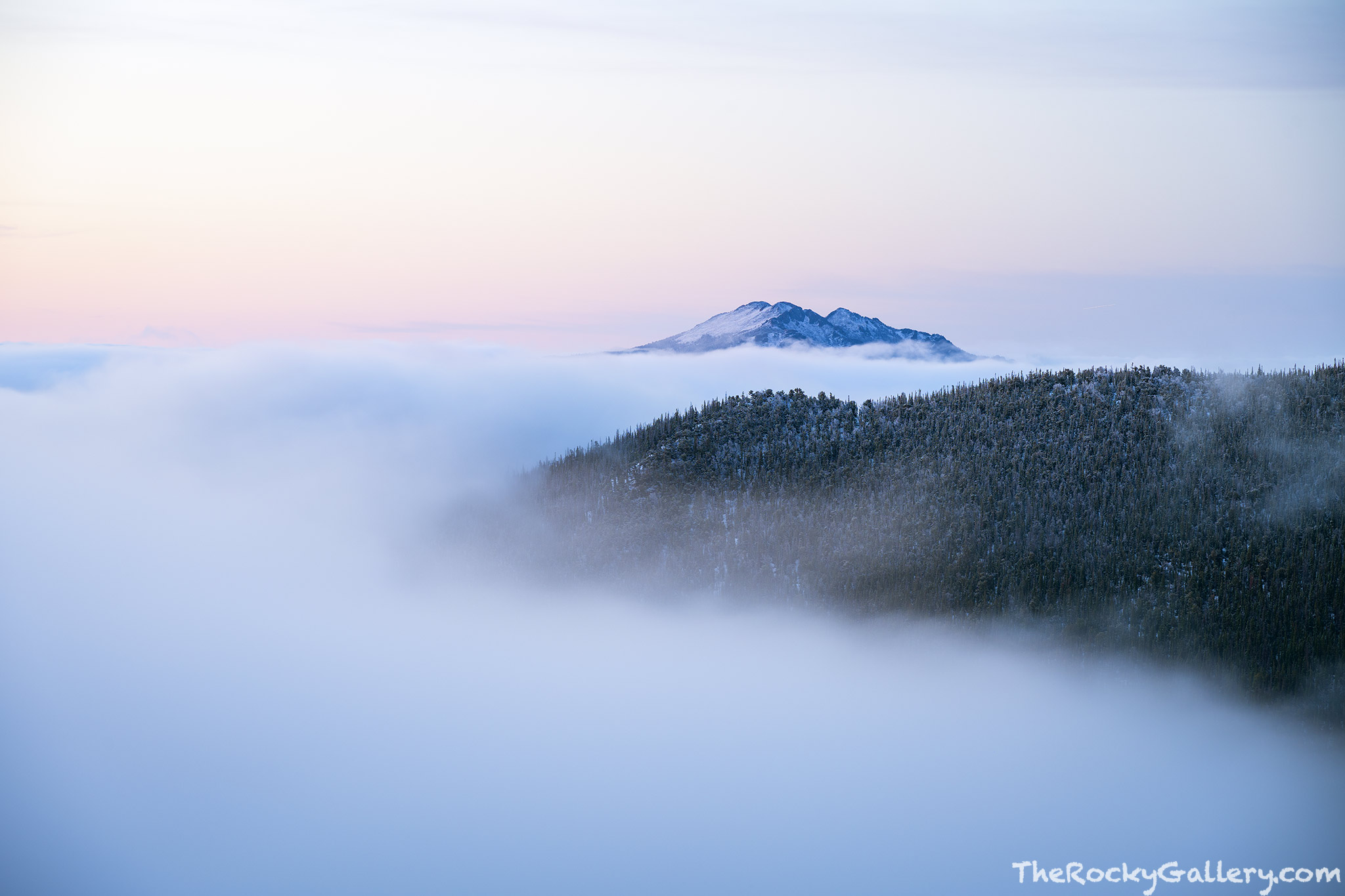
Memorial Day morning in Rocky Mountain National Park was pretty amazing. After storms pushed through last night, rain and snow was present above 10,000 ft. I headed to Rainbow Curve along Trail Ridge Road to get above the cloud inversion and see what would develop at sunrise. Here we are looking at the Twin Sisters like an island in the middle of an occean of clouds just before sunrise. The inversion layer quickly smoothered Rainbow Curve after this but I love the pastels and subtle nature of this image. Technical Details: Nikon Z7 II, Nikkor 100-400mm F4 IS S lens

Memorial Day in Rocky Mountain National Park proving what most of us here in Colorado know. It’s may be the unofficial kick off to Summer, but in Rocky Mountain National Park its more or less business as usual. Last time I checked in was to relay the message that Trail Ridge Road would not be open for the Memorial Day holiday weekend. And after a couple of days of unsettled weather in Rocky with rain, and thunderstorms, this morning looked like there could be a chance for a decent sunrise.

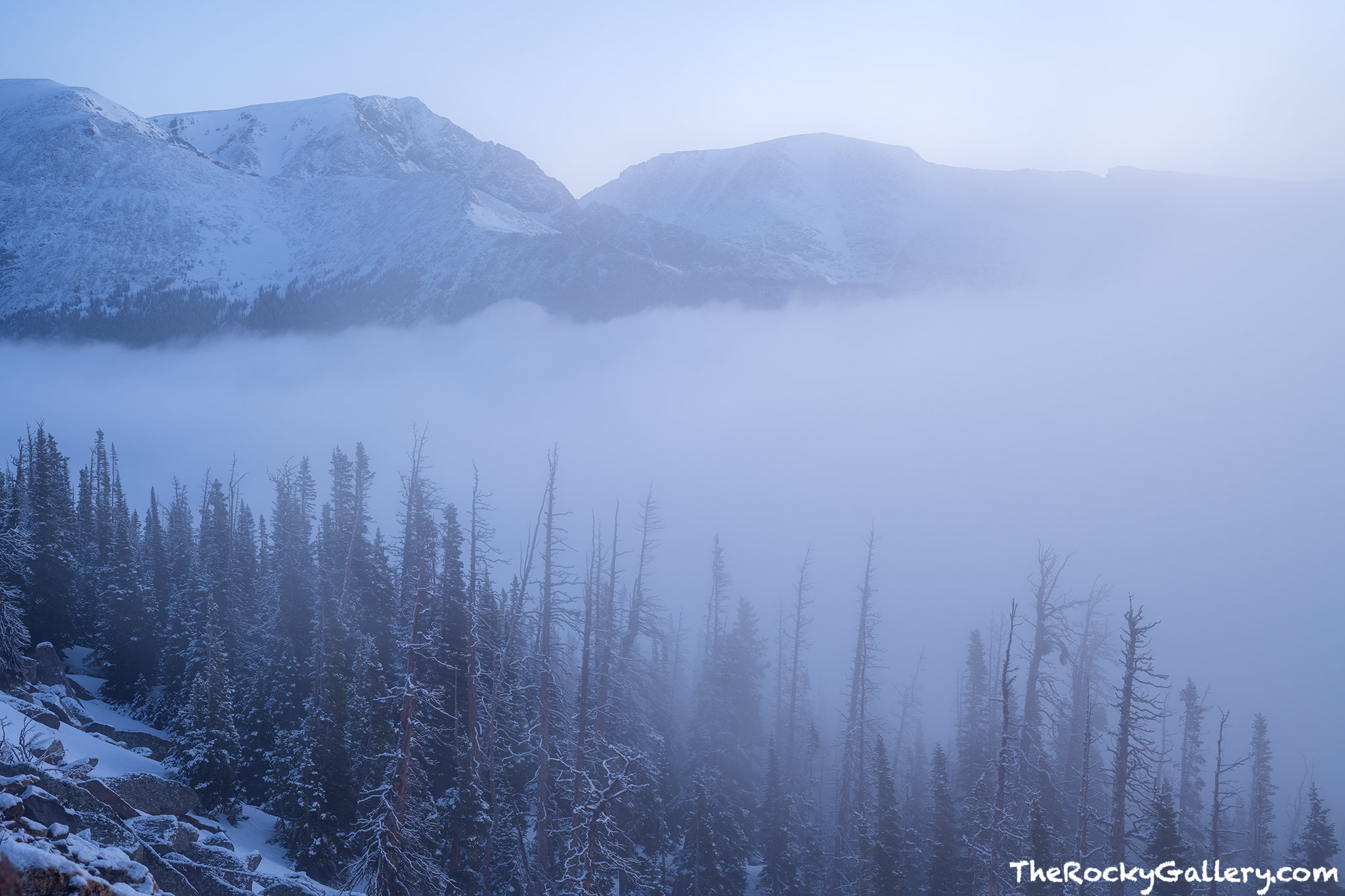
Ypsilon Mountain, Fairchild Mountain and the Mummy Range made a short appearance this morning before the clouds rose up and obstructed this view. I shot this in the blue hour before sunirse but the new snow and the Mummy Range and pines helps the image convey the cool, moody morning. Technical Details: Nikon Z7 II, Nikkor 24-120mm F4 IS S lens

It was rainy when I left my house this morning to head up to Estes Park and RMNP. My tentative plan was to head up Bear Lake Road, get a decent hike in and look to head to one of the lakes to get mountains reflecting in the calm waters. Fingers crossed, maybe whichever peak I ended up photographing would even have a nice new dusting of snow on it.

When I arrived in Estes Park, I found there was a pretty good inversion sitting over the lower areas of the park. The inversion appeared to be at about 9500 ft or so and there did not seem to be much in the way of cloud cover over the inversion layer. I decided I would ditch my plan to head up Bear Lake Road and instead take the safe route and head up to Rainbow Curve and at the very least get a chance to play in the fog and possibly snow.

Heading up Trail Ridge Road, just as I started to climb above Hidden Valley, I saw my first breaks in the cloud cover. At that time, the inversion was east of Rainbow Curve and frankly, I could not tell if it was moving out of the park or pushing farther west up against the range. This is the reason I like Trail Ridge Road when theres and inversion, you have a little more flexibility to try and manage if you can get up above the inversion layer. While its great to be out in the backcountry when this happens, you pretty much have to hike to a location and cross your fingers that you picked the right spot.

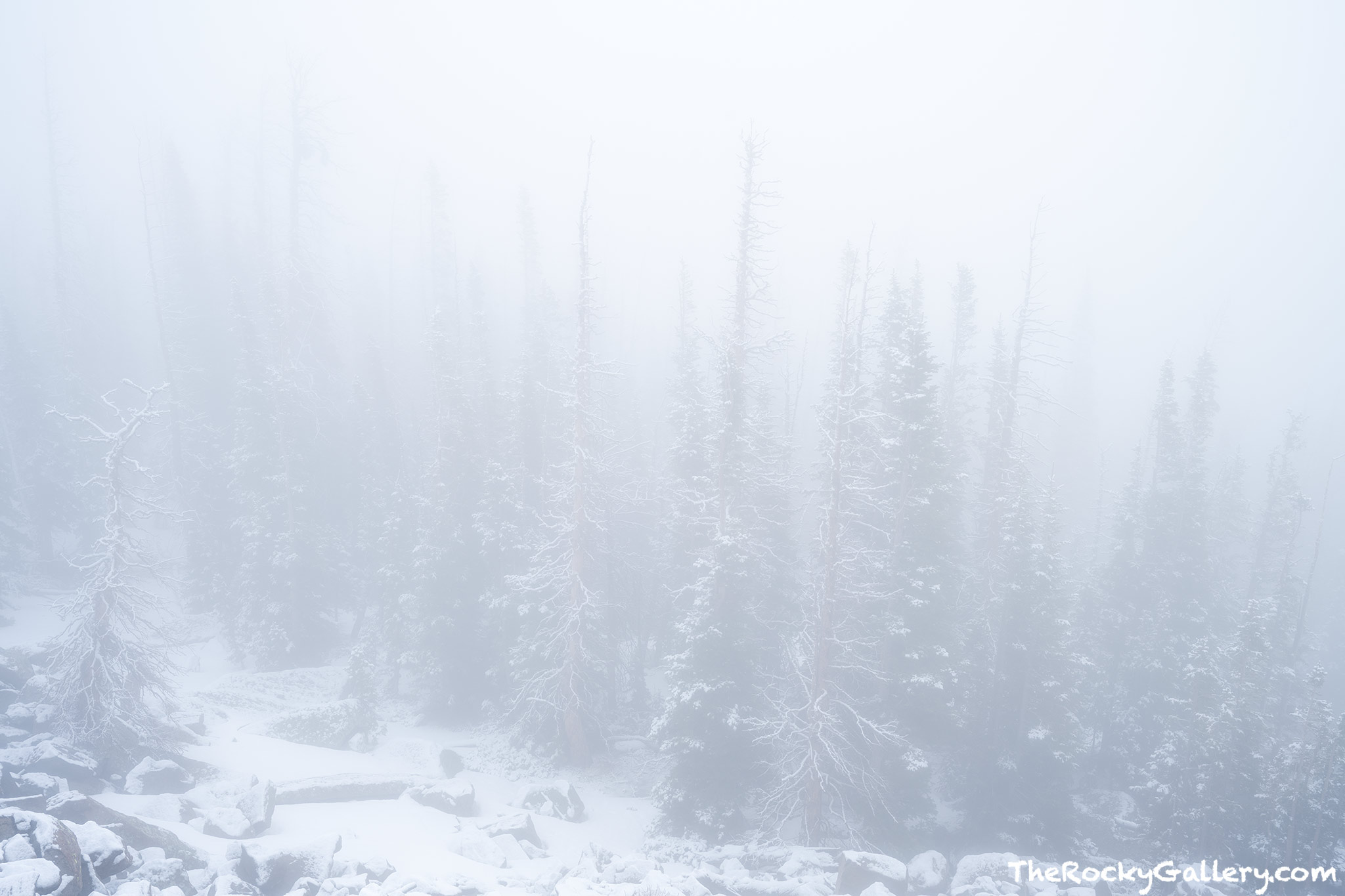
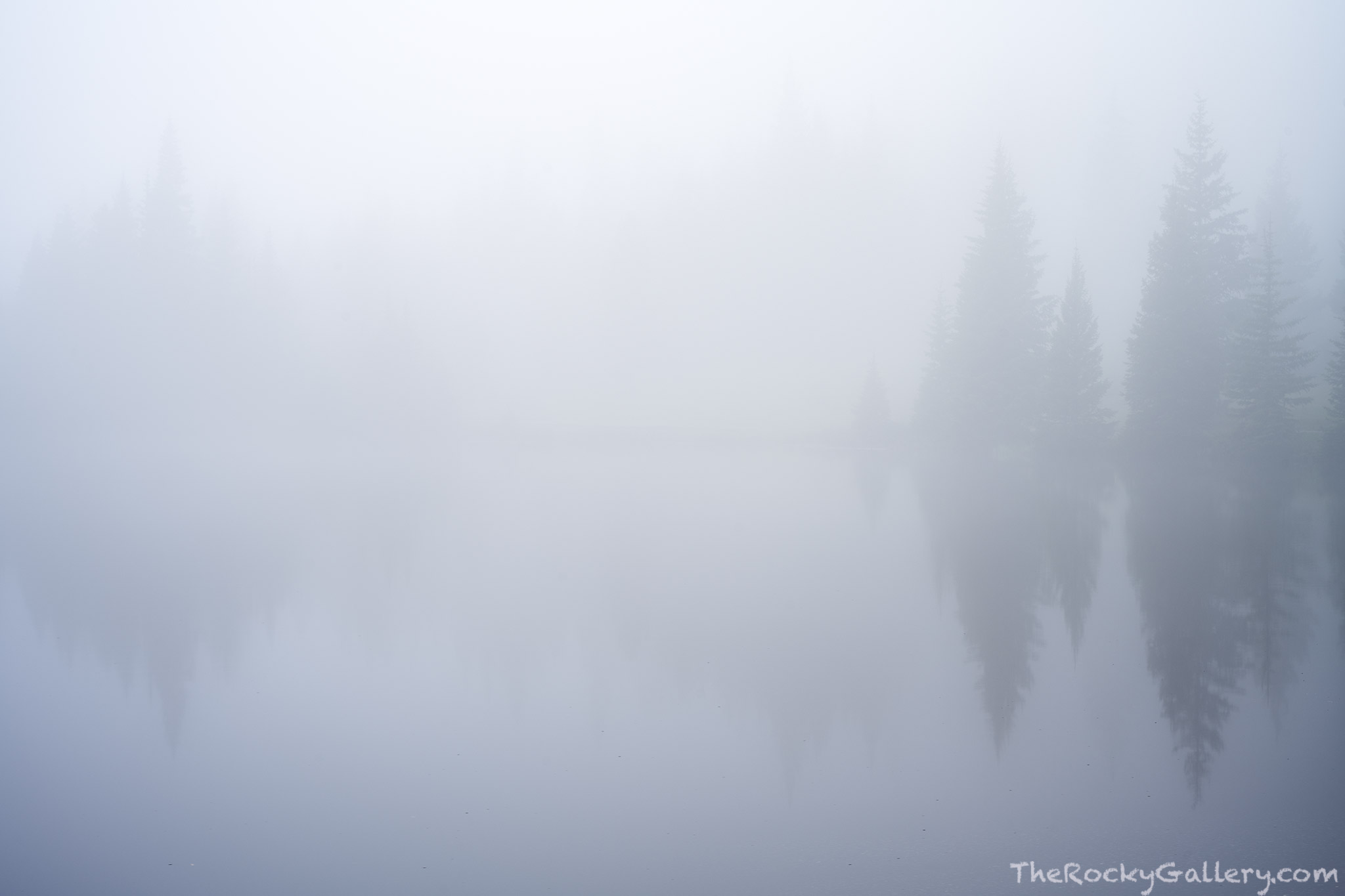
I only had about 10 minutes before the inversion layer and clouds covered Rainbow Curve and pretty much obstructed everything. This image of these pines covered in fresh snow and fog certainly conveys the ‘unoffical start to summer’ vibes for RMNP!. Tehcnical Details: Nikon Z7II, Nikkor 24-120mm F4 IS S lens

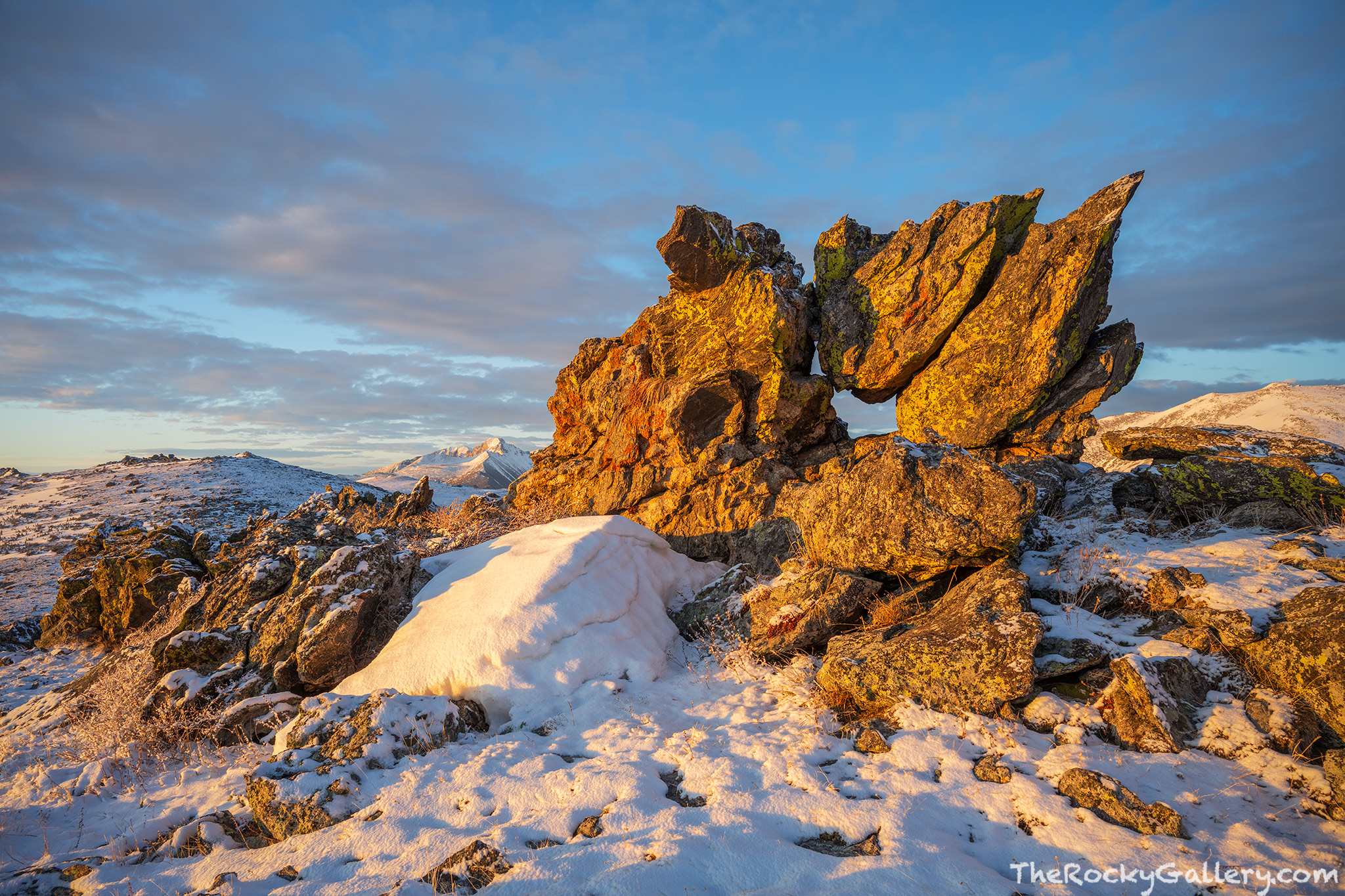
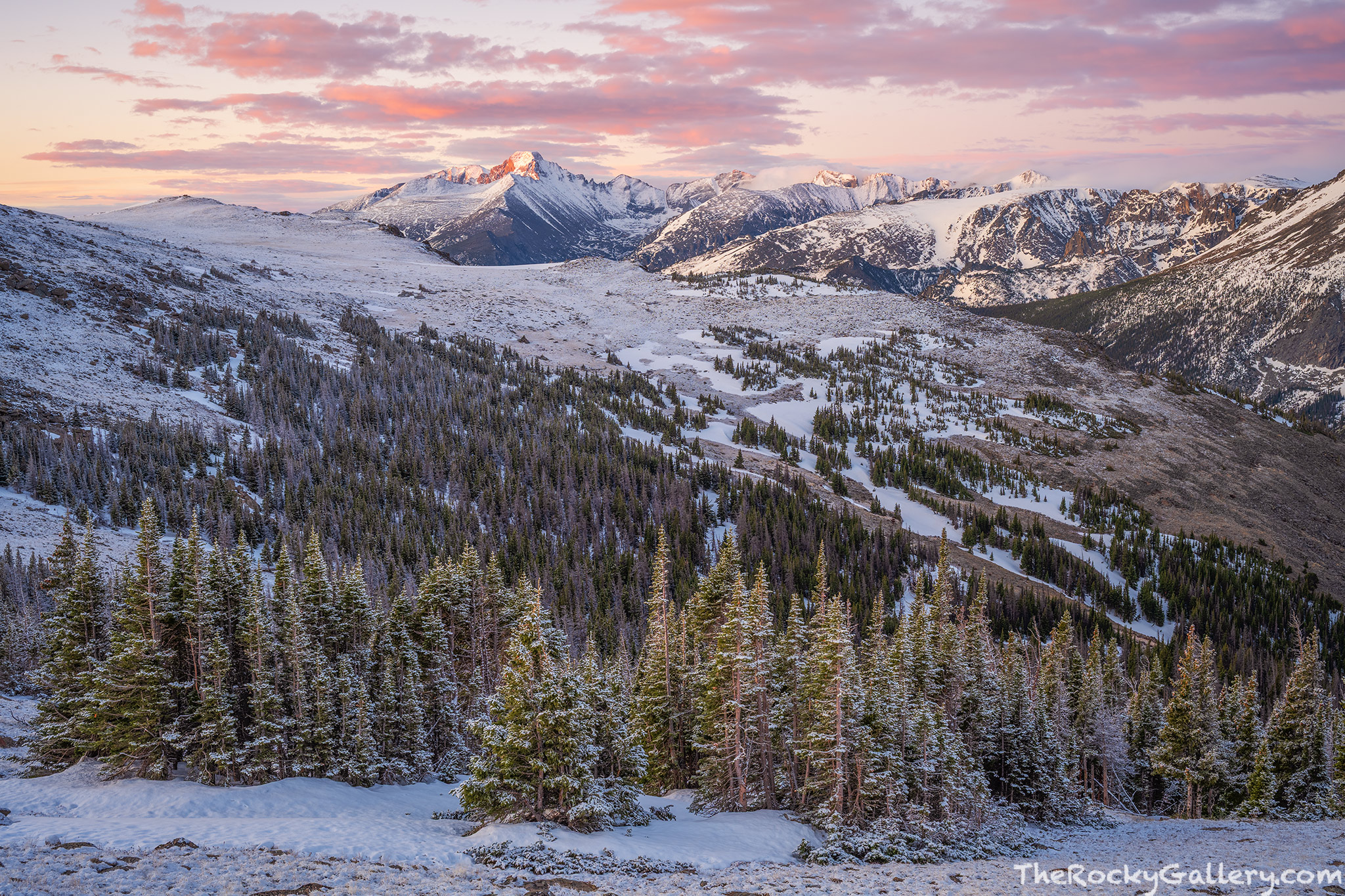
Inversion layers often act like a living, breathing entity. The move up and down like waves. Sometimes they are very still flat, and other times they move up and down like you are in the middle of storm in the ocean, This morning, the inversion layer was moving upwards like a rising tide. I had a few my minutes just before sunrise to get setup and start shooting. Longs Peak was visible when I first arrived for a few brief moments as was the Twin Sisters off to the east of Longs Peak. There was about a 1/4-1/2 of inch or snow of new snow on the pines over 10,000 ft so the view from Rainbow Curve looked spectacular.

Within about 10 minutes or so of me getting setup and taking a few exposures of both Longs Peak, Ypsilon Peak and then onto the Twin Sisters which had a little bit of color behind it from the pre-sunrise light, the inversion made its way up and over Rainbow Curve and left me in a blanket of clouds. Those 10 minutes were all I would get with a clear view to the east. I waiting around for about an hour but the inversion did not clear again until I had left and the light had gone flat.

Here’s a pro-tip for photographers shooting Rocky Mountain National Park during an inversion. Don’t assume you can just setup and wait for the light. Start shooting as soon as you have adequate enough light. Blue light images, long exposures with the inversion smoothing out and the nice pastel light of dawn all can be more dramatic or stunning then when the actual sun appears and may make the light harsh or throw lots of hard shadows and glare into the scenes. My personal favorite light is the light just before sunrise as its a little more subtle, but also a little more easy to process and capture on our modern camera sensors.

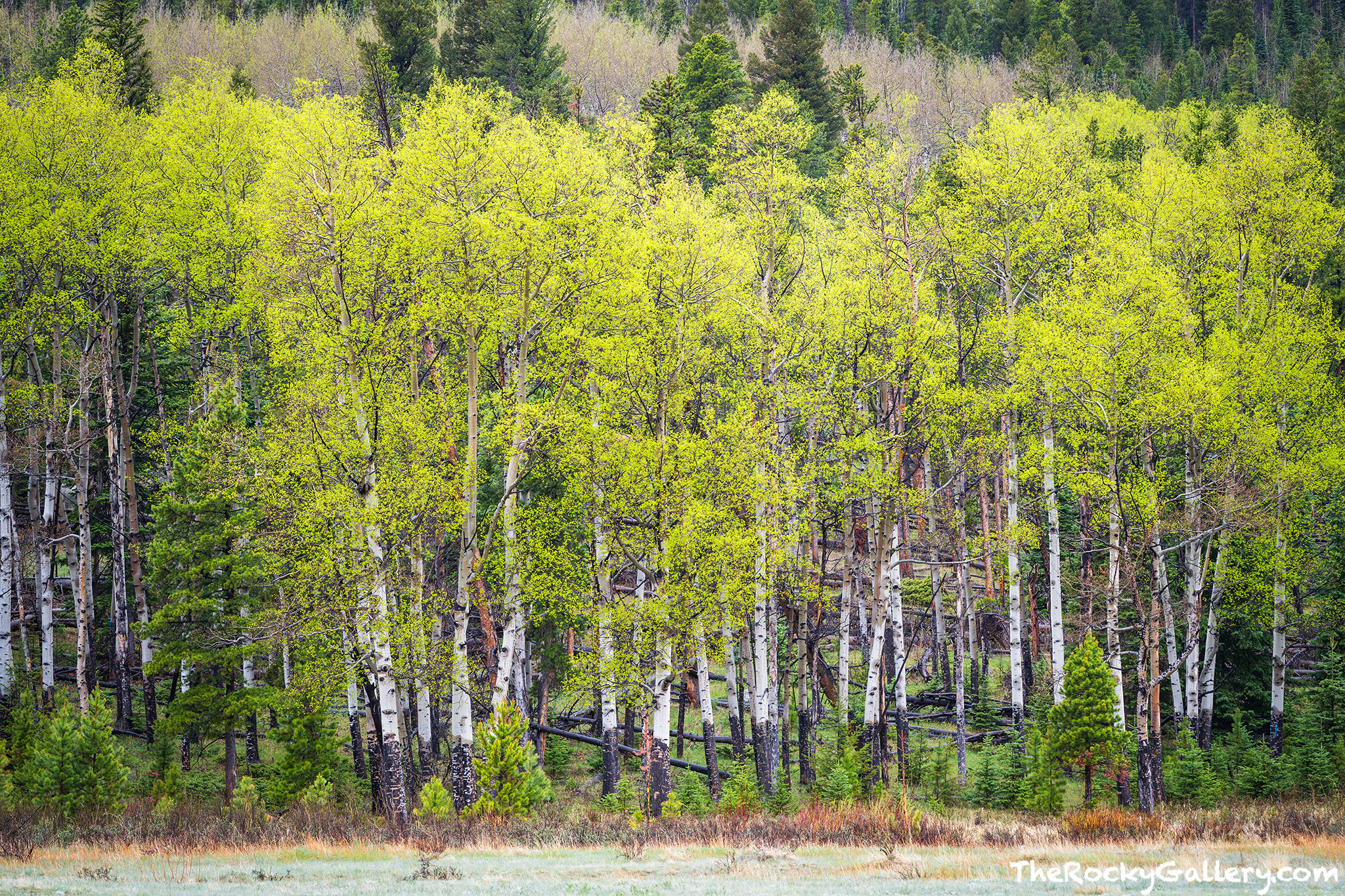
Once it became obvious that I was going to be socked in with clouds at Rainbow Curve, I headed down to Horseshoe Park to see how the aspen trees were looking. I find lime green spring aspens as enjoyable to photograph as I do golden aspens in the fall. The aspens are start to leaf out and look pretty good as of this morning. There are still many that have not leafed out, but we are almost looking like spring in Horseshoe Park. Technical Details: Nikon Z7 II, Nikkor 100-400mm F4 IS Lens

Once I decided I was done for the morning at Rainbow Curve, I headed back down Trail Ridge Road and wanted to check out how the aspens were coming along. I’m a sucker for lime green spring aspens almost as much as I am for golden aspens come fall. I was able to find some nice spring aspens budding out in Horseshoe Park as well. While there as still some trees that have yet to bud out, many have started and are looking good. All the rain we’ve had also soaks into the aspen boles and brings out a little more contrast and detail in the trunks which was welcome also.

Overall, an awesome morning in Rocky Mountain National Park that turned out as so many do. Not what I had planned and not what I expected but roll with flow and you can come away with some interesting new compositions and images. Enjoy Memorial Day here in the United States and of course always remember to honor those who made the ultimate sacrifice on this day so that we can all enjoy places like Rocky Mountain National Park.

Trail Ridge Road Closed For Memorial Day

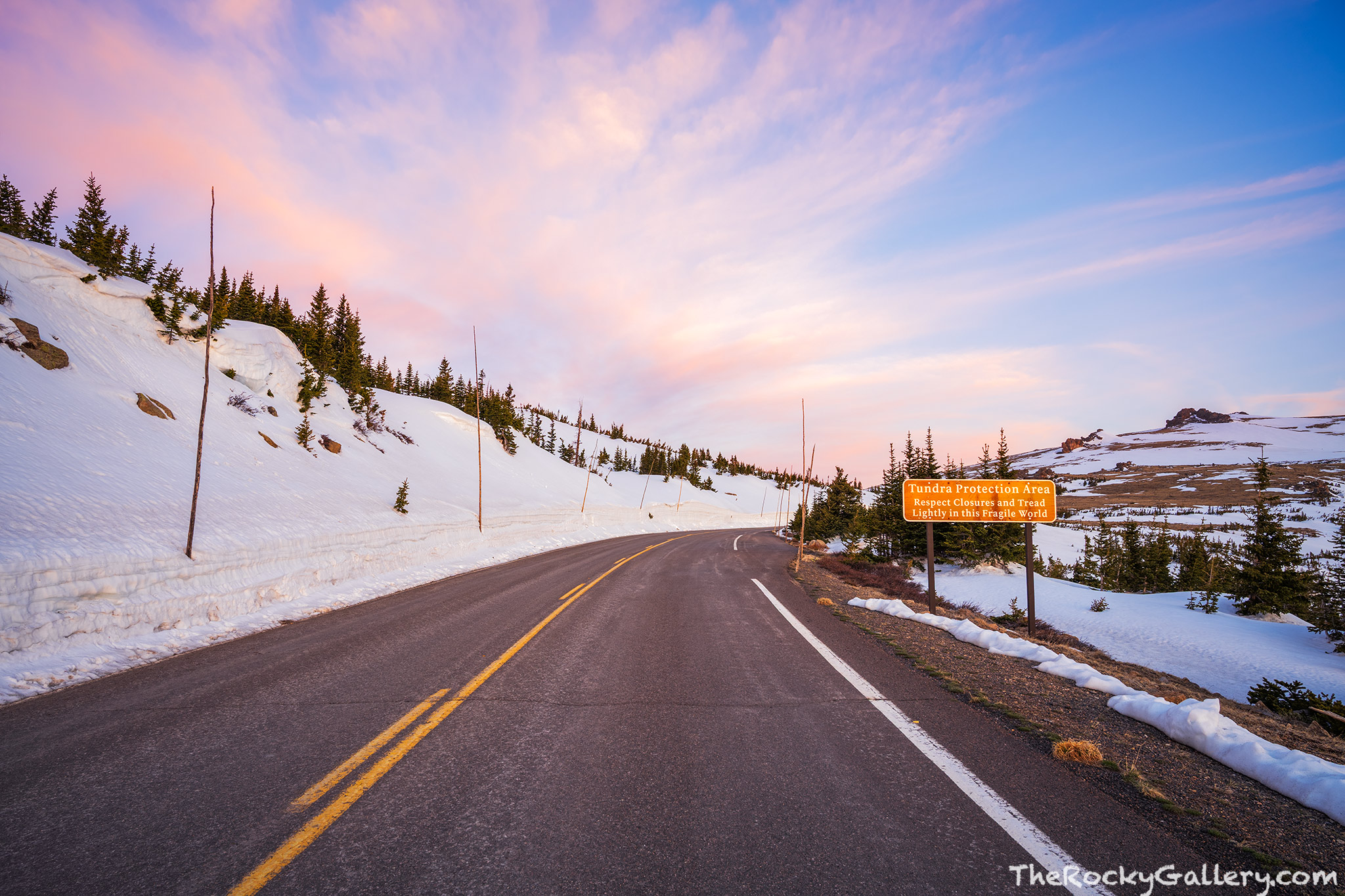
Unfortunately, Trail Ridge Road wont be open for the Memorial Day weekend this year. The NPS crews have been working their hardest to get the road open, but snow and lots of wind the past two weeks have made it difficult to make progress on portions above timberline. I hiked up the road this morning and this was sunrise below the Ute Trail. While we have less snowpack this year, the wind with last weeks stormed moved lots of snow back onto Trail Ridge Road. Technical Details: Nikon Z7, Nikkor 24-70mm F4 IS S lens

It’s official. The National Park Service just posted that they wont be able to open Trail Ridge Road in time for the Memorial Day holiday weekend. The past couple of weeks we have had a combination of snow and very high winds and according to the National Park Service (NPS), the road crews plowing Trail Ridge Road have been hampered by the snow and mostly the very high winds that continue to push back any progress they have made in the last few weeks.

The NPS road crews in Rocky Mountain National Park do an amazing job working to get Trail Ridge Road open for the season. They have been plowing since April. We’ve had a below average snowpack this year but we have had very strong wind storms much of the spring, combined often with snow and blowing snow.

By last week, I was starting to get the feeling that Trail Ridge Road might not be open for the season as there was very little chatter about it opening early and people who had hiked up the road reported the plowing operations were just past the Rock Cut. Other signs that we may be behind schedule was the fact that the Alpine Visitor Center webcam had not be moved from its winter location as of yet. When they move the web camera, you know they have dug out parts of the AVC and have the generator running up there to power it all day long as opposed to 3 times a day via a solar panel in the winter. The web cam at the AVC did show blown snow behind it one day so I believe the Grand Lake crew has at least reached the parking at one point in the past two weeks.

Trail Ridge Road wont be open for the Memorial Day weekend this year but it was not for lack of trying. One of the Rotary snowplows the NPS uses to plow Trail Ridge Road rests overnight near the Ute Trail. The glinted light of sunrise illuminates the Kodiak Rotary plows blades this morning helping to highlight the battle scars and bruises the equipment takes getting Trail Ridge Road open each season. Technical Details: Nikon Z7, Nikkor 24-70mm F4 IS S lens
So now that Trail Ridge Road wont be open this weekend, what would be some good alternatives to keep busy. One could be to make the longer drive over Berthoud Pass to Grand Lake. Grand Lake will be beautiful this weekend and with Trail Ridge Road closed, it will be a lot more quiet than Estes Park. Another alternative would be to visit and hike the lower portions of Wild Basin. There will still be a lot of snow in the higher elevations, but the lower elevations of Wild Basin should be less crowded than say the main areas of Rocky and mostly snow free down low. Lastly, areas like Lumpy Ridge right in town would be a good choice as they wont require long drives and although the parking lots are small, they tend to get less visitors than main areas of the park.

As an aside, Bear Lake Road now has timed entry in effect so if you are planning on heading into the Bear Lake area after 5:00 AM and 5:00 PM you will need to have an timed entry permit. With Trail Ridge Road closed, and if you dont have a timed entry permit, it would probably be a good idea to avoid the Bear Lake area unless you have already purchased a timed entry purchase. Regardless, there will be plenty to do and see and Rocky is rounding into spring form making for some great opportunities for photographers.

Condition Spring!

Sunrise at Bierstadt Lake back on May 5th. You could almost mistake this for a summer image with the grasses but as you can see there is still plenty of snow on the west end of the lake. Regardless, expect to find open water in the lower elevations of Rocky Mountain National Park. Technical Details: Nikon Z7 II, Nikkor 24-120mm F4 IS S lens

I just wanted to check in here before the Memorial Day weekend regarding the current conditions in Rocky Mountain National Park. Winter is quickly losing her grip on the park but we still have a ways to go in many places.

Lower elevations are starting to green up nicely. This past week we have had lots of wind, rain mixed with snow many of the days but the tug of war between winter and spring/summer is finally starting to lean towards the latter.

Grasses in the lower elevations are greening up and there are even some wildflowers such as Golden Banner starting to grow in earnest in some areas Rocky. Aspens are leafed out and leafing out in many areas but there are some that have yet to even bud out so its a bit hit or miss on photographing those key lime spring aspen trees right now.

Sunrise from Moraine Park back on May 13th. The Big Thompson River is flowing well and the grasses are just starting to green up. We are a little farther along now as far as the green up goes but Stones Peak has the same if not more snow on it as of today!. Technical Details: Nikon Z7 II, Nikkor 24-120mm F4 IS S lens

Lakes and water below 10,000 ft are all thawed and running at a mild runoff right now. Trail to access places like Dream Lake and The Loch still have spots of snow on them and can be a bit dicey once the days warm up, so be prepared with traction devices and gaiters for your legs if you plan to get off trail or get into some of the higher elevation locations.

As far as Trail Ridge Road goes, I believe it should open by the end of the week. We have had some snowy mornings on the higher elevations but hopefully the plow crews can get the Trail Ridge Road in a safe enough condition to open it to all those waiting to head over to Grand Lake for lunch. It appears that we are going to have a warming trend in the near future which should help as well.

Overall, things are looking great and I can’t wait for the warmer weather and summer conditions to get here. Have lots of great backpacking trips planned and will be out everyday that conditions look promising for photography. Happy shooting!

Early Summer Summary

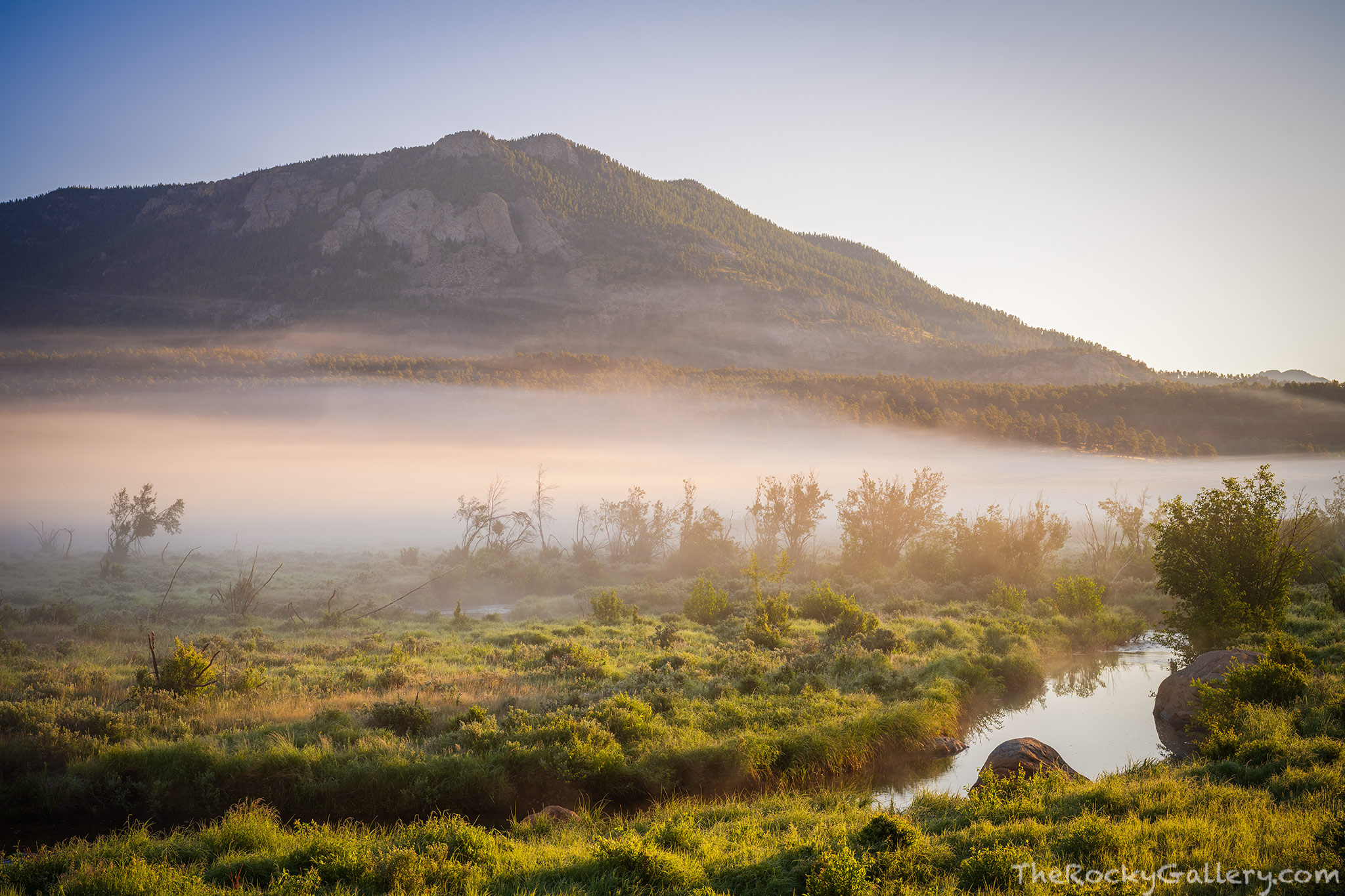
Ground fog rolls across the east end of Moraine Park on the east side of Rocky Mountain National Park yesterday morning. It was a clear morning but the ground fog allowed me to get out and capture this image of Moraine Park with Deer Mountain in the background soaking up the early morning light. The start to summer in RMNP has been mostly clear and windy but here to hoping that will change soon. Regardless, you have to photograph with the hand your dealt and this worked out better than I originally hoped for. Technical Details: Nikon Z7 II, Nikkor 24-120mm F4 S lens
Warm and windy is how the summer has started off so far in 2024 in Rocky Mountain National Park. After an active spring, summer has been pretty much summer like. It’s not been dry in the mountains as we have had rain showers many afternoons, but mornings and sunrises have tended to be mostly free of clouds but more importantly, very windy.

Rocky Mountain National Park is known as a windy location. Wind is something we deal with often in Rocky. The wind while a feature all year long, tends to abate or at least give photographers a few breaks here and there in the early mornings and late afternoon to take advantage of calm waters for reflections or long exposures on a group of wildflowers in a meadow or hillside.

Since about the middle of June this pattern has stuck and now it looks like we are going to trend towards much warmer weather at the end of this week. As of this writing, it appears that next week the weather will be more active again with instability and afternoon thunderstorms making a comeback to Rocky. Both the moisture and return of unstable weather will be welcome for photographers such as myself and anybody looking for some respite from the warmer weather at the end of this week.

Bad weather makes good photographs and as much as one might try, clear skies and breezy conditions are challenging no matter who is behind the viewfinder trying to create art and capture the beauty of Rocky Mountain National Park.

On Monday morning I headed into the park with mixed expectations. I had avoided the park over the 4th of July weekend as I had other commitments and frankly when RMNP is that busy, it’s a holiday and a weekend and the skies are clear, I’ll probably opt to sit out a sunrise or two. The skies were clear when I headed in and there was pretty much a 0% chance that there would be any cloud cover at sunrise.

While not all that recent, this image was shot in late June at Lake Irene on the west side of Rocky Mountain National Park. Simmilar morning as it was clear on the east side but socked in with fog on the west side of Rocky. Dramatic sunrises are great but again, photographing fog is harder to do in RMNP than one would think. Anytime I get the chance to photograph fog, I will. Technical Details: Nikon Z7 II, Nikkor 24-120mm F4 S lens
It had rained pretty hard the night before and as I drove over the causeway over Lake Estes, there were hints of fog coming from the surface of the lake. I figured I would check out Moraine Park to see if there any ground fog present along the Big Thompson as there often can be after a night of rain. With little chance of a colorful sunrise, I headed down into Moraine Park where there was a thin layer of ground fog collecting on the middle to east end of Moraine Park.

I parked at the Cub Lake trail head and hiked around the meadow along the South Lateral Moraine until I could find a comp that would work with the current conditions. As is typical with these kind of mornings the fog was rising and falling by the minute all the while slowly evaporating and moving farther to the east.

Shortly after sunrise, along the Big Thompson River, I was able to capture this image of the fog in Moraine Park with Deer Mountain catching the early morning light. Obviously not the most dramatic sunrise I’ve capture here but one I was pleased with considering the difficult conditions for photography in Rocky as of late. In Baseball terms, sometimes you have to hit a bunch of singles before a home run. This was one of those types of mornings.

Shaping Up To Be A Banner Year For RMNP!

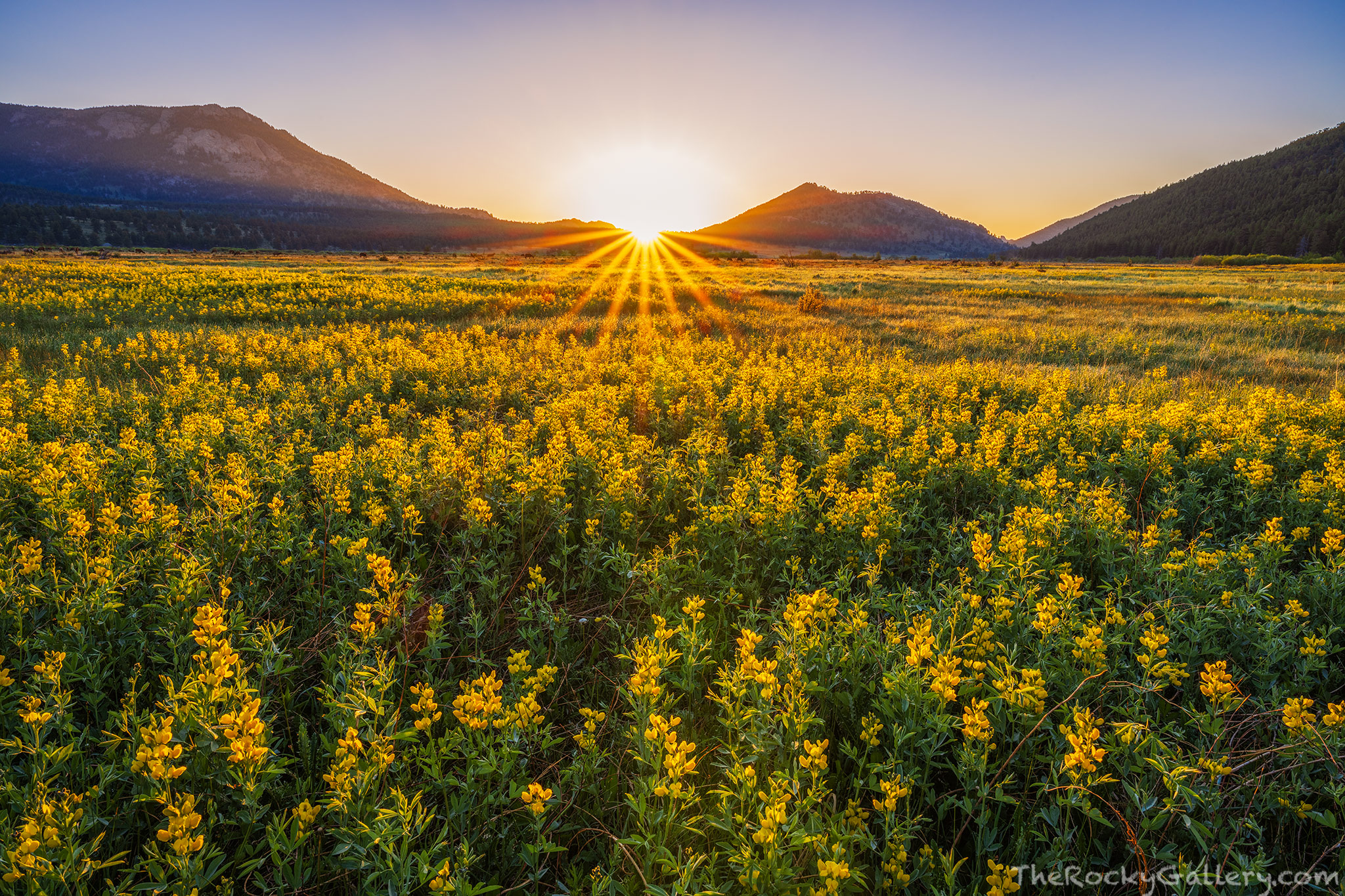
It’s shaping up to be a banner year for wildflowers in Rocky Mountain National Park. After a very snowy winter and a wet spring, we are being rewarded with some awesome wildflower displays early in the season. Moraine Park looks amazing right now with Golden Banner growing all through the meadow as seen here during yesterdays sunrise. Now is a great time to get out and photograph RMNP. Technical Details: Nikon Z7, Nikkor 17-28mm F2.8 lens

Sure I’ll be a little cliche here and say it. It’s a banner year for Golden Banner in Rocky Mountain National Park. These beautiful yellow wildflowers that grow in clumps and appear in the early part of the spring through mid summer depending on your elevation and now budding up all over Rocky’s middle elevations.

While the arrival of wildflowers in Colorado and RMNP is always a welcome sign that summer and warmer weather is approaching, this years bloom on the east side of Rocky Mountain National Park has been the best that I have witnessed in my 26 years photographing the park.

Right now, Moraine Park, Horseshoe Park, along with the hillsides of Upper Beaver Meadow have beautiful patches of Golden Banner proliferating in a manner I have not witnessed. It’s a photographers delight as one can take their pick of vantage points and work in the beautiful yellow wildflowers.

To date, the best area right now is Moraine Park. Huge groups of Golden Banner can be found just about anywhere in the lush green meadows. Rocky’s snowy winter and wet spring are really paying dividends for us photographers as the weather is now quickly warming.

While Moraine Park looks great for landscapes, its also teeming with wildlife right now as the elk take advantage of the greening grasses. While photogrpahing sunrise, this group of elk watched me with curiosity as I setup in front of this huge clump of Golden Banner growing in the meadow. Technical Details: Nikon Z8, Nikkor 500mm F5.6 PF lens
While the Golden Banner are the main attractions, lots of other wildflowers are revealing themselves in the same areas. Wild Iris, often growing in or near the patches of Golden Banner look great on the east side of the park as do a handful of other wildflowers such as White Evening Primrose and Marsh Marigolds. Calypso Orchids should be out now as well though I have not seen or photographed any as of yet.

These are the early season wildflowers in Rocky Mountain National Park but we should start to see the summer blooms gaining traction over the next few weeks as the remaining snow melts and the days continue to be long and warm. Columbine, Paintbrush and Alpine Sunflowers will all be covering the hillsides shortly.

This is my favorite time of year. Summer is short in Rocky and it’s fleeting nature and beauty or both exhilarating to explore and photograph each year but also a little solemn knowing that it will be short lived and one can only be present for so many sunrise and or sunsets in the park before the weather begins to turn cooler.

So now is the time to get out in RMNP and explore, enjoy summers warm embrace and all the rebirth and beauty that comes with it. Don’t waste a minute but make sure to enjoy every aspect of this awesome time of year before looking back and wondering where all the time went. Hope to see you out enjoying and photographing my favorite time in the park.

Rolling Over To The West Side Of Rocky

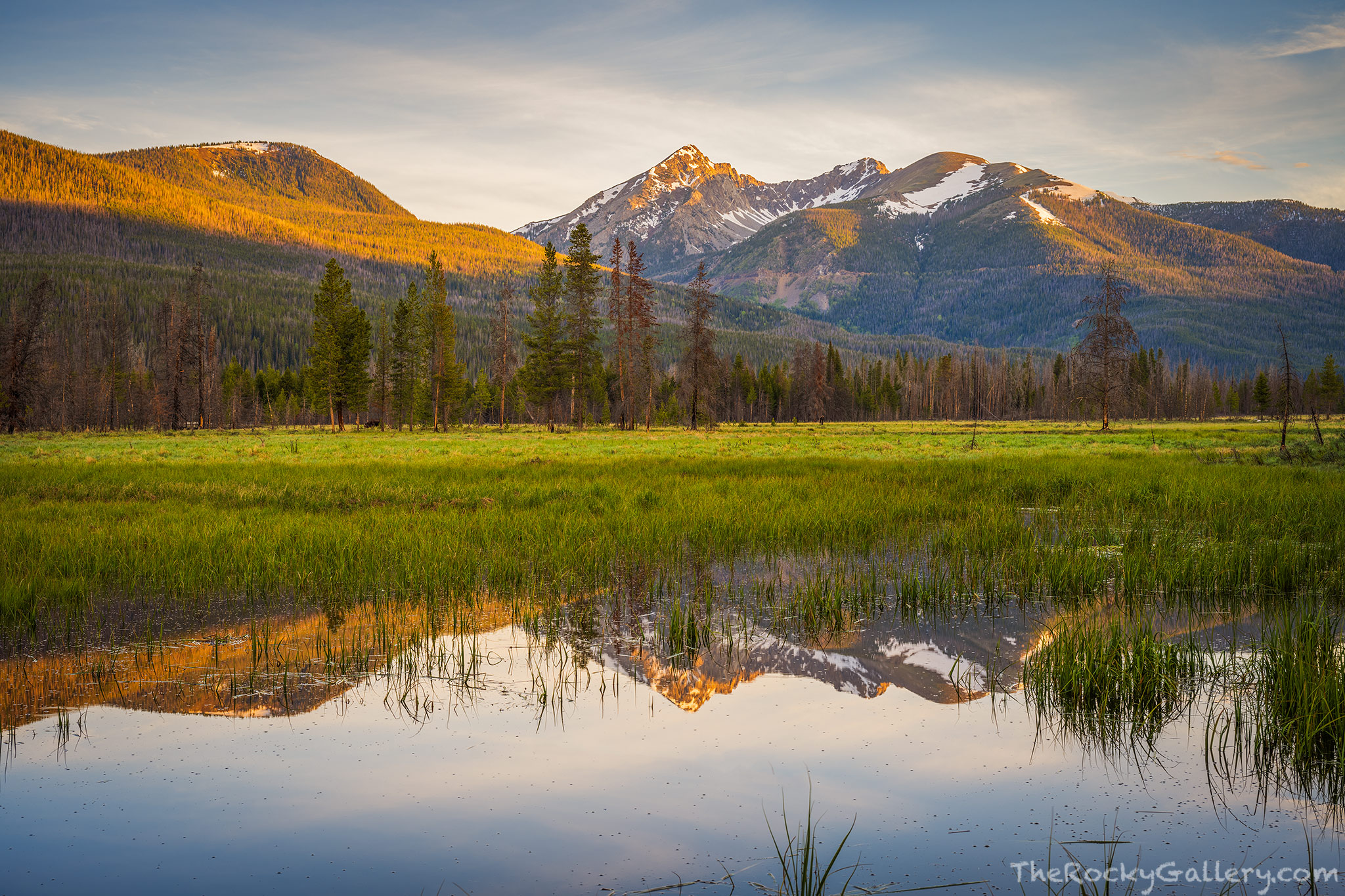
With Trail Ridge Road open for the season again, I’m going to end up spending a decent amount of time photographing on the west side of Rocky Mountain National Park. This morning, I headed over to the Kawuneeche Valley to photography this locations. It’s only a few weeks before the water recedes and the grasses grow so high as to block out the reflection of Baker Mountain so this morning seemed like as good a morning as any to photograph this location. Technical Details: Nikon Z7II, Nikkor 24-120mm F4 S lens

Once Trail Ride Road opens for the season, it feels like you get access to an entirely new national park. The west side of Rocky Mountain National Park feels a lot different than the east side. It’s significantly colder, wetter and to me at least always feels a little more primal than the east side. Wildlife abounds, lakes, streams and forest are teeming on this side of the park.

While I try to visit and photograph a variety of locations in Rocky, year after year one will often find themselves in the same or similar locations. Often, many of these locations are best photographed at certain times of year and thus, you tend to take advantage of the conditions and end up in certain areas more often than not.

This location in the Kawuneeche Valley is just one of those locations. With the Colorado River overflowing with snowmelt, this meadow floods and this small pond acts as a perfect spot to photograph Baker Mountain reflecting above the valley. This spot also almost always has a handful or more of Moose milling around. A month from now, much of this water will have receded and the grasses grown so high that a reflection is no longer possible or mostly obscured.

So it has become a tradition of sorts to spend more than a few mornings in the Kawuneeche Valley on the west side of Rocky Mountain National Park photographing the overflowing Colorado River before it quickly recedes. It’s also a nice break from the east side of the park where I easily spend 70% of my time, especially during the winter months once Trail Ridge closes for the seasons.

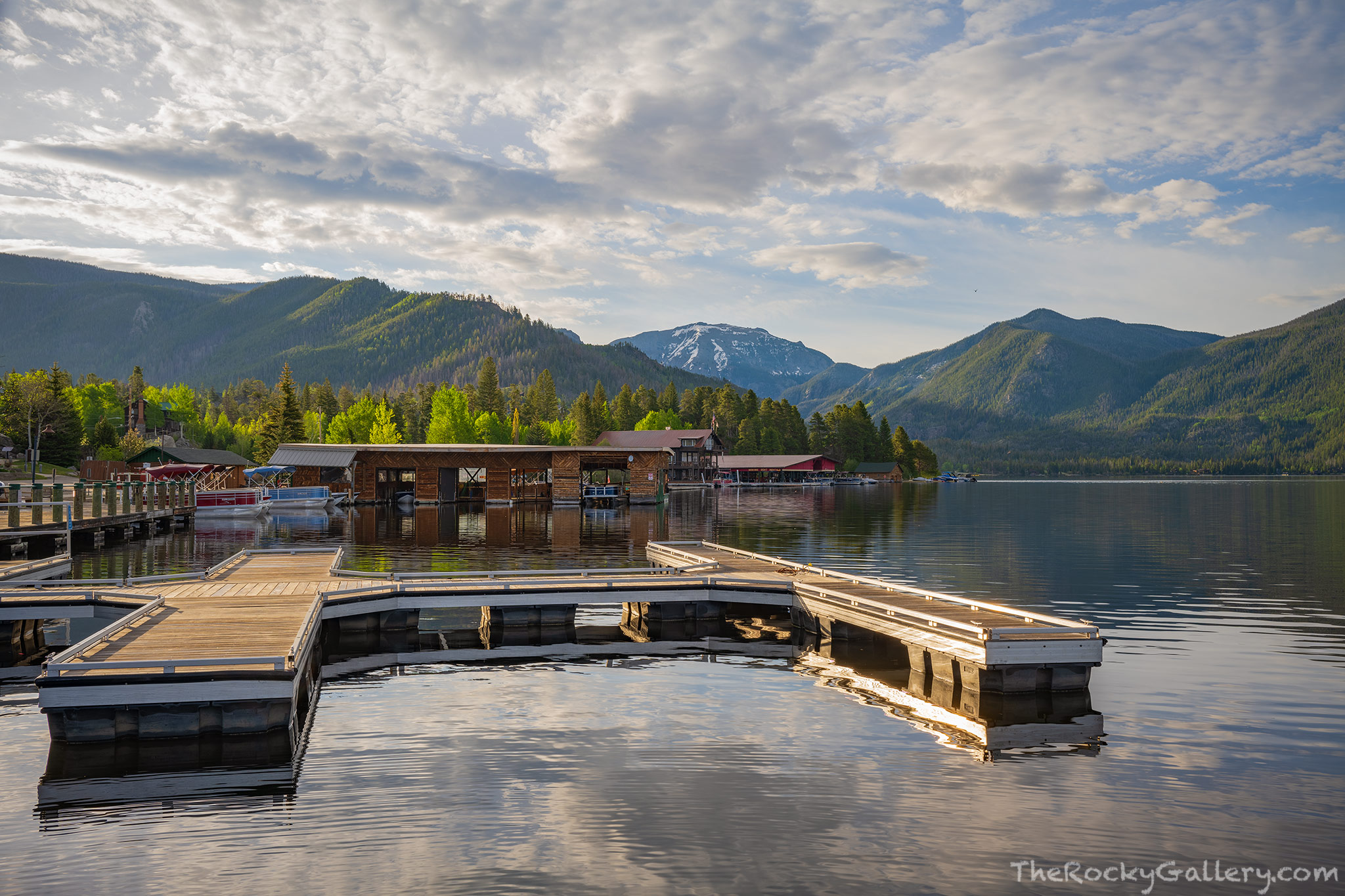
After photographing the Kawuneeche Valley, I headed into Grand Lake to see whats going on in town this season. I was walking along the beach and wandered over to the town dock where I took this photo of the sun hitting the dock and lighting the lime green aspen trees in the background that had just leafed out. Baldly looking as regal as ever in the background with a mostly calm Grand Lake looking as beautiful as ever. Technical Details: Nikon Z7II, Nikkor 24-120mm F4 S lens

After hanging out on the west side, I took a ride into Grand Lake just to see how things look. Grand Lake is my favorite town in all of Colorado, and spending a little time along the shore drinking a coffee on a cool morning is one of life’s joys. Just as I arrived at the beach, the sun rose above the ridge and over the North Inlet and illuminated the town dock. The aspens in background have just leafed out and are a brilliant green, especially when side lit like this morning.

So I’ll be spending a decent amount of time the next few weeks exploring and photographing the west side of RMNP. Of course this time of year I alway joke that I wish I could be in about ten locations at any given time and more often than not I’m going to try to be where I think the best light is. Hopefully, a few mornings that light is over on the west side!.

First Run Over Trail Ridge Road

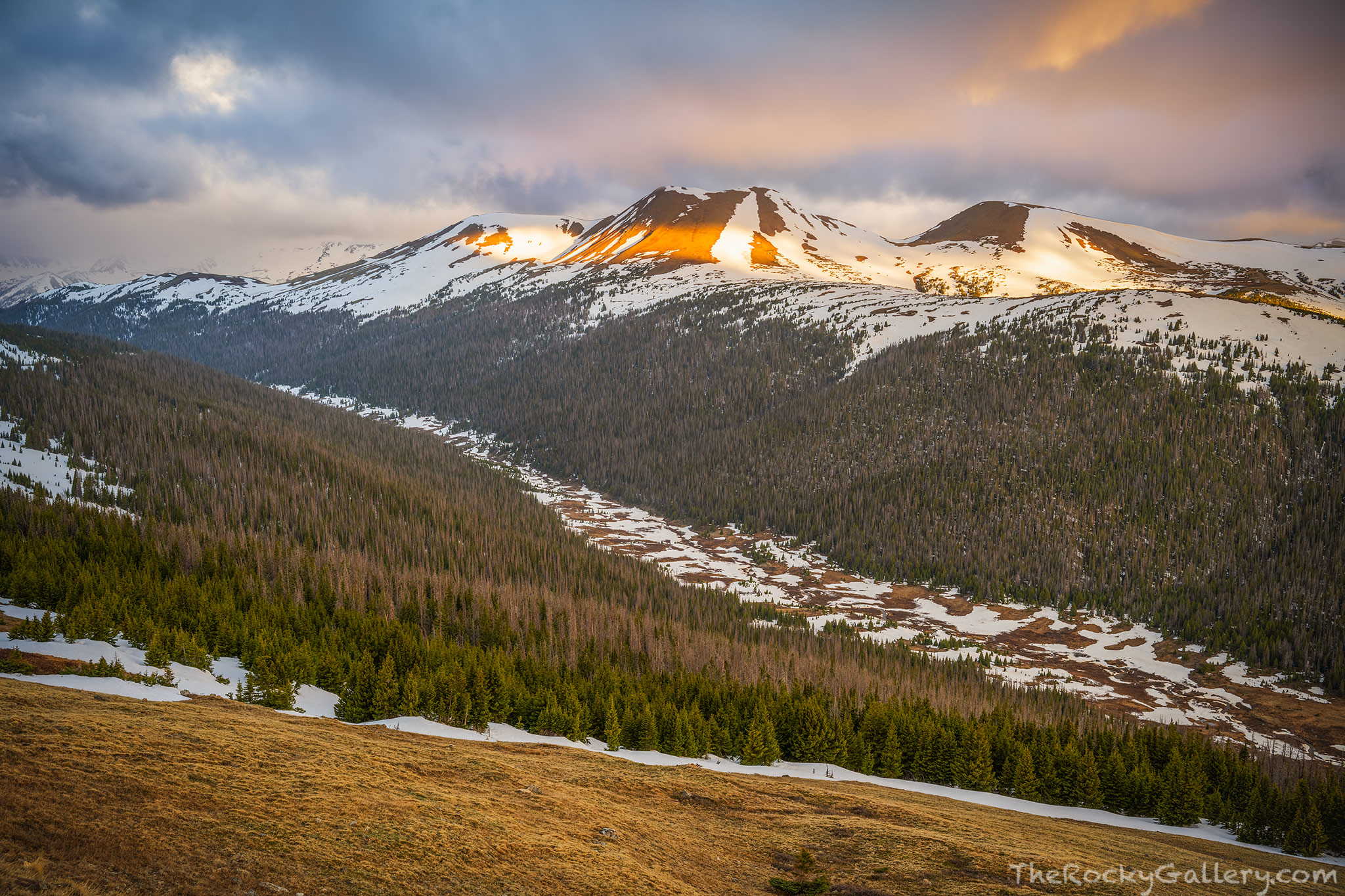
I finally was able to make my first run of the seaons over Trail Ridge Road yesterday. As always, it never dissapoints. While it was both windy, cold and snow, I was able to capture some drop under light hitting Specimen Mountain and the Never Summers Range at sunrise from Medicine Bow Curve. The Poudre River below while flowing well, still has lots more snow to melt. Technical Details: Nikon Z7II-Nikkor 24-120mm F4 S lens

It’s that time of year already in Rocky Mountain National Park. Trail Ridge Road finally opened for the season on the afternoon of May 31st. One of the later opening dates from my recollection in recent memory. With Trail Ridge Road finally open for the season (The Alpine Visitor Center and Store are still closed as of this writing), it’s unofficially the start to the summer season in RMNP which means access and opportunities for photography greatly improve.

When Trail Ridge reopens for the season its like seeing an old friend after a long absence. Over the course of the long, snowy, windy and cold winter the landscape, mountains and wildlife that live in these high alpine zones continue on with very little human interaction. But with the opening of Trail Ridge Road, its like a window or door to the park has been opened, welcoming visitors to Rocky Mountain National park with open arms and the feeling or renewal or rebirth.

While there is still a lot of snow to be found in both the high country of Rocky Mountain National Park and pretty much any location over 10,000 ft after what was a healthy winter of snow and precipitation, this harsh and unforgiving environment will move quickly now to melt away the snow, turn the alpine tundra from brown to a vibrant green and cover the ridges with wildflowers of all varieties. In as little as a month or so from now, most of the snow will be gone, the grasses green, the alpine tarns unthawed and free of ice and snow and alpine sunflowers will be budding up on the tundra.

I’ve been busy photographing many of the lime green aspen trees that just look beautiful right now between 9000 and 9500 ft. There is a short window with the aspens before they turn a darker green so I’ve been taking advantage of this short window which has prevented me for heading up and over Trail Ridge Road since in opened for the season.

Yesterday was my first of what will be many runs up and over Trail Ridge Road until it’s closed for the season sometime in late September or October or in the even of a really warm and dry fall possibly November.

In typically Trail Ridge and Rocky Mountain National Park fashion, the early season weather over Trail Ridge did not disappoint. The wind was howling at 25-30 mph, rain and snow were falling periodically and lots of low hanging clouds hugged the hillsides and mountaintops. ‘What could be more perfect than this?’ I thought as I headed over Milner Pass with the idea of heading down the Kawuneeche Valley or possibly even up the East Inlet.

Rain and snow altered my plans and I looked for a location where I might get some drop under light and sun once the sunrise occurred around 5:30 AM. I settled on Medicine Bow Curve as waited in the cold and spitting snow as Specimen Mountain and the Never Summer Range were covered in both dappled sunlight and snow showers at daybreak. The headwaters of the Poudre River below me still covered with lots of snow and the tundra brown from a long winter still had the making of a landscape that couldn’t be more representative of the high country of Rocky Mountain National Park in late spring.

While it was cold, windy and snowy, as I triggered the shutter on my camera, I couldn’t feel more excited and thankful for it to be the summer season, one that always starts with great excitement, anticipation and hope for a few months of great adventures, experiences and photography.

Old Man Winter Makes His First Appearence

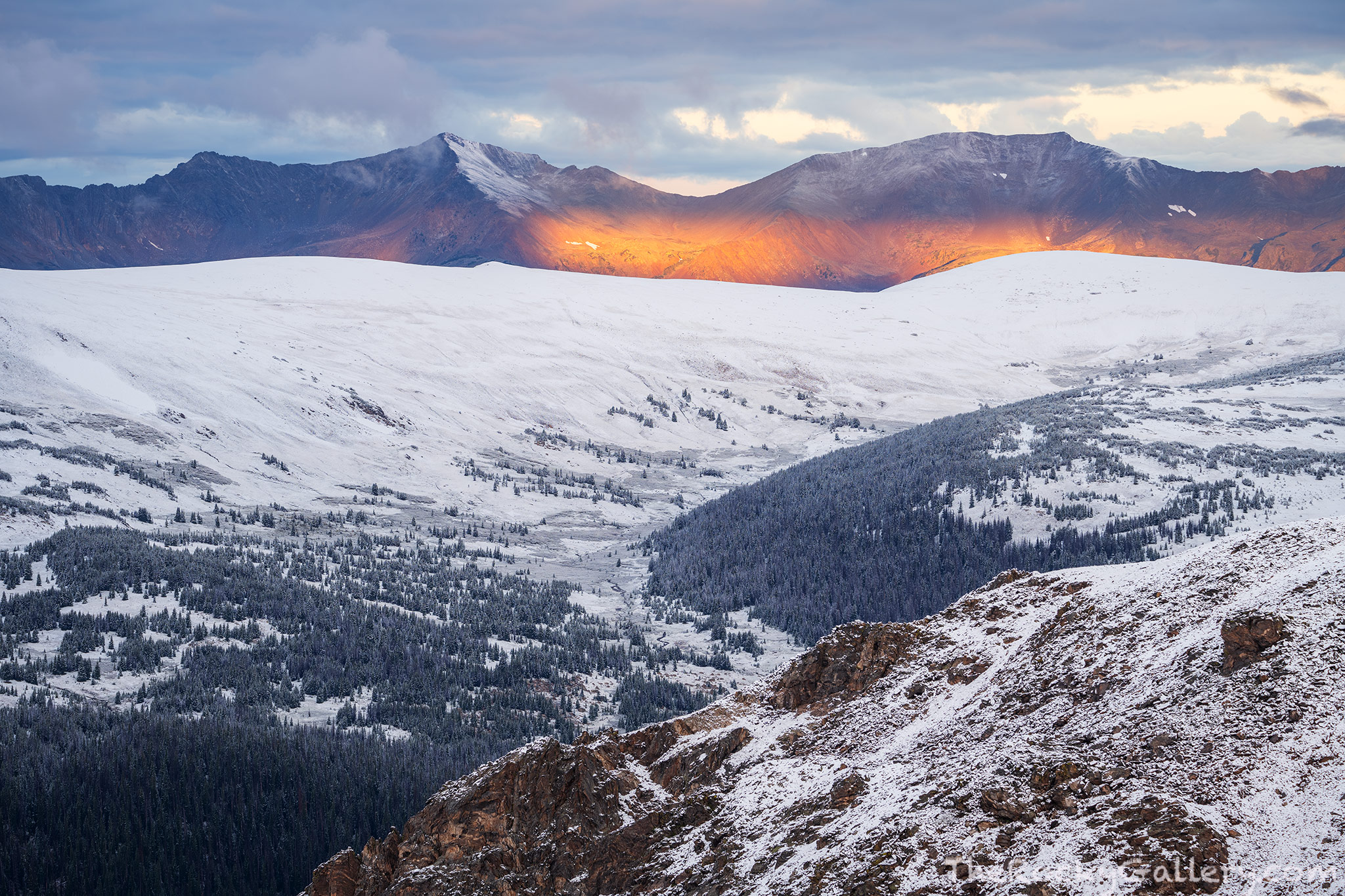
Its hard to believe but winter made its first appearance in the high country of Rocky Mountain Natinonal Park yesterday. Mark down September 11th, 2023 as our first signifigant snowfall of the season. Here we are looking over Forest Canyon towards the Never Summer Range of RMNP while the sunlight glows at the bottom of Mount Cumulus and Nimbus. Technical Details: Nikon Z7II, Nikkor 100-400 F4-5.6 S lens

Well it happened. Mark it down, yesterday was the first snow of the season in Rocky Mountain National Park. While its actual not that early or even that unusual as we can pretty much see snow almost anytime of year at the highest of elevations, late summer and early fall snow brings with it a different feeling.

Late spring snows can be annoying. Your ready for summer, warm weather and snow free trails only to get a foot of heavy, wet powder dropped on you. While its annoying, you know its going to melt fast and warmer days are right around the corner.

With the first snow of the season in the late summer or early fall, that feeling is a little more somber, at least to those of use who no longer look forward to ski season (blasphemy I know!). That first snow brings with it a feeling of finality, a stoppage to summer and a signaling that a long cold winter will soon be blanketing Rocky Mountain National Park.

The first snow of the seasons is a reminder, that summer and fall seasons in Rocky are short and sweet. You have to get out and photograph them as much as you can and bask in each and every warm, and beautiful summer sunrise and or sunset. Even when you are holed up in your tent cursing the skies as you wait out a summer monsoon thunderstorm, you know sooner than later, the pad you have your tent sent up on will soon be covered in feet of snow.

Even with all these changes occurring, the first snow of the season still elects excitement. It’s something new and different and it affords the landscape photographer a chance to make images of snow covered landscapes that might be difficult or near impossible during the winter season.

Yesterday morning, i was taken off-guard by the new snow that had fallen. It had been raining hard the night before and when I checked the radar I could see some blue(snow) mixed in with the green(rain) on the weather map. Nothing unusual, even for summer months but I casually though that maybe the summit of Longs Peak would see its first dusting of the season.

Hiding behind Specimen Mountain, Mount Richtofen peaks above the ridgeline as the sun illuminates the landscape of Rocky Mountain National Park now covered in snow. While its not all that early for snow in Rocky, its always a wake up call for us photographers as well as lovers of RMNP. Technical Details: Nikon Z7 II, Nikkor 100-400mm F4-5.6 S lens
When I arrived in RMNP about 4:00 AM to scout out the conditions on a dark night, I could make out what looked like snow on Longs Peak. Looks like we had a little more than a dusting so I headed up Trail Ridge Road to see if I could get myself in a good spot to photograph Longs Peak covered in fresh snow. Just below Rainbow Curve I was surprised to see what looked like some light accumulation of snow around 10,000 ft. Rounding out over Hanging Valley, we now had plenty.

Snow quickly appeared on Trail Ridge and I slowly made my way up the icy road that would have certainly been closed by Park Rangers if the snow had not fallen in the middle of the night. As soon as Rangers got on duty and saw the conditions, they did indeed close Trail Ridge Road down for a few hours until conditions improved. I made my way up to the Rock Cut knowing this was not only a good place for a near 360 degree view for photography, but also one that if the NPS closed the road I would not get stuck on the west side of the park for.

Clouds rolled back in over the divide and Longs Peak but the aptly named Never Summer Mountains stayed cloud free and even got a few brief minutes of sunshine at sunrise. I was able to photograph Mount Cumulus and Nimbus with a little bit of dappled light as well as the top of Mount Richtofen and Static Peak before the sun backed under the cloud cover again.

An exciting morning it proved to be as Park Rangers raced up Trail Ridge Road while I was heading down so they could get the road closed down before anymore people tried to challenge the icy conditions. Even though it was and exciting and productive morning, there was a tinge or sorrow knowing my beloved high country summer was being extinguished slowly by old man winter.

Its Never Summer!

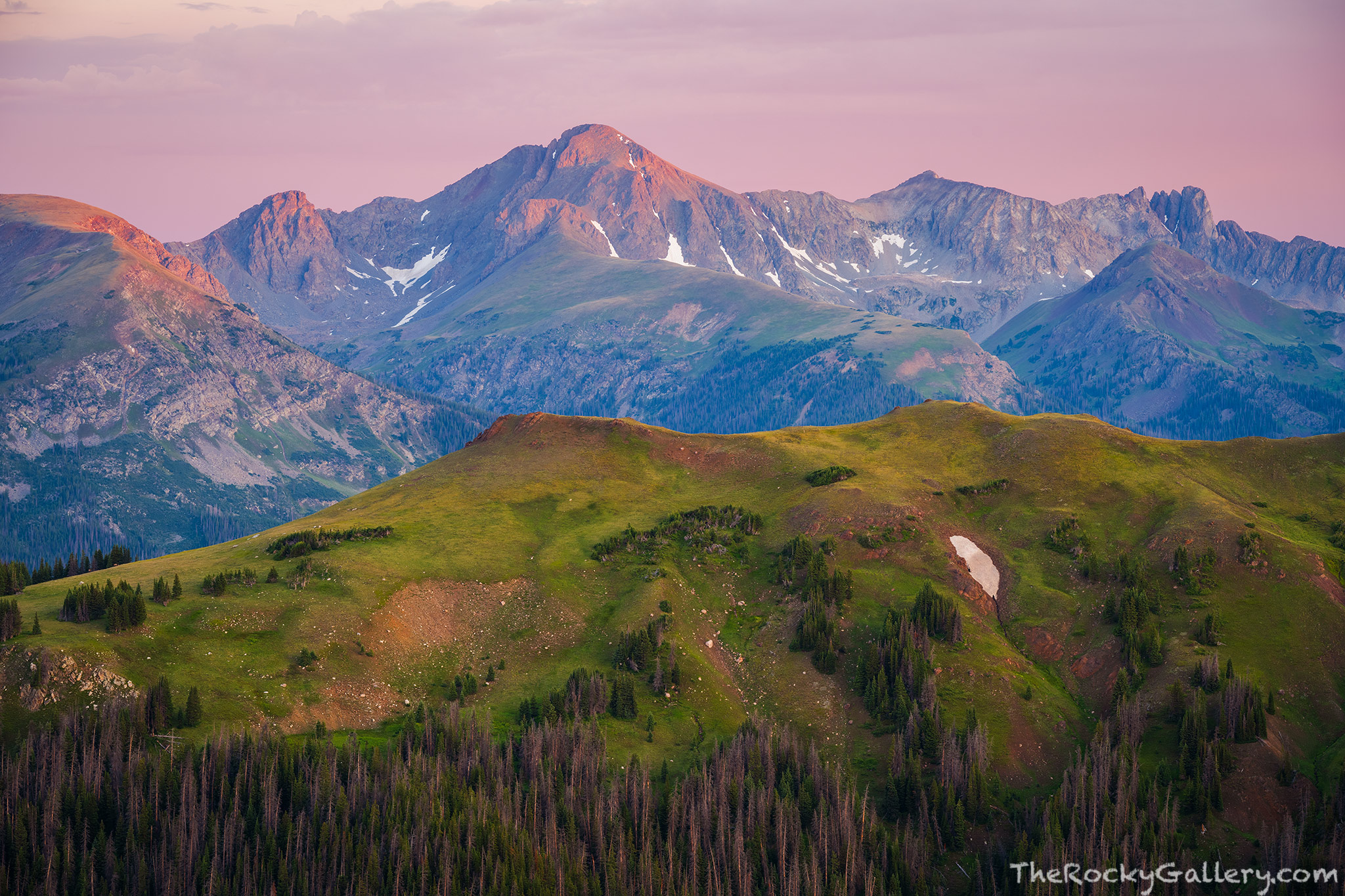
These past two weeks, I’ve been spening quite a bit of time photographing the area of Rocky Mountain National Park around the Never Summer Mountains. The weather and light in this area have been cooperating and its been inspiring and motivating photographing this beautiful part of Rocky Mountain National Park. In this image, regal Mount Richthofen glows in the early morning light over the Never Summer Range. Dont be afraid to get out and revisit the same locales multiple times for best results. Technical Details: Nikon Z7 II, Nikkor 24-120mm F4 IS S lens

Actually, it’s most definitely summer. Even after our cooler and wetter than usual summer here in Colorado, it feels like August. My current muse or passion in Rocky Mountain National Park has been the Never Summer Mountain Range where the lighting and scenery have been spectacular.

It’s a secret I’ve shared with my readers and clients I guide in the park, that I often go back multiple times to the same location to both capture images in ideal light I may have missed during my initial visit, or just to capture the scene in different lighting or weather conditions. Often, one has a preconceived idea how they image the shot will look, thats often not how it shakes out in the end however.

The Never Summer Range is situated both inside Rocky Mountain National Park as well as extending north and west outside the park boundaries. It’s a prominent and distinctive range and one that most visitors to RMNP admire from along Trail Ridge Road, specifically the Gore Range Overlook, the Alpine Visitor Center and Medicine Bow Curve.

The Never Summer range takes its name from the Arapaho tribes who referred to the range as the Never No Summer range as snow could almost always be found on the range. The Never Summers as they are affectionately referred to now, where also once considered part of the Medicine Bow range but in deference to the indigenous people of the region, renamed the Never Summer Mountains back in the 1920’s.

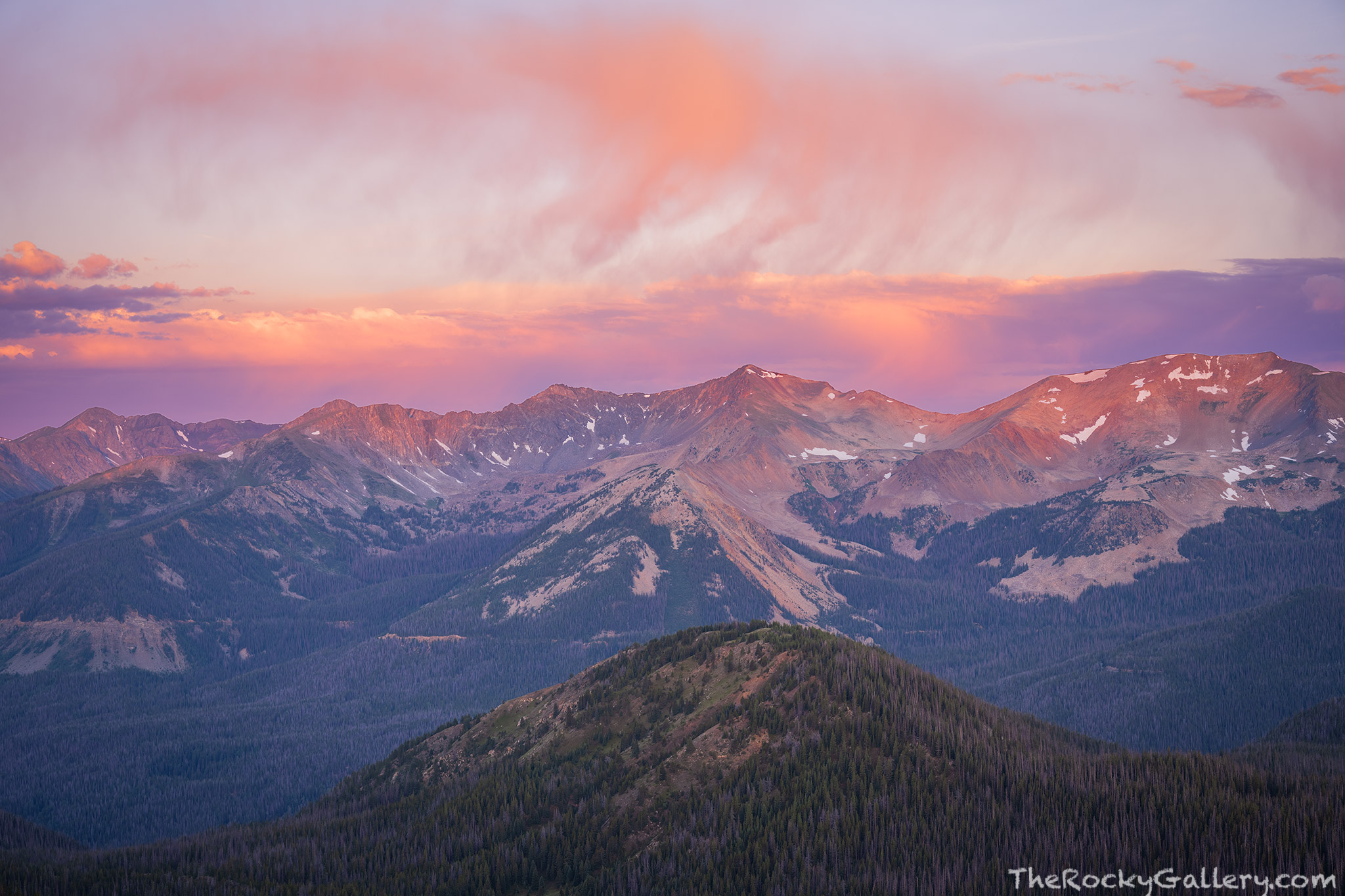
Virga floats over the Never Summer Range at sunrise. Howard Mountain, Cirrus and Nimbus glow in the early morning light high above Poudre Lake and Lake Irene. Technical Details: Nikon Z7, Nikkor 24-120mm F4 IS S lens
I’ll always check the weather forecast before heading out, loosely basing what I’m planning on photographing based on where and when I think the best light, clouds and atmospherics will be. These past few weeks, the best lighting in the morning has been over the Never Summers and thats where I’ve spend a good deal of my past mornings enjoying the scenery so to speak.

Familiarity with an area breeds success, so don’t be afraid to keep working a certain location so that you can become acquainted with the light, landscape and local. One of the keys to making better images is to connect and truly know your subject. So while we all want to photograph new locations and see new exotic places, spend time getting to know and area and your photography will begin to see improvements and gains in both your photography and images of that location.

The Magnigicent Marigold

Hard to beat a serene summer morning at an alpine tarn here in Rocky Mountain National Park. Watching this sunrise evolve the other morning is why summers in RMNP are just about my favorite time of year. Sure the title of this post is a little dramatic but enjoying the short but spectacular summer in RMNP makes one prone to a bit of hyperbole now and again. Technical Details: Nikon Z7 II, Nikkor 14-24mm F2.8 S lens
Just packing up here for a quick overnighter in the backcountry. I’m going to head out to Mirror Lake for a night to photograph sunrise and sunset. I’m excited to get back out to Mirror Lake because I have not been back there since 2020, just a few weeks before the Cameron Peak fire roared through the Hagues Creek drainage and part of the northeast side of Rocky Mountain National Park. The NPS finally reopened the trail and access to Mirror Lake for the first time this year, so when I saw an opening for a permit I jumped at it.

Last year while camping at Lawn Lake, I hiked up to the Saddle and surveyed the area from high above Hagues Creek. It’s devastating to look at but already Hagues Creek drainage had begun to grow back. The trees are mostly burnt now, but the grasses were a vibrant green which made the view a little more easy to digest.

What I could see from that trip is the fire stayed below Mirror Lake. The Mummy Pass trail is closed but access to Mirror Lake is now open and I believe the area directly around Mirror Lake should be as pristine and beautiful as it was when I was last there in 2020.

Alternatively, most parts of Rocky Mountain National Park are in prime summer season right now. It looks like our monsoon season which has picked up this week and is really supposed to intensify next week should bring some great opportunities for dramatic sunrise and sunsets in the coming days. This is the time of year when days are long, and the hikes are hard but you push through because you can always take a break once the fall seasons ends. I’ll be out as much as possible the next few weeks basking in all or the glory of a Rocky Mountain summer which is as sweet as it is short.

In the meantime, here’s a sunrise image from Wednesday up at Marigold Ponds which exemplifies the beauty found in RMNP during the summer months. Other than being hounded by our mosquitos, waiting on the shoreline of this small tarn for the sun to rise is about as good as it can get. Have a great week and hope you all are enjoying your summer.