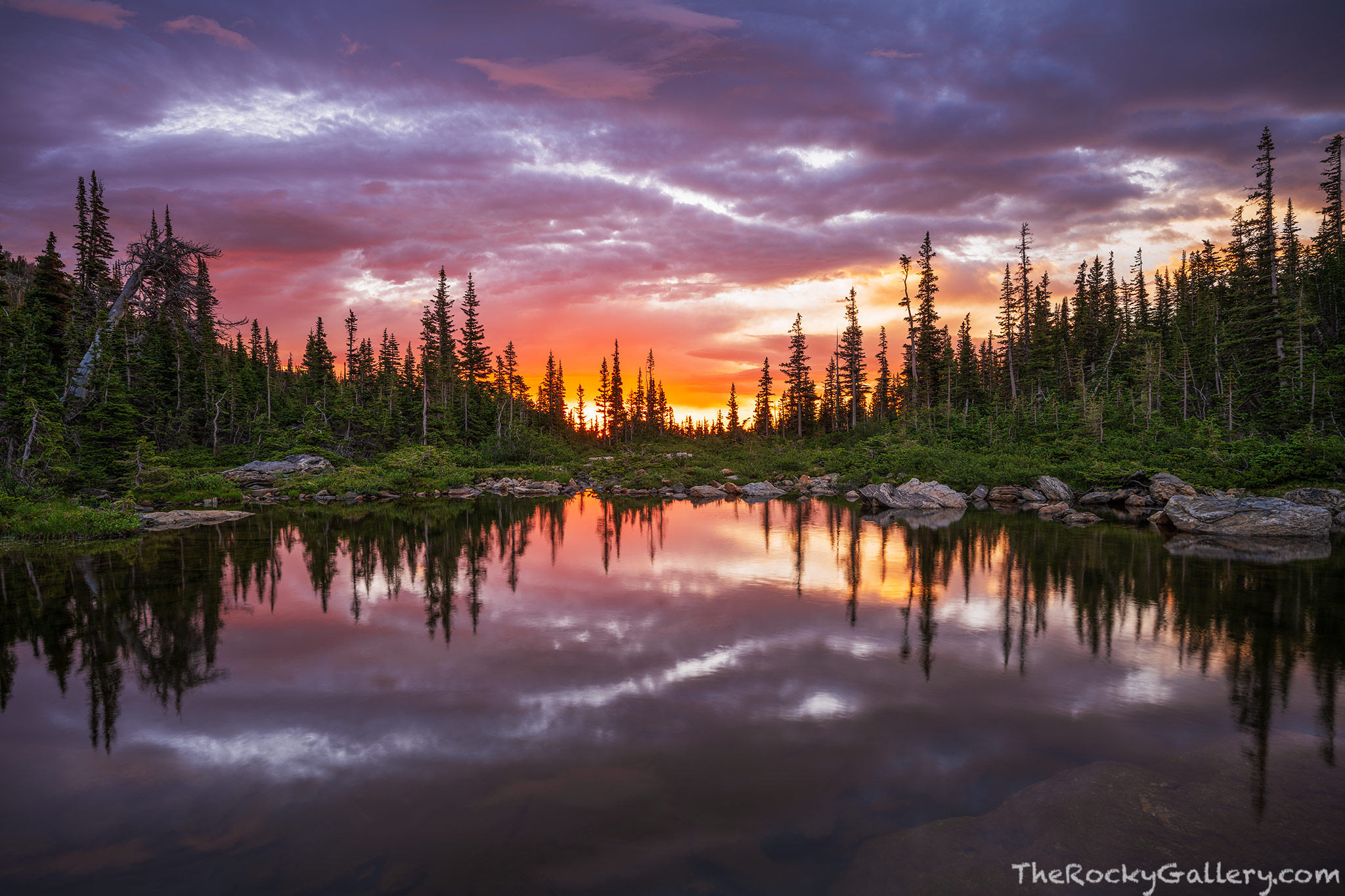
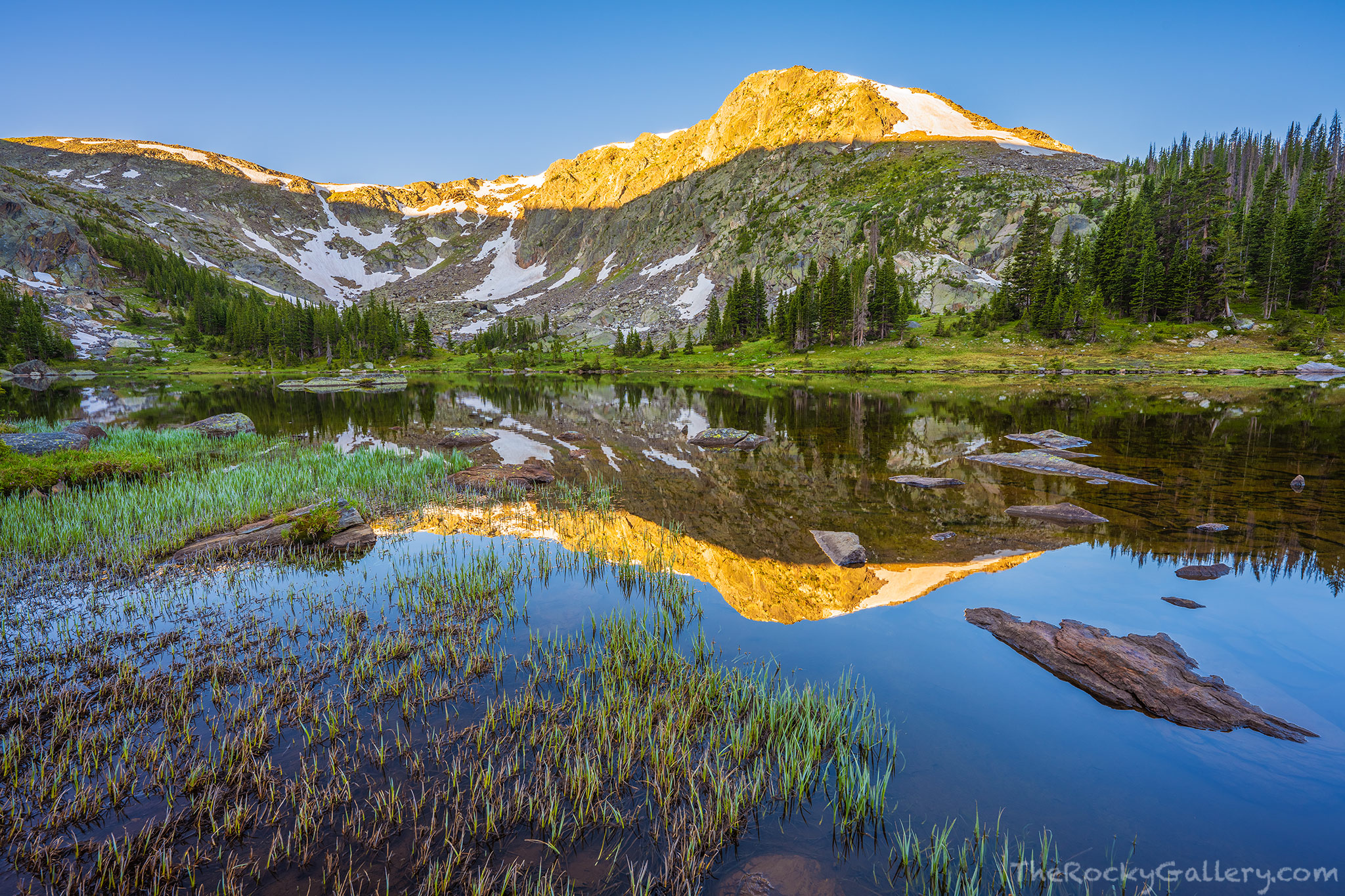
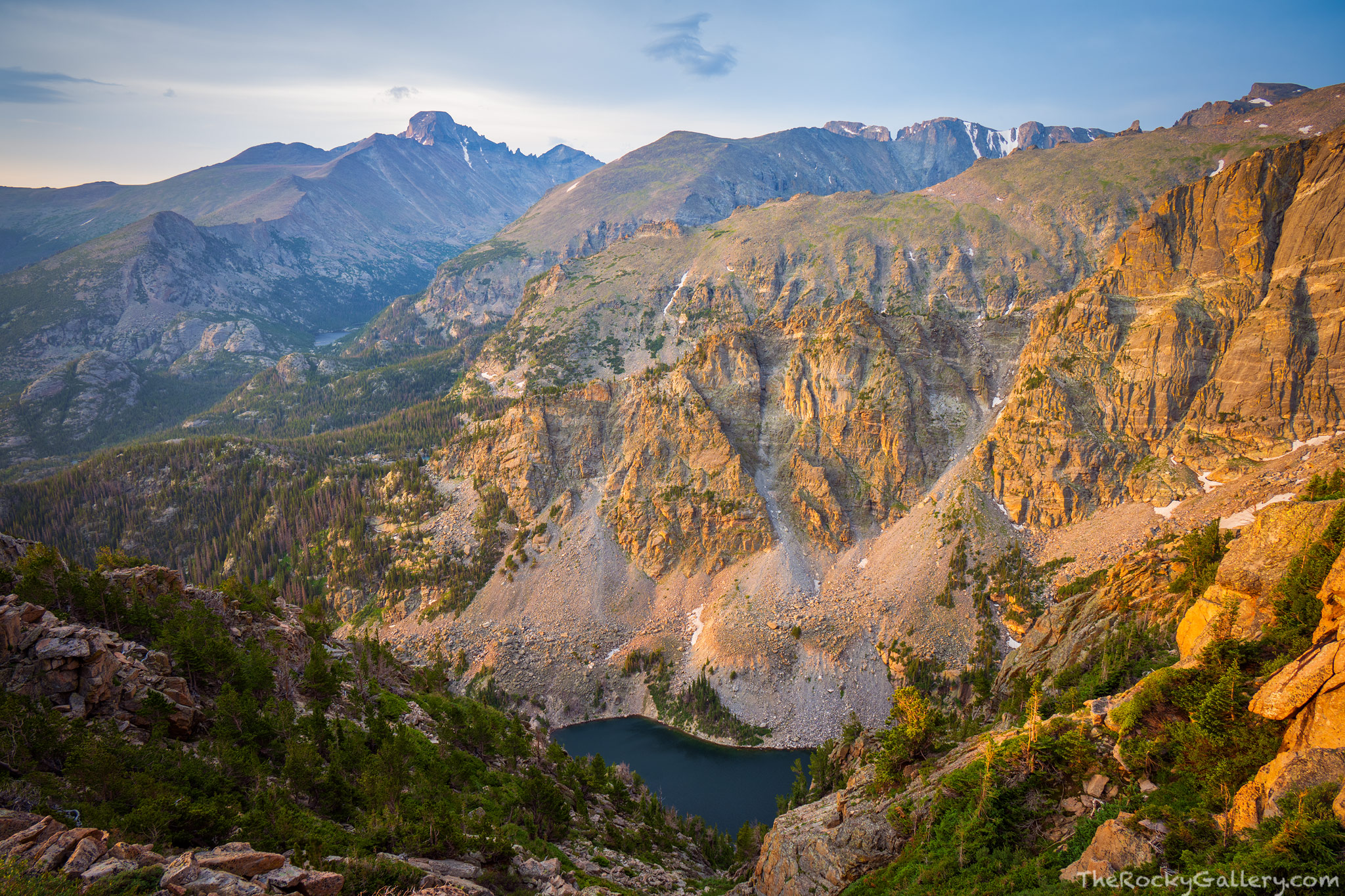
Hard to beat a serene summer morning at an alpine tarn here in Rocky Mountain National Park. Watching this sunrise evolve the other morning is why summers in RMNP are just about my favorite time of year. Sure the title of this post is a little dramatic but enjoying the short but spectacular summer in RMNP makes one prone to a bit of hyperbole now and again. Technical Details: Nikon Z7 II, Nikkor 14-24mm F2.8 S lensJust packing up here for a quick overnighter in the backcountry. I’m going to head out to Mirror Lake for a night to photograph sunrise and sunset. I’m excited to get back out to Mirror Lake because I have not been back there since 2020, just a few weeks before the Cameron Peak fire roared through the Hagues Creek drainage and part of the northeast side of Rocky Mountain National Park. The NPS finally reopened the trail and access to Mirror Lake for the first time this year, so when I saw an opening for a permit I jumped at it.
Last year while camping at Lawn Lake, I hiked up to the Saddle and surveyed the area from high above Hagues Creek. It’s devastating to look at but already Hagues Creek drainage had begun to grow back. The trees are mostly burnt now, but the grasses were a vibrant green which made the view a little more easy to digest.
What I could see from that trip is the fire stayed below Mirror Lake. The Mummy Pass trail is closed but access to Mirror Lake is now open and I believe the area directly around Mirror Lake should be as pristine and beautiful as it was when I was last there in 2020.
Alternatively, most parts of Rocky Mountain National Park are in prime summer season right now. It looks like our monsoon season which has picked up this week and is really supposed to intensify next week should bring some great opportunities for dramatic sunrise and sunsets in the coming days. This is the time of year when days are long, and the hikes are hard but you push through because you can always take a break once the fall seasons ends. I’ll be out as much as possible the next few weeks basking in all or the glory of a Rocky Mountain summer which is as sweet as it is short.
In the meantime, here’s a sunrise image from Wednesday up at Marigold Ponds which exemplifies the beauty found in RMNP during the summer months. Other than being hounded by our mosquitos, waiting on the shoreline of this small tarn for the sun to rise is about as good as it can get. Have a great week and hope you all are enjoying your summer.
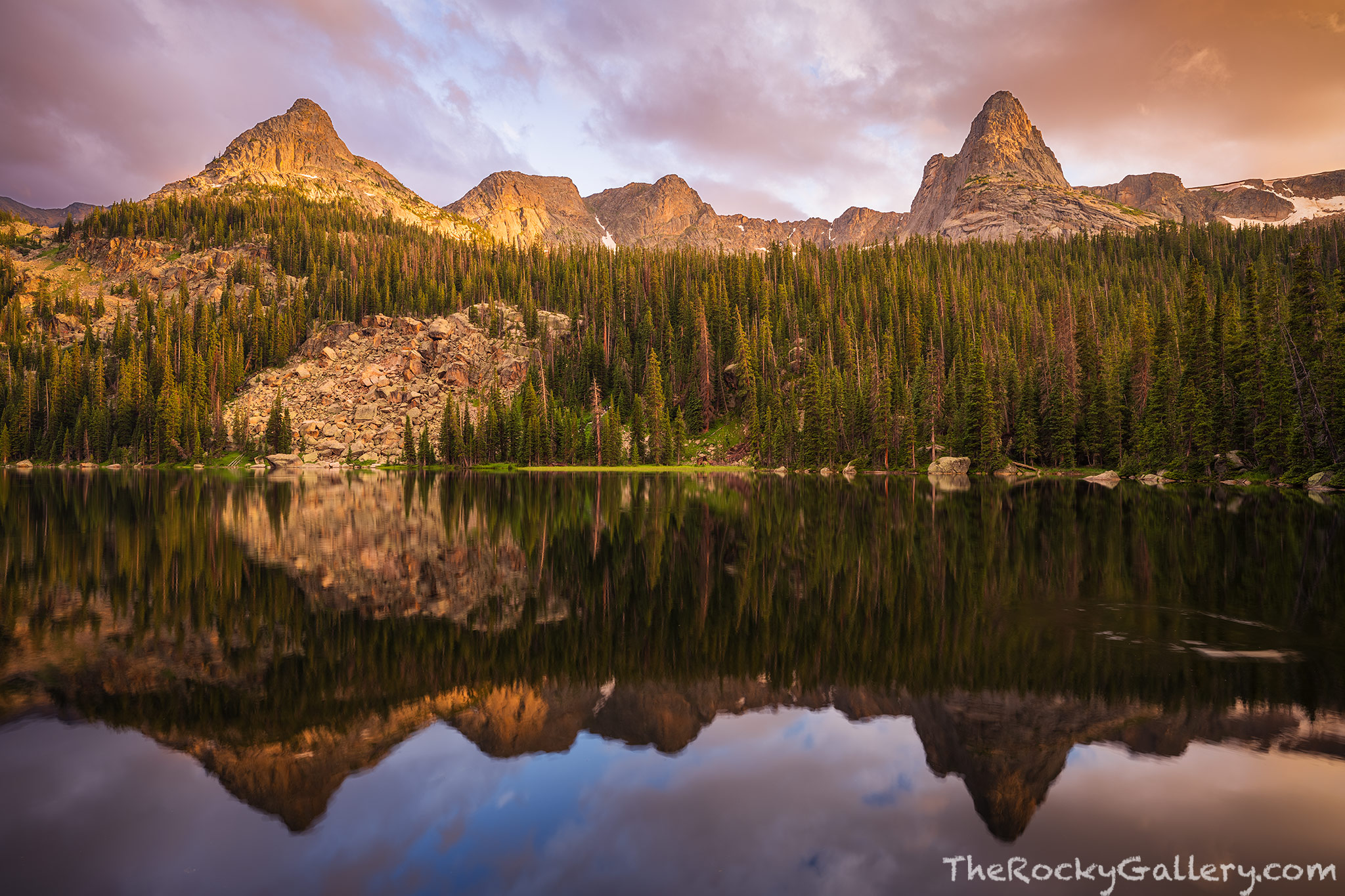
I just returned from a few days in the backcountry of Rocky Mountain National Park photographing some of the more remote locations in the Upper East Inlet section on the west side of RMNP. Spirit Lake is one of the most beautiful locations in all of RMNP, and this nights sunset did not dissapoint as the light scattered on the Fleur de Lis. Technical Details: Nikon Z7 II, Nikkor 14-24mm F2.8 S lens.
It’s prime backcountry and backpacking season in Rocky right now. Almost all the snow is gone though there is still some to be found here in there in a shaded nook or cranny. The wildflowers are in full bloom as are the mosquitos. Even so, its one of my favorite times of year in Rocky Mountain National Park.
When the backpacking lottery comes around March 1st every year, summer seems like its forever off. Even though March 1st is still right in the middle of the winter season, one can start dreaming of where they are going to try and land backcountry sites at and what the conditions will be like when the actual date finally rolls around.
You can plan all you want for the backcountry lottery, but usually you have to be pretty quick on the draw to get sites you want. You need to have a plan B ready to go as once your first pick if gone, you can’t wait long for your second or third. Sometimes you go to your old reliables, places you have been many times but can never explore or photograph enough.
That was the case with my first pick this year of the Upper East Inlet backcountry site. I’ve camped at both Solitaire and Upper East Inlet multiple times in the past and can never get enough of the area east of Lake Verna. Ironically, no matter how hard I’ve tried, I’ve never been able to land a permit to camp at the Lake Verna backcountry site.
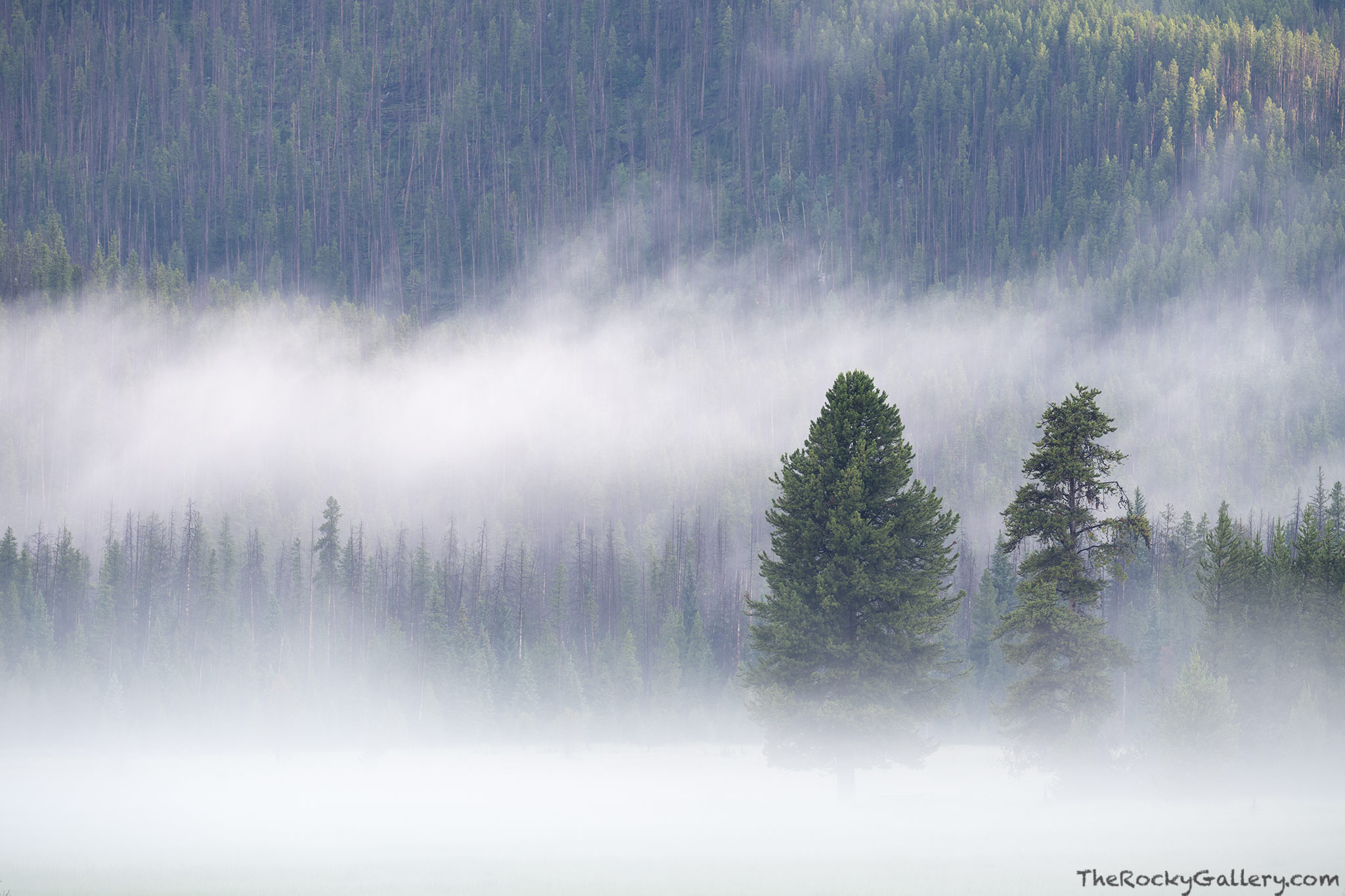
The morning before heading up the East Inlet, I spent the morning attempting to chase any breaks in the cloud cover at sunrise. As I drove through the Kawuneeche Valley, the fog along the Colorado River was awesome and small breaks in the clouds had the hillsides bathing in sunlight here and there. Technical Details: Nikon Z7 II, Nikkor 100-400mm F4-5.6 S lens
So finally on July 20th, the date arrived for my first backpacking trip of the year in Rocky. I arrived at the East Inlet trailhead a little before 8:00 AM. I had been in the park since 4:00 AM prepared to photograph sunrise. Large thunderstorms had been rolling across RMNP all night and a good amount of rain had fallen. The sun managed to spot light a few areas through the fog in the Kawuneeche Valley, but rain and clouds quickly moved back in so I photographed what I could and then headed over to the East Inlet TH to make the six plus mile trek up to the Upper East Inlet site.
It was fairly warm and wet when I headed through East Meadow on my way towards the climb up to Lake Verna via the Devils Staircase. The mosquitoes couldn’t get enough of me as I walked through the grass meadow. With dozens of mosquitoes converging on my arms and legs at the same time I had to stop and break out the bug spray. Normally, I try not to use any repellant until I absolutely have to. This was one of those situations, and as I hastily dropped my pack and grabbed for the repellant, I said to myself ‘if this does not work I’m turning around and bailing right now’. Happily, the Deep Woods Off did its job and the mosquitoes disappeared.
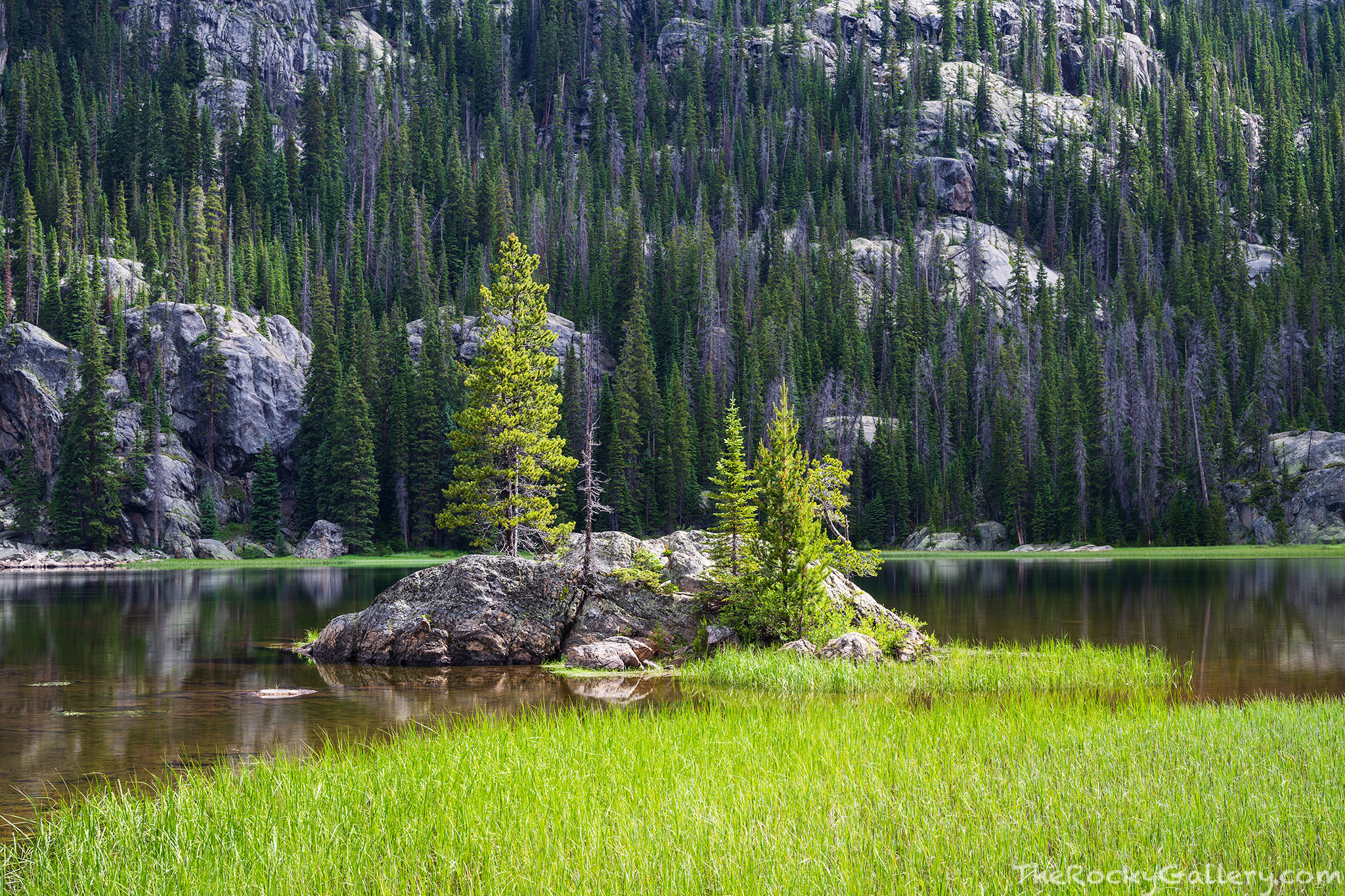
After making the tough trip up the Devils Staircase with my heavy pack, I stopped to take a break at Lone Pine Lake and photograph the iconic little granite island that once held a lone pine according to legend. It’s now 4 or 5 pines but the verdant green around the lake and the sun spotlighting the island was just about perfect. Technical Details: Nikon Z7 II, Nikkor 24-120mm F4 lens
From the East Meadow up until Lone Pine Lake it was an enjoyable but tiresome hike with a heavy pack on. I stopped to photograph Lone Pine Lake as the sun spotlit the namesake island (which now has like 4 or 5 pines on it). After that short stop, and another mile or so I was heading up the trail to my campsite at Upper East Inlet. Eating lunch and setting up camp just before the rain and lighting really started to pickup again worked in my favor. With pretty heavy thunderstorms moving over the East Inlet, I spent a good 3 hours just waiting out the rain and storms in my small one person tent. Keeping an eye on the forecast, it looked like I’d have a decent chance for some good light around sunset when the storms where supposed to abate for a little while.
Finally around 5:00 PM it seemed like the rain had stopped. I grabbed dinner, threw on my pack and headed up the trail past Lake Verna to get in position for sunset. The goal was the area around Fifth Lake but clouds and thunder starting moving back in so I stopped at Fourth Lake to wait it out.
It remained pretty unsettled through the rest of the evening and I figured I’d stay down in the trees at Fourth Lake and shoot for Fifth Lake another time when exposure would not be an issue. Photographing for a short while at Fourth, I headed back down to Spirit Lake for the final hour or so before sunset. Fourth Lake is beautiful but Spirit Lake is in my opinion a better location to photograph landscapes as its a little more open and accessible along the shoreline than Fourth Lake is. Regardless, the sun managed to break through again in spots and I had pretty good sunset light on Fleur de Lis and some decent yet spotty light on the Cleaver to the east of the lake. After spending a bunch of hours hanging in a small tent, I was a happy camper as I hiked back in the dark to my site.
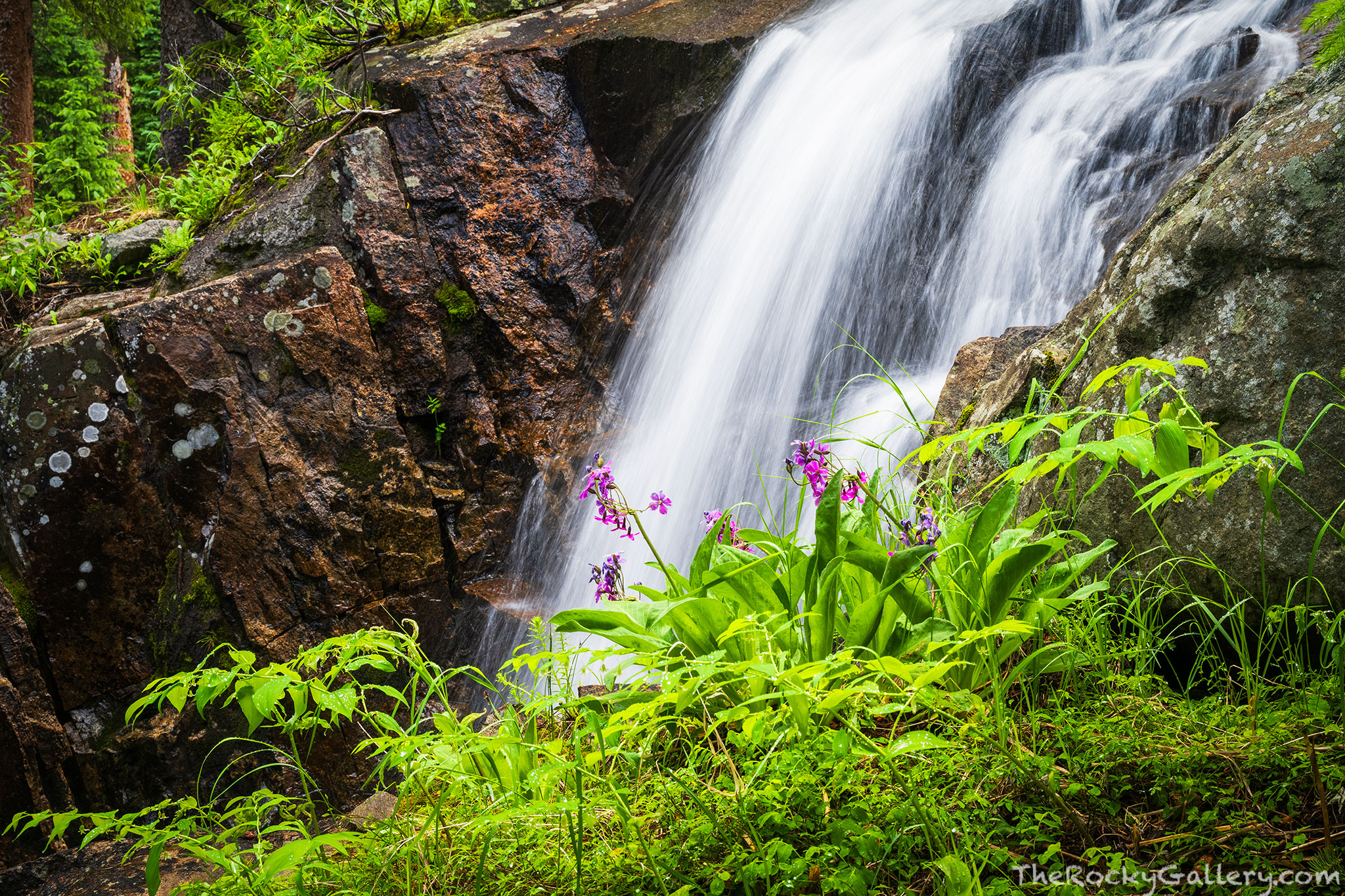
Just above Lone Pine Lake the trail crosses over this beautiful cascade. Green from all the rain and moisture and lined with wildflowers, scenes like this one make the East Inlet trail a favorite amongst hikers in RMNP. Technical Details: Nikon Z7 II, Nikkor 24-120mm F4 lens
The next morning, the 21st of July dawned clear. I rolled out of my tent a little before 4:00 AM, fired up the JetBoil and made a nice hot cup of Anthonys Organic Instant coffee to wake myself up and figure if there was anything worth photographing that morning. After finishing my coffee, I made a quick run up to Lake Verna just to get a better look at the skies and see if there were any promising clouds. The sky was clear as a bell so while that was a bummer, there was lots of low hanging fog on the surface of Lake Verna as well as some fog hanging over the Inlet of Lake Verna near its beautiful but tiny beach. I made a quick run down to the trail to the overlook looking over Lone Pine Lake just west of the Solitaire site to see if Lone Pine was fogged in. Amazingly, it was not, only Lake Verna was.
Hustling back to Verna just as the sun was cresting the continental divide, I spent the morning keeping my fingers crossed that the low lying fog hanging over the surface of Lake Verna would remain long enough for me to make some images. Its common in Rocky Mountain National Park that both clouds and fog will dissipate just as the sun is starting to rise, so I’ve learned to temper my excitement as I’ve watched epic conditions turn into fair and boring conditions quickly and often.
The ground fog held and I was able to get some interesting and unique images of a backlit Lake Verna fogged in. Overall, another great morning and I headed back to camp to relax and reset.
After a stormy afternoon and night, my first morning in the Upper East Inlet broke clear. Low fog however clung to the shore and surface of Lake Verna allowing for this image looking west across the backlit lake. Technical Details: Nikon Z7II, Nikkor 100-400mm F4-5.6 S lens
That afternoon the weather was much more settled than the previous day. There were still thunderstorms that started to form in the afternoon and it would sprinkle here and there but overall it was obvious there was not nearly the staying power in the clouds and storms as there was the previous day. Thunderstorms staged to the west of Grand Lake, but over the divide and the Cleaver it was basically clear. I could see thunderheads east of the divide but they were not high enough to be beneficial in anyway for photography that afternoon. All I could do would be to pick a spot and see what happened. Again, I chose Spirit Lake because thats where the clouds were. If they moved east I would have a shot and if they stayed south and west I would have s shot. Needless to say I did ok though the lighting was not nearly as dramatic as the afternoon before.
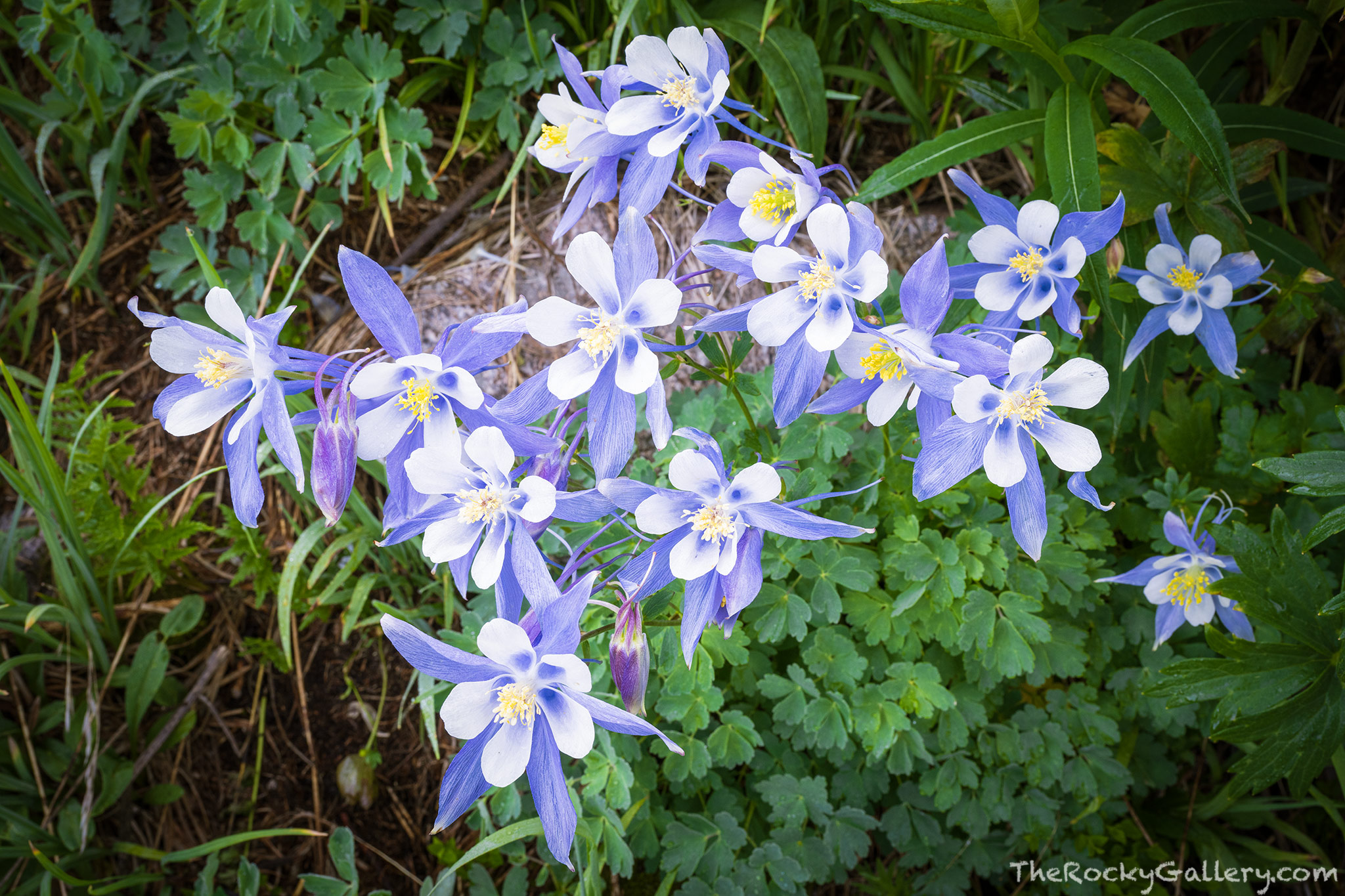
The wildflowers below Fifth Lake were spectacular. I spent my final morning exploring this area. The Columbines were as good and as dense as any other place I’ve photographed in RMNP. Technical Details: Nikon Z7 II, Nikkor 24-120mm F4 S lens
My final morning in the backcountry of RMNP again dawned clear. Regardless, I had wanted to go explore Fifth Lake and especially the area around it as its one of the best places in all of Rocky for wildflowers. I headed up the trail before 5:00 AM and made my way past Lake Verna, Spirit, Lake Verna and Fourth Lake in short order quickly ending up in the spectacular meadow just below Fifth Lake. With the mountains still casting a large shadow over the meadow, I used the diffused light to photograph the amazing blooms of Blue Columbines, Red and Pink Paintbrush all before the wind started to pick up and blow the flowers around.
I was able to photograph for about a 1/2 hour before the wind became to blustery and the conditions deteriorated. It was time to make my way back to camp, pack up and head back down to Grand Lake.
Overall another great trip in the backcountry of Rocky Mountain National Park and as is always the case from a landscape photographers perspective, being out in the backcountry leads to about a productive a time as one can spend in the field. I’ve still got a few more days left in the backcountry of Rocky Mountain National Park and I’m looking forward to spending as much time as I can enjoying it, stay tuned!.
I spent a clear but calm and beautiful morning hiking up to Timber Lake on the west side of Rocky Mountain National Park last week. Summer in RMNP is in all its glory right now. The glory that is summer in the higher elevations of Rocky wont last long so its always good to appreciate and reflect on these journeys to visit these locations that one may not get to see at whim. Technical Details: Nikon Z7 II, Nikkor 14-24mm F2.8 S lens
It’s mid July here in Rocky Mountain National Park. While late September may vie for the best time of year in RMNP, I think mid July gives late September and run for its money. The snow has more or less melted in the higher elevations or at least on most maintained trails, the tundra and grasses are a vibrant green, and wildflowers are blooming all over Rocky.
Days are long, start earlier and end late but its amazing to watch everything come alive again after a deep winter slumber that for some of these locations lasts into early June. We’ve had some really interesting weather here in Rocky. Anecdotally, I would say I noticed a change about mid way through last summer. Lots of moisture, cooler, and overall, much more conducive to landscape photography.
It’s not uncommon in Rocky Mountain National Park to get a week without seeing all but a few clouds in the skies during the summer months. This can be especially true if the monsoonal flow of moisture that runs up from the Southwest and Gulf of California is not active or is cut off by a high pressure system parked right over Colorado.
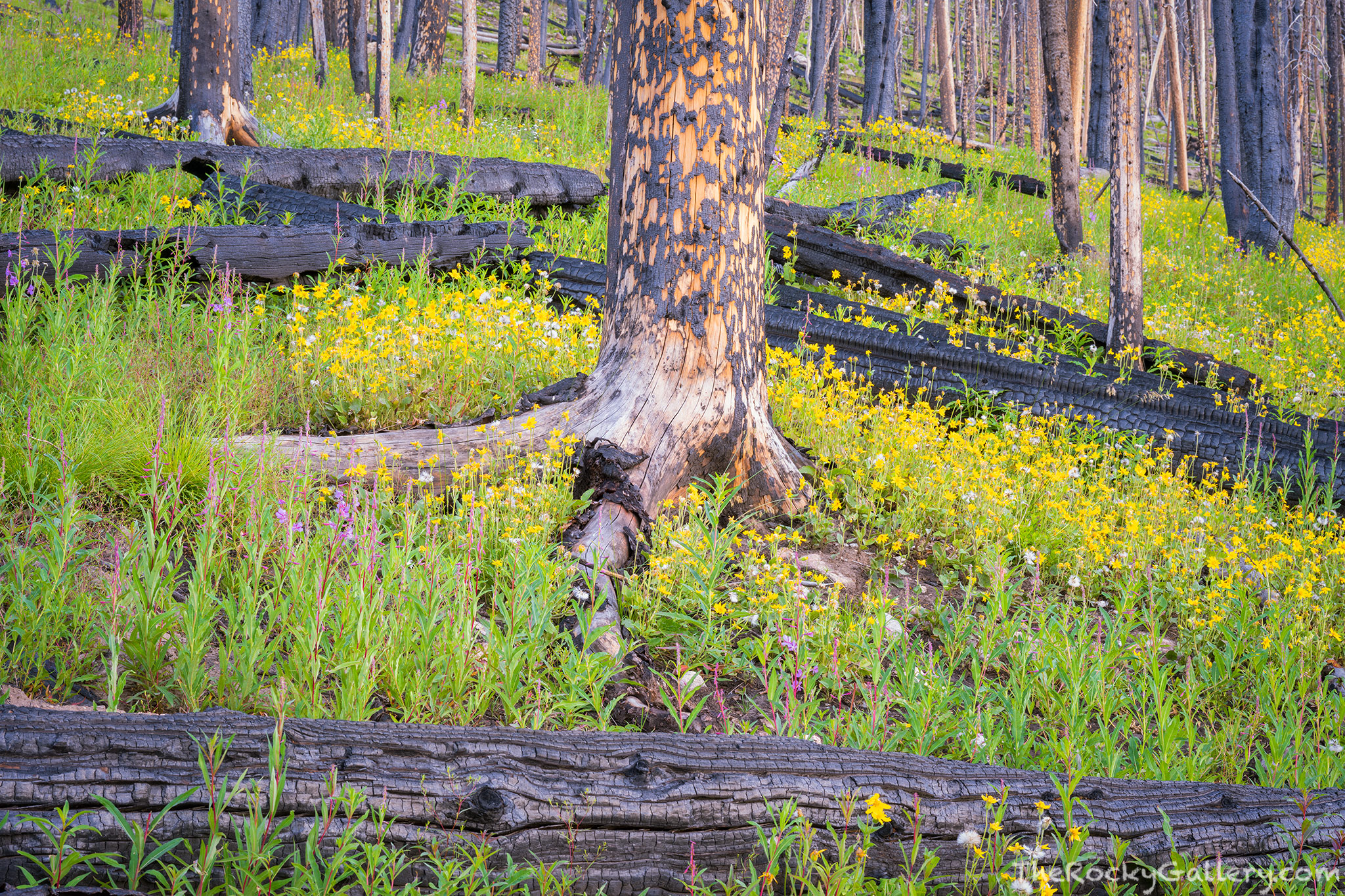
While trying to stay busy during an otherwise clear morning in RMNP, I hiked up through the fire damaged area to Big Meadows. Last year, as the landscape recovered, the wildflower bloom in and around Big Meadows was amazing. The Arrowleaf did not dissapoint as the burn area continues to recover on the west side of RMNP. Technical Details: Nikon Z7 II, Nikkor 24-120mm F 4 S lens.
That weather pattern has been occurring here in Rocky for about the past week or so. Not much interesting out there to photograph from an atmospheric standpoint for the past week or so. Looks like starting tomorrow the monsoonal flow is going to kick back in and we should have some really good chances for active and dramatic atmospheric conditions and landscape photography.
This is going to coincide with me spending a few days on the west side of Rocky Mountain National Park backpacking, so I’m both really excited and keeping my fingers crossed that I can stay mostly dry but also come home with some great images in sections of the park that can be difficult to photograph without lots of effort.
Even with the clear conditions, I’ve been out in the field, hiking, photographing and exploring. After all, some of my best images and times in RMNP have come when I’ve had the lowest expectations or just decided to try something different because things did not look promising.
As I often do this time of year with Trail Ridge Road open for the season, I spend a lot of time on the west side of Rocky Mountain National Park. Not only is it easier to access this time of year with Trail Ridge Road open, but for the most part its a lot less crowded and many of the great locations on this side of the park are just flat out ignored by other photographers. Many of these locations are physically much more difficult to reach and require much earlier or later start times, but they are both amazing an awesome.
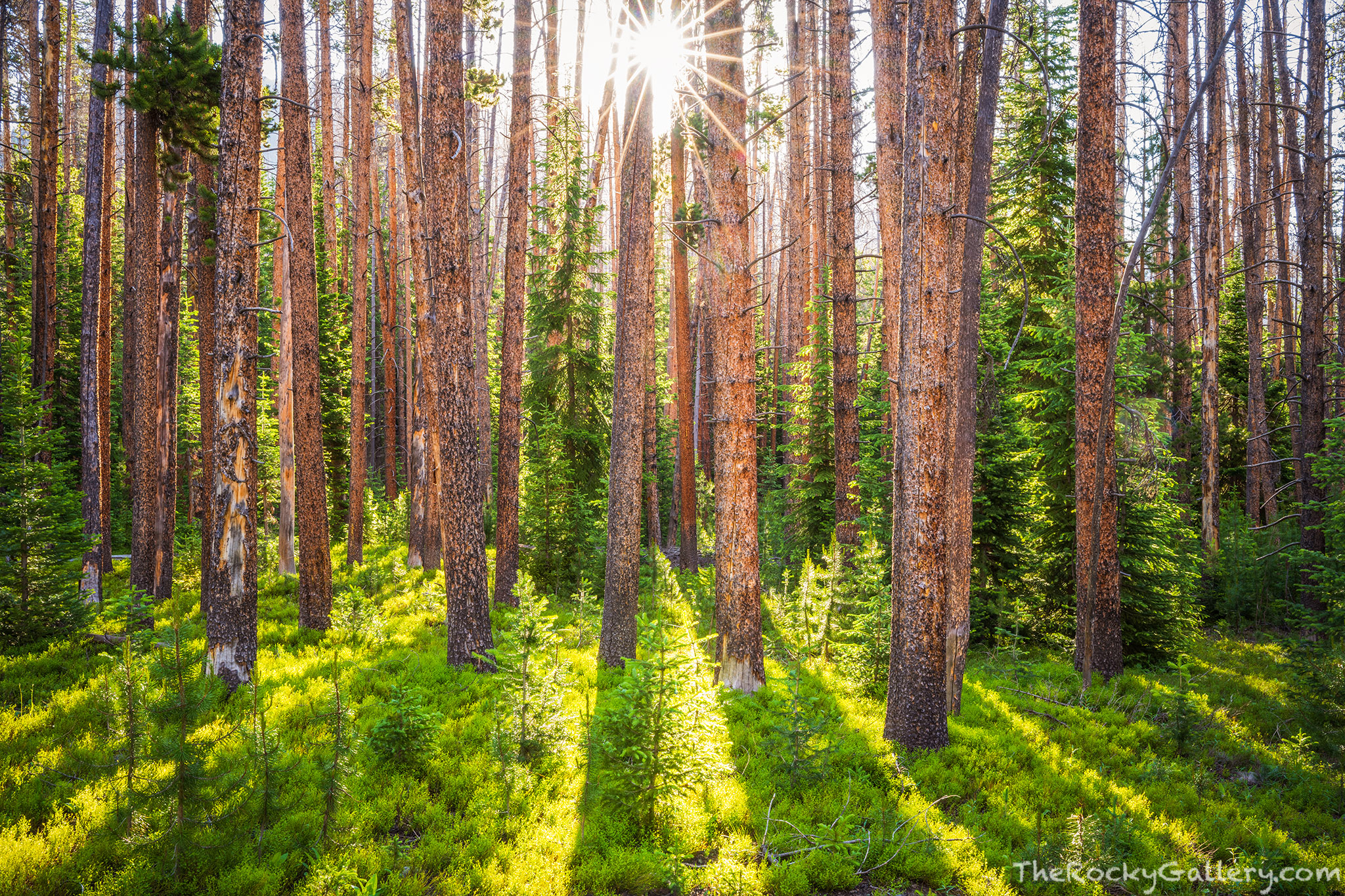
While a lot of the west side of RMNP sustained fire damage, there are still many areas that managed to escape both the fire and the beetle kill. On another clear morning in the park, getting creative I came across this stand of pines casting shadows on the vibrant green forest floor along the Onahu Creek Trail. Regardless of the clear skies, its hard to have a more memorable time then hiking on the less travelled trails of Rocky. Technical Details: Nikon Z7 II, Nikkor 24-120mm F4 S lensWhile it was sunny last week with nary a cloud in the sky, I spent time exploring and photographing the burn area on the west side of the park. While the bloom in Big Meadows is not quite as good as last year, its still offers lots of promise. I also made a run up to Timber Lake for sunrise just because why not?. Sure it was clear when I arrived after hiking the five plus miles, but the winds were calm, I got to watch both a Moose and her calf graze in the meadow below the wake as well as watch a pair of bald eagles at the lake hunt for fish.
While Rocky is only 400+ square miles, its still huge when most of ones travel is on foot. Some may not realize this, but it can be years between visiting locations no matter how efficient one is or how many days a year I spend in the park photographing the landscape and wildlife.
Photographing locations like Timber Lake are like visiting and old friend. Even after a great morning hike into the lake for sunrise, heading out and leaving one often feels a sense of somberness as you may not see your old friend for years again as other locations in the park are visited and photographed. Life is short, and watching short seasons in the high country like summer and fall make you only appreciate how little time one really has to spend at each of these spectacular locations. None of us know how much time we have on this planet, but its certainly shorter then many expect. You only have so many sunrises and sunsets and sometimes you can be on the shore of Timber Lake to photograph them. Appreciate each day, get out and explore and embrace the excitement, beauty and even the somberness that comes with photographing these unique locations in Rocky Mountain National Park.
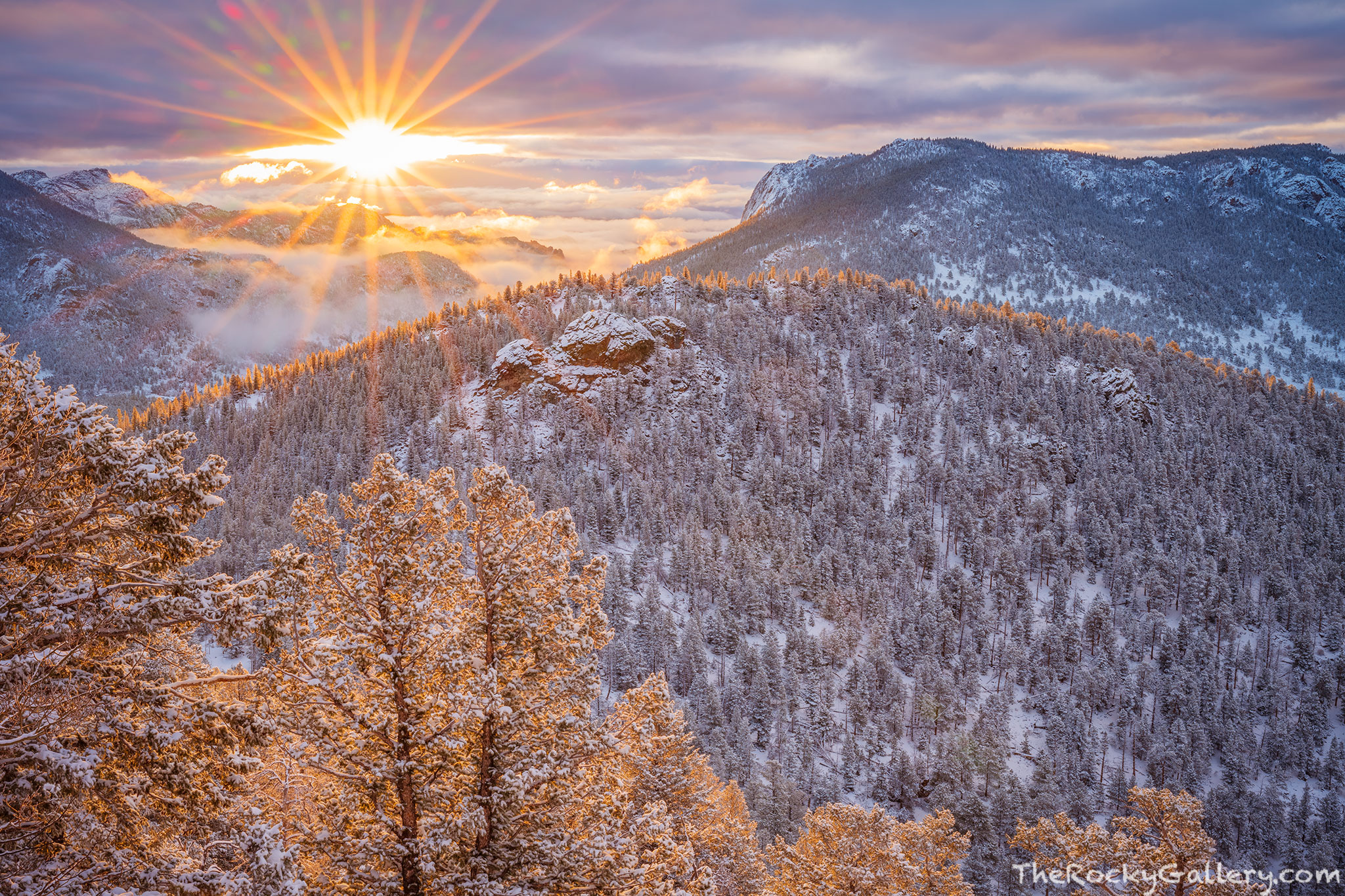
With a space of recent late spring snowstorms over Rocky Mountain National Park this past week, I headed up to capture some of the beautiful conditions. Sunrise from Many Parks Curve was spectacular on Wednesday as the sun rose over the plains of Colorado and illumated the snow covered trees. Technical Details: Nikon Z7II, Nikkor 24-120mm F4 lens
Sorry for the lack of recent blog posts of late. After and amazing autumn season in Rocky Mountain National Park, winter started early in November and never really seemed to let up much. To be honest, with the cold weather and snow we had early this year, I took the liberty of stepping back this winter and did not make nearly as many trips into the park.
With April arriving and a slew of late season snowstorms running through the park every few days, with signs of spring even so slowly starting to appear. I’ve been re-energized and I’m back to getting out and photographing RMNP early and often again.
Everybody needs a break from their creative pursuits now and then, and while I had not planned on taking a break from photographing Rocky this winter, It just kind of happened. Rather than fighting it, for the first time in my photography career I went with the flow and found some other things to occupy the time until spring thaw started and I felt inspired and motivated to get back out in the park and break out the camera once again.
I dont plan on taking a break anytime again soon, but its been a rewarding and refreshing experience for somebody who obsesses about getting out in the field as much and as often as possible. To any of my fellow photographers struggling with burn out or just and overall malaise, I’ll be the first to tell you its ok to take a break and step away for a little while.
Regardless, I’m fully recharged now and pumped up for my favorite seasons of summer and fall in Rocky Mountain National Park. The park is slowly thawing out, Trail Ridge Road should be open in the next thirty days give or take and other sections of RMNP are already opening for the season such as Upper Beaver Meadow Road and Wild Basin Road.
I’ll make sure to both keep posting on my Twitter and Facebook accounts as well as to keep this blog updated with the latest conditions and images from recent outings. Here’s to thaw and hope to see you out on the trail.
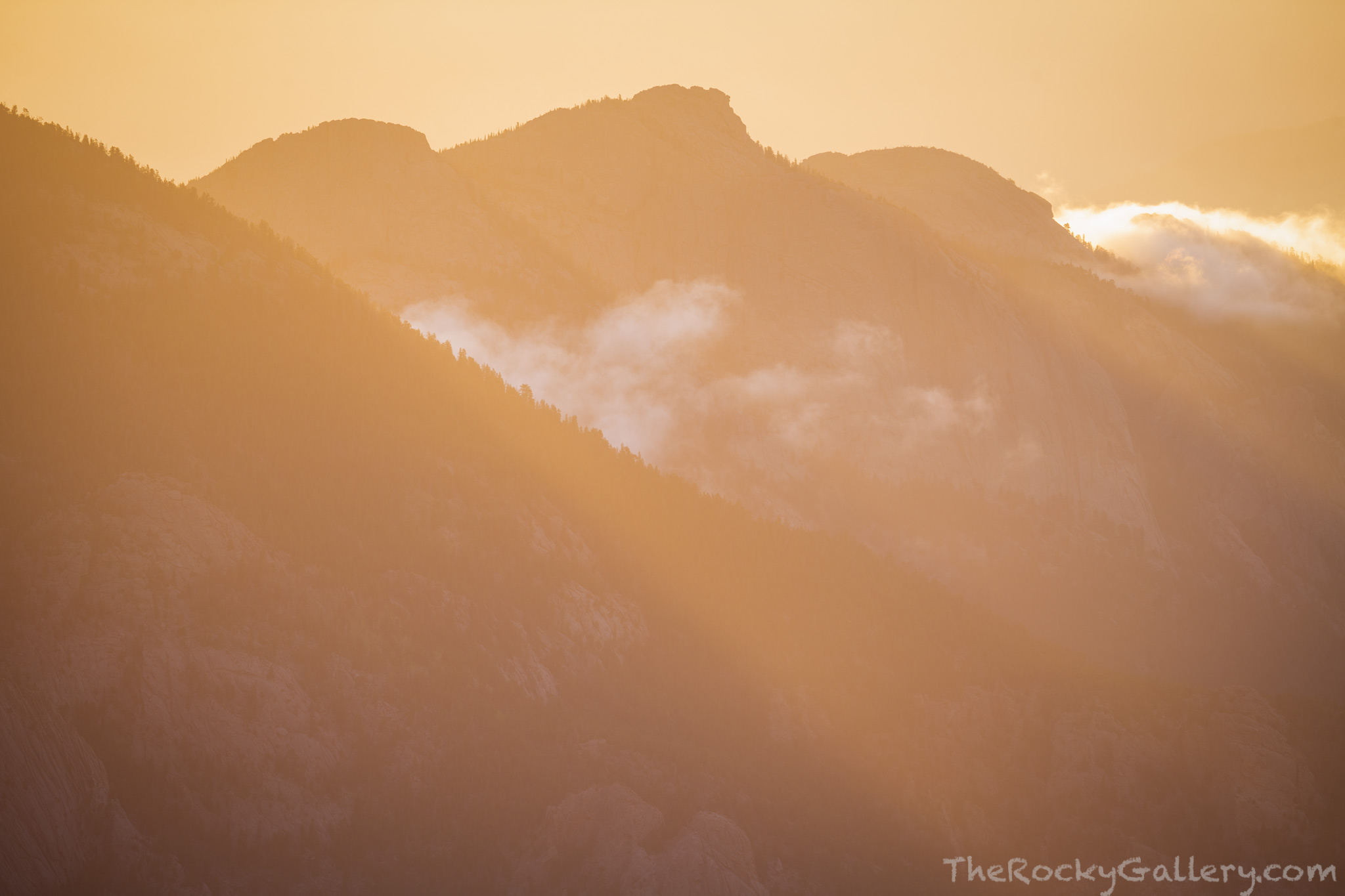
Light beams shine down around the Needles in the Lumpy Ridge section of Rocky Mountain National Park. I was able to photograph this scene from along Tombstone Ridge far across the valley using my 100-400mm lens to compress the scene. Wide angles are great, but often in Rocky, a long lens can save your bacon!. Technical Details: Nikon Z7II, 100-400mm F 4.5-5.6 lens.Every landscape photographer gets a special tingle when they start talking about using their widest angle lens. Shooting at 11mm or 14mm with a field of flowers in the foreground and a stream winding through the scene with beautiful mountains, clouds and light filling up the background is enough to make any us want to print up a 40×60 inch print to hang on the wall.
While very wide lenses are awesome, here is a little secret. Many of my best landscape images are taking with my mid range zoom of 24-70mm and if not with that lens, something longer like my 70-200 or now recently added 100-400mm lens.
Being able to compress the landscape and focus in on the nooks, crannies and other nuances of light have saved my bacon more than once on an outing into the field. This morning up in Rocky was no exception and I was more than thrilled to rack out my 100-400mm lens to capture some interesting light that would have otherwise been to far away.
To make a long story (and blog post) short, my morning up in Rocky Mountain National Park started with an inversion or low lying cloud layer of the park. As is usually the case, when an inversion is present, I try to get above it. This morning is was up Trail Ridge Road and then a few miles out on the alpine tundra and Ute Trail to get an interesting vista.
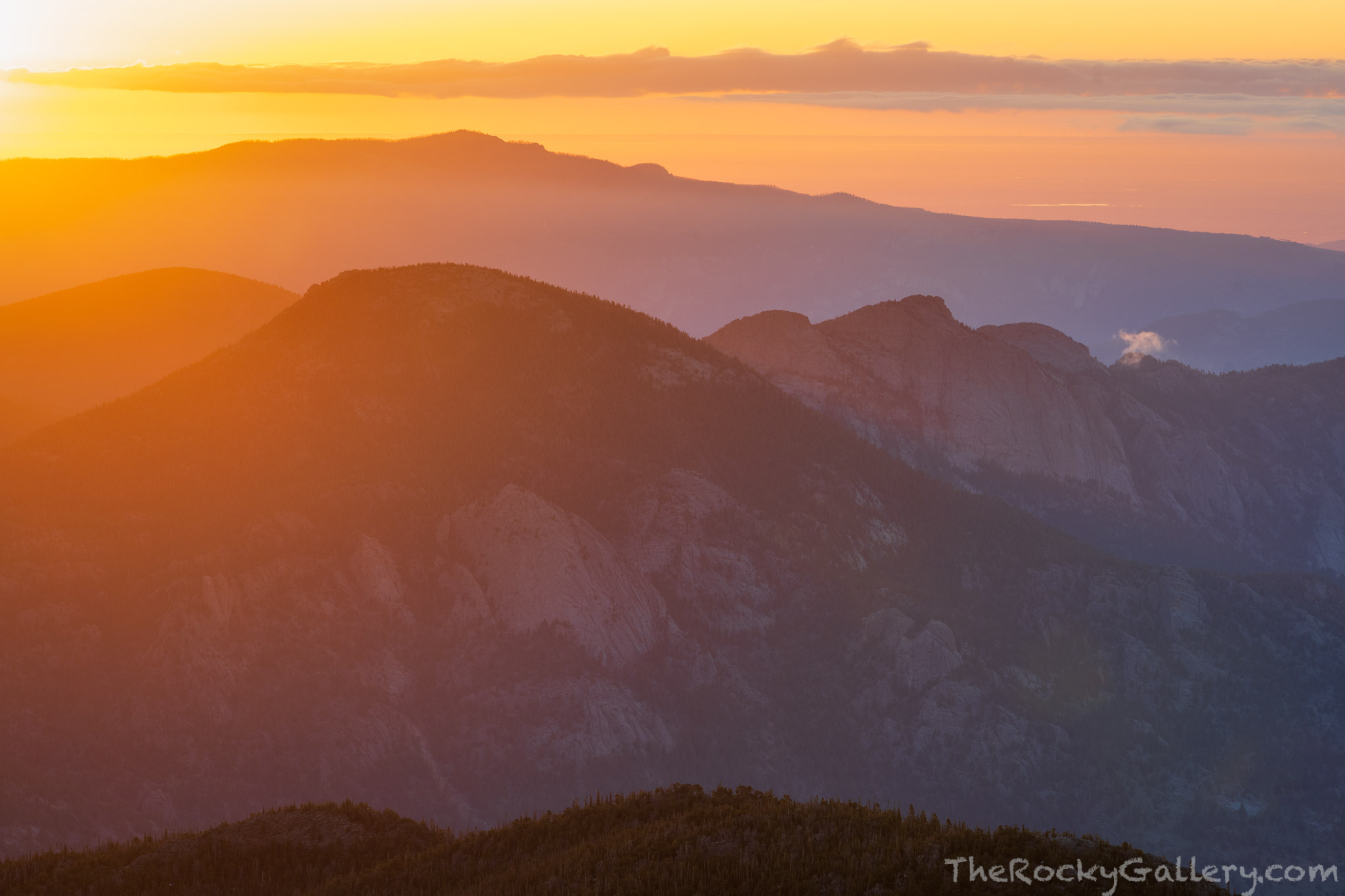
Another example of using a long telephoto lens this morning to compress this scene of McGregor Mountain and the Needles of Lumpy Ridge as the sun rises over Rocky Mountain National Park. Technical Details” Nikon Z7 II, Nikkor 100-400mm F 4.5-5.6The only problem was, these inversions layers can be quite fickle. The rise and fall like a wave but also ebb and flow just like a tide. This morning, the beautiful layer of clouds that filled Moraine Park, Horseshoe Park and Forest Canyon below me had moved on out to the east by the time I arrived at my vantage point.
Sunrise was beautiful but there were almost no clouds left and for the most part, much of the landscape while spectacular and beautiful, was not all that interesting from a photography perspective.
There was one exception however. The Needles across the valley in the Lumpy Ridge section of Rocky had some awesome light beams coming down as the sun rose over RMNP. Even better, some fog and clouds hung over the lower peaks.
Off went my 24-120mm lens and on went the 100-400mm lens. At 400mm, I was able to compress the landscape to accentuate the light beams, capture the fog and clouds around the Needles and come away with dramatic light. If I only had my 70-200mm on me I would not have been able to compress the scene enough to keep it interesting. Even so, one more time my long lens landscapes with my 100-400mm saved my bacon!.
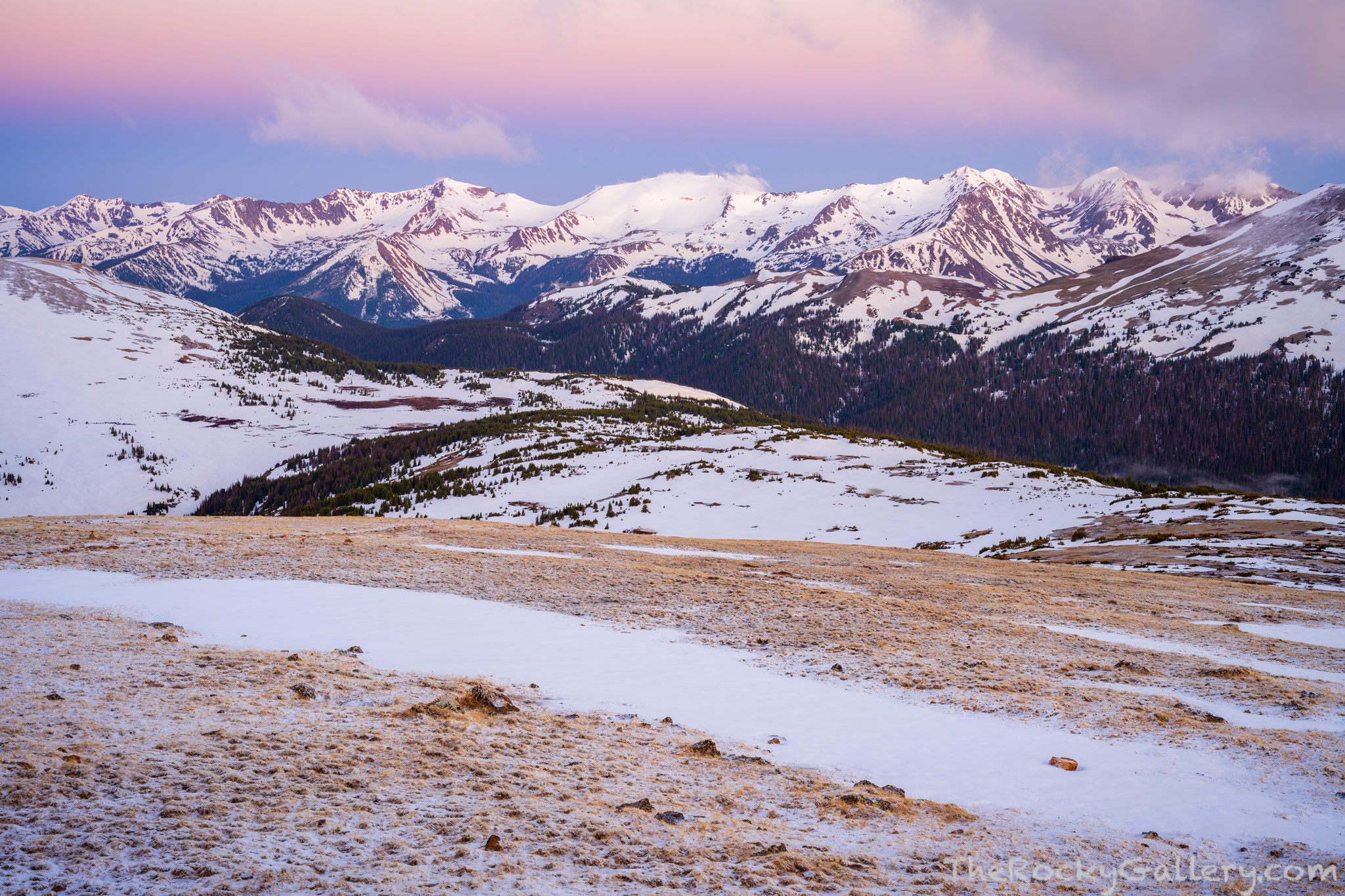
Better late than never but I was finally able to make my first trip up Trail Ridge Road since it opened for the season. Weather and timing have not made it possible until this morning but at least I was greeted with fresh snow and some pretty light as I took in the view from the Gore Range overlook of the Never Summer Mountains which were living up to their moniker as always. Technical Details: Nikon Z7 II, Nikkor 24-120mm F4 S lensBelieve or not, I actually made my first run up Trail Ridge Road for the season this morning. It’s not that I haven’t wanted to get out on Trail Ridge but both weather and timing have made it impossible to find a morning to head up since Trail Ridge Road opened for the season just before Memorial Day on May 27th.
For those unaware. Trail Ridge Road is the highest continuous paved road in the United States. It tops out just over 12,000 ft in elevation above the Lava Cliffs overlook and connects the towns of Estes Park on the east side of Rocky Mountain National Park, with Grand Lake on the west side of the continental divide and Rocky Mountain National Park.
Each year, millions of visitors come to Rocky Mountain National Park to drive over the hairpin turns and switchbacks of Trail Ridge Road to take in the views and enjoy the alpine scenery and tundra. It’s a great way for visitors to RMNP to be exposed to multiple mountain ecological zones including the alpine tundra above timberline.
Trail Ridge Road also offers photographers lots of opportunities for iconic vistas of snow covered landscapes as well as wildlife such as Marmots, Pika, Ptarmigans, Big Horn Sheep, Elk and just about every other creature in Rocky that at some time or another will migrate up or down from the higher elevations.
To date, I had not made my ‘seasonal’ first migration over Trail Ridge Road but when I awoke this morning to rain falling, it seemed like a perfect time to head on up and see what opportunities for photography might exist.
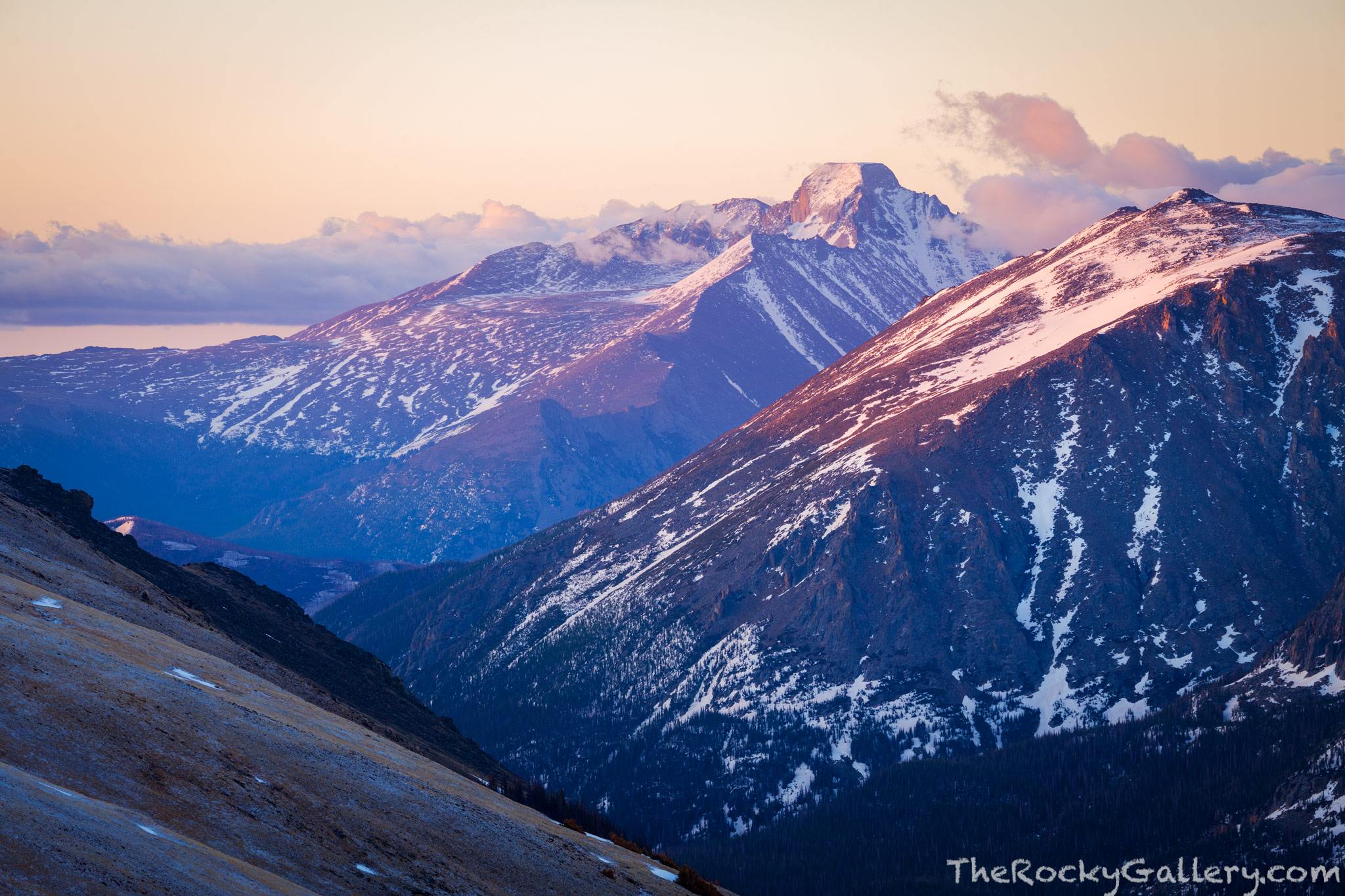
Longs Peak standing side by side with Stones Peak looks regal as always this morning with a light dusting of snow on its 14,259 ft summit as seen from the Gore Range Overlook on Trail Ridge Road. Technical Details: Nikon Z7 II, Nikkor 100-400mm F 4.5-5.6 S lensLike I always say when I head up to RMNP, I never really have any idea what I’ll come away with photography wise. I try to keep an open mind and look for opportunities, while using my 20 plus years of photographing in the park to put myself in locations that are likely to have the most interesting conditions or lighting.
That was the case this morning as I cruised past Forest Canyon Overlook and started to notice snow on the hillsides. Soon that snow became snow and ice on the road itself and by the time I had driven to the Rock Cut, there was a decent layer of snow and ice over the road.
Taking it very slowly so as not to end up at the bottom of Forest Canyon I made my way to the Gore Range overlook where the Never Summers had some fresh snow but so did the alpine tundra in the foreground. While I had originally planned to make it down the Kawuneeche Valley, the snow and ice slowed me down enough that the Gore Range overlook was as far as I was going to make it anyway before sunrise.
By the time the sun actually hit the mountains, most of the clouds had dissipated as they so often do in Rocky, but the great thing about this spot is earth shadow this time of year over the Never Summer creates a nice band of color above the peaks as can be seen in the image above.
So I’ve got my first trip over Trail Ridge behind me for the seasons and it was a fun one. Getting some fresh snow on June 7th makes it even more fun and I cant wait to get over to the west side of the park as soon as time allows, which is hopefully sooner than later. Regardless, with Trail Ridge Road now open for the season its really starting to feel like Summer in RMNP, even if there is snow!.
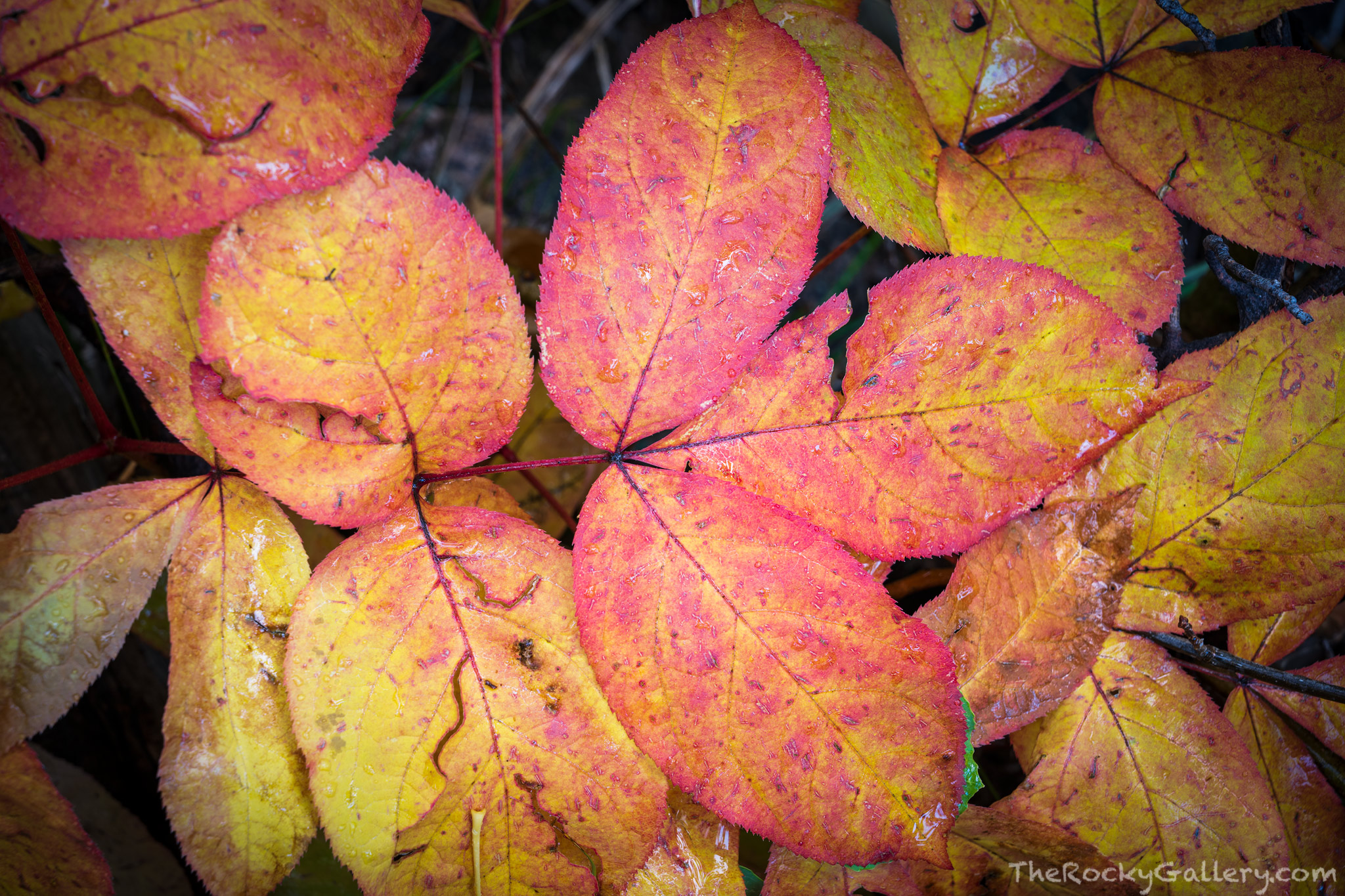
I for one certainly thought we were done with any and all remaining fall color in Rocky Mountain National Park for the 2021 season. Heading out in Moraine Park yesterday morning to break in my new Nikkor 105mm Macro lens, I stumbled on what is the last remnants of fall color in RMNP. Just a small reminder of the great autumn season we had this year and a beautiful subject to test my new lens on. Technical Info: Nikon Z7 II, Nikkor 105mm F 2.8 VR S lens
Ok I admit it. I was wrong. I put a fork in the autumn season in Rocky Mountain National Park and declared it officially ‘brown season’. I was wrong but still mostly right. It most certainly is brown season in RMNP but there are still some minuscule pockets of autumn hanging on in Rocky which I happily discovered yesterday while out hiking in Moraine Park.
With my new 105mm Micro S lens freshly delivered from Allens Camera in my pack, I headed out looking to find some nails to try my new hammer on. Small intimate fall color scenes always work well with macro scenes, I figured we were passed that and was thinking more along the lines of frozen water and ice to test this new lens on.
After photographing a beautiful sunrise from Moraine Park, I headed off in search of something to point the shiny new 105mm macro lens out. It was a pleasant morning, mild with a slight breeze and lots of fresh snow on Stones Peak in the distance. As I ringed the perimeter of Moraine Park looking for intimate scenes and small subjects, there were still lots of signs of our just departed fall season.
Scanning the hillsides lots of brown leaves still clinging to the bushes and underbrush but no signs of any lingering color until finally I spotted a tinge of orange and red along the base of pine. There it was, a few vines creeping along the ground with a mix of brown and red leaves.
While not the highlight of the fall season, I dropped my backpack and broke out the 105mm macro to break it in and enjoy what will surely be the last of the fall color I will photograph in Rocky in 2021, or will it?.
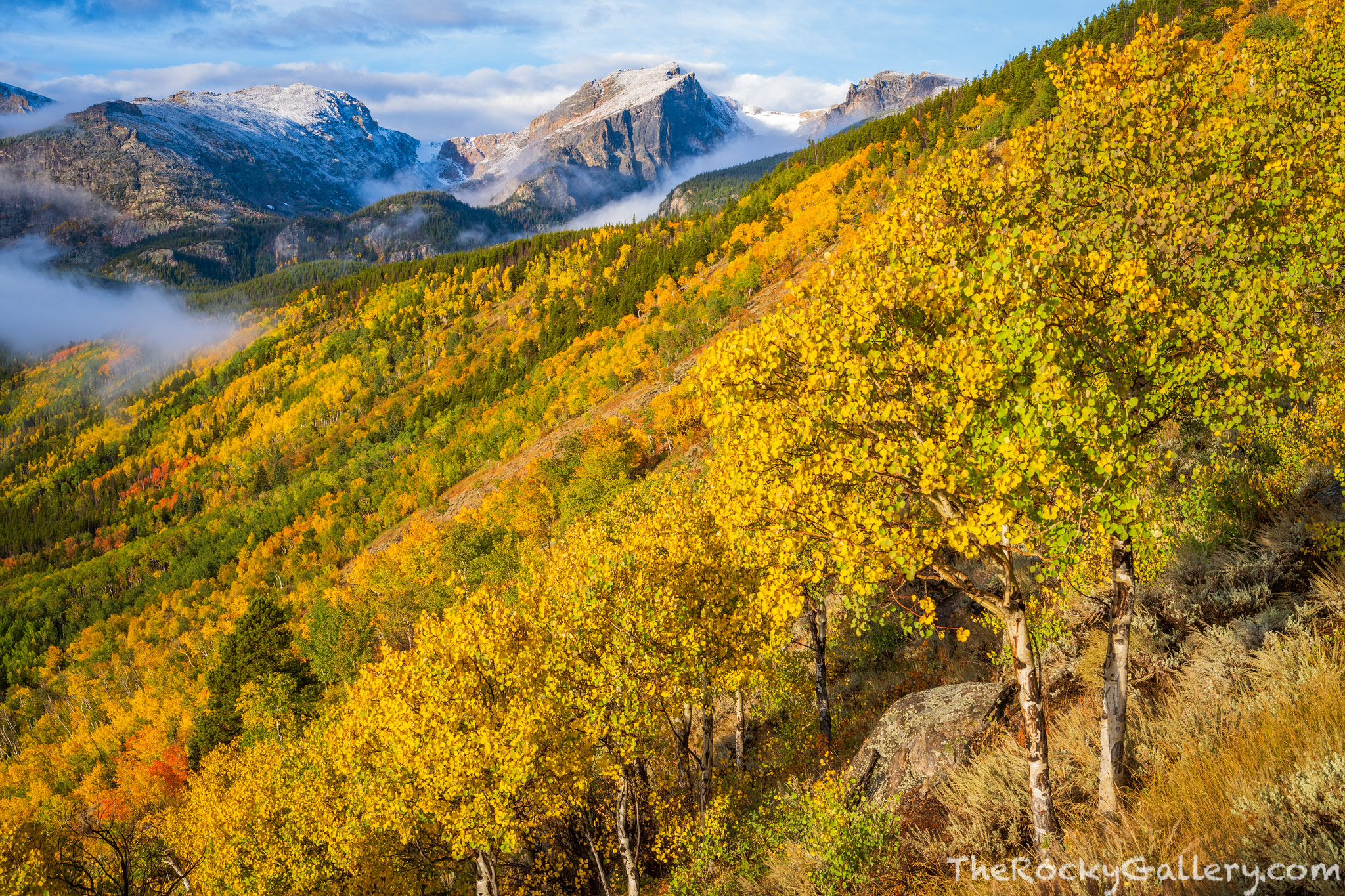
It was a tremedous fall season here in Rocky Mountain National Park. I cant remember a better season in recent years where we had both beautiful and interestind weather, vibrant fall colors in both the trees and understory while also enjoying an exteded season due to the mild weather and lack of wind storms. Here’s and image from the morning of September 30th along the Bierstadt Moraine. Fresh snow on Otis, Hallett and Flattop with fog and brilliant colors on the Bierstadt Moraine itself. Technical Details: Nikon Z7 II, Nikkor 24-70mm F4 S lensIt’s a wrap. Sure its still technically autumn in Rocky Mountain National Park but we’ve pretty much moved on to the down and brown season here. It’s always a sobering watching summer move to autumn in the park and then within a few short weeks its over and done with.
Fall 2021 in Rocky was awesome however. The colors were spectacular, the weather was mild but also interesting. We had a nice dusting of snow on the high peaks, fog, some rain and very vibrant reds and oranges along with our traditional yellows and golds. With the mild weather much of the underbrush turned in unison with the aspens and cottonwood trees.
From my perspective of photographing RMNP over the past 23 years, I cant remember a season with such great color, weather. To build on those two great factors, I also cant remember a time that fall color hung around for as long as it did this season either. The first week of October still had great fall color on places like the Bierstadt Moraine which is typically long past peak by this time.
I’m still working through a backlog of images from the fall and I’ll have plenty of material and images to post here as we move into winter. Hoping many of you were able to get out and enjoy what was an amazing few weeks for us landscape photographers.
Hard to believe it but the autumn season in Rocky Mountain National Park is slowly starting to reveal itself once again. Subtle signs of fall are becoming more obvious with each passing day. I photographed this colorful underbrush on the Bierdstadt Moraine just last week. Stay tuned for more updates on the current conditions in RMNP moving forward. Technical Details: Nikon Z7 II, Nikkor 24-70mm F4 S Lens
Well its happening. Summer is quickly transitioning into autumn in Rocky Mountain National Park. While the fall is my favorite season in RMNP, with over 23 years of photographing the fall color in Rocky behind me, I’m always sort of shocked out how quickly we transition from summer to fall in the park.
Autumn in Rocky Mountain National Park is sly. It slides in slowly, covertly than all at once. Subtle color changes in the grasses and underbrush portend to the looming changes in weather and seasons and then just like that, were full on with the fall season here in Colorado.
It’s been and incredibly challenging year for photography in Rocky. We’ve had smoke and poor air quality nearly from the get go of summer. Smoke settled in over the park in early June and with a few short durations, it’s remained entrenched over RMNP. Top that off with a very placid weather pattern and weak monsoonal impulse most of the summer and we have had lots of warm, clear mornings and evenings in Rocky. Great for hiking and camping, not so great for us photographers yearning for dramatic light and weather.
With that said, fall always brings a newfound enthusiasm for photographers in RMNP. The season is short and we want to take advantage of as much of its gifts and bounty as possible before the abrupt and crashing decent into winter.
I’ll try my best to keep the blog updated as we move into fall. I can tell you the elk rut is starting in earnest and they herds have begun moving towards the lower elevations. The bull’s are active and bugling and there are already lots of opportunities to photograph the rut if you happen to be in the right location.
A few aspen trees here and there are starting to turn golden and I would expect by next week some of our traditional early turning areas (west side of the park) will be looking decent. As always, keep and eye out for the smaller details as much of the autumn color in RMNP will be in the subtle nooks and crannies of the park before unveiling their full autumn splendor.
Regardless, even after a difficult summer of photography in the park, the oncoming fall season in Rocky Mountain National Park has renewed my vigor and has me excited for the great potential and beauty each fall season holds in Rocky.
Unfortunately, the smokey conditions from wildfires around the western United States has persisted over Rocky Mountain National Park this week. Even so, when conditions arent perfect its always good to get out on the trail and enjoy a great hike in the park. Photographing sunrise from Flattop Mountain is one of my favorite things to do and even though conditions were not perfect yesterday, the lighting on Hallett and the view of Longs Peak from the Emerald Lake overlook is always awe inspiring and motivating. Technical Details: Nikon Z7 II, Nikkor 24-200mm F 4-6.3 Lens
One of my personal favorite hikes in all of Rocky Mountain National Park is the Flattop Mountain Trail. While it can be a strenuous climb to the top of Flattop, the views are well worth it. The Flattop Mountain trail also connects to many of the parks other formal and informal trail systems at the summit. It’s a gateway to access much of Rocky Mountain National Park and in particular a gateway that allows hikers the easy access to the west side of Rocky Mountain National Park short of driving over Trail Ridge Road.
My good friend and fellow photographer extraordinaire Erik Stensland likes to call trails like the Flattop Mountain trail, the ‘Superhighways’ of Rocky Mountain National Park. It’s a great analogy and I think its a perfect description of for trails like the Flattop Mountain Trail.
With smoke from forest fires all over the western United States still affecting the air quality in and around RMNP, It’s been tricky getting out and photographing Rocky in what is one of the best times of year. Smoke and an overall lack of colorful sunrises to start the month of July has me getting itchy to get out and do something. When I dont have photography clients out in the field in Rocky, and if I am conditions for dramatic landscape photography are not cooperating, I do what anybody else does and just like to get out for a good hike and enjoy the trails and scenery.
Yesterday morning with that in mind, I did just that and headed up Flattop Mountain about an hour and half before sunrise. The smoke was not as bad as it had been but it was still present. There were actually clouds hanging over Rocky this morning but the predicted break in the cloud cover did not appear to be forming as thunderstorms from the previous night still hung over the eastern plains of Colorado as I got a clearer view heading up the trail.
Regardless, the hike in of itself was more than enough to keep a smile on my face as I headed up the switchbacks before sunrise. Three miles from the Bear Lake parking lot, I reached the Emerald Lake overlook with a few minutes to spare. Sunrise was more or less blasé with the clouds obscuring the sun enough to color the sky, but about 15 minutes after sunrise, enough light scattered through the clouds and smoke to photograph some nice warm light on the flank of Hallett Peak.
I made a few images of the light on the side of Hallett and a touch now on the Diamond of Longs Peak. Even with less than perfect conditions, surveying the views and familiar peaks from this location a thousand feet above Emerald Lake is always one of my favorite spots to take in a sunrise. Lets hope the next time I’m up here the smoke has cleared and sunrise is one to remember. Even so, its hard to beat summer mornings on Flattop.